Full Article
about Prádena del Rincón
A village in the Sierra del Rincón with rural charm; its church houses a visitable medieval necropolis.
Hide article Read full article
The first impression of Prádena del Rincón can be slightly disorienting. The road through the Sierra Norte winds through forest and gentle bends, and then, almost without warning, a small cluster of houses appears. There is no grand entrance, no viewpoint set up for photos. Just the village itself, as it is.
That sums up the place rather well. There are no museums or souvenir shops here. What you find instead is a compact settlement, an old church, and a handful of short streets where daily life still moves at a slower pace. This is not a place arranged for display. It is simply a village that continues to function as one.
San Blas Church and the village feel
At the centre stands the church of San Blas. Its origins are usually placed in the medieval period, although what stands today reflects changes and additions from different eras. Dark stone and a modest bell tower give it a restrained appearance that matches the tone of the village as a whole.
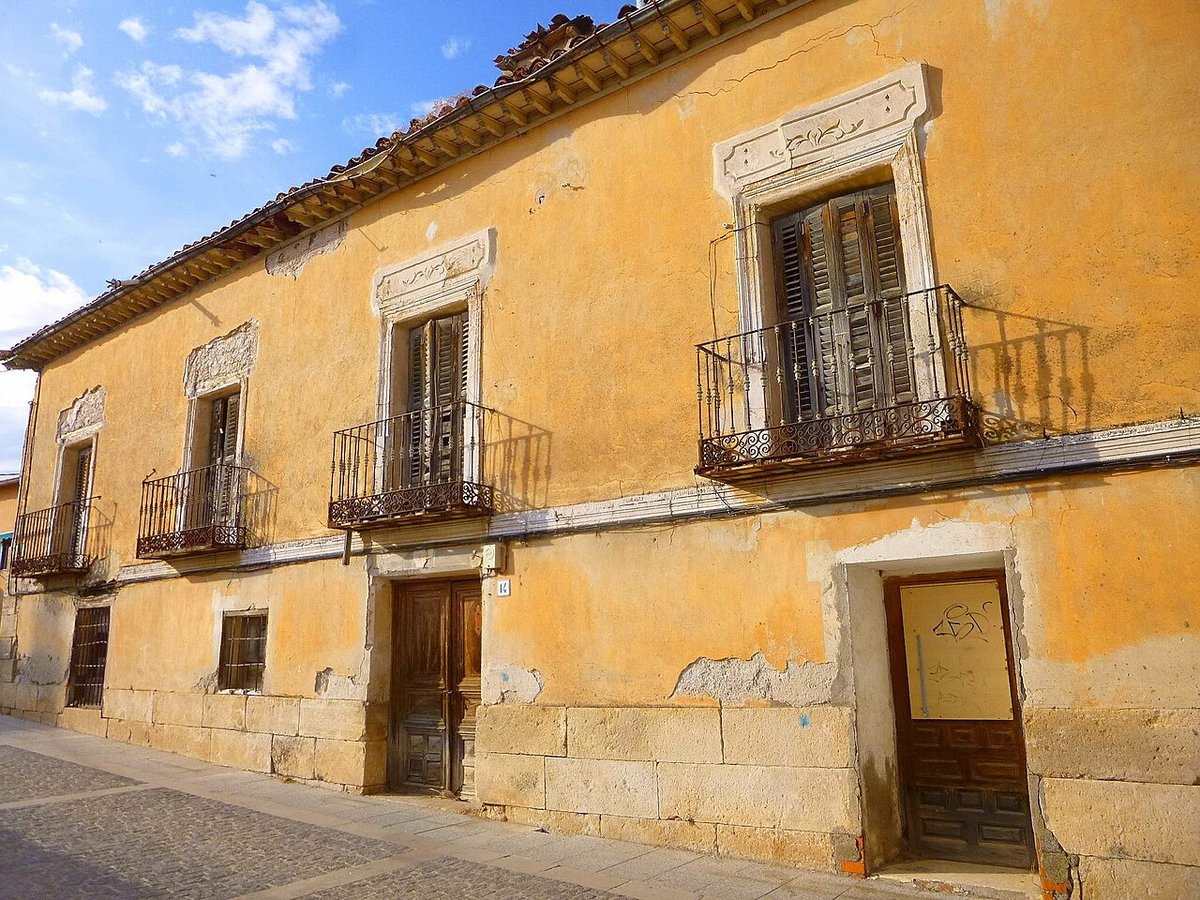
A walk around the church leads naturally into the surrounding streets, where the details begin to define the place. Houses have thick walls, dark roofs and wooden balconies that have endured many winters in the mountains. Nothing feels overly restored or arranged for effect. The impression is of a village that has adapted over time with the materials and needs it had at hand, which is often how places like this evolve.
Stone fountains still appear here and there, along with old washhouses once used for laundry. Even in summer, the water runs cold enough to make you pull your hand away almost immediately. These are small features, yet they offer a glimpse into how daily routines once worked before everything depended on running water at home.
Walks through woodland and open ground
Many visitors come to Prádena del Rincón because of its surroundings. Paths begin almost as soon as you leave the village, leading into areas of Pyrenean oak and Scots pine. There is no need to plan anything elaborate. A simple forest track is enough to place you fully in a mountain landscape within minutes.
The character of the area shifts with the seasons. Spring brings rockroses and small wildflowers scattered across the meadows. Autumn feels very different, with dry leaves underfoot, ochre tones across the hillsides, and the distinct scent of damp earth as the day cools. Winter is harsher. Cold temperatures are taken seriously here, and snow sometimes makes an appearance.
Wildlife is present, though sightings depend more on luck than anything else. Roe deer and wild boar move through these hills, but most of the time you notice traces rather than the animals themselves. As for mushrooms, the usual advice for mountain areas applies: if you are unsure what you are picking, it is better to ask before taking anything.
A place to slow down for a few hours
Prádena del Rincón is not a destination designed to fill an entire day with activities. That is part of its appeal. A relaxed walk through the centre can easily be done in a little over an hour. The route naturally takes in the church, nearby streets, fountains and a few houses that preserve traditional architecture.
It is worth stepping beyond the village as well. A short walk along one of the tracks provides a clearer sense of the setting. From just outside, the layout becomes obvious: a small group of houses surrounded on all sides by woodland and open countryside.
Plans tend to work best here when there is no rush. A slow walk, a pause in the square, then moving on towards another village in the Sierra Norte fits the rhythm of the place. Prádena del Rincón often works as a break between stops rather than a main destination, and it suits that role comfortably.
Practical notes before you arrive
Even in warmer months, the temperature drops when evening approaches. It helps to bring an extra layer if you plan to stay later in the day or head out into the surrounding hills.
Mobile coverage can become unreliable once you leave the centre of the village. Anyone planning to follow routes in the area may want to have maps available offline.
The village itself is small, and services are limited. Shops are not always open, particularly outside weekends or busier periods. It is worth arriving with that in mind rather than expecting a wide range of facilities.
Getting there without fuss
From Madrid, the usual approach is via the A-1 towards the area around Buitrago del Lozoya. Beyond that point, the route continues along secondary roads through the Sierra Norte, where traffic is light and woodland lines much of the الطريق.
Parking is generally straightforward near the centre of Prádena del Rincón. Once the car is left behind, everything in the village can be explored on foot in a short amount of time.
What people might not mention
Prádena del Rincón works best as a short stop or as part of a wider route through the Sierra Norte. It is not a place that keeps you occupied with a long list of sights, but it does offer something quieter.
Small villages sometimes serve as pauses between journeys. You stop, walk for a while, take in the mountain air, then continue on your way. Prádena fits that role neatly. Not every place needs to offer more than that.