Full Article
about Somosierra
The highest village in Madrid on the historic mountain pass; site of Napoleonic battles
Hide article Read full article
Where the Wind Arrives First
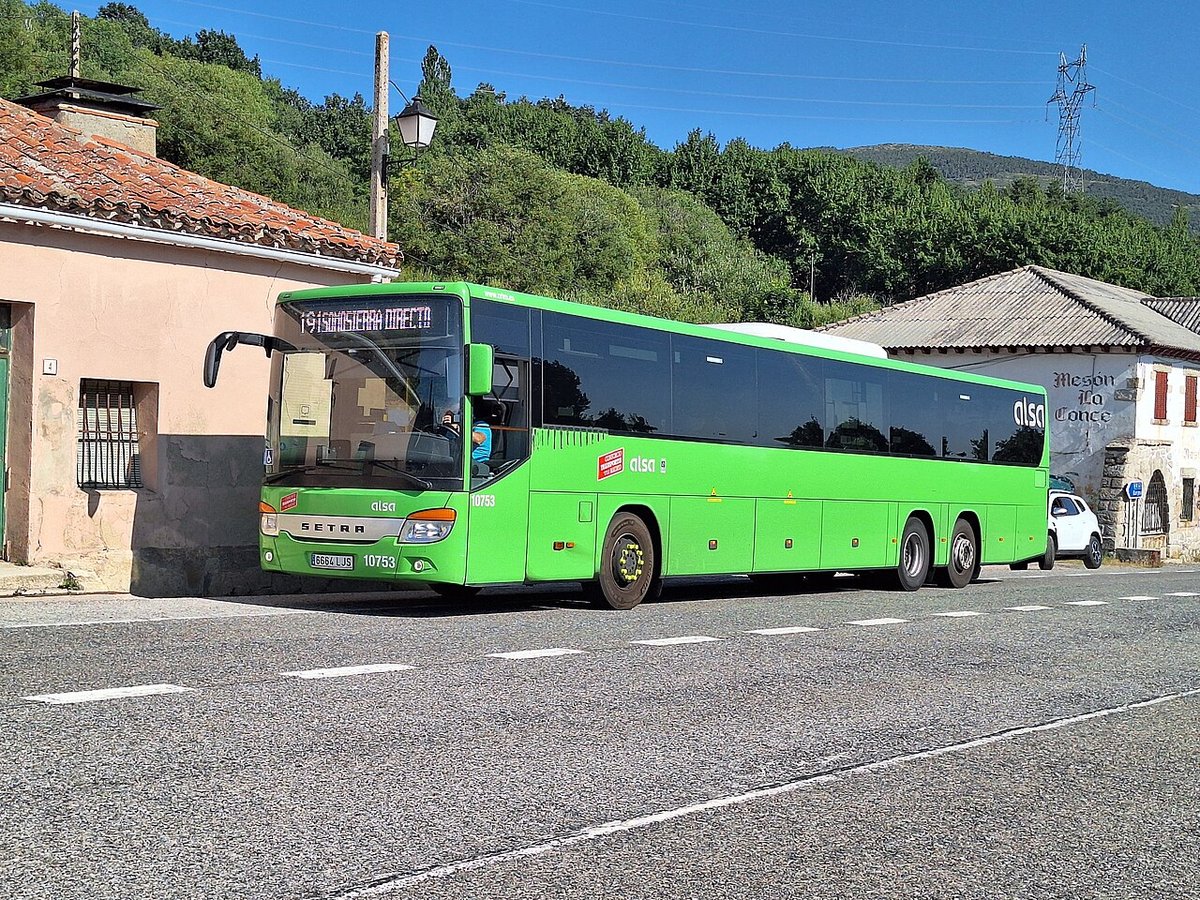
You often hear the wind before you see much else. It sweeps across the mountain pass and drops towards the first houses. It rattles cables, knocks against a shutter, carries the scent of resin and damp earth. Tourism in Somosierra frequently begins like this: leaving the A‑1 motorway, pulling in briefly to a small village more than 1,400 metres above sea level, where the Sierra feels close at hand.
Somosierra sits on the natural corridor that links Madrid with Spain’s northern plateau. This position has always shaped it. Today the motorway runs alongside, fast and constant, but the village itself lies a few metres away, gathered between slopes covered with pine and oak.
There is no dramatic arrival. The landscape simply opens up, the air cools, and the wind makes itself known.
Short Streets, Dark Stone
The centre can be explored slowly and in a matter of minutes. Streets follow the incline of the land, so there is always a slight slope underfoot. The façades are built in dark stone, sometimes almost black after rain. Many houses have thick wooden doors and curved roof tiles that jut out to shield against winter snow.
At the heart of the village stands the church of Nuestra Señora de la Concepción. It is a sober stone building with a tower visible from the road as you approach the pass. Inside, everything is simple: pale walls, a few modest altarpieces, and the echo of footsteps when no one else is there.
By mid‑morning, little can usually be heard beyond the wind and the occasional car passing through on its way up to the puerto, the mountain pass that gives the village its name. Life moves at a low volume. With fewer than a hundred inhabitants, Somosierra feels quiet almost as soon as you step out of the car.
There are not many shops, nor a steady flow of people. Houses cluster along a handful of streets and, once you walk a hundred metres or so beyond them, open countryside takes over again. Anyone expecting a village busy with tourist activity may find something different here. The usual rhythm is simple: stop for a moment, stretch your legs, look around.
The Historic Pass and Its Slopes
Somosierra is pressed up against the Puerto de Somosierra, one of the historic routes between Castile and Madrid. For centuries, this was a key crossing point through the mountains. If you drive a few minutes up the old road, the view widens quickly. Rounded hills appear, patches of pine forest, and meadows where the shade of green shifts noticeably with the seasons.
Light changes fast at this altitude. In the morning, the northern slopes remain in shadow. Towards late afternoon, when the sun drops in the direction of the Segovian plateau, rocks and dry grass take on a marked ochre tone. The colours are never static for long.
Near the pass, several tracks head into the hills. Some follow old livestock routes once used to move animals across the mountains. Others wind between young pines. They are not long walks if you set off from the village itself, yet they offer a clear sense of the terrain: constant wind, stony ground, wide views when the sky is clear.
The setting explains the place better than any signboard could. The wind, the slopes and the road climbing towards the pass define Somosierra more than any single building.
Walking the Sierra Norte
Marked footpaths lead from Somosierra into the Sierra Norte, the northern mountain range of the Community of Madrid. Many follow forest tracks or old paths. None are especially demanding, although the altitude makes itself felt if you are not used to it.
Underfoot conditions vary considerably depending on the time of year. In winter, the ground can freeze even when there has been no snowfall. In spring, muddy stretches appear after several days of rain. Good boots with a solid sole are advisable, along with an extra layer, even when central Madrid is warm.
For those seeking quiet, early morning is usually the best time. After midday it becomes more common to see cars stopping at the pass and people heading out for a short walk. Even then, the sense of space remains. Once you leave the immediate cluster of houses, the landscape opens quickly into hills and sky.
The terrain is straightforward to read: pine stands, open pasture, rocky patches. The wind rarely disappears completely. It shapes the vegetation and carries the smell of the forest downslope. On clear days, views stretch wide across the surrounding high ground.
A Small Village Without Ornament
Somosierra has fewer than a hundred residents, and that fact is evident almost immediately. There is no elaborate staging for visitors, no attempt to turn the village into something it is not. The scale is modest and the atmosphere direct.
Stopping here tends to be brief. Travellers leave the motorway, step out into cooler air, and take in the difference from Madrid city. In summer, that contrast is clear as soon as you open the car door. Even at midday, the air is usually fresher than in the capital.
Winter brings a different consideration. If passing through at that time of year, it is sensible to keep an eye on the hour. Temperatures drop quickly towards evening and the dampness of the pass seeps into the cold. Light fades fast at this altitude, and the wind can sharpen as the day ends.
There is a certain honesty to Somosierra. The village does not attempt to distract from its surroundings. The church stands at the centre, the stone houses line their short streets, and beyond them the land rises and falls towards the pass. The motorway may run close by, but a few steps are enough to leave its rhythm behind.
In the end, tourism in Somosierra is less about ticking off sights and more about pausing in a place shaped by geography. A historic mountain crossing, dark stone façades, shifting light on the slopes, and the constant presence of wind at over 1,400 metres above sea level. That combination defines the experience more clearly than any itinerary.