Full Article
about Torrelaguna
Medieval town, birthplace of Cardinal Cisneros; a site of outstanding historic and artistic value
Hide article Read full article
The street where Cardinal Cisneros was born in 1436 was not yet a proper street. It was more a track of compacted earth where carts, animals, and traders bound for the market would pass. The house where he was born, the son of a local apothecary, still stands without prominent signage. In Torrelaguna, history is often present in this way: in the masonry of a church, in coats of arms worn smooth on doorways, or in documents kept in the municipal archive.
A town’s purchase of its jurisdiction
In 1574, the town gathered 8,500,000 maravedíes to buy its jurisdictional rights from Philip II, ending the control held by the archbishops of Toledo. The deed of sale remains in the archive. This purchase granted the town the status of villa, with the authority to appoint its own judges.
The change left a physical mark. The town hall occupies the old public grain store, built in 1592 with walls thick enough to preserve cereals through lean years. On its façade, you can see the yoke and arrows of the Catholic Monarchs alongside a chain motif associated with Cisneros.
The church and its context
Work on the church of Santa María Magdalena began around 1440. It was consecrated in the early 16th century. Its style is late Gothic, and its structure feels solid, even defensive—a common feature in towns across this plateau, which experienced long periods of frontier instability.
Between the sierra and the river
The town’s location, between the Sierra Norte and the Jarama river plain, placed it on a corridor connecting the interior plateau with routes toward the Ebro valley. This brought trade, movement, and conflict.
Near the town centre stands the Arrebatacapas tower, generally dated to the Andalusí period, probably the 10th century. It overlooks a broad expanse of cereal fields. The tower’s name, which translates roughly to "cloak-snatcher," comes from a local story: watchmen here would sometimes demand a traveller’s cloak as an improvised toll.
The Jarama river forms the municipality’s southern boundary. Following it downstream leads to the Pontón de la Oliva, a 19th-century dam associated with Madrid’s water supply system. The walking route there from town passes through farmland and riverside areas that look very different in summer than in winter.
Seasonal rhythms and preservation
The annual matanza, or pig slaughter, still shapes the domestic calendar in many homes. When cold weather arrives, strings of chorizos de cantar appear hanging in courtyards. You also find morcillas de cebolla, onion-based black puddings, often prepared in the cellars beneath older houses.
Some of these preservation techniques are linked to the religious communities present here in the 16th and 17th centuries. The friars of the convent of San Bernardino influenced local economic life and the organisation of vegetable plots and storerooms.
Winter dishes follow this logic of making provisions last: soups with stale bread, migas with grapes when in season, and a consistent use of pork products. It is a cuisine born from using what is available.
Festive calendar
At the end of August, festivities honour the Virgen de la Soledad. Her image is carried in a nocturnal procession from her hermitage, followed by several days where religious acts mix with dances in the plaza. Local tradition ties these celebrations to a vow made during an 18th-century epidemic, though the precise details depend on who is telling it.
In spring, a romería or pilgrimage goes to the hermitage of Santa María de la Cabeza. Part of the route follows the Miel stream. Some families go in decorated carts, others on foot. After an outdoor mass, people share food, often including hornazo, a bread filled with cured meats and hard-boiled egg made the day before.
Practical notes
Torrelaguna is under an hour north of Madrid by road. The drive passes through pine woods and farmland characteristic of this part of the Sierra Norte.
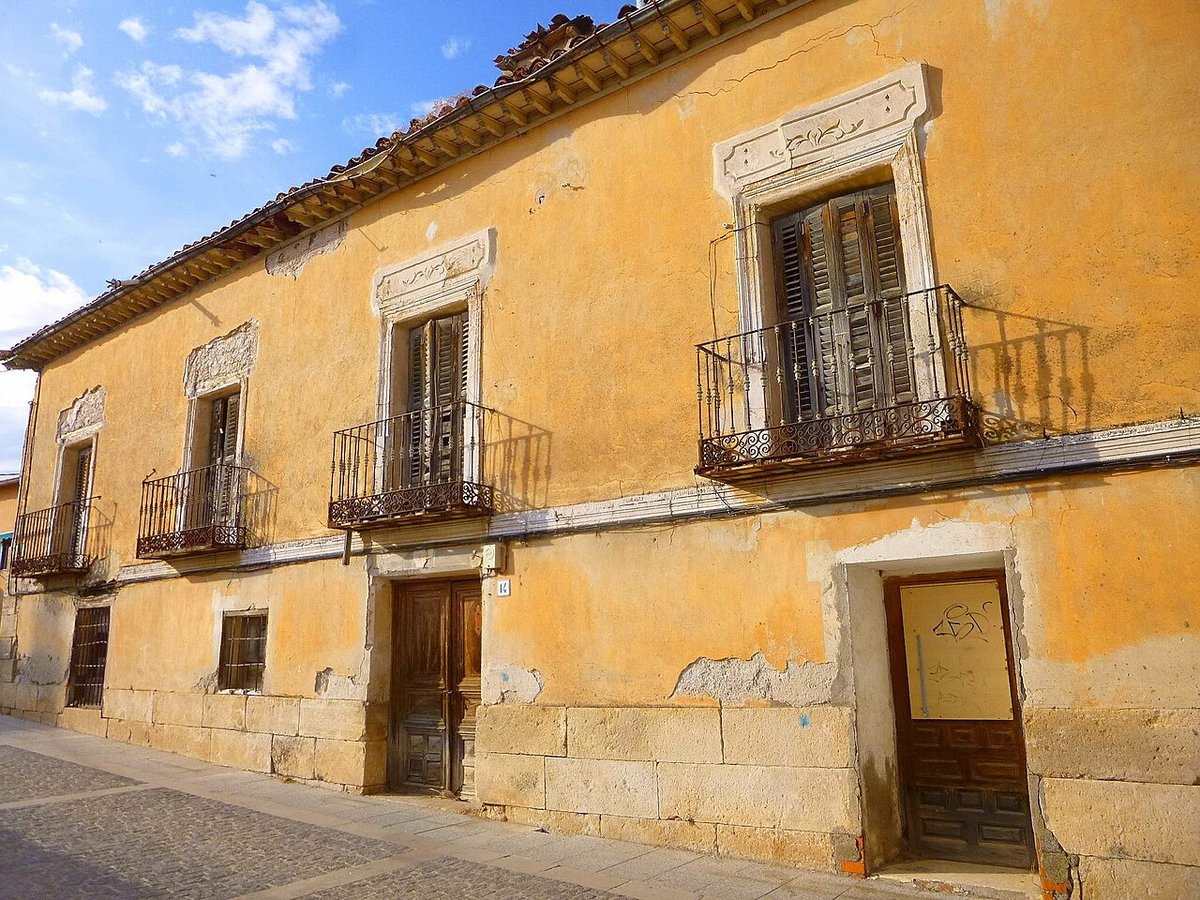
The historic centre is walkable. Take time to look at the façades; several houses still display the carved coats of arms of families like the Cisneros, Arteaga, or Zapata, marking their influence from the 15th to 17th centuries.
The church of Santa María Magdalena rewards a slow visit. Morning light through the rose window in the transept makes it easier to see the details inside. The main altarpiece is Renaissance.