Full Article
about Valdemanco
Mountain village in a granite valley; known for its roast kid and quarries.
Hide article Read full article
A village shaped by altitude
Valdemanco makes most sense when read through its landscape. The village sits on the northern slope of the Sierra de Madrid, about 75 kilometres from the capital, at roughly 1,125 metres above sea level. Altitude and exposure matter here. The climate, along with the surrounding woodland, has influenced how the settlement grew and how it still feels today.
Its origins are tied to farming, livestock and the use of nearby pine forests. That history remains visible in the layout of the old centre. Streets are narrow and tend to gather around a central square, following a practical logic rather than a grand plan. Beyond the last houses, the terrain opens into pine woods and stands of rebollares, a type of oak that shifts noticeably with the seasons. In winter, frost is a real presence, especially in open ground where there is little shelter.
This relationship between settlement and environment gives Valdemanco a clear identity. Nothing appears accidental. Materials, orientation and spacing all respond to long, cold winters and the need to make the most of available resources.
The square and the church of San Pedro
At the heart of the village stands the parish church of San Pedro Apóstol. Its origins date back to the 16th century, although it has undergone later alterations. The building seen today reflects, in part, changes introduced in the 18th century.
The church is modest in design. Stone walls, wooden carpentry and minimal decoration define its appearance. It follows a pattern seen across many villages in the Sierra de Madrid, where religious buildings were built to serve rather than impress.
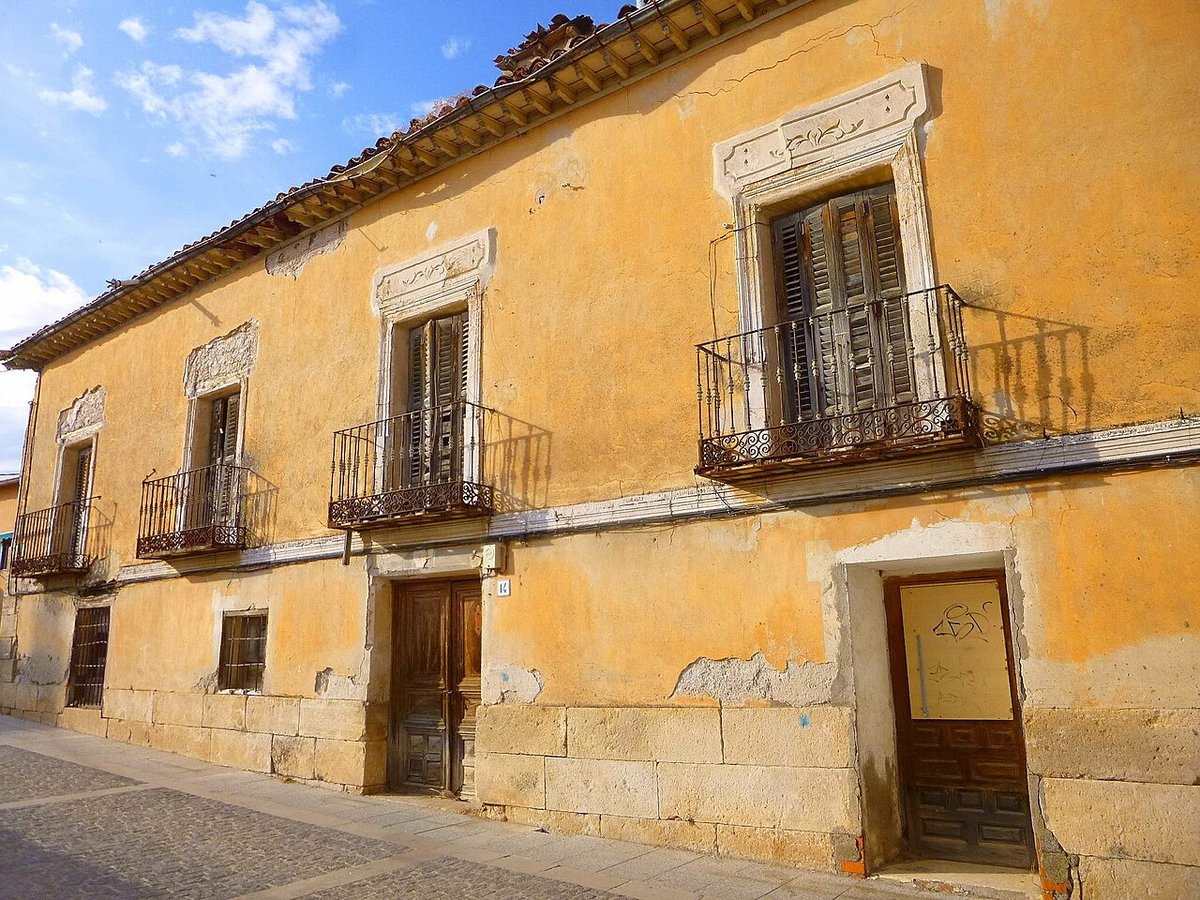
The square around it functions as an everyday space rather than a formal showpiece. It is bordered by masonry houses, many with wooden balconies and traditional curved roof tiles. These elements are not decorative flourishes but practical responses to the mountain climate. Sloping roofs help deal with snow and rain, while balconies make use of light without exposing interiors to the cold.
Walking through this area reveals different stages of construction. Older stone houses stand alongside more recent additions, showing how the village has adapted without breaking completely from its past.
Pine woods and open dehesa
Just beyond the edge of the built-up area, the landscape changes quickly. Pine woods begin almost immediately after the last row of houses. Paths lead out with little transition, making it easy to move from village streets into open countryside.
One of the best-known nearby spaces is the Dehesa Bonita, located to the north. A dehesa in Spain refers to a type of managed landscape, usually with scattered trees and open grazing land. Here, the terrain alternates between clearings and areas of woodland. It is not a dense forest. This balance allows for a clear view of the contours of the land and the lower vegetation.
Walks in this area are generally straightforward, suitable for a relaxed pace rather than demanding hikes. Even so, the ground can be uneven. Loose stones and exposed roots appear along some paths, so solid footwear is advisable.
Seasonal change is easy to notice in these woods. Light shifts, ground cover varies, and the density of foliage alters the experience from one visit to another.
Routes towards the Cerro de San Pedro
Several walking routes begin in Valdemanco, some of which head towards higher parts of the Sierra. Among the most recognisable features in the area is the Cerro de San Pedro, a hill that acts as a visual reference point across this part of northern Madrid.
From its summit, on clear days, it is possible to see a large portion of the surrounding region. The ascent, however, comes with exposure. Wind tends to be strong at the top, and that should be taken into account before setting out.
The nearby pine forests attract mushroom gatherers in autumn. This activity has a long presence in the area, though it is not entirely unrestricted. Some plots of land are subject to limitations, and these should be respected. The landscape here is used as well as enjoyed, and that balance is part of how it has been maintained over time.
Paths leading towards the Cerro vary in length and difficulty, but all share the same gradual transition from village edge to open mountain terrain. Within a short distance, buildings fall away and the sense of space increases.
Local life and annual celebrations
Valdemanco’s calendar is shaped by a series of local festivities that bring together residents and those who return for specific dates. The main celebrations take place around San Pedro, at the end of June. These combine religious observances with activities held in the streets, reflecting both tradition and community life.
In August, summer festivities are usually held. These have a more informal character and draw families from the village as well as nearby areas.
September brings a romería dedicated to the Virgen del Rosario. A romería is a type of pilgrimage or communal outing, often involving a short journey to a nearby shrine or rural spot. In Valdemanco, it retains a distinctly popular tone, with strong local participation.
During the Christmas period, nativity scenes appear and traditional songs are organised by residents themselves. These moments offer a glimpse into how the village maintains its customs without turning them into spectacle.
A short visit to Valdemanco
The centre of Valdemanco can be explored in a relatively short time. A walk around the Plaza de la Villa reveals the mix of older and newer buildings, along with the materials and forms that define the village. Stone houses sit beside later extensions, creating a layered but coherent whole.
The church of San Pedro helps explain the historical role of the settlement. For centuries, it was not only a religious building but also a social focal point.
If time allows, a short walk towards the Dehesa Bonita or along one of the paths leading to the Cerro de San Pedro adds another dimension to the visit. It takes only a few minutes for the surroundings to shift from built space to open landscape, with the village receding behind.
Access from Madrid is usually via the A‑1 road as far as Buitrago del Lozoya. From there, smaller regional roads cross the Sierra Norte towards Valdemanco. There is also a bus connection from that area, although services are not especially frequent, so it is worth checking in advance.
Valdemanco does not rely on grand sights or large-scale attractions. Its interest lies in how closely the village, its buildings and its surroundings are tied together. That relationship is clear whether walking through the square, following a path into the pines or looking out from higher ground.