Full Article
about Villavieja del Lozoya
Mountain village restored with charm; it preserves a unique Mudéjar arch in the area.
Hide article Read full article
A quiet turn in the road
Villavieja del Lozoya is the sort of place people come across almost by accident, often after passing Buitrago and continuing a few kilometres further along the road. It feels like one of those spontaneous detours where you pull off just to see what is there, then end up parking on a silent street where very little happens.
There are no headline sights or landmark monuments. What defines the village is something simpler: stillness, stone buildings, and the slower rhythm typical of the Sierra Norte, a noticeable contrast with Madrid. Even the loudest sound can seem to be the wind moving through the trees, which says quite a lot if you arrive from the city.
A small and grounded village centre
The heart of Villavieja del Lozoya revolves around the parish church of San Miguel Arcángel. Local records usually date its construction to around the 16th century. It is not an imposing structure. Instead, it has the look of a mountain village church, built in stone, solid and without elaborate decoration.
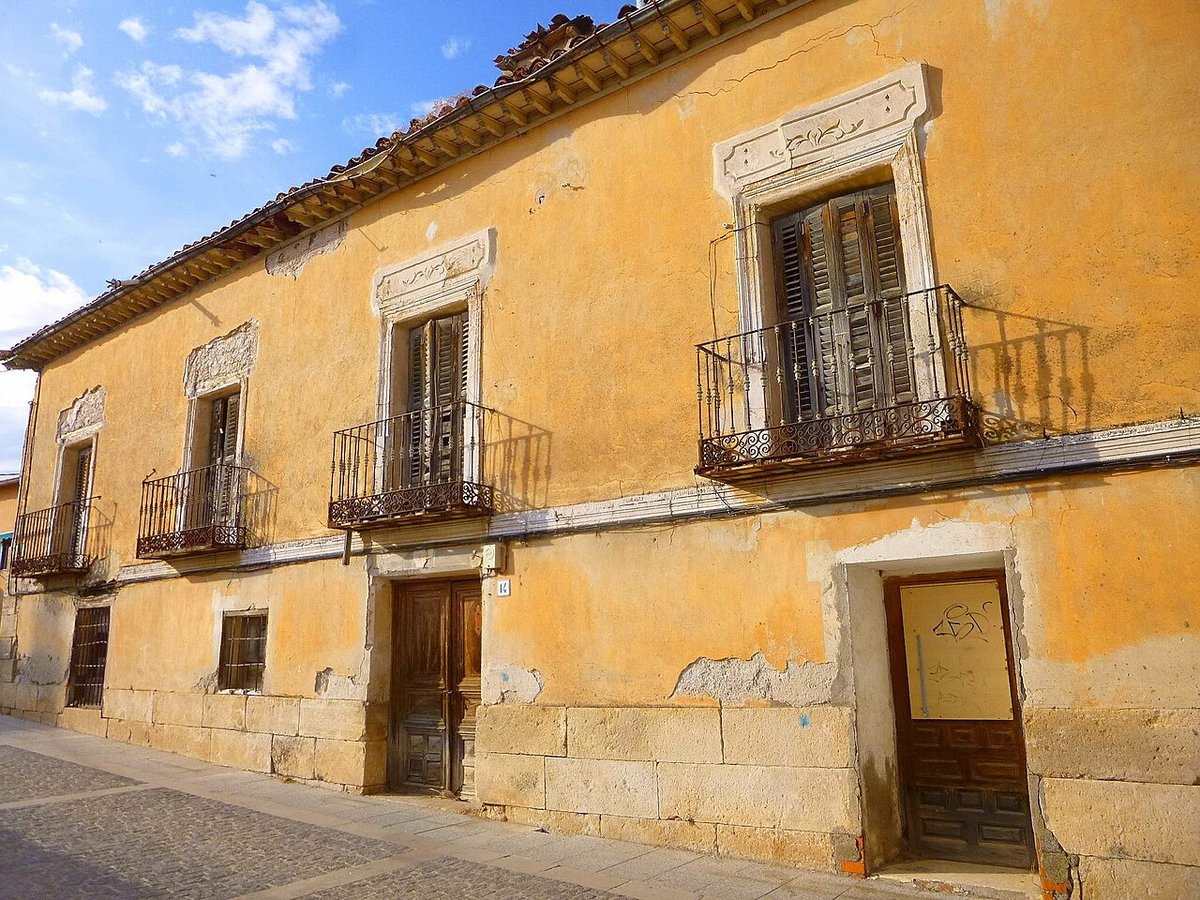
A handful of short streets branch out from the church. Along them, traditional features remain easy to spot: masonry houses, thick wooden gates and interior courtyards that are only partly visible from outside. Some façades carry small details that catch the eye, such as carved lintels or uneven windows, while ivy slowly spreads across certain walls.
There is no single large square where everything gathers. The layout is more informal, with small open pockets between streets that might hold a couple of parked cars, a fountain or just a bit of space to pause. The entire centre can be explored in five or ten minutes, which often feels just right.
Paths and open countryside
Walking out from Villavieja del Lozoya takes very little effort. The last houses give way quickly to open meadows, patches of Pyrenean oak and occasional pine trees scattered across the landscape. It is not high mountain terrain, but it clearly belongs to the Sierra Norte: gently undulating, quiet, with wide skies.
The paths around the village tend to be tracks or trails used by locals and livestock. Signposting is not always consistent, so a map or GPS can be useful if the walk turns into something longer. After rainy days, the ground can become slippery in places.
A bit of patience often rewards anyone who stops and stays still for a while. Movement in the undergrowth is not unusual, with roe deer in the area and birds of prey that appear gliding overhead towards the end of the day.
Local life and celebrations
Festivities in Villavieja del Lozoya keep a distinctly local feel. The celebration dedicated to San Miguel Arcángel usually takes place at the end of September and brings the liveliest atmosphere of the year. There is music, organised activities and the return of neighbours who live elsewhere but come back for those days.
August tends to include more informal events arranged by residents themselves. Traditional games, shared outdoor meals and evening gatherings in the street become common once the heat of the day fades.
For the rest of the year, the pace slows considerably. Winter can be particularly quiet, with low temperatures that push daily life indoors rather than out onto the streets.
A short walk that delivers
One of the easiest ways to get a sense of Villavieja is simply to park near the entrance and wander without a fixed plan towards the church. Along the way, there are chimneys, stone walls and small vegetable plots tucked up against houses.
Any of the paths leading out towards the surrounding meadows quickly open up views across the Lozoya valley. There is no need for long routes or steep climbs to understand the landscape here. The setting reveals itself with very little effort.
A relaxed walk of about an hour is usually enough. There is no pressure to rush or to keep checking the time.
How long to spend
Villavieja del Lozoya is not a place that demands a full day of activities, and it does not try to be. The village can be seen quite quickly.
It works best as part of a wider plan in the Sierra Norte. Many visitors stop here for a walk, stretch their legs, and then continue exploring other nearby places. That approach fits the scale and atmosphere of the village well.
Some places function better as a pause than as a main destination, and this is one of them.
When to go
Autumn suits the Lozoya valley particularly well. The oak trees begin to change colour, and the air turns cool while remaining pleasant enough for walking.
Summer afternoons are usually easier to handle than in Madrid, although temperatures drop after sunset and a light layer comes in handy. Winter brings a different mood altogether, with cold days, occasional frosts and, at times, snowfall.
Getting there and what to expect
Villavieja del Lozoya lies just over an hour by car from Madrid. The usual route passes through Buitrago del Lozoya and continues along the winding roads of the Sierra Norte.
It is not a place people pass through by chance in large numbers. Most visitors arrive because they are already exploring the region or looking for a small village with very little activity.
Accommodation within the village itself is limited or may not be available depending on the time of year. Nearby villages in the area generally offer more options.