Full Article
about Aldea del Fresno
Known as Madrid’s beach for its Alberche river swimming spots; a popular riverside natural area.
Hide article Read full article
Where the landscape sets the pace
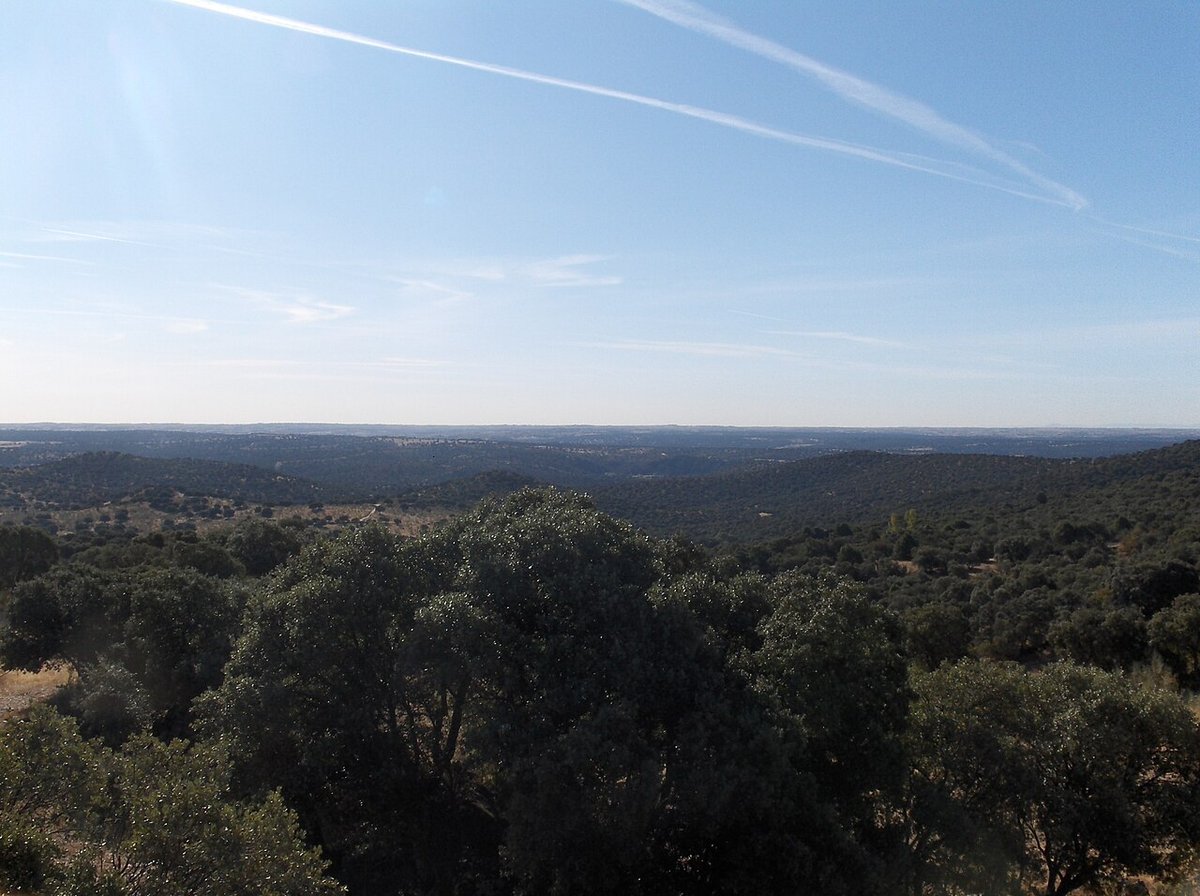
Aldea del Fresno makes the most sense when seen on a map. The town sits where the Alberche and the Perales begin to widen into a valley, far from the narrow gorges of the mountains. The Alberche still carries the force of water descending from Gredos, yet here it spreads out, creating sandy banks. In summer, those stretches draw many people from Madrid who want to be close to water without travelling far from the capital.
That close link with the rivers explains much of the town’s character. Settlement patterns, riverside खेती and everyday routines all follow their course. Even the name reflects this setting. Fresnos, or ash trees, were once common along the damp riverbanks of central Spain. A small settlement grew among them and eventually took its name from those trees.
Land, power and the parish church
Like many places in the south-west of the Madrid region, Aldea del Fresno appears in medieval records tied to repopulation efforts and the organisation of land under larger councils. Over time, control shifted into the hands of noble families. These lands attracted attention for practical reasons: pasture, water sources, and the hunting grounds of the nearby hills.
The parish church of San Pedro stands above the town centre. Its position gives it a clear presence from a distance. Compared with other churches in the area, the current building is relatively recent, shaped by successive reforms and rebuilding over the centuries. The tower is its most visible feature. Inside, there is a neoclassical-style altarpiece along with several religious images that still form part of local devotion. These figures are brought out in procession during the patron saint festivities.
The area around the church offers a broad view over the Alberche valley. From there, the logic of the settlement becomes clear. The town developed close to the river but on slightly higher ground, avoiding the risk of flooding.
The Perales waterwheel
A short distance from the town centre, following the course of the Perales, stands an old irrigation waterwheel. Such hydraulic devices were once common in the fertile lowlands of central and southern Spain, though few remain today.
The structure preserves the traditional system of a wheel fitted with containers that lifted water up towards nearby खेत. It is not always in motion, yet it still gives a clear sense of how irrigation worked before modern systems took over. Around it, the layout of plots can still be recognised, areas that were long used for riverside agriculture.
The surrounding hills appear in medieval hunting texts, where animals such as wild boar were frequently mentioned. These species are still present in the area today, maintaining a link between past and present landscapes.
Echoes of the old railway
In the late nineteenth century, the railway reached this stretch of the Alberche valley. A line connected Madrid with the western part of the province of Toledo. The nearest stop lay a few kilometres from the town itself, but it shaped movement and transport of goods for decades.
That line disappeared in the mid-twentieth century. Its route has not vanished completely. It can still be traced as a wide dirt path that some residents use for walking or cycling. From time to time, proposals emerge to convert it into a greenway. The idea has circulated for years, moving through different stages without a final outcome.
Rivers on the table
The presence of the Alberche and the Perales also shapes how people eat in Aldea del Fresno. The fertile plains have supported small-scale खेती and cereal crops, while the nearby hills sustain livestock.
Roast lamb often appears at family gatherings and weekend meals. It is usually cooked over holm oak wood, a detail that influences the flavour. Legume stews remain common in colder months, still prepared in many households. During Holy Week, dishes based on cod reflect long-standing fasting traditions associated with that period.
Beekeeping also has a place in the surrounding hills. Honey is typically sold directly by producers, with small batches linked to individual beekeepers rather than large-scale distribution.
Walking the town and reaching the water
Aldea del Fresno is easy to explore on foot. The parish church, a handful of central streets, and the river surroundings hold most of the points of interest. Distances are short, and the layout remains straightforward.
Simple paths lead from the town towards the banks of the Alberche. In summer, many people head to the natural bathing spots that form along the river. The water tends to stay cool even during the hottest days. The ground alternates between sand and stretches of rounded stones, so practical footwear makes a difference.
The town lies just over an hour by road from Madrid, depending on traffic. Travelling by car is the most practical option. Once there, most places can be reached on foot without difficulty.