Full Article
about Cadalso de los Vidrios
Historic town ringed by vineyards and pine woods; known for its palace and its garnacha wines.
Hide article Read full article
A place people have heard of, but rarely place
There are towns that seem to exist mainly so that people from Madrid can say “I’ve got a place in the mountains” without anyone being entirely sure where that is. Cadalso de los Vidrios fits that idea quite well. Many recognise the name, fewer can point to it on a map. Ask where it is and the answer often circles around nearby places: somewhere past Robledo, almost towards San Martín de Valdeiglesias.
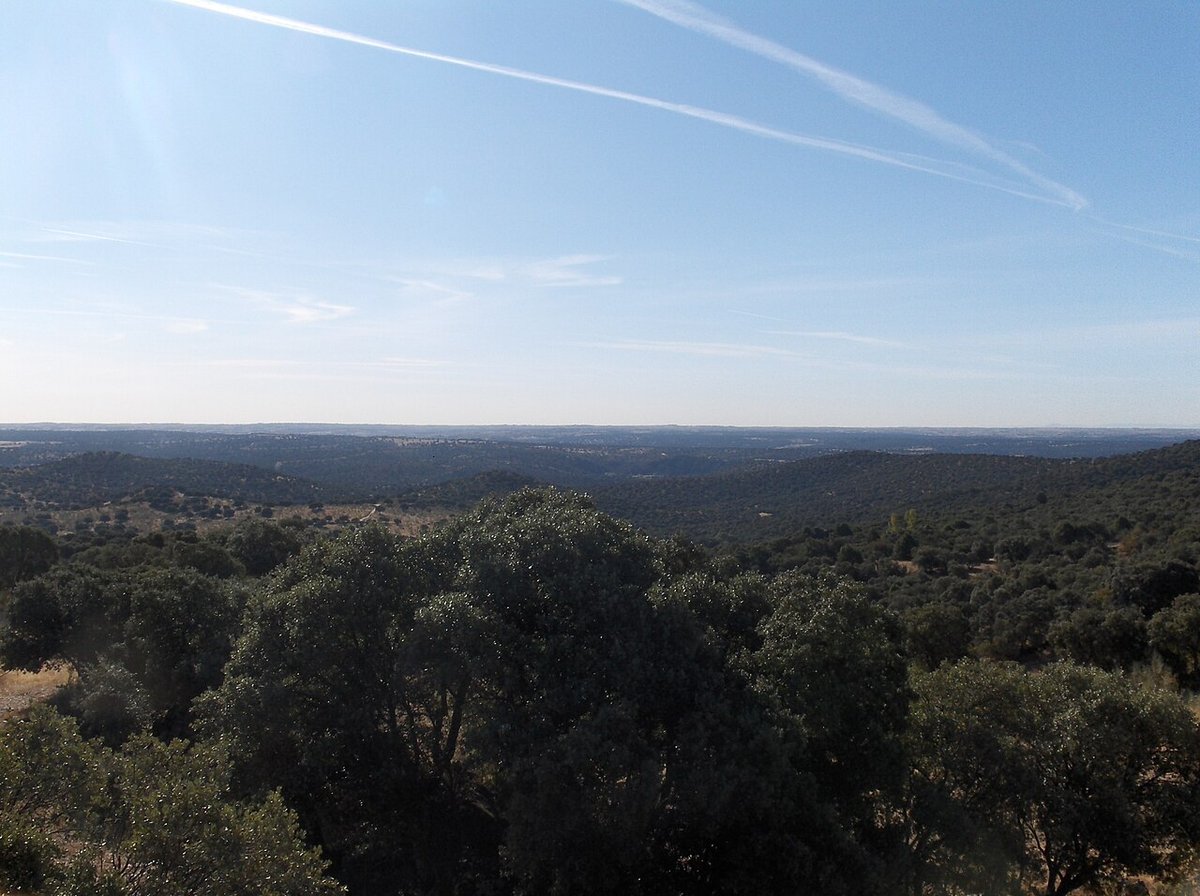
The approach comes via the M‑501, a long road that feels as though it is heading nowhere in particular until houses begin to appear and you realise you have arrived. It is about 75 kilometres from Madrid, an easy enough journey unless you end up behind one of the granite lorries that are still a common sight here. Along the way, holm oaks, quarries and gentle bends introduce the landscape of the western sierra little by little.
Glass for a royal pharmacy
One of the first things that stands out in Cadalso is how little effort it makes to present itself as a tourist destination. The centre has no obvious souvenir shops or signs designed for quick photos. Its history runs on a quieter track.
For centuries, the town had a tradition of glassmaking. It is often said that pieces produced here found their way to the Real Botica of the monastery of El Escorial, the royal pharmacy. These were not decorative objects but practical ones: jars, laboratory containers, everyday tools for scientific and medical use at the time. The industry disappeared long ago, yet the name of the town still carries that memory.
The old quarter follows the slope of the land, as is typical in this part of the sierra. Streets climb, others drop, and cars edge into whatever space they can find. At the top sits the Iglesia de la Asunción, a 16th‑century building that continues to anchor the centre. Nearby is the main square, where daily life unfolds with little fuss and plenty of familiar faces greeting one another in passing.
Stone that travelled far
Another detail often surprises first-time visitors. Granite from Cadalso was used in parts of the Sagrada Familia in Barcelona. It is not something the town advertises at every turn, yet it remains part of local memory.
There is a small monument dedicated to the stonemasons, a trade that provided work for many people in the area over several decades. Quarrying no longer has the intensity it once did, though lorries carrying stone can still be seen heading out towards the road.
The presence of these quarries has shaped both the landscape and the rhythm of the place. It is a reminder that, beyond its calm appearance, Cadalso has long been connected to work that reached well beyond its immediate surroundings.
Short walks into the surrounding hills
For those who feel like a walk without too much effort, there are several short routes around the area.
One of the best known is the Ruta de la Peña, which runs for roughly four kilometres there and back and follows the Arroyo Boquerón. This is not a walk of dramatic viewpoints or high summits. Instead, it is defined by quieter elements: the sound of water, the presence of oak trees, stretches where very little interrupts the silence. At times, grazing animals appear, watching passers-by with mild curiosity.
Another option is the Senda de las Viñas. The name suggests a landscape dominated by vineyards, although in some sections today pine forest and scrubland take over. Even so, the route offers a good sense of the surroundings: open countryside, the scent of rosemary when the sun is strong, and a level of calm that holds even at weekends.
These paths are not about ticking off landmarks. They are simple ways to spend time outdoors, with just enough variety to keep the walk interesting without demanding much planning.
Easter Monday and the hornazo
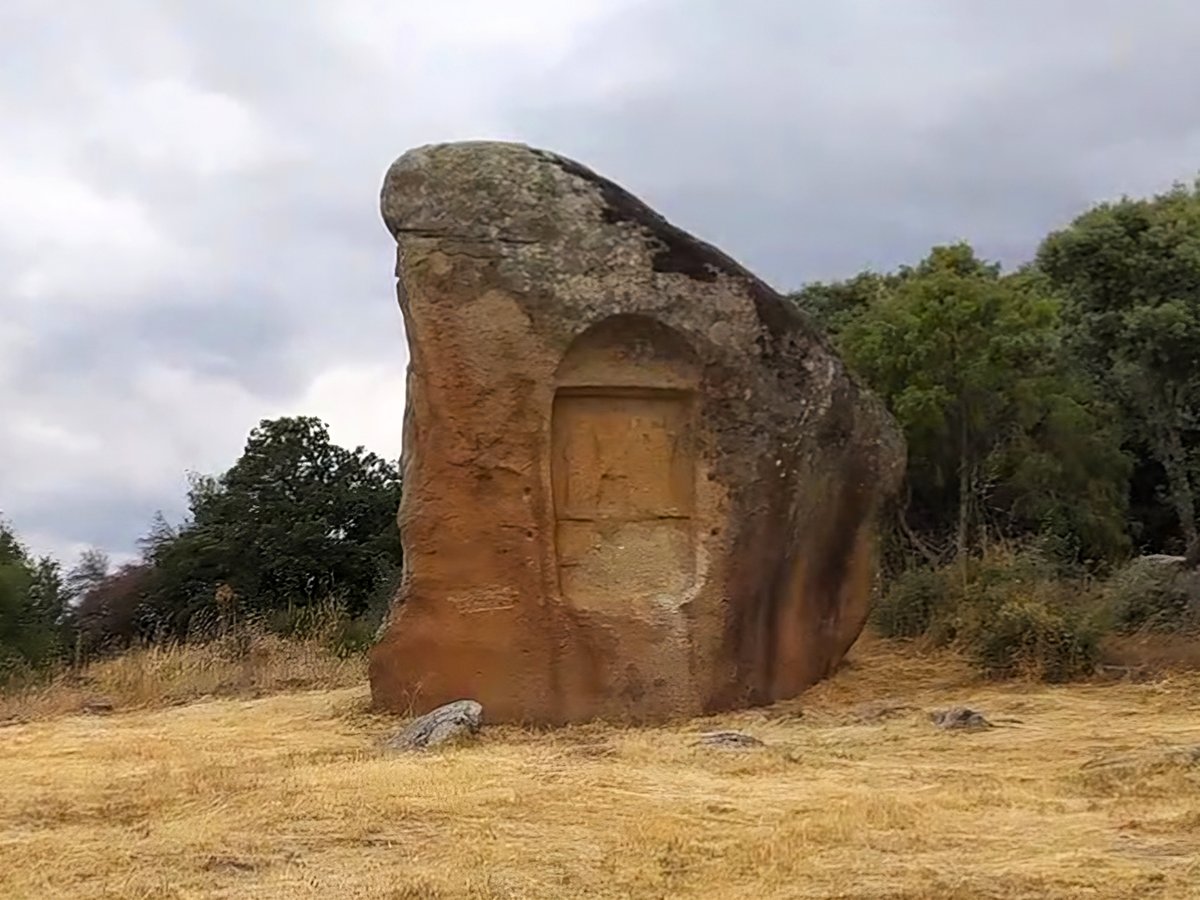
A visit in spring may coincide with one of the most recognisable local traditions: the hornazo of Easter Monday. On that day, many residents head up to Peña Muñana, a nearby rise where families and groups of friends gather to spend the day outdoors.
The hornazo is a sweet bread with a whole boiled egg baked inside. On paper it can sound unusual, yet it has been part of local cooking for generations. Each household has its own version, and comparisons are part of the ritual. Some will insist theirs uses more lard, others point to a stronger touch of aniseed.
This is not an event organised with visitors in mind. It is closer to a shared outdoor meal. People bring their own food, share what they have, and let the day unfold without much structure or urgency.
A place that keeps its own pace
Cadalso de los Vidrios is unlikely to impress within the first few minutes. There is no postcard castle, no viewpoint filled with people taking photos. What it offers is something less immediate: a steady rhythm and a strong sense of everyday life.
Neighbours greet each other in the street. Children still play in the square. Conversations stretch out on benches as though time is not especially pressing.
Anyone arriving in search of a destination packed with attractions may find it underwhelming. Those looking for a few quiet hours, a short walk in the nearby hills, and a simple stop afterwards for food and a glass of local wine will find it works well.
A straightforward plan suits the place best: arrive in the morning, take one of the short routes, then return to the centre and sit down for something to eat without expecting anything elaborate. The approach here is direct. Traditional dishes, wine from the area, and unhurried conversation set the tone.
On the way back to Madrid, once the holm oaks thin out and the M‑501 comes back into view, the impression that lingers is not of a place trying to stand out, but of one content to carry on as it is.