Full Article
about Cenicientos
Madrid’s westernmost municipality; land of wine and bulls, its landscape marking the transition to Gredos.
Hide article Read full article
A corner of Madrid that feels far away
Cenicientos has a reputation that builds slowly. It sits in the far west of the Community of Madrid, quietly surrounded by hills and vineyards, and many people from the region go years without realising it is there. Then someone mentions the vines, or a local winery, and interest suddenly picks up.
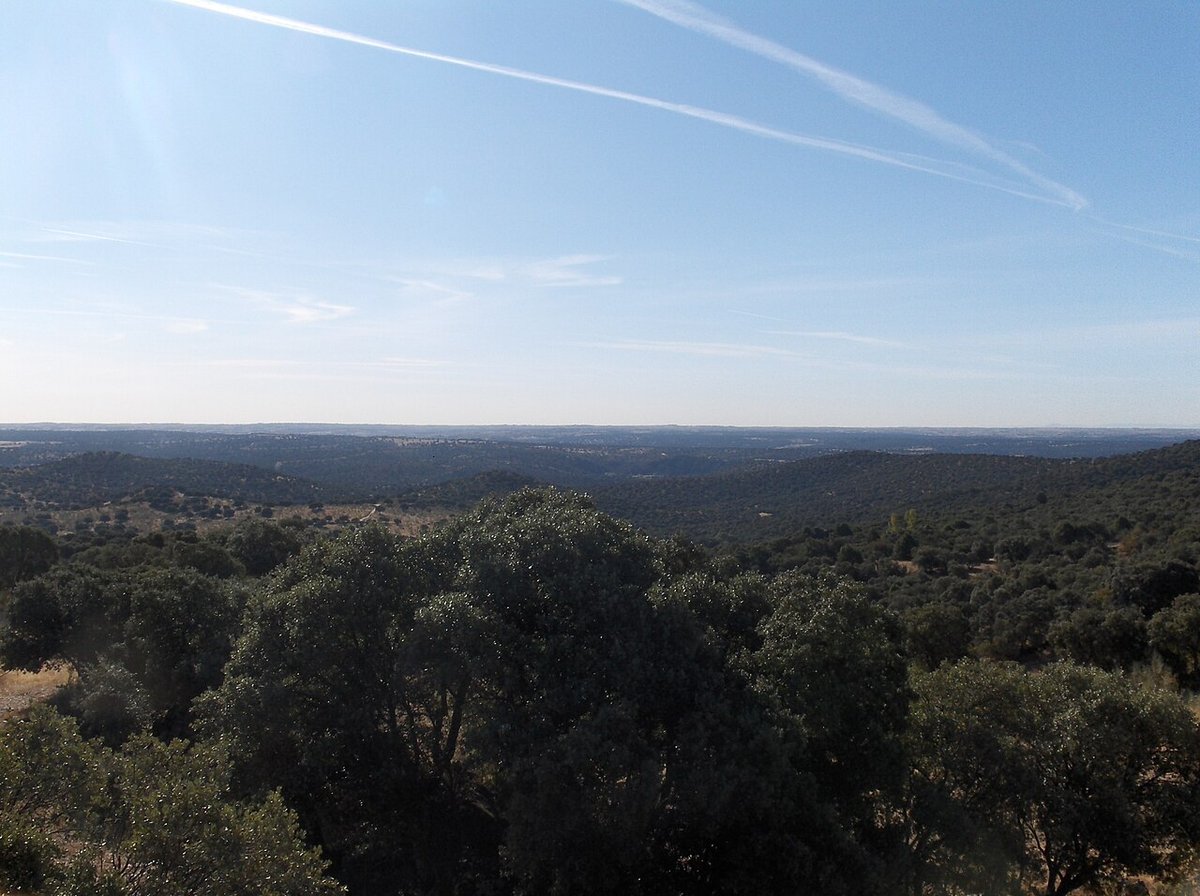
The approach already hints at what makes it different. After leaving the A‑5, the roads become calmer and the surroundings shift almost without notice. Vineyards begin to appear, alongside old olive groves and low scrubland. The atmosphere feels closer to the southwest of Ávila or certain parts of Toledo than to the usual mental image of Madrid.
Cenicientos stands at around 760 metres above sea level and covers a relatively large area for this part of the region. The centre is easy to explore in a single afternoon, though the slopes encourage a slower pace. Stone houses line the streets, and there are corners where daily life continues without hurry. The main square is one of those places where people sit and watch who comes and goes. Spend a little time there and the rhythm becomes clear: things move differently here.
La Piedra Escrita: Rome in the open landscape
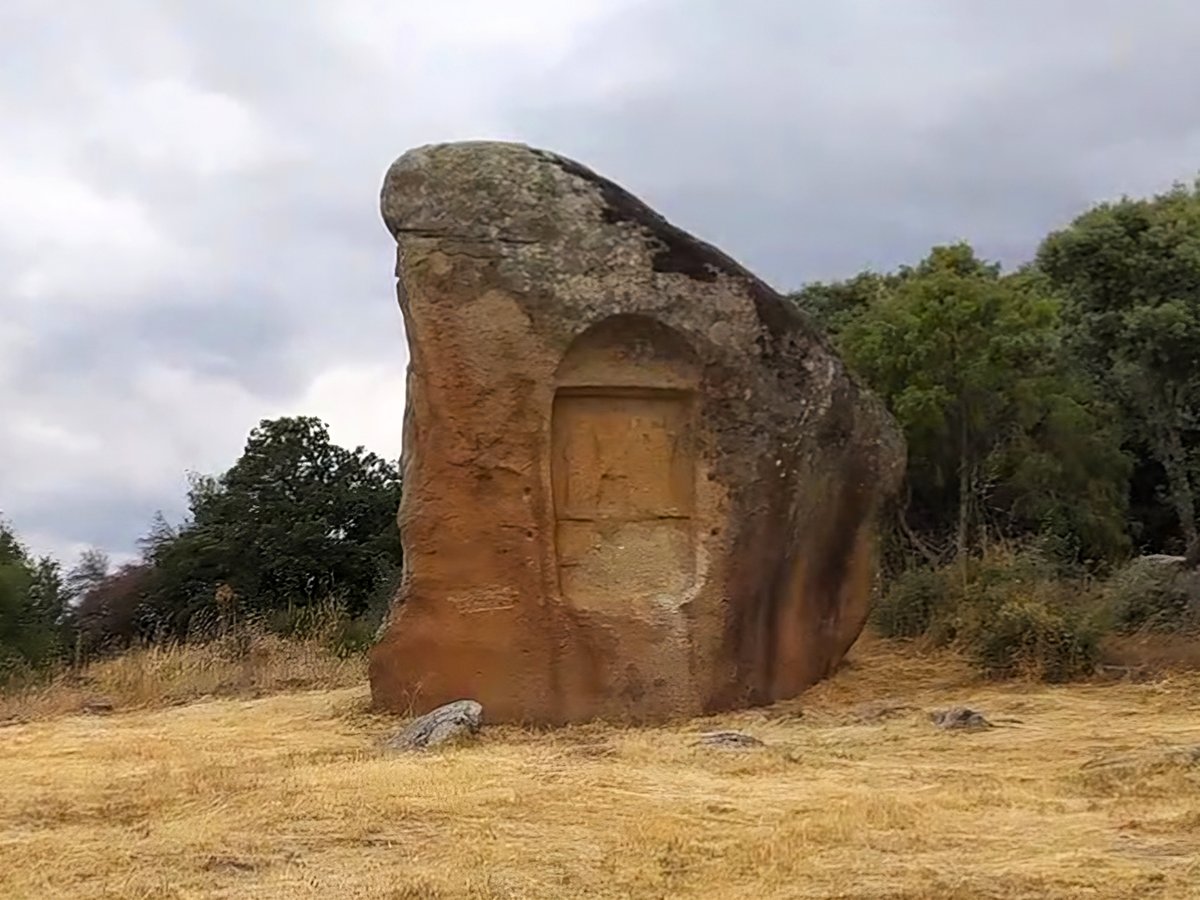
Just over a kilometre from the village lies one of its most distinctive sites, the Piedra Escrita.
This is a Roman rock sanctuary, usually dated to around the 2nd century, dedicated to the goddess Diana. Rather than a built structure, it consists of a large stone with reliefs carved directly into its surface. It does not resemble a classical monument with columns or grand architecture. The impact comes from something else: standing in front of it, it is hard not to think about the people who climbed to this same spot nearly two thousand years ago to leave their offering.
The walk to the Piedra Escrita can be done on foot from the village, or partly by track with a short stretch on foot at the end. The route is simple and quiet, with holm oaks around and very little noise. It is the kind of place where visits tend to last longer than expected.
From San Esteban de la Encina to Cenicientos
The village has not always carried its current name. For centuries it was known as San Esteban de la Encina, a name much more typical of the period.
The change to Cenicientos is often explained through a story that circulates locally as a legend. According to this version, Alfonso VII once asked how many inhabitants the place had. The mayor replied with something along the lines of: “with a hundred and hundreds, you can count on them, my lord”. Over time, that phrase is said to have evolved into the present name. Whether or not the tale is accurate remains unclear, but it has been passed down for generations.
There is another detail that tends to catch visitors off guard. Residents are not called cenicientenses, but coruchos. It may sound unusual at first, yet it quickly becomes apparent that the term is used with a certain pride.
Food from the Sierra Oeste
The cooking in Cenicientos draws on the traditions of the Sierra Oeste and on ingredients that have long been part of local life.
One of the most frequently mentioned dishes is gazpacho de matanza. Despite the name, it has nothing in common with the cold Andalusian soup. This is a hot, substantial dish made with bread, broth and pork. It belongs to a style of cooking designed to sustain long working days outdoors.
Migas also appear regularly, sometimes served with grapes or with torreznos. Alongside them are slow-cooked stews prepared in a pot and left to simmer for hours. These are meals that favour patience over complexity.
When festivals or celebrations arrive, rosquillas de vino come into play. These small pastries are closely tied to local tradition and appear at specific moments in the calendar.
There is nothing elaborate or modern about this food. It is straightforward, rooted in the area, and intended to satisfy.
Dates when the village fills again
For much of the year, Cenicientos remains quiet. That changes on certain dates, when the population increases noticeably.
In September, the village celebrates festivities in honour of the Virgen del Roble. The devotion is linked to the hill that rises above the settlement. During these days, many people return: relatives, former residents, and those who still maintain a connection to the area.
Another important moment comes with the romería on the first Sunday of May. People head towards the surroundings of the sanctuary, combining the religious aspect with a day spent outdoors.
Then, on 26 December, shortly after Christmas, comes the feast of San Esteban, the patron saint. It is an unusual time of year for patronal celebrations, yet here it remains firmly established.
A simple reason to come
Cenicientos does not compete with the most photographed villages in the Madrid mountains. There is no large castle or a historic centre packed with monuments that take hours to work through.
The appeal lies elsewhere. The vineyards that stretch around the village, the presence of the Piedra Escrita, and an atmosphere shaped more by everyday life than by tourism all play their part.
A visit follows a straightforward plan. Walk through the streets at an unhurried pace, head out to the Roman sanctuary, and take one of the paths leading towards the surrounding hills. Then sit down to eat without rushing. That is enough to fill a long half day or a calm short break, with no need to complicate it further.