Full Article
about Navalagamella
A village ringed by holm-oak groves and Civil War bunkers; a natural lookout toward the sierra.
Hide article Read full article
A change in the landscape
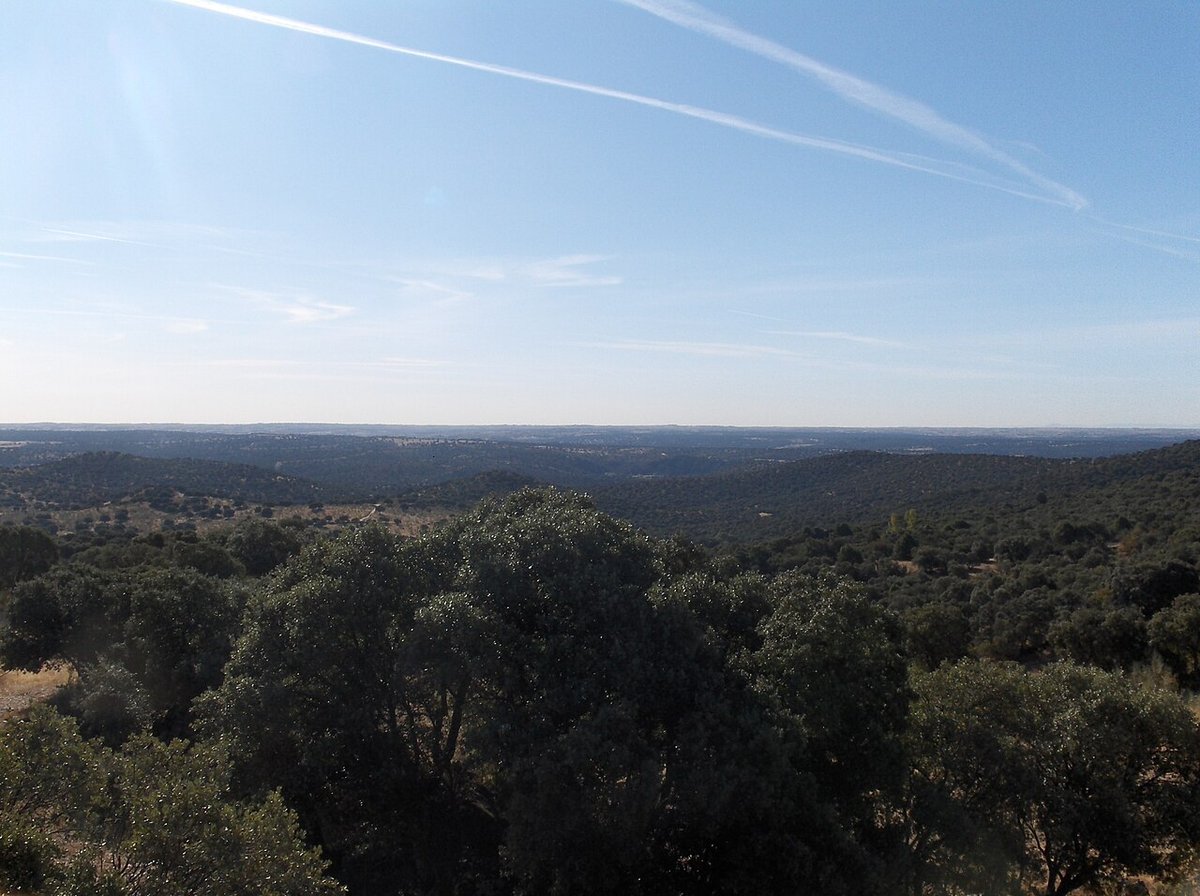
About 47 kilometres from Madrid, the scenery begins to shift once the denser edges of the metropolitan area fall away. The road opens out into holm oak groves and gentle hills, and in that transition Navalagamella comes into view. The village sits in a nava, a flat basin within the mountains, at more than 700 metres above sea level. Its name reflects that setting. This small plateau offered nearby water and a degree of natural shelter, enough to support a stable settlement after the medieval repopulation of what is now the Sierra Oeste.
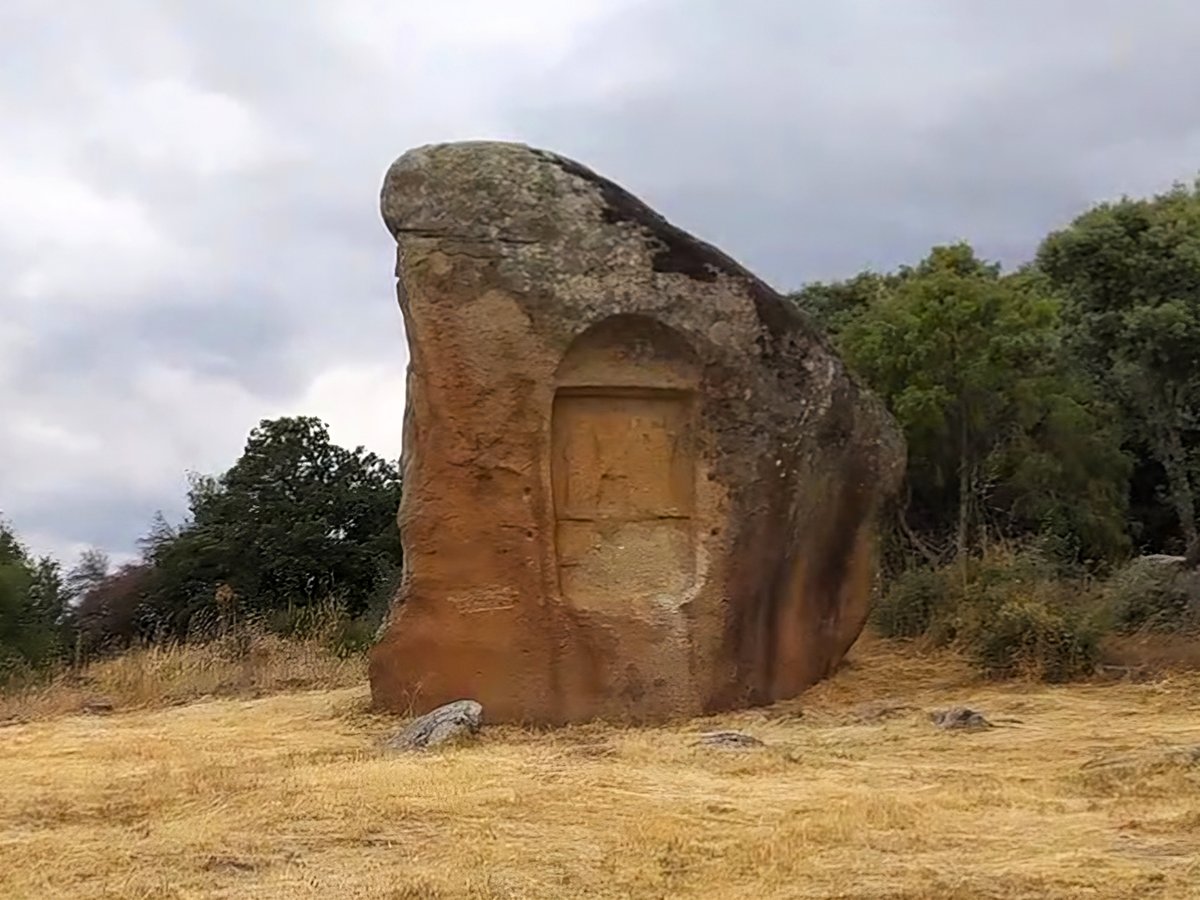
Granite defines the place. The stone is close at hand and has been used for centuries, shaping both houses and streets. There are no grand façades or monumental squares. Navalagamella grew in a practical way, making use of what the land provided rather than reshaping it.
When Navalagamella became a villa
During the Early Modern period, the village gained importance within the surrounding territory. As happened in many Castilian settlements, residents raised funds to buy from the Crown the title of villa. This was more than a symbolic step. It allowed the community to administer its own justice, hold a market and reduce dependence on nearby jurisdictions.
The document confirming this status is still kept in the municipal archive. It reflects a broader pattern seen across rural Castile, where communities that were not major urban centres nevertheless reached a level of population and economic activity that enabled them to seek greater autonomy.
The church and the historic centre
The church of Nuestra Señora de la Estrella occupies the highest part of the village. Its tower, visible from the approaches, works as a clear point of reference. The building seen today is the result of several construction phases. Its origins appear to date back to the late Middle Ages, with later extensions adapting the structure to changing needs.
Rather than focusing on a richly decorated interior, what stands out is how the church relates to its surroundings. The perimeter creates a small, irregular square where space feels carefully measured. Houses cluster close to the granite walls, and the area preserves the traditional scale of the village.
Near Calle Real, a Gothic arch survives from what was once an inn. Routes towards El Escorial passed relatively close by, and for centuries villages like Navalagamella served as stopping points for muleteers and travellers. The arch remains because it became part of a later dwelling.
The Torre del Reloj completes this walk through the centre. Its structure combines masonry and brick, the result of later additions over time. The bells still mark the hours and can be heard across much of the village.
The Perales river and working buildings
The river Perales runs through the municipality before heading towards the Tagus valley. For a long time its flow powered several flour mills. Today, the buildings remain along with some elements of their machinery.
A signposted route follows the course of the river and links several of these mills. They are not monumental constructions. These are working buildings, built from local stone and designed to make use of the water’s force. Walking along this stretch of the Perales offers a way to understand how the rural economy functioned here well into the last century.
Some of these paths coincide with older routes that once connected villages across the mountains. In places, the stone surfaces worn by pack animals are still visible, marking centuries of movement through the landscape.
Hermitages, schools and everyday memory
Beyond the main centre, smaller buildings give insight into daily life in earlier periods. One of them is the hermitage of Santísimo Cristo de la Sangre, located near the Cañada Real Leonesa. This historic drovers’ route was used for seasonal livestock movements, and the presence of a hermitage here is no coincidence. Such places offered rest and a moment of reflection for shepherds and travellers.
Another hermitage, dedicated to San José, was rebuilt after the Spanish Civil War. It keeps the simple form common across villages in the Sierra Oeste, with masonry walls, a small bell gable and an open space in front.
The former school building still shows two separate entrances. For many years, boys and girls used different doors, a system that now feels distant but was standard in public education from the late nineteenth century through much of the twentieth. The building is now used for cultural activities, continuing its role as a shared space within the community.
Festivities and getting there
Local life remains closely tied to traditional celebrations. The festivities in honour of San Miguel Arcángel take place towards the end of September and bring together much of the village’s activity. In winter, there is a custom of gathering in the square to mark the end of the year with a bonfire while the tower bells ring.
Navalagamella is reached by road.