Full Article
about Robledo de Chavela
Home to NASA’s deep-space tracking station; church whose ceiling is painted with dragons.
Hide article Read full article
A town built from the mountain
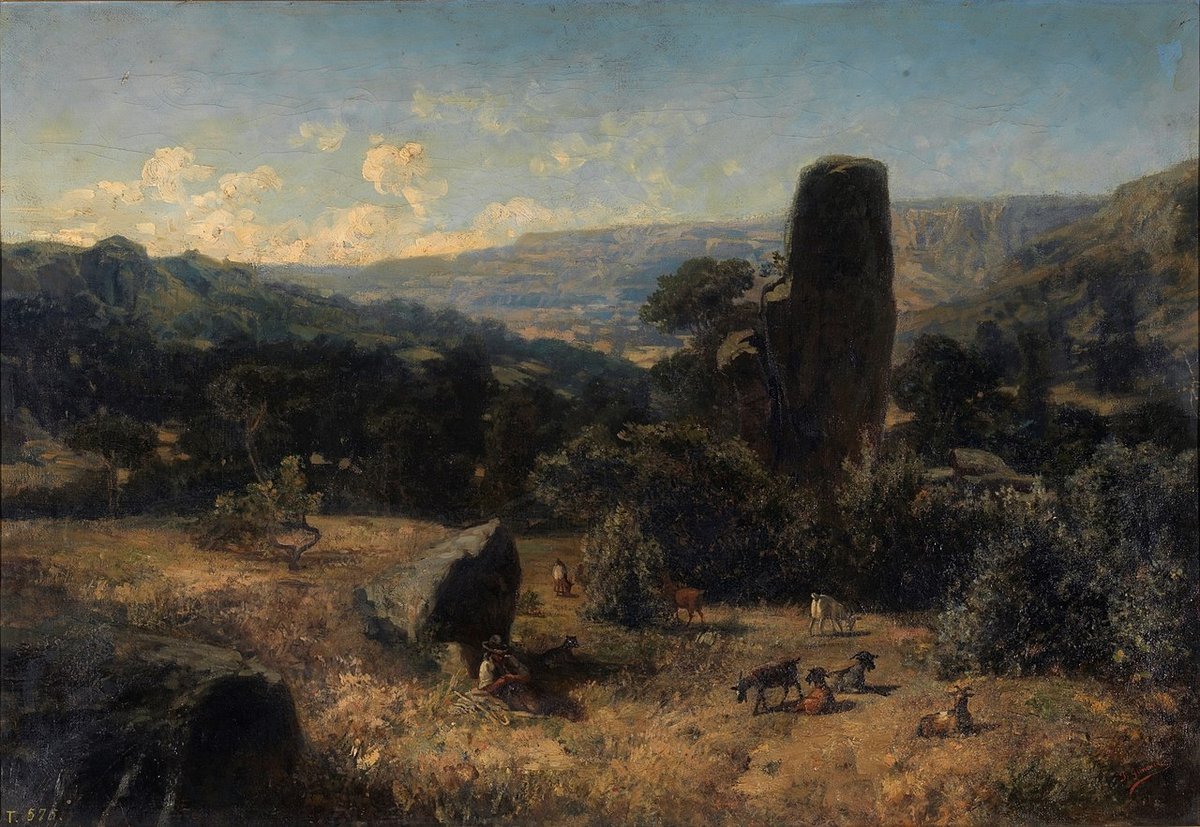
Robledo de Chavela sits at 901 metres in the Sierra Oeste of Madrid. The terrain is rugged, and the town’s character comes from the granite it stands on. The houses are built with that same stone, paired with timber from the local pine forests. Just under five thousand people live here now, but the layout hasn’t lost the logic of an older mountain settlement: streets that climb, thick walls, and small squares that still set the daily rhythm.
Stone for a king and a monastery
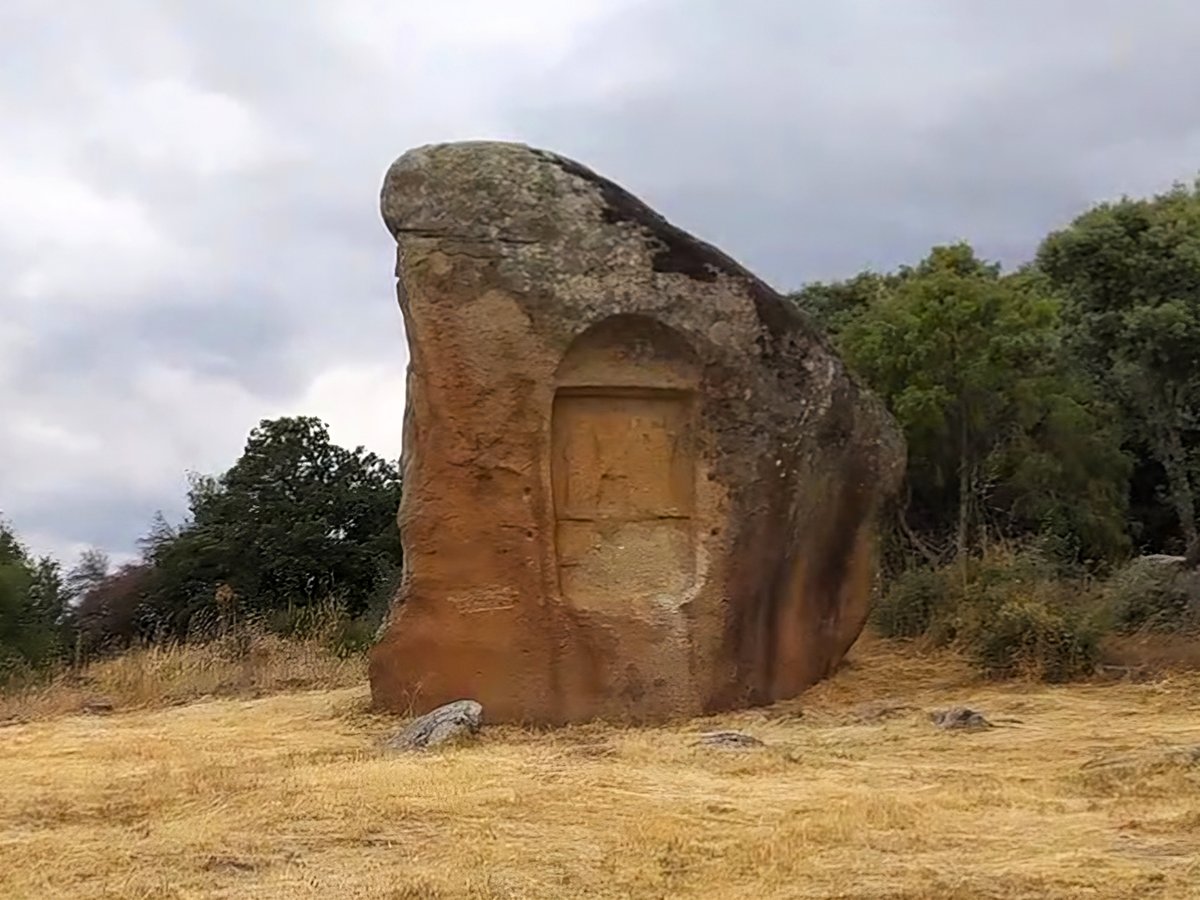
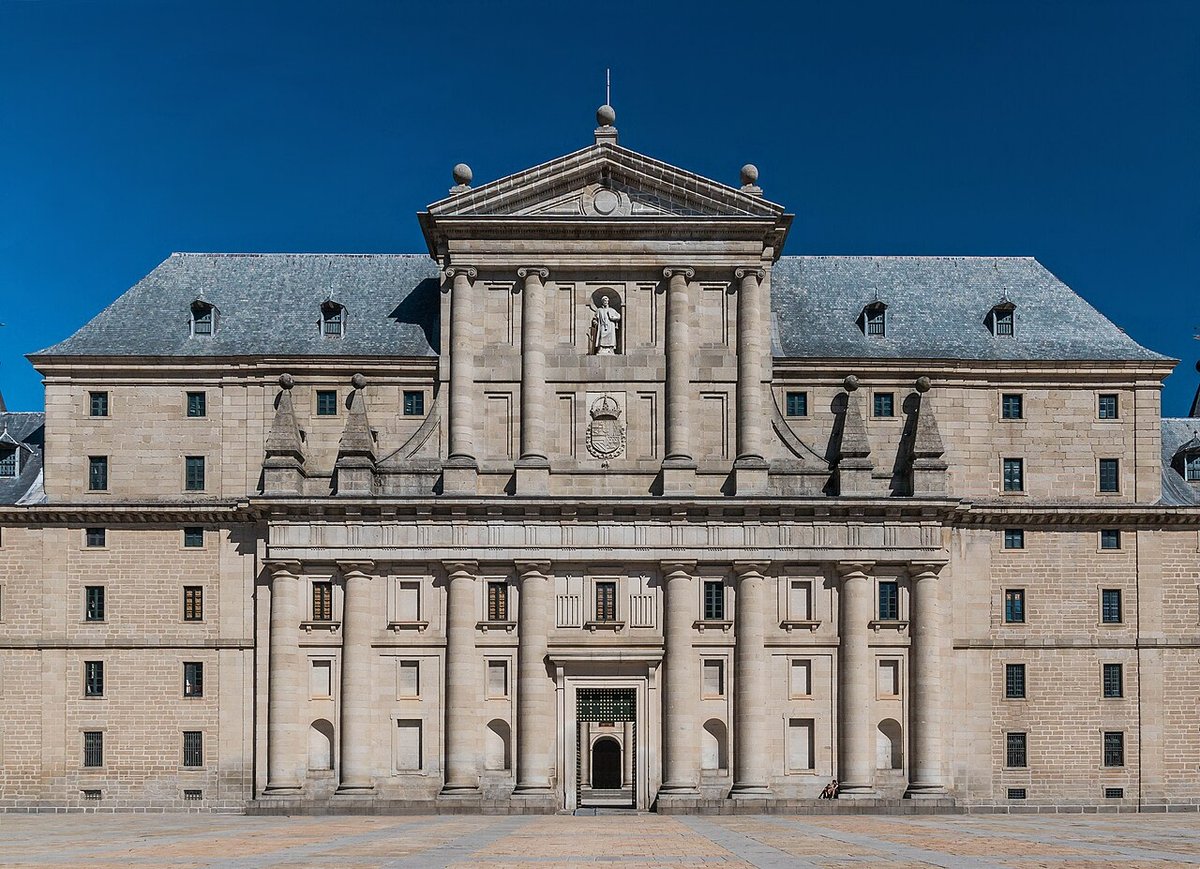
The settlement gained its current form after the medieval repopulation of these hills. From the 13th century, Castilian settlers came for grazing, timber, and water. What secured Robledo de Chavela a footnote in history was its role in building El Escorial. Much of the granite for Philip II’s monastery was quarried nearby, from sites like the Peña del Rey. The local pine forests supplied wood, and remnants of old water channels in the area are traditionally said to have been dug to carry resources toward the construction site. The connection is more oral history than documented fact, but it persists in how the town remembers itself.
The scale of the Church of the Asunción
The Church of the Asunción dominates the centre with its granite bulk. Construction began in the late 15th century, and its size is notable for a town that has never been large. It speaks of an earlier economy sustained by livestock and forestry. The tower is capped with eight stone urns, locally said to represent soldiers standing guard. A more recent discovery came during restoration work in the sacristy: beneath layers of whitewash, dozens of painted dragons were uncovered, hidden for centuries. Inside, a Renaissance main altarpiece remains, and several of the church’s images are central to the September festivities for the Virgen de la Antigua.
Antennas and a hermitage in the pine forest
A few kilometres out of town, a space tracking station from the 1960s rises from the pine woods. Its large white antennas create a stark contrast against a landscape of grazing land and granite. Just a short walk from them stands the Hermitage of Navahonda, a 16th-century building also linked by tradition to Philip II. A few weeks after Easter, a pilgrimage winds up to this hermitage. It’s one of the most rooted events here, drawing both residents and visitors.
Walking the granite sierra
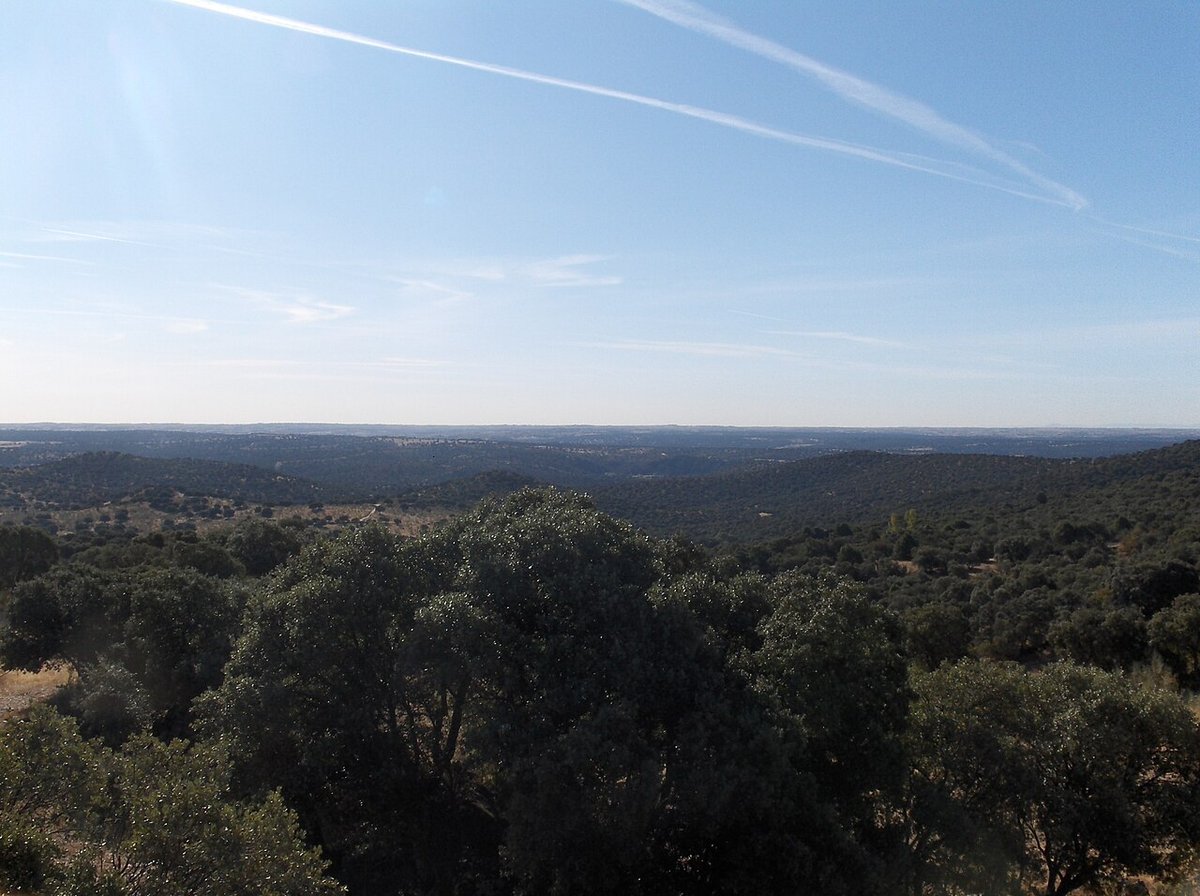
The landscape around Robledo is a mix of holm oak groves and pine stands, shaped by granite outcrops. Some of these rocks are among the oldest in the region, formed when this area was seabed. Paths lead to high points like the Cerro de La Almenara, which opens up views over the Alberche valley. On very clear days, the skyline of Madrid is visible on the horizon. Griffon vultures are a constant presence here, circling on thermal currents above the slopes.
A practical note
The drive from Madrid takes about fifty minutes, traffic depending. The old centre is walkable, though some streets are steep. Look for the older granite houses; many still show solid doorways and carved coats of arms from the town’s pastoral past. You can see the town itself in a morning. The broader point of coming here is to see how its history—and its present—are still shaped by stone, wood, and the sierra that supplies them.