Full Article
about Rozas de Puerto Real
On the border with Ávila; known for its centuries-old chestnut grove, the largest in the region.
Hide article Read full article
Getting there and first impressions
Anyone considering tourism in Rozas de Puerto Real should first think about the journey. From Madrid it is roughly 85 kilometres along the A-5, followed by secondary roads with plenty of bends. The surface is in good condition, though the final stretch calls for a slower pace. Once you arrive, parking is usually straightforward. Fewer than 600 people live here and the village itself is small.
Rozas de Puerto Real sits at around 880 metres above sea level, right on the border with the province of Ávila. The built-up area is modest and low-key. The main interest lies in the surroundings rather than in the village streets.
A brief look around the village
Within the centre, the Iglesia de la Asunción de Nuestra Señora is the clearest point of reference. It is a simple building, with stone masonry, a small bell tower and a fairly plain interior. There are no major decorative features that would justify a long visit, but it fits the scale of the place.
The rest can be seen quickly. Narrow streets, low houses, some façades whitewashed and others left in exposed stone. Quite a few old wooden doors are still in place. There is no grand square or notable civic buildings. It is a village that does not ask for much time.
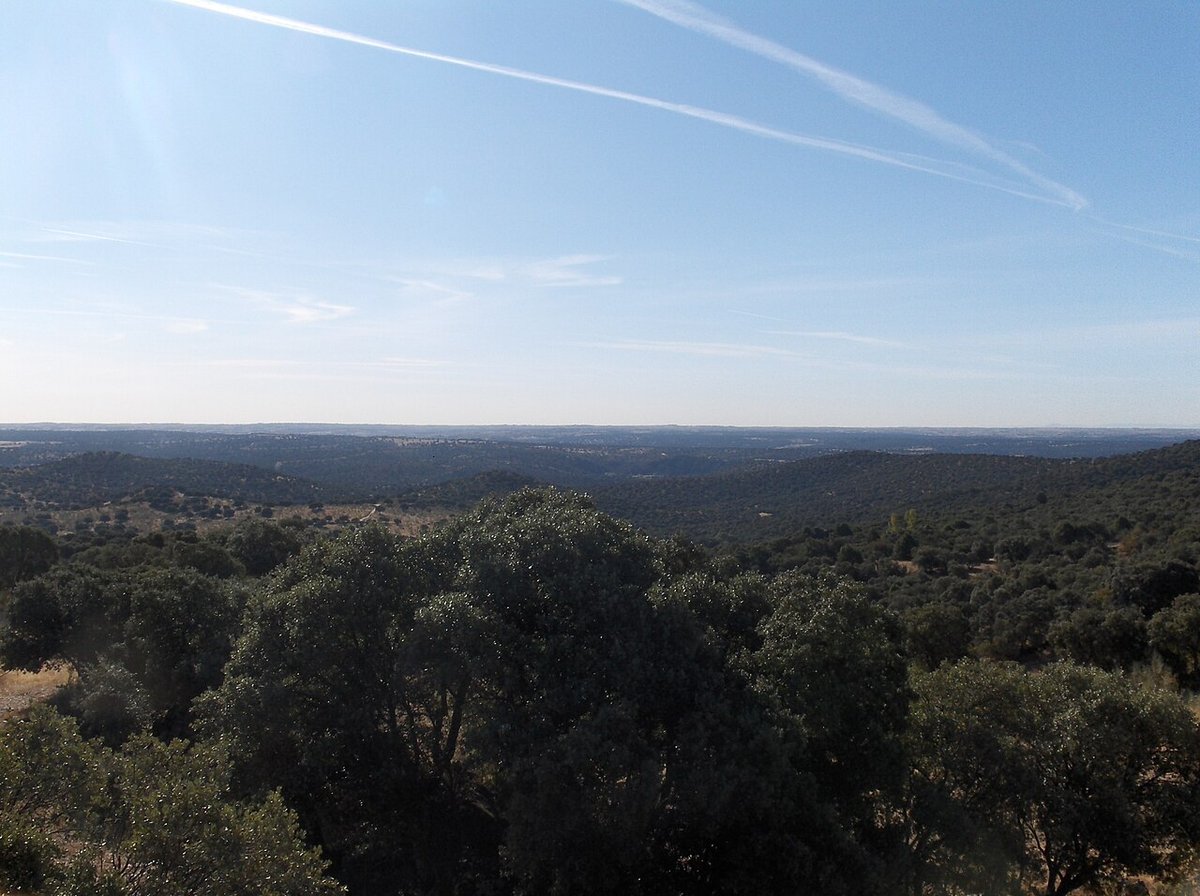
Step beyond the last houses and the landscape shifts almost immediately. Holm oaks, oaks and open pasture appear, and on clear days the Sierra de Gredos can be seen in the distance. Signs of animal life are easy to spot, from hoof marks to patches of churned mud.
Walking the surrounding landscape
There are rural tracks all around Rozas de Puerto Real. Many are not signposted, so it helps to check a map or an app beforehand. These are straightforward paths that cross low hills and small streams, some of which only carry water for part of the year.
Looking up can be as interesting as watching the ground. Vultures and kites sometimes glide on the air currents overhead, and larger birds of prey appear from time to time. The routes are not technically demanding, but the terrain alternates between loose stones and softer earth. Standard walking footwear is enough, along with water when the heat builds.
Food in the area keeps things direct and unfussy. Grilled meats, cured sausages and goat’s cheese are common. It is mountain cooking, simple and without elaboration.
A short stop rather than a full day
The centre can be covered in a short time: the church, a walk along the main streets, and little else. After that, it makes sense to head out along one of the tracks on the edge of the village. Within minutes the houses fall away and the setting becomes open countryside and low scrub.
Rozas de Puerto Real works best as a pause rather than a destination that fills a full day. A couple of hours is enough to get a feel for the place and then continue exploring the wider Sierra Oeste.
When to go and what to expect
Spring and autumn are usually the most comfortable seasons for walking. Summer brings strong sun on paths with limited shade. In winter, the altitude becomes noticeable, with cold mornings and occasional wind.
Rozas de Puerto Real does not have extensive tourist infrastructure or museums that extend a visit. It remains a quiet stop in this part of the region. Anyone coming here should do so with the idea of spending some time walking in the surrounding landscape, then moving on.
For practical purposes, the usual route from Madrid is along the A-5 to San Martín de Valdeiglesias, followed by local roads. These can be narrow in places and winding, though generally well maintained. If heading out on foot, carry water and some protection from the sun in summer. Weather conditions in the mountains can change quickly, and wind can appear without much warning.