Full Article
about San Martín de Valdeiglesias
Capital of the Sierra Oeste; known for its castle and the San Juan Reservoir, Madrid’s beach.
Hide article Read full article
San Martín de Valdeiglesias sits on the edge of Madrid’s Sierra Oeste, and a visit here usually starts with a practical question: where to leave the car. The historic centre is old, with narrow streets that were not designed for modern traffic. It makes more sense to park on the outskirts and walk down into the town. In summer and at weekends, this becomes more than a suggestion. Large numbers of people from Madrid head towards the reservoir, and the place fills up quickly.
The approach along the M‑501 sets the tone. The first thing that comes into view is the castle, solid and unadorned. It has stood here since the 15th century, when Álvaro de Luna ordered the construction of the Castillo de la Coracera. Its position looks out over the valley, a reminder of its original purpose. In 1468, Isabel la Católica stayed here after signing the Toros de Guisando, a historical agreement tied to the succession of the Crown of Castile. These days, the interior is often empty. That absence has a certain appeal, as it has not been turned into a space full of shops or theatrical recreations.
A town that keeps things simple
San Martín has around 9,000 residents and acts as a local hub for the surrounding area. The centre offers what you might expect from a place of its age and size: sloping streets, low houses and plenty of stone. There is no attempt to dress it up beyond that.
The Iglesia de San Martín dominates much of the skyline in the old quarter. Built in the 16th century, it shows clear Herrerian influences, a style associated with austerity and geometric clarity in Spanish architecture. The building is large and restrained. It is not the sort of landmark that draws visitors from afar on its own, yet it is worth walking around if you are already here.
The historic ensemble received protected status in the 1960s. That decision came at a time when such designations were not yet widely pursued by towns, which makes it a relatively early example of this kind of recognition.
The reservoir that reshaped everything
The Embalse de San Juan explains much of what San Martín is today. Built in the mid-20th century, it altered the local economy in a fundamental way. Before its construction, the area relied on cereal crops and some olive growing. Afterwards, second homes began to appear, bringing a different rhythm to the town.
August gives a clear sense of this shift. The atmosphere around the water fills with parasols, radios and jet skis. There is constant movement. Outside the peak summer period, the pace slows and it becomes easier to walk along the shoreline, although the reservoir is never completely empty.
The so-called beach is artificial, with sand brought in to create a more familiar setting. The water is usually clear because it comes from the Alberche river. Swimming is possible, but the bottom is soft and slightly muddy. Footwear such as flip-flops makes things easier.
Local food without fuss
Food in San Martín de Valdeiglesias follows the logic of the region. Patatas revolconas appear on many menus nearby. This is a mashed potato dish seasoned with paprika and accompanied by chorizo and bacon. It is filling and direct, with no attempt to lighten it.
Another local staple is arrope. This thick, dark sweet is made by slowly reducing grape must with fruit over several hours. It is more often prepared at home than found in restaurants, which gives it a different kind of presence in the area.
Summer changes the feel of the town in noticeable ways. Day-trippers from Madrid arrive in large numbers, and bars fill up quickly. The contrast with quieter months is clear.
Walks and nearby detours
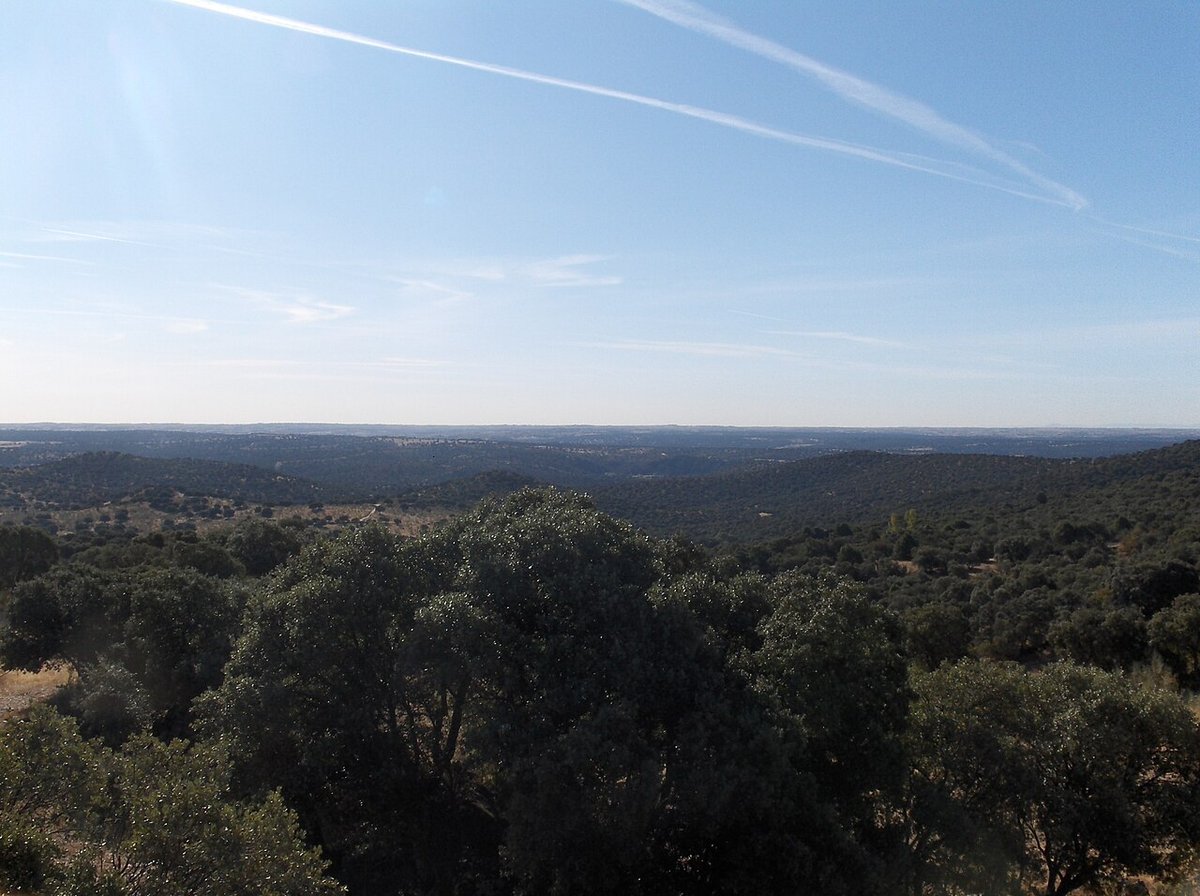
The surroundings offer simple walking routes rather than dramatic viewpoints. One of the best known is the ruta de las ermitas, which links several small chapels across the nearby hills. The full route takes a little over three hours and involves frequent ascents and descents. The terrain consists mainly of low scrub and old paths.
Signposting can be inconsistent. It is easy to lose the route at certain points, so carrying water and a map on a mobile device is a sensible precaution. Some walkers end up near the cemetery while trying to find the ermita de la Salud.
A short drive away sits the Bosque Encantado. This is a garden filled with shaped vegetation, including animals and oversized mushrooms. The overall effect leans towards kitsch, yet it tends to appeal to children.
Timing your visit
Busy weekends in July and August bring the largest crowds. The town fills up, and the reservoir even more so. Anyone who prefers a quieter atmosphere should avoid those peak moments.
Weekdays or a spring visit offer a calmer experience. A simple plan works well: park on the upper edge of town, walk down towards the castle, take a turn through the old centre, then decide whether to continue towards the water.
A long morning is enough to see the essentials. That sense of proportion reflects the place itself. San Martín de Valdeiglesias is a sizeable town in the Sierra Oeste, defined by the presence of its castle and its reservoir. It does not try to be more than that.