Full Article
about Valdemaqueda
Set amid vast pine forests; its standout feature is the five-arched medieval bridge over the Cofio.
Hide article Read full article
Morning light in the square
Early in the day, when half the square is still in shade, Valdemaqueda is all about the sound of footsteps on stone and the slow opening of a door. Tourism here often begins like that: quietly, with the smell of wood smoke drifting from a chimney and cool air coming down from the hills.
The Plaza Mayor is small. At that hour, the light comes in sideways and picks out the joints between the paving stones. Several short streets lead away from it, descending gradually towards the Alberche. There is no rush in the layout. The village seems to have settled itself along the slope, with retaining walls holding the الأرض in place and houses adjusting as best they can.
Walking along Calle Real or Calle del Convento brings small details into view: dark wooden doors, slightly bent iron grilles, façades where the stonework is left exposed. Some windows are narrow, designed to keep warmth in during winter. Many houses still have iron balconies, with plant pots or washing hanging out when the day opens up.
The church and village life
The church of San Andrés appears as you turn a corner, its square bell tower visible from several points in the village. The current building is generally dated to around the 16th century, although it has seen later alterations. Its pale walls reflect the strong midday light.
Inside, the atmosphere is cooler and quieter. There are polychrome altarpieces and traces of painted decoration in places. It is not a grand space, yet it remains where the village gathers at certain times of year.
The feast of San Andrés still shapes the local calendar. A procession moves through the streets near the church and returns to the square. It is a simple event, rooted in the village itself, without elaborate staging. For visitors unfamiliar with Spanish traditions, this kind of procession is a religious and communal act, often marked by a steady pace and a shared sense of routine rather than spectacle.
Paths down to the Alberche
From the last houses, several paths begin almost without notice. One of them leads down towards the Alberche river through holm oaks and oaks. In autumn, the ground is covered with dry leaves that crunch underfoot. In spring, the scent changes: rockrose, thyme and damp earth after rain.
The paths are usually signposted, although it is worth paying attention to the ground after several days of rain. Some sections become slippery, and mud can cling to your shoes.
The river appears suddenly among the trees. It is not a dramatic gorge or a vast landscape. Instead, it is a calm جریان, with open meadows around it and stone walls marking out old plots of land. At times, you might hear goldfinches or tits moving through the lower branches.
Open ground and low hills
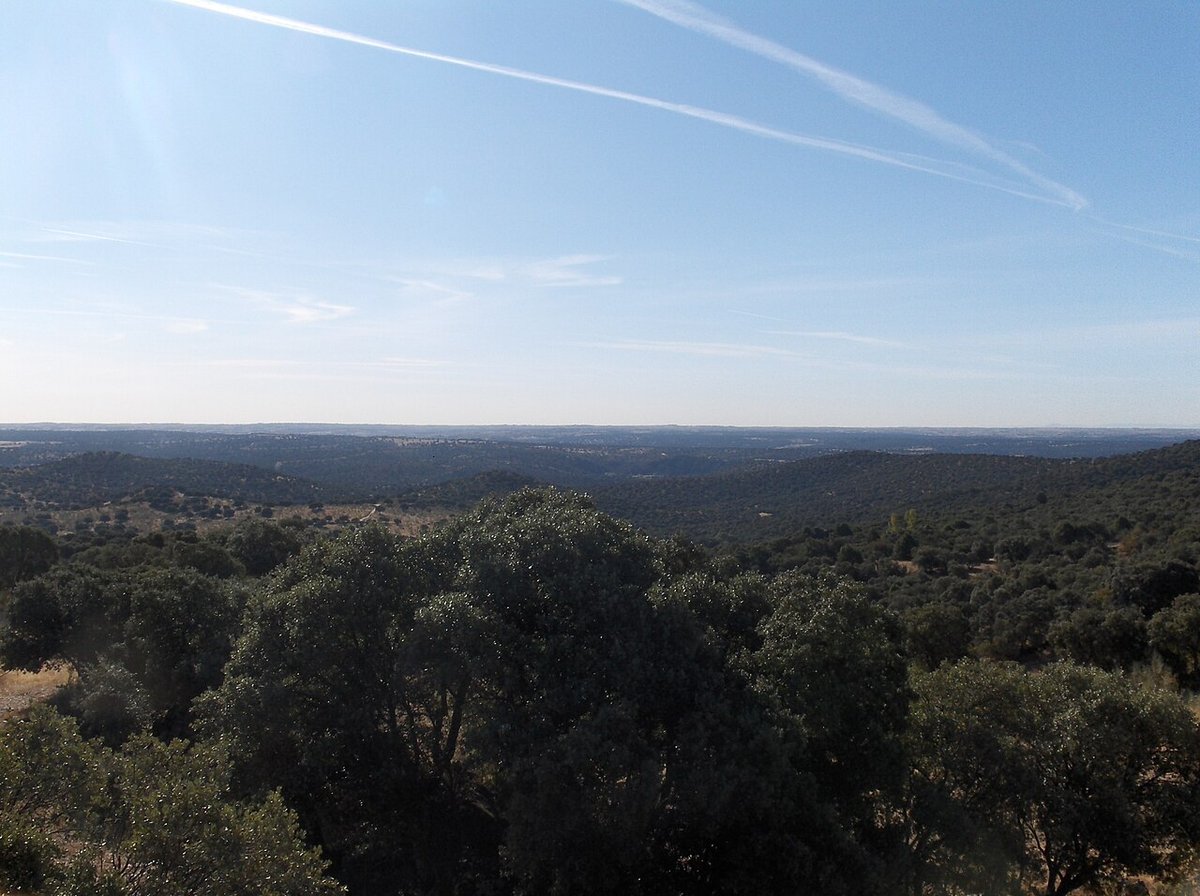
A short distance from the centre, the landscape opens out. There are gentle rises covered in grass, patches of chestnut and ash trees, and stretches of low scrub where the soil turns reddish.
It is comfortable terrain for walking, without steep climbs. Even so, the sun can be strong in summer, and shade is limited in the more open areas. If heading out on foot, it makes sense to start early or wait until late afternoon.
During mushroom season, usually well into autumn, it is common to see people moving through the countryside with baskets. Many areas have rules about collecting, so it is best to be aware before entering private or heavily used land.
A circular route above the village
From the square, a circular path climbs gradually towards a rise known as El Alto. The ascent is not long, but the ground alternates between firm sections and loose stone.
At the top there is usually a simple table, a place to stop for a moment. From here the whole village comes into view: red-tiled roofs, the church tower, and beyond them the expanses of holm oak woodland that cover the lower slopes of the Sierra.
On clear days, the contrast is easy to see between denser woodland to the north and more open hillsides to the south.
Night in the Sierra Oeste
When night falls, the place changes with the silence. A short distance from the centre, darkness becomes almost complete. There is very little artificial light, and the sky quickly fills with stars.
On clear nights, the pale band of the Milky Way can be made out. Satellites also pass overhead, small points moving slowly across the black sky.
It is worth bringing an extra layer, even in summer. The temperature drops quickly once the sun disappears.
A short visit, taken slowly
Valdemaqueda does not demand much time. In the space of a morning, it is possible to walk through the centre, reach the river and follow one of the nearby paths.
Services are not always open at all hours, especially outside weekends. It helps to arrive with a simple plan: walk, listen to the hills and take in the landscape without rushing.
That is how the village works. There are few distractions, just the sound of wind through the holm oaks and the crunch of gravel underfoot.