Full Article
about Villamanta
Town with Roman remains on the site of ancient Mantua; farming and livestock tradition
Hide article Read full article
A small town with a long memory
Villamanta appears in historical records far more often than you might expect for a small municipality in what is now the Sierra Oeste of Madrid. Documents from the Ancien Régime already mention its pasturelands and disputes over grazing, a sign that this territory held value long before a road linked it with the capital.
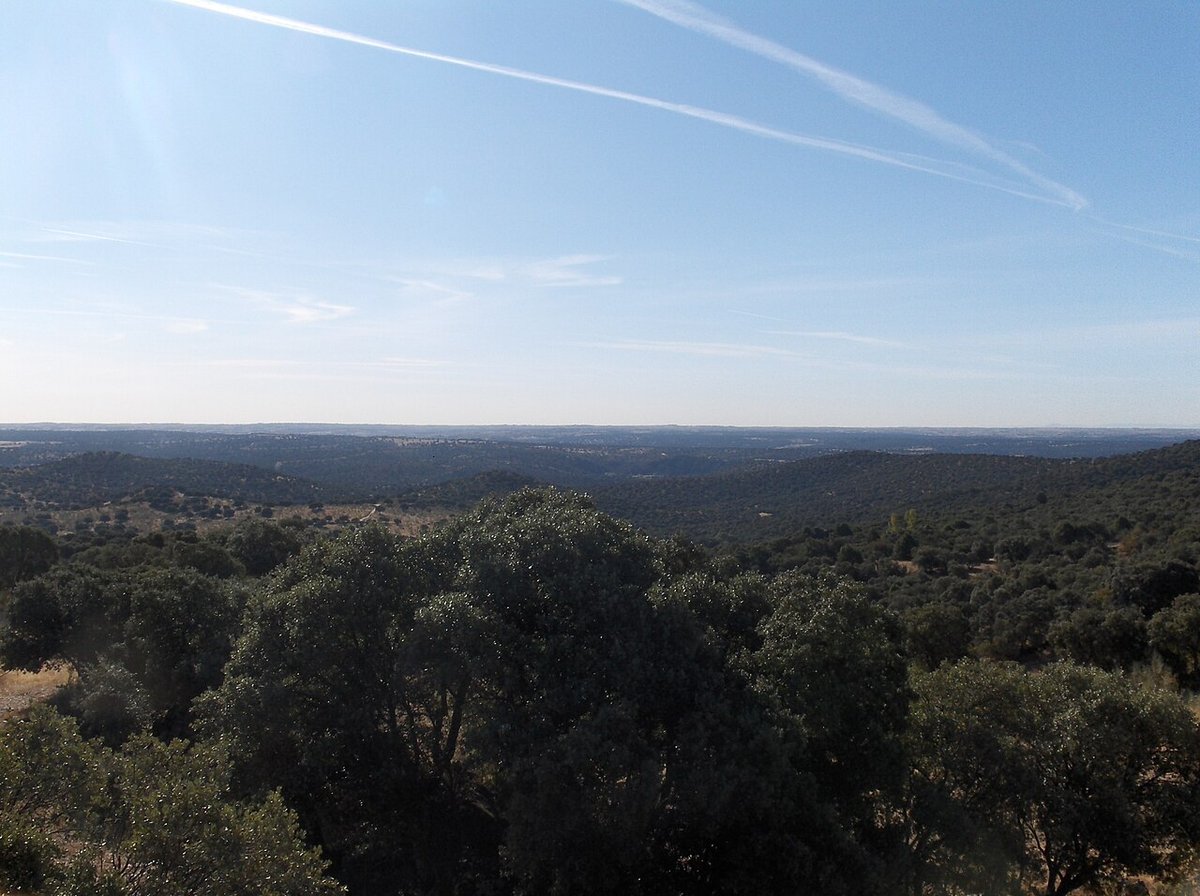
Today it sits a little over an hour from Madrid and has a population of around three thousand. Its story, however, is easier to grasp through the landscape that surrounds it. On one side lies the fertile plain of the Alberche river, while further off the first dehesas begin to hint at the nearby hills. That contrast between farmland and open woodland helps explain why people have settled here for so long.
A possible Roman trace
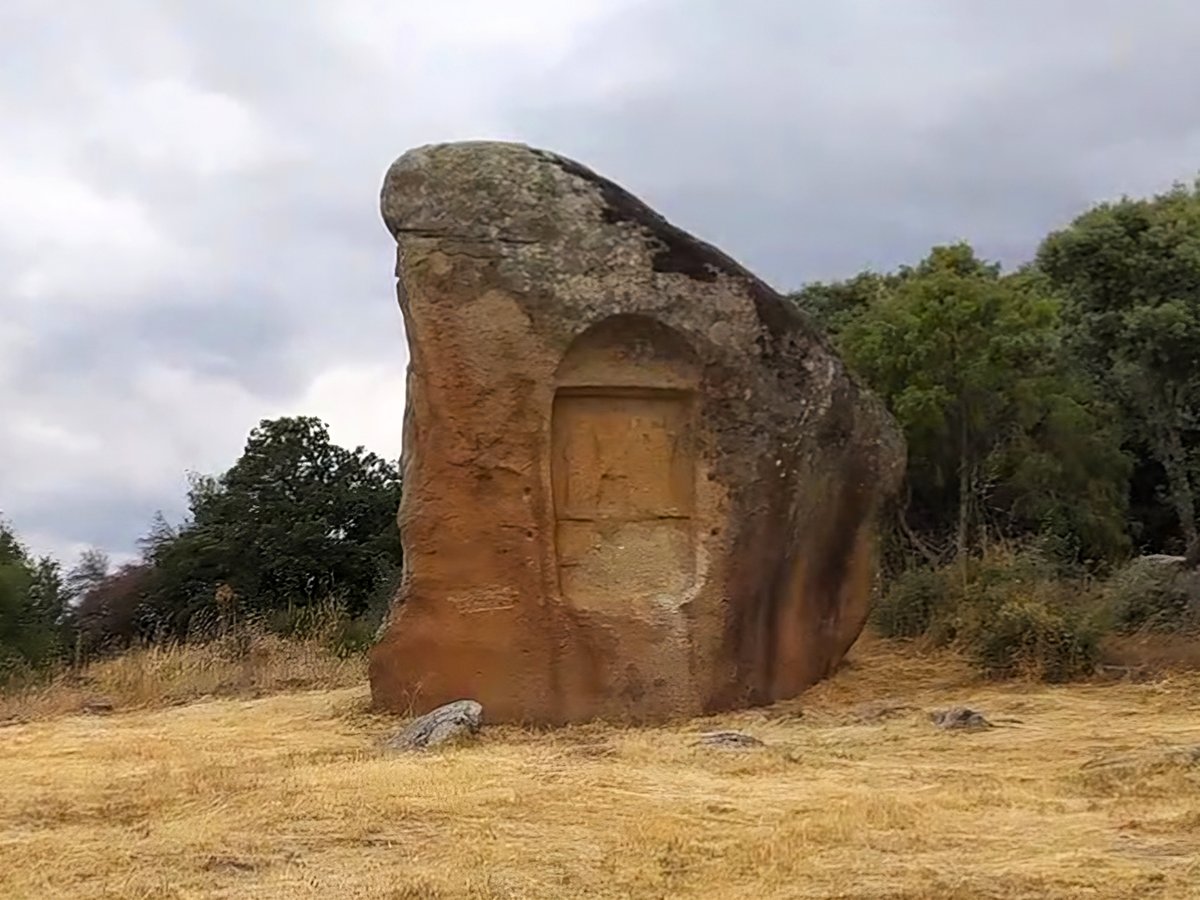
Villamanta has sometimes been linked to the ancient Mantua Carpetanorum, mentioned by Roman authors. The identification has not been confirmed, although remains found in the area point to Roman presence in the wider zone.
One of the most curious clues is not displayed in a museum but built into an ordinary house in the town centre. A Roman stone slab has been set into a façade, its inscription now worn. It is usually interpreted as a dedication connected to a soldier from the Legio VII Gemina. Rather than being treated as a formal archaeological piece, it has simply become part of the wall. This kind of reuse was common in villages where old stone was incorporated into new buildings without much concern for its origin.
The location of Villamanta helps explain why settlements emerged here. The village stands on a slight rise above the Alberche plain, in a transition zone between cereal-growing countryside and more open land dotted with holm oak and cork oak. The Cañada Real Segoviana also passes through the area. This was one of the major livestock routes across the Spanish plateau, used for seasonal movement of herds. Its course can still be recognised today, and some stretches serve as paths for walking or cycling.
Santa Catalina and the old hospital
The most prominent building in Villamanta is the church of Santa Catalina. Its construction stretched across a long period, between the 16th and 17th centuries, which explains the mix of Renaissance elements with later additions.
The tower stands out for its solid, almost austere appearance. It looks closer to a defensive structure than to an ornate bell tower. In settlements located along routes of passage, it was not unusual for church towers to take on a secondary role as lookout points.
Inside, there are several Baroque altarpieces of modest scale. Old parish records also mention relics attributed to Saint Damasus, a 4th-century pope of Hispanic origin. They are not always accessible, and information about where they came from is limited, so it is best understood as a local tradition rather than a fully documented fact.
A short distance from the church stands a building that once served as a hospital for the poor and for travellers. These institutions were common in places crossed by important routes, offering basic shelter to shepherds, muleteers, or anyone passing through who needed a place to spend the night. The building has been put to different uses over time, but its original volume is still recognisable.
Fields, dehesa and local cooking
The economy of Villamanta remains closely tied to the land. The surrounding area is dominated by cereal fields, especially wheat and barley, broken up by olive groves and patches of holm oak. Moving west, the terrain opens out and begins to resemble the dehesa landscape that characterises much of this part of Madrid’s region.
This mix of farmland and scrubland has shaped local cooking. Traditional dishes are hearty, designed for long working days outdoors. Lamb features prominently, along with legume stews and rosquillas de anís, small aniseed-flavoured biscuits that appear often in household recipe collections across the comarca. Each home has its own way of preparing them, so there is no single version.
The memory of a railway
For much of the 20th century, Villamanta was connected to Madrid by a railway line that continued towards Almorox. The trains stopped running decades ago, yet traces of the route remain, along with some buildings linked to that infrastructure.
Across many towns in the southwest of the region, this line shaped everyday life for years. It carried grain, brought goods in, and allowed travel to the capital. After its closure, the road became the only practical connection.
Walking through Villamanta
The town centre is compact and easy to explore on foot. The main square works as a natural starting point, from which it is a short walk up to the church and then on to viewpoints overlooking the plain.
For those who want to go further, several paths lead out into the surrounding countryside and connect with stretches of the Cañada Real Segoviana. These are straightforward routes that make it easier to understand the agricultural landscape of this part of the Sierra Oeste.
Villamanta is not defined by large monuments. Its interest lies more in the territory around it and in the layers of everyday history that have settled into that landscape over time, whether Roman, pastoral or agricultural. Walking slowly is often enough for those traces to come into view.