Full Article
about Abarán
Hide article Read full article
A river that changes its mind
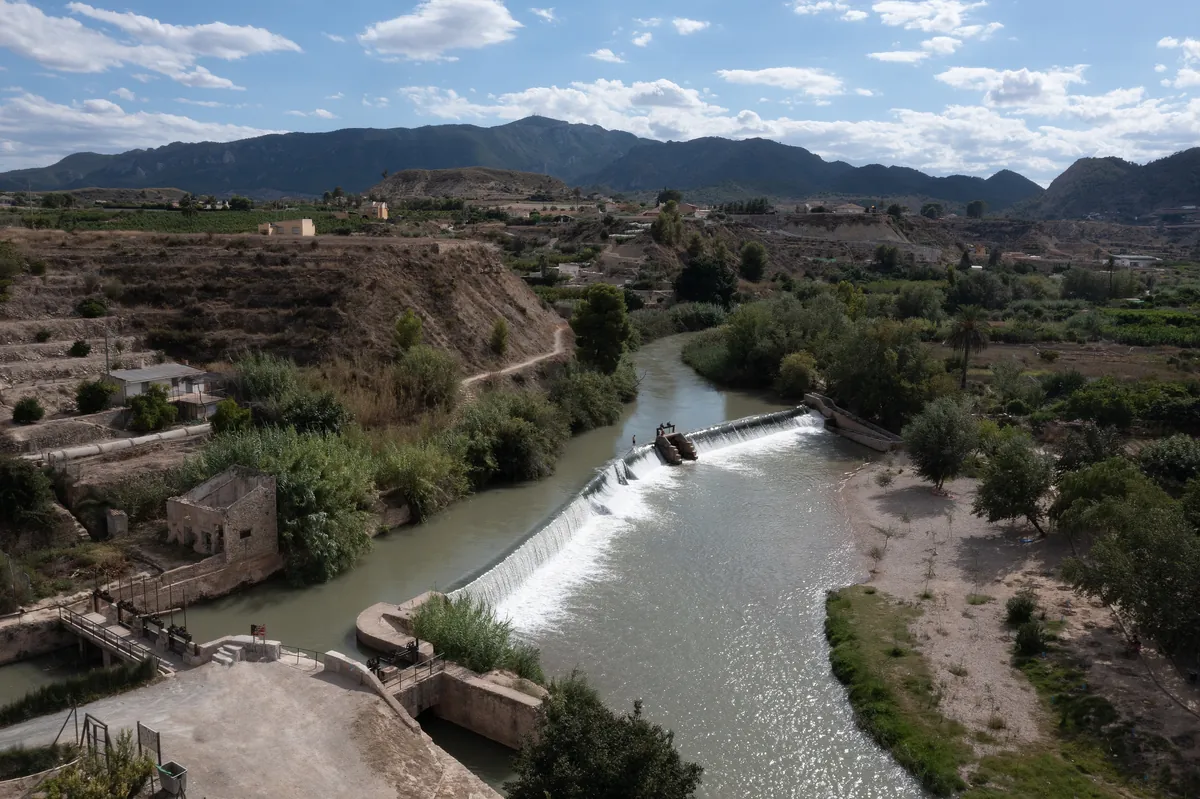
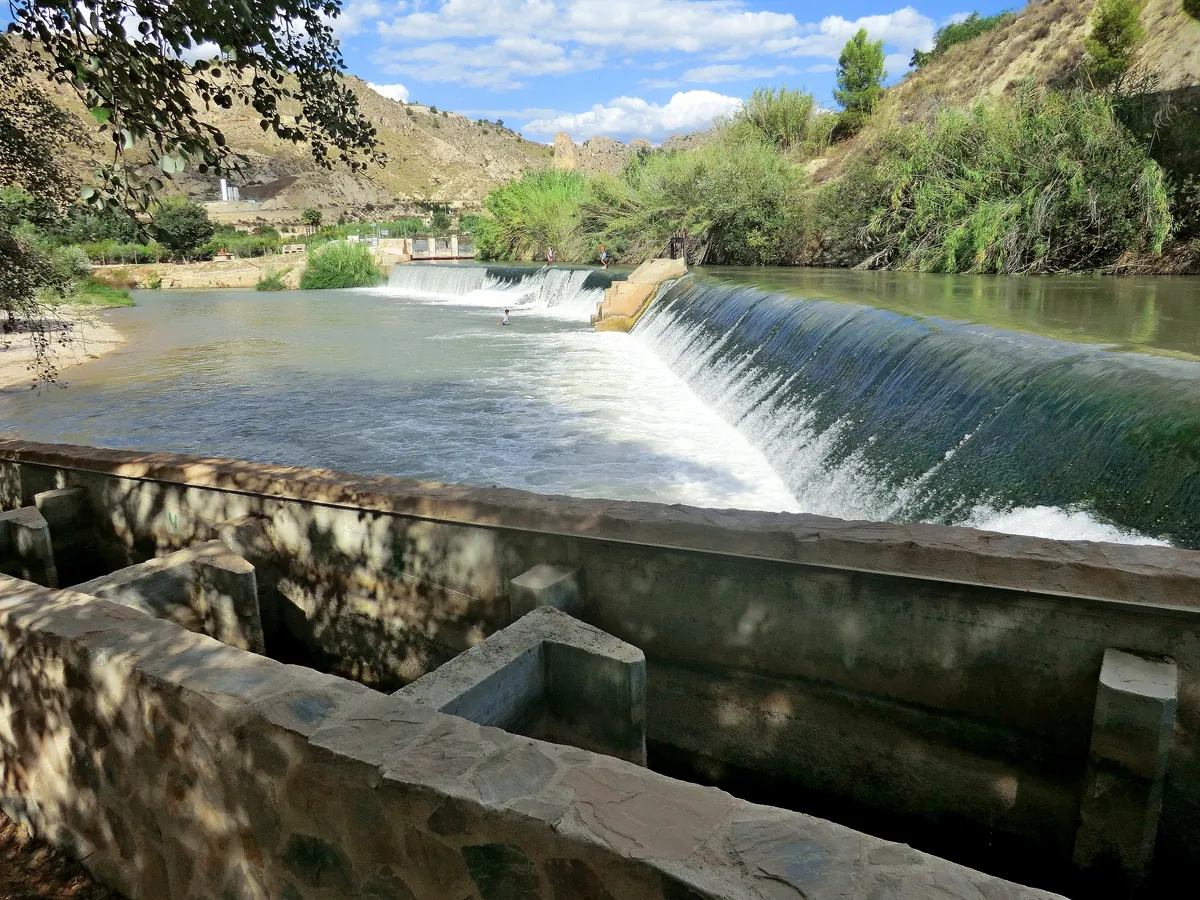
The Segura seems to hesitate here. After running between rocky walls from its source, it opens out at Abarán into a wide meander, as if it had decided to turn back on itself. That bend shaped everything that followed. In the late ninth century, Arab settlers took advantage of the curve to establish Fauaran. The name endured, gradually adapted into Spanish, and the town remains tied to that sweep of water which set its course.
Water as explanation
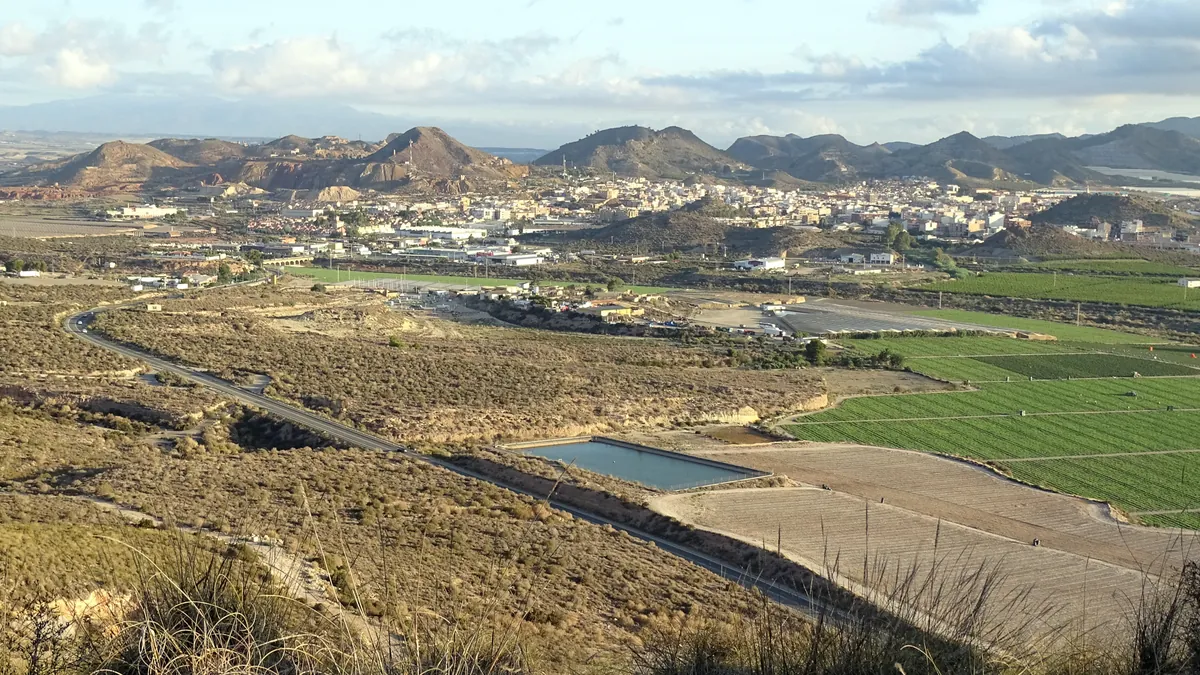
Abarán’s fertile plain exists because the river turns. Sediment carried by the Segura from the calcareous uplands of the north-west settles here, creating soil capable of sustaining crops. After the resettlement of the 15th century, the Moriscos cultivated wheat, barley and carob trees across this land.
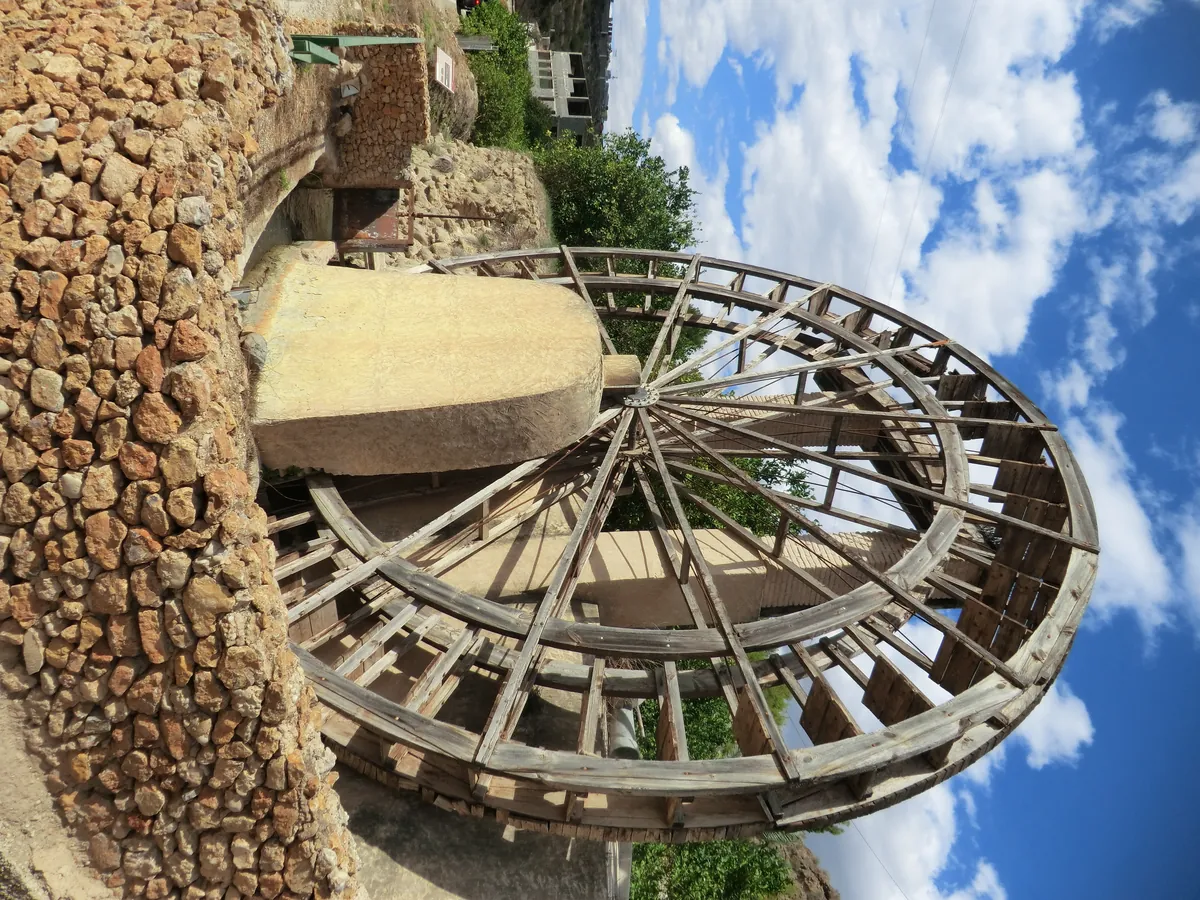
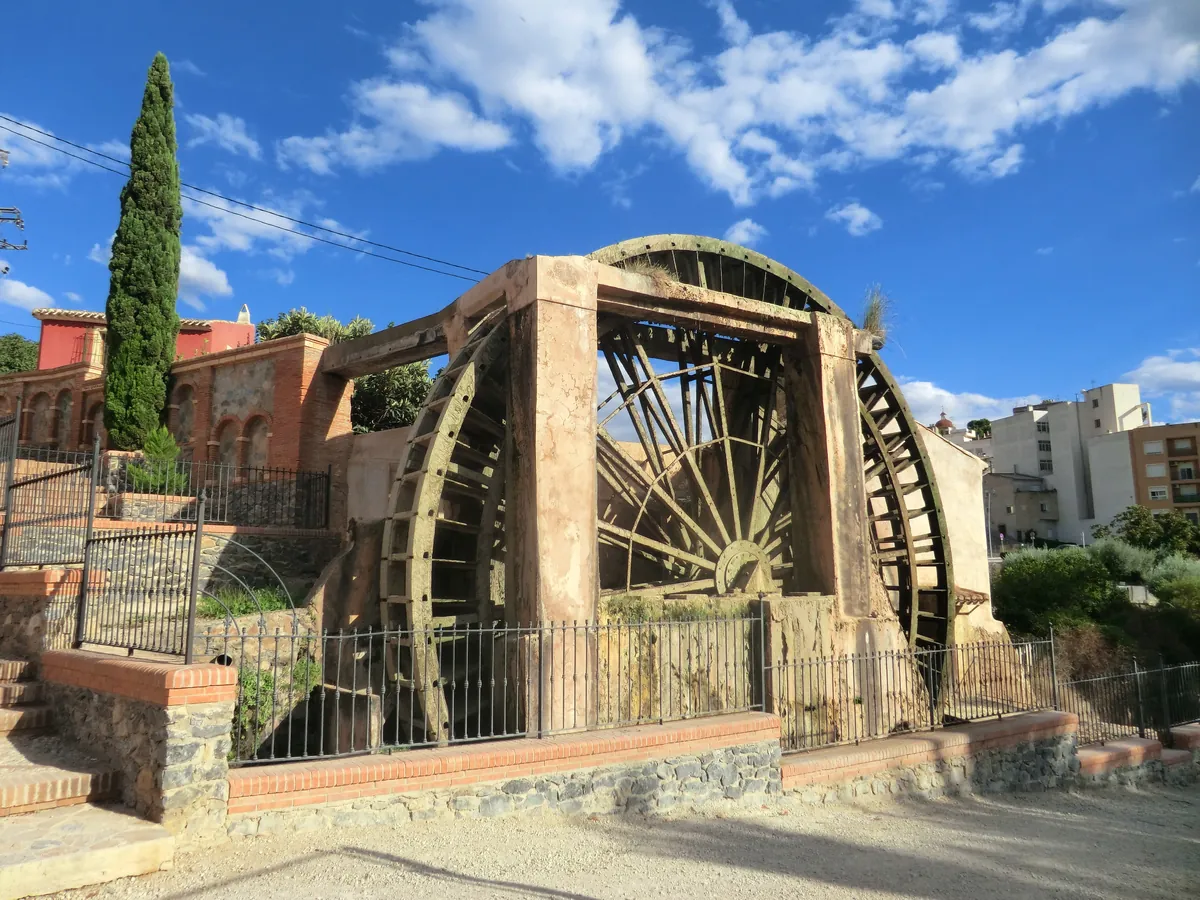
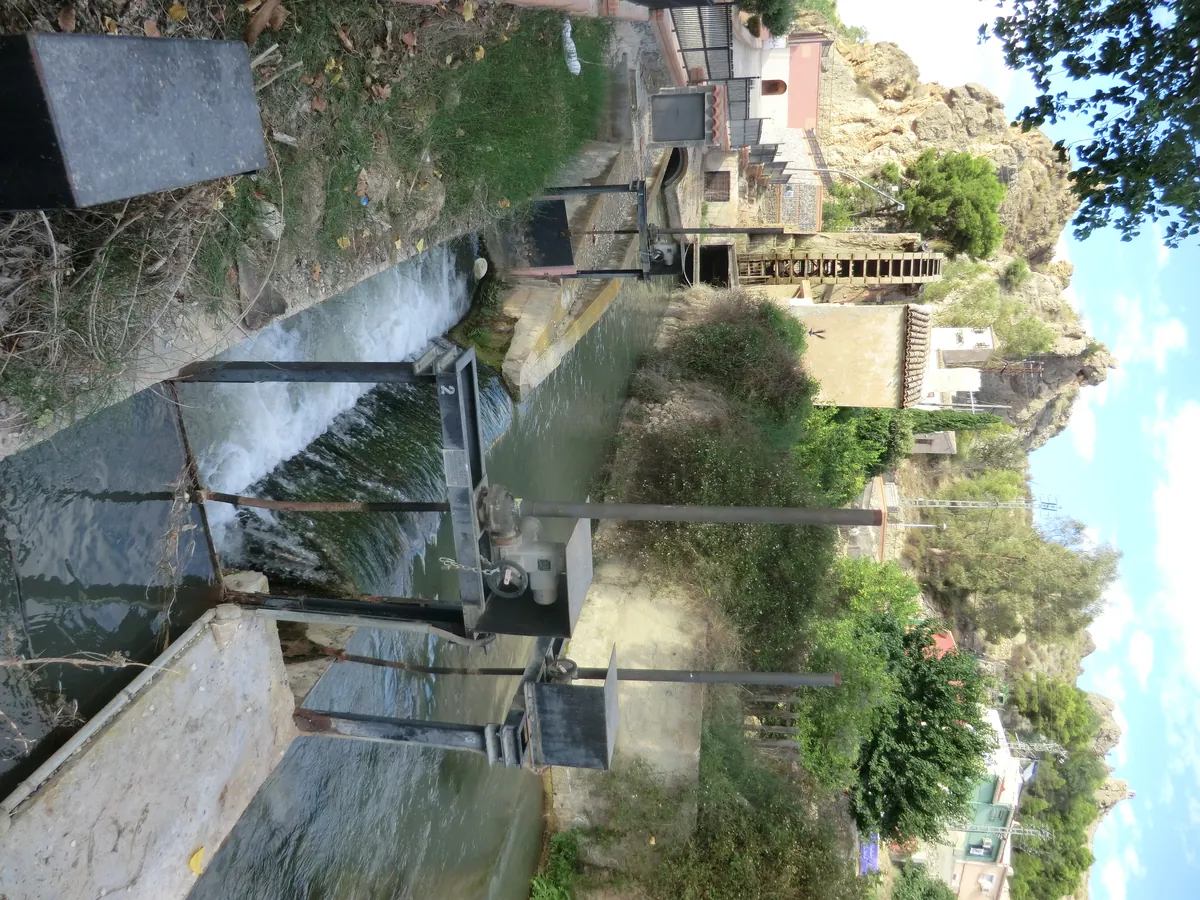
Water did more than nourish fields. It powered mills. The route known as the Ruta de las Norias follows an old riverbed for about eight kilometres and passes the remains of more than twenty such structures. These mills ground grain well into the 20th century. Some still retain their full wheel, while others are reduced to the miller’s house, now part of small rural dwellings. Walking among them clarifies why settlement took hold at this exact point along the Segura.
From settlement charter to expulsion
In 1494, twenty Morisco families from Hellín were granted a Carta Puebla by the Catholic Monarchs to populate Abarán. The surnames recorded in that document, including Yelo, Tornero, Cobarro, Gómez and Molina, still appear in today’s census. The conditions were straightforward: pay tithes and remain Christian.
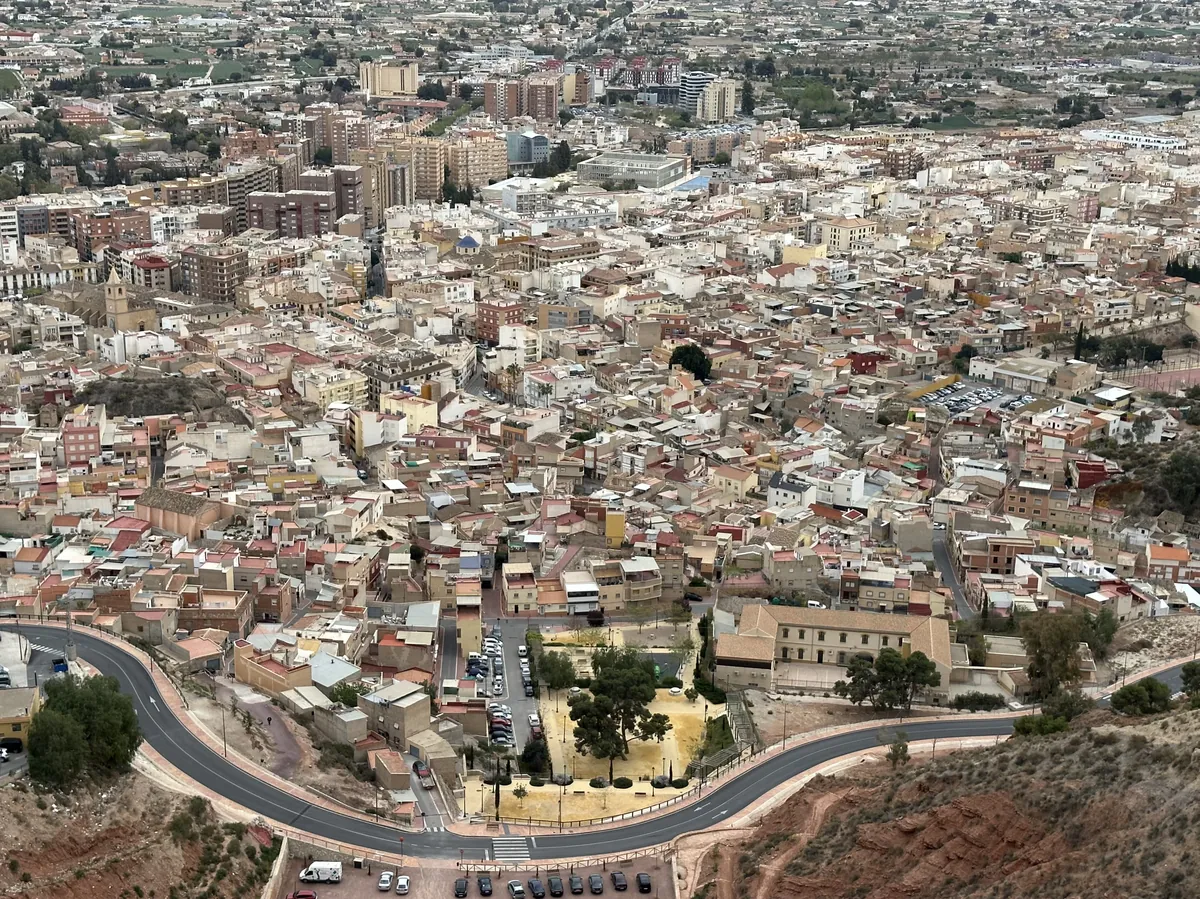
This arrangement lasted for roughly a century and a half. In 1609, Philip III ordered the expulsion of the Moriscos. Half the population vanished, and the fertile plain was left without enough hands to work it. Recovery came slowly. New settlers from Castile and Aragón moved into the empty houses, yet growth stalled until the 19th century. That long pause explains the town’s layout today, with tightly packed streets and low houses. Much of the historic centre was built before expansion resumed.
The bridge that held on
The Puente Viejo, built in 1883, crosses the Segura with three stone arches and a roadway that endured the heavy floods of the 20th century. In the 1950s, a new concrete bridge took over traffic, leaving the old one for pedestrians.
From its side, the shape of the meander becomes clear. The river moves away and then returns, enclosing a green plain that contrasts with the dry rambla beyond. It is a useful vantage point for understanding how geography influenced the town’s development.
Festivities through the year
Local celebrations follow a steady rhythm tied to the calendar. San Pablo on 25 January marks the close of the Christmas season. A procession leaves the parish church and passes through streets lit by bonfires. It is the oldest documented festival in Abarán, appearing in an account book from 1654. The fires serve a practical and social purpose: sausages are grilled over the embers, and younger participants leap over the flames.
A similar custom appears again during the Romería de San Blas on 3 February. On that day, it is traditional to walk up to the hermitage and eat dishes such as zarangollo and michirones. Spring brings the Santísima Trinidad, held on the last weekend of May, with evening festivities and games such as ribbon races. The Feria de Septiembre, on the first weekend of the month, began in the 1960s as a commercial initiative and has since become a fixed date in the local calendar.
Walking through Abarán
Abarán lies about 45 minutes from the city of Murcia via the A-30. The centre can be covered in an afternoon. From the Plaza de la Constitución, where the 19th-century town hall stands, Calle Mayor leads down towards the Puente Viejo. Along the way sits the Iglesia de San Pablo, rebuilt in the 18th century on the site of an earlier structure.
Inside, the decoration is restrained. A neoclassical altarpiece dominates, accompanied by several Baroque sculptures that survived the disentailment period. For those interested in vernacular architecture, details appear in the stone corner blocks of houses from the 16th and 17th centuries, as well as in interior courtyards once used to store wheat.
Local cooking reflects the agricultural base of the area. Dishes often include michirones, a bean stew with chorizo and bacon, and olla de trigo during the colder months. For something sweet, paparajotes are typical: lemon leaves coated in batter and served with cinnamon.
When to go
Spring offers the most balanced conditions for a visit. The fertile plain is green, the river carries water, and temperatures allow for unhurried walks. Summer regularly brings heat above 35 degrees, and activity in the town slows. In autumn, after the grape harvest, the surrounding hills shift in colour. The Senda de la Umbría, a five-kilometre path with views over the Valle de Ricote, provides a way to explore the wider landscape.