Full Article
about Águilas
Hide article Read full article
Águilas, el pueblo que se esconde en treinta y cinco playas
Águilas es como ese compañero de piso que nunca sabes dónde está. Un día parece vacío, al siguiente bulle. Tiene 35 playas. Casi siempre hay una donde puedes tumbarte sin ver otra toalla. No es solo un pueblo costero más en Murcia. Aquí el Mediterráneo se ha colado entre dos bahías y se ha quedado.
La clave está en su forma. El agua rodea el pueblo por ambos lados, marcando el ritmo. Pasas de una bahía a otra en minutos, pero cada una tiene su aire. Ese ir y venir entre espacios define Águilas más que cualquier monumento.
El muelle de hierro que cargaba mineral
Si llegas por la carretera desde Lorca, lo primero que ves es una estructura de hierro larga. Parece sacada de un decorado antiguo. Es el Embarcadero del Hornillo. Un muelle de unos 300 metros sobre pilares de hormigón.
De 1903 a 1960, esto no era decoración. Se cargaban unas 600.000 toneladas de mineral al año. Las tolvas parecen ahora reliquias de otra época. Una ciencia ficción industrial que entonces tenía sentido. El mar guarda rastros de aquello. Dicen que el fondo huele a azufre e historia.
Ahora es un Bien de Interés Cultural. Suena formal, pero el sitio es muy físico. Lo dicen el metal, la sal y la escala. Sirve tanto para una foto como para entender el trabajo que pasó por esta costa.
De aquí sale una vía verde de unos cinco kilómetros. Es llana, buena para bici o paseo sin cuesta. Sigue la línea de ese pasado industrial. Te hace pensar en cómo se movía el mineral. No era perfecto: algo siempre se caía por el camino.
Un castillo con vistas a dos mundos
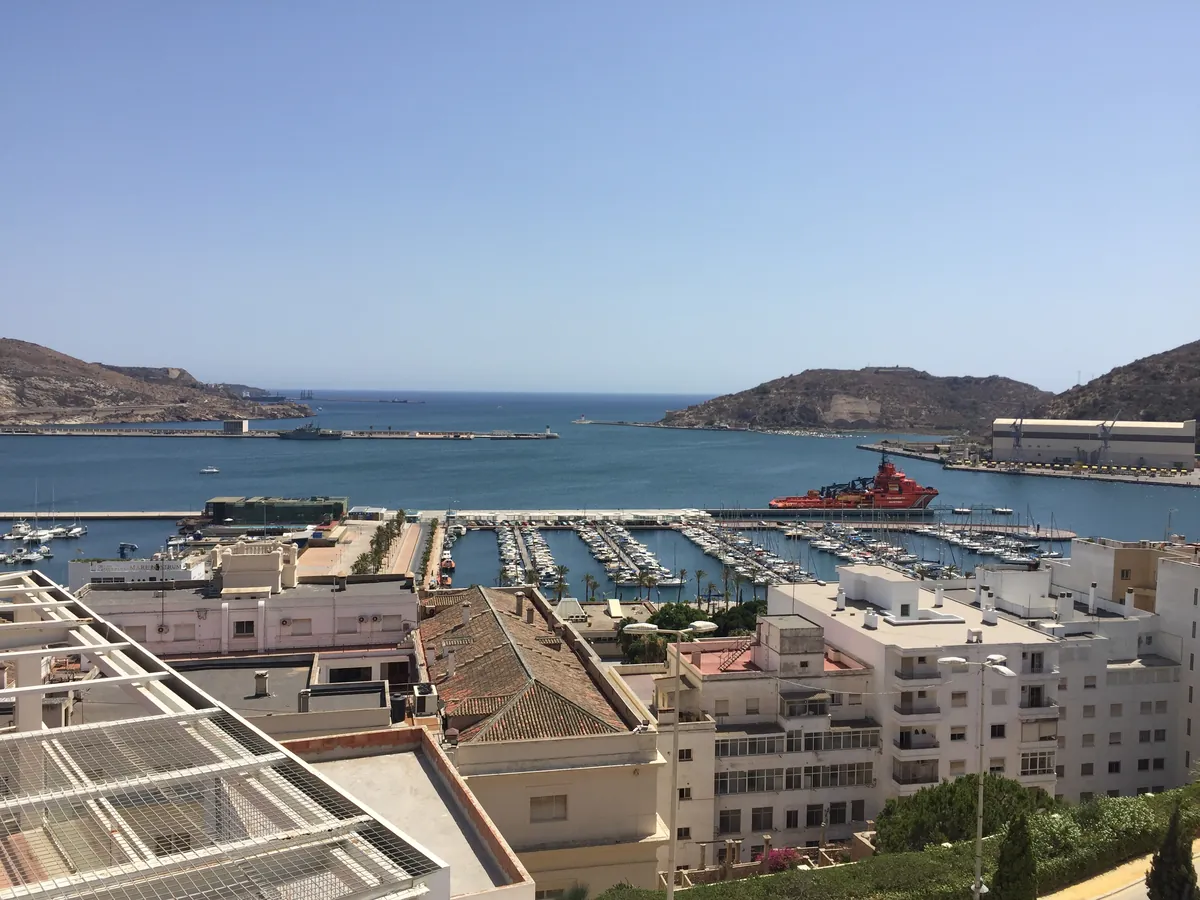
El Castillo de San Juan está arriba del todo. Subir cuesta, sobre todo en agosto. Pero la vista desde arriba lo explica todo: ves cómo el pueblo se parte en dos.
Felipe II lo mandó construir en 1579. La razón es obvia cuando miras hacia abajo. A un lado está Levante, con su puerto pesquero y barcos descargando. Al otro, Poniente, con la Playa del Hornillo y bunkers de la Guerra Civil aún ahí.
El contraste es inmediato: un lado vive del trabajo diario; el otro guarda historias recientes junto a la arena.
La entrada al castillo es gratis y hay un museo dentro. Explica los bombardeos que sufrió la zona con un tono directo.
Arroz al caldero: depende del día
Pedir arroz al caldero aquí puede salir muy bien o regular. Tienes una pista clara: mira la terraza. Si es agosto y hay mesas vacías, sigue caminando. Si hay ruido de camareros y huele a mar, suele ser buena señal.
El plato viene de la tradición pesquera local. Lleva rape, gallo o brótola. Le da sabor la ñora, un pimiento seco que pica sin avisar. Las raciones son grandes. Pide media si vas solo; están pensadas para gente con hambre.
Otra opción local son los gurullos con conejo. Su textura recuerda a una pasta artesana. Pero su sabor va más al campo que a la costa. Es un plato que conecta el interior con este pueblo marinero.
Cuatro calas y un paseo sencillo
La Ruta de las Cuatro Calas te muestra otra costa. Son unos 4,2 kilómetros que unen varias calas seguidas. Cada una tiene su carácter.
La Higuerica tiene el agua clara y se ve el fondo. La Carolina forma un hueco pequeño de arena. Los Cocedores parece una cantera abandonada. Calarreona tiene chiringuito y sombra de pinos.
Esa sombra importa mucho aquí. En Murcia no abunda. Los pinos en Calarreona te permiten quedarte más tiempo sin achicharrarte.
La ruta es fácil: aparcas en la primera cala, caminas hasta la última y vuelves por donde viniste. Lleva agua contigo; hace sol y solo hay un quiosco en todo el camino.
Un Carnaval que no mide fuerzas
Diez días entre febrero y marzo cambian Águilas por completo. El pueblo se llena de desfiles, carrozas y disfraces hechos con cualquier cosa. Tiene el título oficial de Fiesta de Interés Turístico, pero lo importante son las personas que llenan las calles.
Su escala sorprende a quien viene por primera vez: tiene energía de gran evento, pero lo montan los propios vecinos participando, no solo mirando.
Si buscas silencio esos días, evita alojarte en pleno centro: la fiesta sigue hasta muy tarde. Llegar desde Murcia en tren tarda poco más de una hora; la estación conserva aire antiguo, con su bar dentro donde tomar café antes de salir a ver pasar el desfile sin pagar entrada.
En verano cambia la rutina: puedes empezar comprando langostinos cocidos en el mercado, bajar a Playa de Poniente y pelarlos sentado en el muro frente al mar. Treinta y cinco playas dan para mucho, pero con esa escena ya entiendes lo esencial del lugar