Full Article
about Aledo
Hide article Read full article
A hilltop shaped by its past
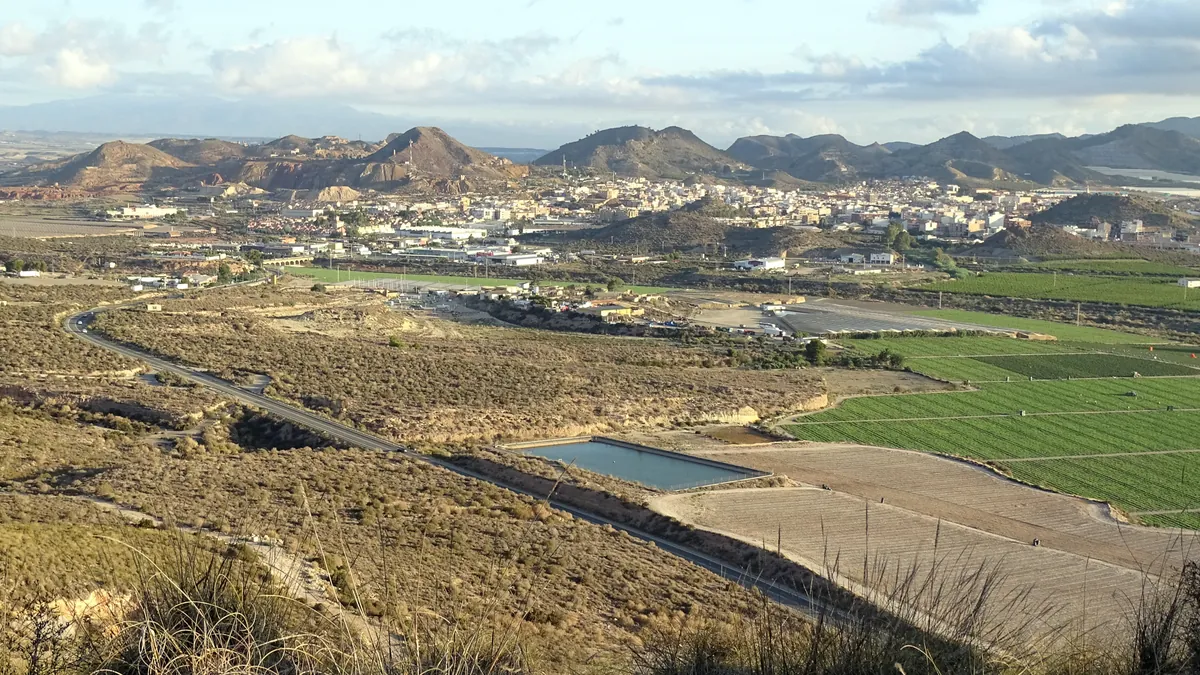
Aledo sits at 625 metres above sea level, on a rocky spur that breaks away from Sierra Espuña. Its position was never accidental. From this height, there is a clear line of sight across the Guadalentín Valley, a strategic advantage that defined the town’s role for centuries. During the Middle Ages, Aledo functioned as a ռազմական frontier, and that history still lingers in the layout of its streets and the remains of its defensive structures.
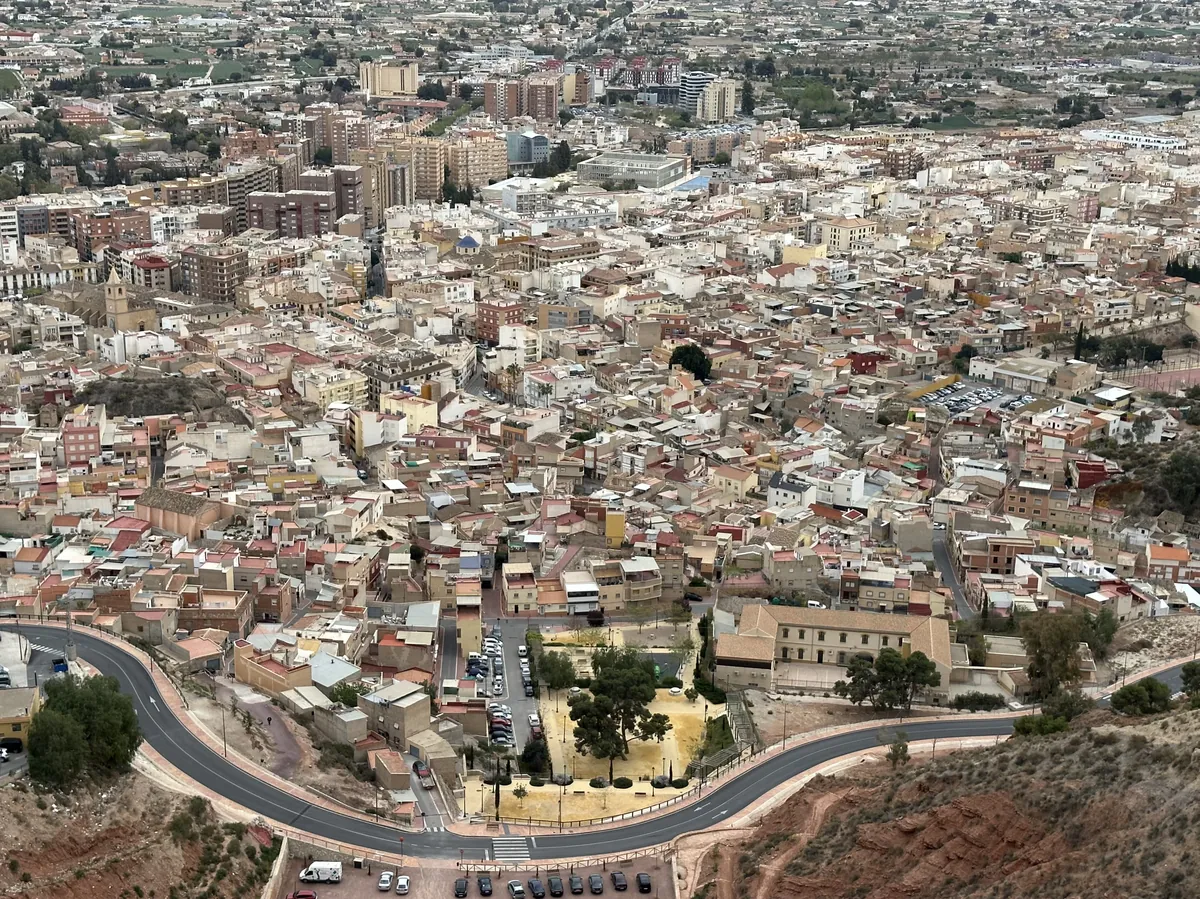
Today, with just over 1,100 inhabitants, the town keeps a compact urban form that adapts to the slope of the terrain. Streets wind tightly, adjusting to the hillside rather than imposing a grid. The result is a place where geography and history are closely intertwined, each shaping how the other is experienced.
The castle and its watch over the valley
The castle of Aledo has its origins in the Islamic period and was later modified after the Christian conquest. It formed part of a wider defensive network in the region, with its elevated position offering a commanding view over the surrounding land. Although much of the original structure has been lost, sections of walls and several towers remain, enough to understand how surveillance and control were organised.
The Torre del Homenaje is the most intact element. It rises above the rest of the site and continues to define the skyline. From the area around it, the view stretches across a large portion of the Guadalentín river basin. This visibility explains why Aledo became a contested location for different powers over the centuries, each recognising the importance of holding this vantage point.
Walking through the remains of the fortress, the connection between landscape and defence becomes clear. The terrain itself played a role in protection, with steep slopes adding an extra layer of difficulty for any approach.
Streets, squares and religious buildings
The historic centre is organised around the Plaza de la Constitución, where the Town Hall is located. This square acts as the main reference point within the town, linking administrative life with everyday activity. From here, narrow streets branch out, following the contours of the hillside.
The church of Santa María la Real, built in the 16th century, reflects the restrained character of Renaissance architecture. Its design avoids excess, focusing instead on balanced proportions and solid construction. The bell tower rises above the surrounding rooftops and works as a visual marker within the dense street network, making it easy to orient oneself while moving through the old quarter.
Beyond the centre, the Convento de San Francisco and a number of small hermitages scattered across the municipality add further layers to Aledo’s religious heritage. These buildings point to how community life historically revolved around religious institutions, shaping both social organisation and the rhythm of daily life.
Sierra Espuña and the surrounding landscape
The proximity of Sierra Espuña has a direct influence on life in Aledo. The natural environment is dominated by Aleppo pines, which cover large areas of the slopes, creating a continuous forested backdrop. Among these woods are the old pozos de nieve, circular stone structures once used to store ice. They reflect earlier ways of using natural resources in a landscape where climate and terrain required practical solutions.
A network of trails leads from the town into the mountains, opening up routes through wooded areas with noticeable changes in elevation. The terrain is uneven, and the slopes can be demanding. Anyone planning longer walks needs to be prepared for the physical effort involved. The same applies to mountain biking, as the forest tracks include steep gradients that require a good level of fitness.
Sierra Espuña is not just a scenic backdrop but an active part of daily life in Aledo. Its presence shapes both leisure activities and traditional practices linked to the land.
Food and seasonal traditions
Local cooking in Aledo is rooted in agriculture and livestock farming from the surrounding hills. Hearty stews are a staple, along with lamb and cured meats produced from traditional pig slaughter. These dishes reflect a cuisine designed around available resources and seasonal cycles rather than elaborate preparation.
Almonds play a central role in local baking. Their use in sweets and desserts comes from long-standing agricultural traditions in the region, where almond cultivation has been an important part of rural life.
Among the town’s celebrations, the Moros y Cristianos festivities in October bring the most visible change to everyday routines. These events recreate episodes linked to the area’s frontier past, with performances and activities that take over public spaces. The historical theme ties back to Aledo’s earlier role as a contested territory, giving the celebrations a strong local resonance.
Getting there and moving around
Aledo lies around 35 kilometres from the city of Murcia. It is easiest to reach by car, using regional roads that connect the valley with the mountains. The approach reflects the transition from lower भूमि to higher ground, with the landscape gradually changing as the road climbs.
Once inside the town, the historic centre is best explored on foot. Streets are narrow and often steep, making vehicle access limited in many areas. Walking allows for a clearer sense of how the town is structured and how it responds to the terrain.
For those heading into Sierra Espuña, it is advisable to check the condition of the trails at local information points before setting out. Conditions can vary depending on the route and the time of year, and preparation is important given the demands of the landscape.
Aledo’s character comes from the balance between its elevated position, its defensive past and its close relationship with the surrounding mountains. Each element continues to shape how the town is experienced today.