Full Article
about Alhama de Murcia (Murcia)
Hide article Read full article
Morning over the orchard
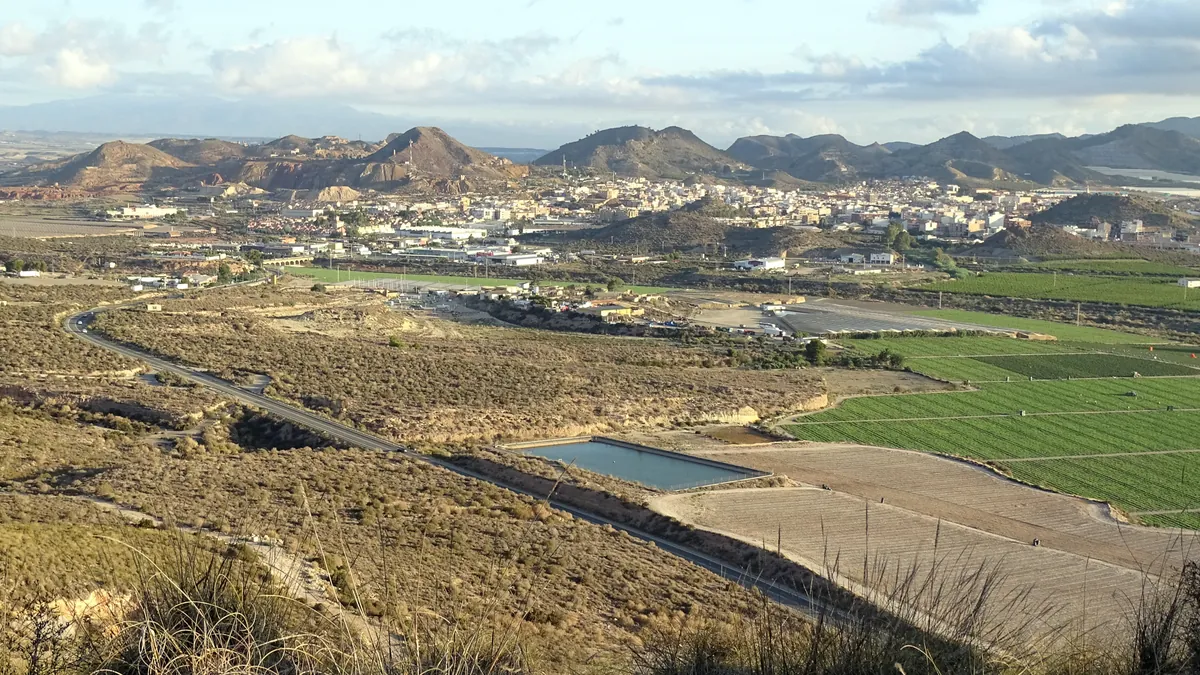
At eight in the morning, the sun is already warming the stones of the castle, and the air carries the scent of rosemary and freshly baked bread rising from the lower quarter. From this height, the Murcian huerta spreads out in neat rectangles: pale green lemon trees, darker orange groves, and, between them, the metallic gleam of greenhouses. Alhama de Murcia wakes slowly, as if the weight of centuries obliges it to move with care.
The town reveals itself in layers. Up high, stone and wind; below, cultivated land shaped by water and routine. Nothing feels rushed. Even the light seems to settle gradually across walls and fields.
Water beneath the ground
The Roman baths sit in the shade of a centuries-old carob tree. The water still emerges at 37 degrees, the same warmth that Roman legionaries would have found in the 1st century when they came here after their watch. Today, a glass structure protects the mosaic slabs, yet the sulphur smell remains unchanged.
The site is divided in two. One part is medicinal, remembered by locals who recall their grandparents coming here to ease rheumatism. The other is recreational, where hypocausts, the ancient underfloor heating system, remain visible alongside traces of an architecture designed for gathering and social life.
The caretaker usually opens at around ten. Arrive earlier and the scene feels suspended: mist rising from the hot water mingles with the steam of the first morning coffee drifting in from nearby houses. It is a moment before the town has fully stepped into the day, when stray dogs decide whether to sleep under the bridge or in the market square.
The scar on the Iglesia de la Encarnación
The Iglesia Mayor de la Encarnación bears a visible crack running vertically across its façade. It is the mark left by the earthquake of 1884, when the ground shook for four days and left the tower close to collapse. Inside, a black marble inscription records it plainly: “In the year 1884, during the reign of Alfonso XII, this church was destroyed by the earthquake and rebuilt with his support.”
The interior smells of wax and cool stone. Light enters through the rose window, forming circles that move slowly across the marble floor like a quiet sundial. If the sacristan is present, there is often a story told without ceremony: the statue of the Virgin above the main altar was the only one that did not fall during the earthquake. It is said in the same tone used for everyday matters, while flowers are arranged for the next service.
The castle and the slope of the town
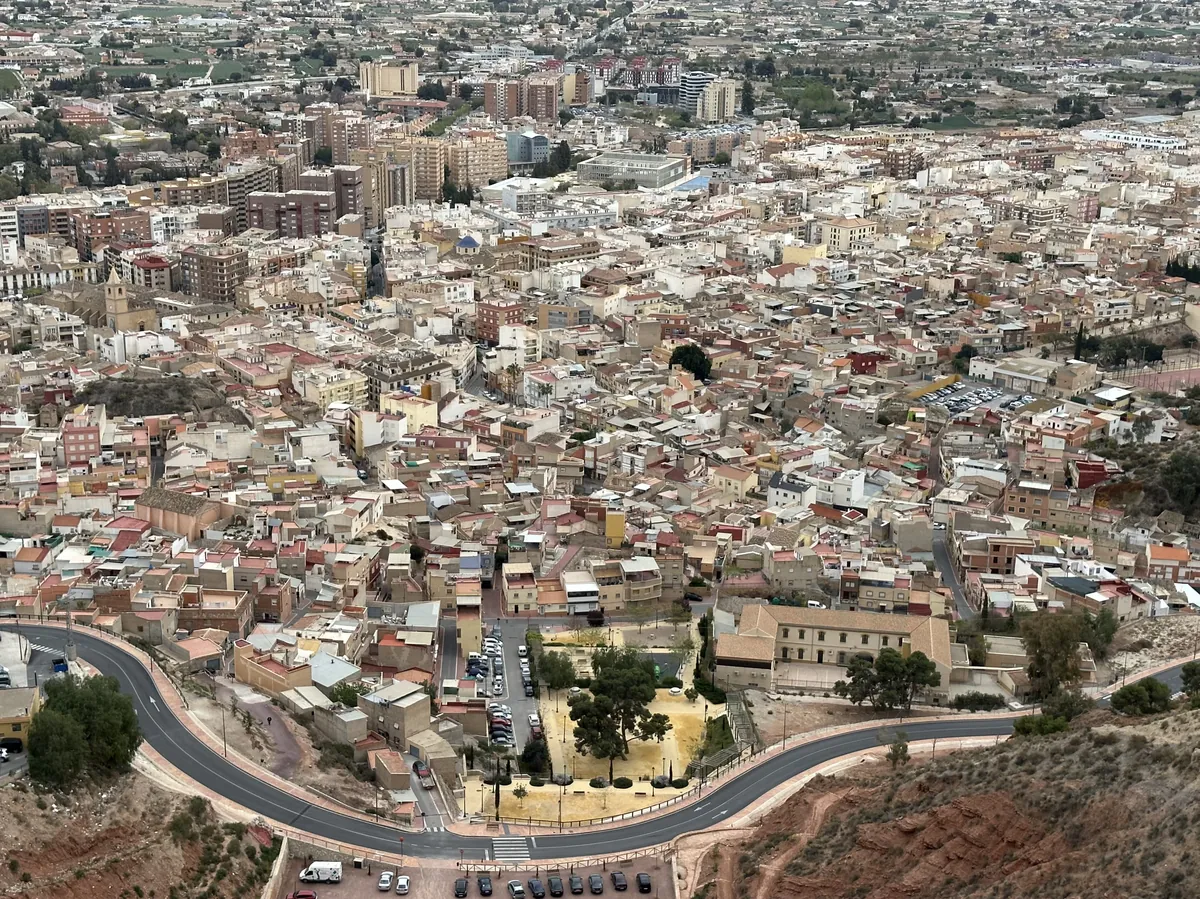
The Arab castle stands at the highest point, where the wind threads through the battlements. From here, the structure of Alhama becomes clear. The old quarter steps down the hillside, its narrow streets acting as natural channels for rainwater. Further out, the newer part stretches towards the Vega Media, with its houses and roundabouts.
The walls of rammed earth still show traces of plasterwork used by Muslim builders to allow the structures to breathe. The materials, shaped by necessity, continue to define the character of the place.
Walking down Calle de la Inquisición leads to San Lázaro, the oldest hermitage in the municipality. Documented in 1390, it is dedicated to the patron saint of lepers, despite the fact that no leper colony ever existed here. The sun-darkened stone keeps the interior cool. Inside, candles left by worshippers have stained the walls with patterns of black smoke that resemble maps of unknown territories.
Life beyond the centre
In August, Alhama empties towards the Mar Menor or retreats inland to El Berro, a small district set against the hills. During the fiestas of the Virgen de los Dolores, its population multiplies. Those who return seek something steady: the pine trees around the Santuario, the river Alhama forming pools among rounded stones, and the scent of thyme that clings to clothes after a walk.
January brings the Auto de los Reyes Magos, a traditional performance of the story of the Three Kings. The air is sharp, and actors breathe into their hands before stepping on stage so their breath does not show in the cold. The same lines have been repeated for more than 150 years. Children grow up knowing that one day they may play Melchor or Gaspar, part of a continuity that moves quietly through generations.
Notes for the road
There is no single dish that defines Alhama on a menu. On a Saturday morning, the place to ask is the market square. Empanadillas filled with oxtail are made in particular homes, following recipes that are never written down. Local goat’s cheese carries a slight bitterness, shaped by the wild basil plants the animals graze on in the countryside.
Spring can still bring cool evenings. Wind descends from the Sierra de Carrascoy and lowers the temperature even in May. August is best avoided. The heat presses in, and the town fills with cars chasing the image of the castle, missing what matters more: the silence at seven in the morning, the smell of fresh bread, and the cool shade of San Lázaro when the sun bears down on the square.