Full Article
about Beniel
Ocultar artículo Leer artículo completo
The border stones arrive before the town does. Two weather-worn limestone pillars squat beside the Alicante–Murcia road, their 14th-century Arabic inscriptions still legible if you squint through the heat haze. Pull in (there’s room for six cars, always space) and you’ve technically stepped from Valencia into Murcia, though the lettuce fields either side refuse to recognise the difference. Most visitors photograph the stones, stretch their legs, and drive on. Stay five minutes longer and you’ll notice the irrigation channel gurgling behind them, the one that has fed Beniel’s orchards since the Moors plotted this grid of water and earth. That channel is the real monument; everything else is garnish.
A Plain Town with a Pulse
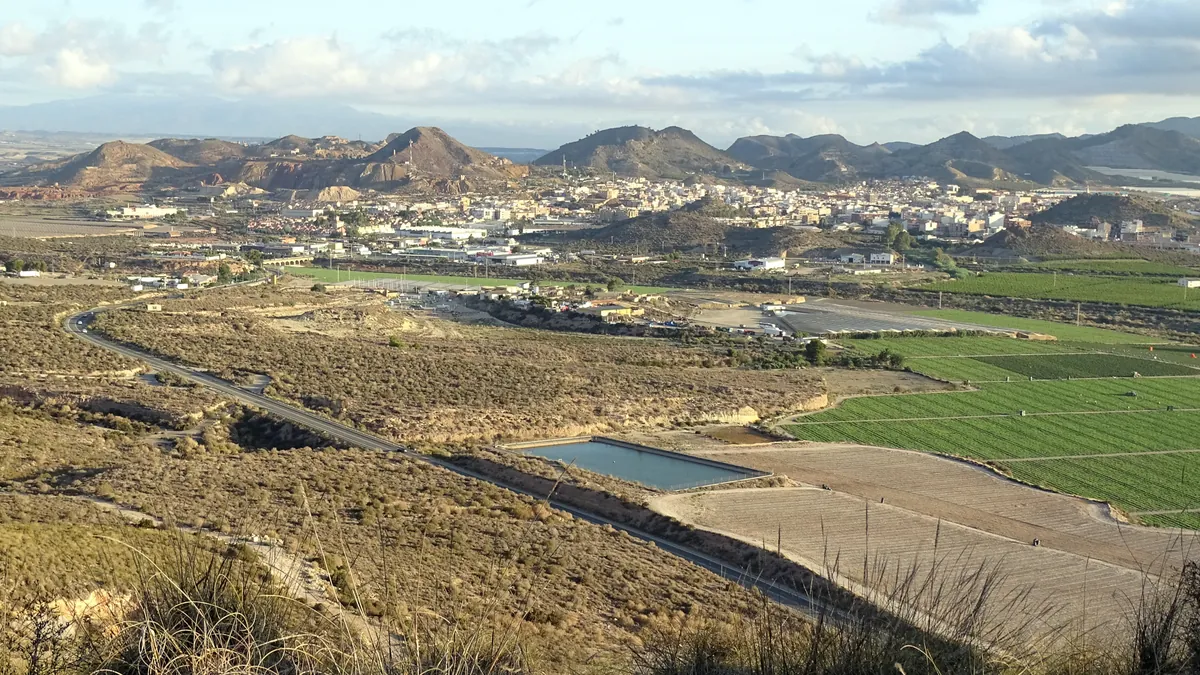
Beniel sits 29 m above sea level, flat as a cricket pitch and ten kilometres south-east of Murcia city. The Segura River slips past the northern edge, but you won’t see it from the main street; the town turns its back to the water and faces the fields instead. Lemon groves press against the last row of houses, their fruit flickering yellow even in December. There is no hill, no castle, no mirador—just a tight grid of white-walled houses and a single church tower that tries, and fails, to act as a landmark. English visitors expecting Andalusian drama often leave disappointed; those who park, walk, and buy an orange from the Wednesday market tend to stay for lunch.
The centre is a five-minute square. Calle Mayor runs from the stone cross to the 18th-century church of San Bartolomé, past two bakeries, a tobacconist that sells fishing licences, and a bar whose terrace occupies the pavement so completely that pedestrians walk in the road. Nobody seems to mind. Traffic is light: farm pickups, the twice-hourly school bus, and the occasional British-registered Kia towing a caravan south. Parking remains free and unregulated; no meters, no app, no blue zones. It feels like an oversight, but no one in the town hall appears in a hurry to correct it.
What You Can Actually See
Inside San Bartolomé the air smells of candle wax and the stone floors are worn smooth by centuries of farming boots. The altarpiece is neo-Baroque, over-restored in 1922, yet the side chapel still keeps a 15th-century Flemish panel that survived the Civil War by being face to the wall. Ask the sacristan—he lives opposite, door painted green—and he’ll unlock the grille for no more than a polite greeting and a euro in the box. Photography is allowed, flash discouraged.
Walk two streets east and you reach the Molino de la Pólvora, a nineteenth-century gunpowder mill turned into a small ethnographic store. Entry is free but irregular; knock at No. 14 and hope someone hears. The mill wheel is long gone, yet the sluice gates still creak and the Segura’s muddy smell drifts in through the arch. Interpretation boards are only in Spanish, so bring Google Translate or simply enjoy the cool after the glare outside.
The river path begins behind the mill. A concrete track follows the azarbe (irrigation ditch) for three kilometres, shaded by eucalyptus and overgrown reeds. Cyclists use it as a flat sprint; walkers get glimpses of herons and the back gardens of周末houses where Murcia city families barbecue on Sundays. Go early: by noon the sun ricochets off the water and there is no shade except the occasional palm.
Eating Without the Hard Sell
Beniel’s restaurants close on Mondays, a fact that catches out more than one Airbnb family. The rest of the week they open strict Spanish hours: lunch 13:30–16:00, dinner 20:30 until the last table leaves. Casa Ramón, on the corner of Calle Nueva, prints an English menu but doesn’t advertise the fact. Order the house arroz de conejo—rabbit paella for two, €18 total—and the waiter will ask if you want chips on the side. Say yes; they arrive thin, crisp, and properly salted. House wine is a young Jumilla served in 50 cl carafes, enough to make the drive back to the coast feel shorter.
For something quicker, Bar El Parque (no park in sight) does toasted sandwiches with fillings that read like a 1970s British picnic: tinned tuna, hard-boiled egg, sweetcorn. They taste better than they should, especially with a caña of Estrella de Levante at €1.80. Locals eat standing at the bar; visitors grab the lone outside table and watch the village conduct its business: parcels collected, lottery tickets argued over, the baker delivering still-warm empanadillas that taste like Cornish pasties with less pepper.
Fiestas Where You’re the Extra
Visit in mid-May and you’ll collide with Moros y Cristianos, Beniel’s loudest weekend. Comparsas in faux-medieval costume march to drums, fire blank-firing muskets, and occupy the church steps for the ceremonial “embassy” where the Moors surrender to the Christians. The script is fixed, the dialogue shouted, and the crowd expected to cheer both sides. Tourist participation is not organised; simply stand in the front row and you’ll be handed a glass of mistela and instructed when to applaud. By 2 a.m. the plaza becomes an open-air disco playing Spanish eighties hits until the Guardia Civil suggest everybody go home. Ear-plugs recommended; hotel rooms non-existent—book in Orihuela eleven kilometres away.
August belongs to San Bartolomé: late-night verbenas, foam parties in the polideportivo, and a procession where the apostle’s statue is carried through streets carpeted with dyed sawdust. Temperatures hover around 35 °C at midnight; the sensible watch from doorways, watering down the dust with hosepipes as the band passes.
Getting Here, Getting Out
Alicante airport is 55 minutes by hire car: join the A-7, stay on it, take Exit 800, done. Corvera (Murcia International) is closer—25 minutes—but fewer flights arrive. Neither airport offers public transport to Beniel; a taxi from Corvera costs €35 and the driver may need GPS. If you insist on buses, catch the L-30 from Murcia city’s Estación de Autobuses; services run hourly, take twenty minutes, and terminate opposite the stone cross. From Beniel you can reach Orihuela by bus, but the coast is cut off—no service to Guardamar or Torrevieja. A car is less luxury, more requirement.
Wednesday market sets up 08:00–14:00 in the polideportivo car park. Fruit and veg cost half Murcia city prices; the clothes stalls sell €3 T-shirts that shrink entertainingly after one wash. Bring cash—no card machines, no ATMs on site. The nearest hole-in-the-wall is inside the Coop supermarket, which also stocks Marmite and PG Tips for the surrounding villa population.
Why Stop at All?
Beniel will never compete with Caravaca de la Cruz or the Mar Menor for British column inches. It lacks a fortress, a beach, even a decent souvenir. What it offers is a calibration point: Spain before the brochures arrive. Sit on the church steps at 19:00 and you’ll see tractors trundle in from the fields, mothers shout dinner from wrought-iron balconies, and the baker sweep his threshold while the day’s last swifts scream overhead. Nothing is curated, nothing costs extra, and no one asks where you’re from until you try to pay with a fifty. Use Beniel to break a journey, stock the boot with oranges, or simply remember that quiet places still exist between airports and coast. Just don’t expect a fridge magnet—stock up on lemons instead; they travel better and the scent lasts all the way home.