Full Article
about Cieza
Ocultar artículo Leer artículo completo
The morning bus from Murcia drops you on the edge of town, and the first thing that hits is the scent—warm almond blossom carried on a breeze that smells faintly of river water and thyme. From the Avenida de la Estación it's a twenty-minute walk uphill to the centre, past garages selling cold beer and garages selling tractor parts, both doing brisk trade. Nobody hustles you onto a tour or waves a menu in your face. Cieza, population 35,000, still behaves like a place that exists for its own reasons rather than anyone else's holiday snaps.
Those reasons have always been tied to the Segura. The river bends so sharply here that the town sits on a bluff shaped like a ship's prow, 188 m above sea level yet still 80 m above the water. Moors recognised the defensive value early: their walled medina of Siyâsa clung to the cliff between the 11th and 13th centuries, its houses literally carved out of the rock. You can stand inside one this afternoon if you book ahead at the Museo de Siyâsa. The ticket includes a hard-hat tour through original dwellings whose plaster friezes of interlaced ivy survive in situ—cool, shadowy rooms that smell of damp limestone and wood-smoke from the curator's lunchtime barbecue outside.
Below the ruins, the Segura has spent the last million years cutting a 200 m gorge known as the Cañón de los Almadenes. Walk the rim path at sunset and you'll see climbers spidering up orange limestone while bee-eaters flicker turquoise overhead. The cliff face holds more than sport routes: UNESCO-listed rock art panels dating back 8,000 years show goat herds and what archaeologists politely call "fertility symbols". Access is free, but the painted overhangs are a forty-minute scramble from the nearest track; trainers won't suffice and the Guardia Civil do patrol for careless boulderers.
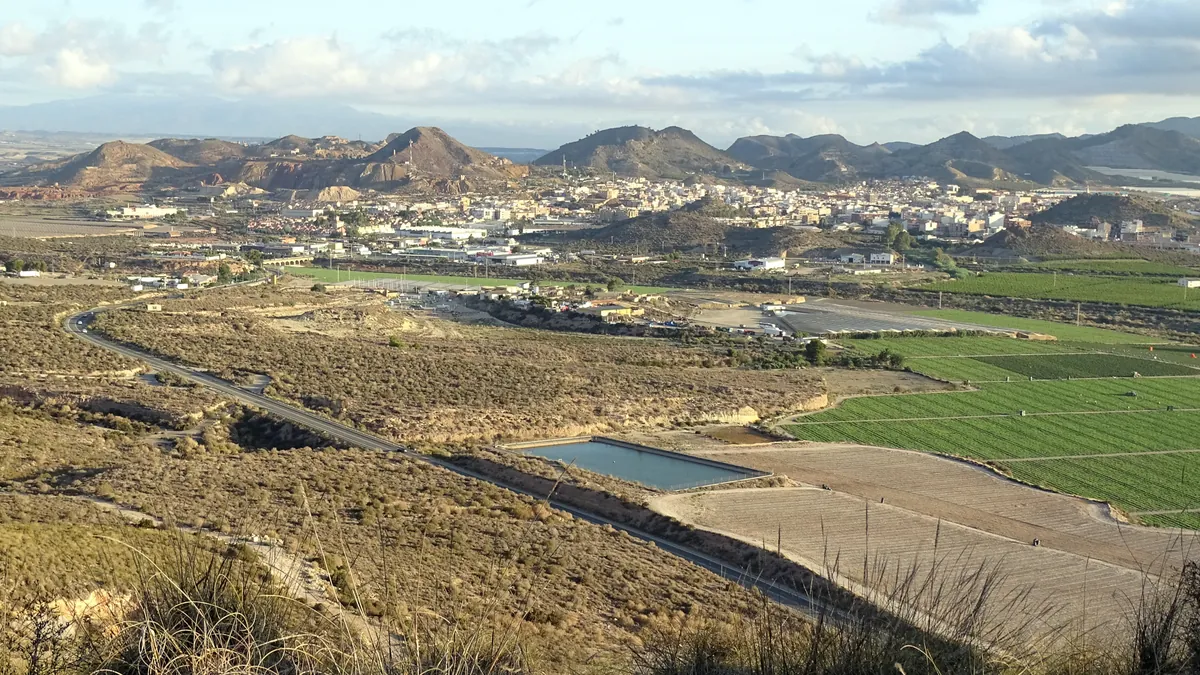
Come March, however, most visitors ignore the gorge and head straight for the orchards. Roughly 6,000 ha of peach, almond and apricot trees surround Cieza, and for two weeks—rarely more—the whole lot erupts into a froth of pink so intense it shows up on satellite images. Spaniards call it La Floración; photographers call it tripod gridlock. Mid-week mornings are sanest. Take the RM-530 out of town, pull off at the first lay-by past the petrol station, and walk. The land is privately farmed but footpaths are public; farmers will wave if you stick to the margins. Dust rises from the terraces, coating everything in a pale ochre that makes the blossom look even louder. Bring water: shade is non-existent and the closest bar is two kilometres back towards town.
If mobility is limited, the Balcón del Muro lookout gives the postcard version without the hike. A tarmacked lane leads from the upper cemetery to a metal platform cantilevered over the valley. Below, the Segura coils between stripes of pastel petals; beyond, the Sierra de la Puerta rises raw and brown, the colour difference so abrupt it feels like Photoshop. Coaches stop here, but they rarely linger longer than fifteen minutes—just enough time for coffee from the mobile van that pitches up at 10 a.m. sharp. Espresso costs €1.20; the attendant keeps a flask of hot milk for Brits who ask politely.
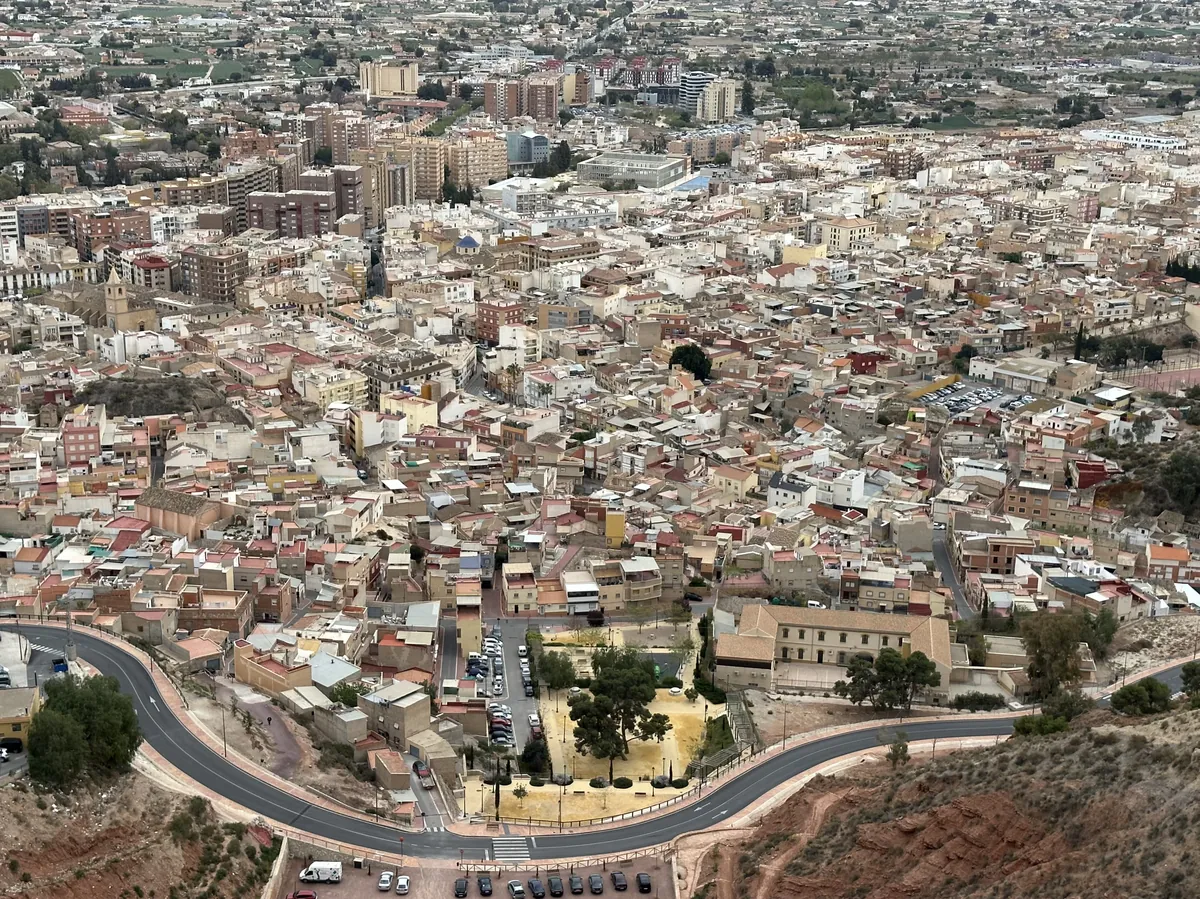
Back in the centre, Cieza's architecture is solidly 16th- to 18th-century provincial Spain. The Basílica de la Asunción squats on the main square like a weathered chess rook, its tower rebuilt after the 1829 earthquake. Inside, a painted wooden Christ by Francisco Salzillo (Murcia's most celebrated baroque sculptor) hangs above the altar, anatomically correct down to the tension in the toes. Entry is free; lighting is coin-operated, so feed the box fifty cents or you'll be peering in the dark. Round the corner, the Ermita de San Bartolomé offers plainer comforts: thick stone walls that stay cool even when the thermometer outside nudges 38 °C in July.
Food follows the river too. Segura water irrigates the orchards and the vegetable plots that supply Cieza's small restaurants. At lunchtime you will be offered gachasmigas—fried breadcrumbs with garlic, bacon and grapes—intended as winter fuel but served year-round because visitors like the theatre of the sizzling pan. Rabbit and snail paella appears on weekends; if the idea of chewing molluscs alarms you, request conejo solo and the kitchen will comply. Pudding is almost always trenza ciezana, a plaited puff pastry filled with peach conserve and almonds. Order it with the local honey, thick as set custard and tasting faintly of rosemary. House red comes from Jumilla, twenty minutes north; expect Monastrell-heavy guts rather than subtlety, and prices that rarely top €14 a bottle.
Evenings centre on the paseo. Families drift along Avenida de la Constitución from 8 p.m. onwards, window-shopping the same boutiques that were here last century. Foreign voices stand out—there simply aren't many. Accommodation reflects that: two small hotels, half a dozen guesthouses, no chains. The three-star Sercotel sits opposite the basilica and charges around €65 for a double in blossom season, breakfast included. Book early: Spanish school parties descend mid-week and rooms vanish. A smarter option is to stay in Murcia city and drive; the A-30 is dual-carriageway all the way, 50 minutes door to door, and car hire at Corvera airport starts from £22 a day if you reserve before arrival.
Weather is the variable that catches people out. Spring can flip from 25 °C sunshine to 12 °C drizzle in the time it takes to finish your coffee; pack a fleece. Summer is furnace-hot—40 °C is routine—and the blossom has long gone, leaving dusty terraces and cheaper hotel rates. Autumn brings the peach harvest and the Fiesta de la Vendimia, when tractors block the streets and every bar offers new wine that tastes like alcoholic grape juice. Winter is quiet, often grey, yet the gorge walks are at their best under low light and empty trails.
Leave time, too, for the river itself. Kayak rental operates from a hut beside the N-301 bridge; two-hour drifts downstream cost €20 including shuttle and dry-bag. The water is flat, shallow and warm enough to swim from May onwards. Kingfishers dart between reed clumps, and the canyon walls rise ochre above you like a condensed Grand Canyon with better snacks. Guides speak serviceable English learned from decades of RAF pilots stationed at the nearby base; ask nicely and they'll point out the rock panel where Bronze-Age artists scratched a whale—proof that even prehistoric visitors appreciated a good fish story.
Cieza won't hand you instant thrills. There are no beach clubs, no whitewashed Instagram corners, no souvenir stalls beyond a single kiosk selling tinned peaches wrapped in ribbon. What it offers instead is continuity: the same blossom sequence the Moors watched, the same river route Iberian shepherds followed, the same slow lunch schedule their descendants insist on keeping. Turn up with sturdy shoes and a tolerance for siesta hours and you'll be fine. Forget either, and the town will still be here next year—blooming on its own terms, not yours.