Full Article
about Fuente Álamo de Murcia
Hide article Read full article
A Town Announced by Lemon Trees
The smell of freshly cut lemon reaches you before the town comes into view. In September, the fields around Fuente Álamo are heavy with fruit, branches bending under the weight. From the road, the bell tower of San Agustín stands out against a pale sky, sharp as a pencil line. Down in the square, men sit with their shirts open, talking with their hands, unhurried, as if the heat has taught them there is no need to rush.
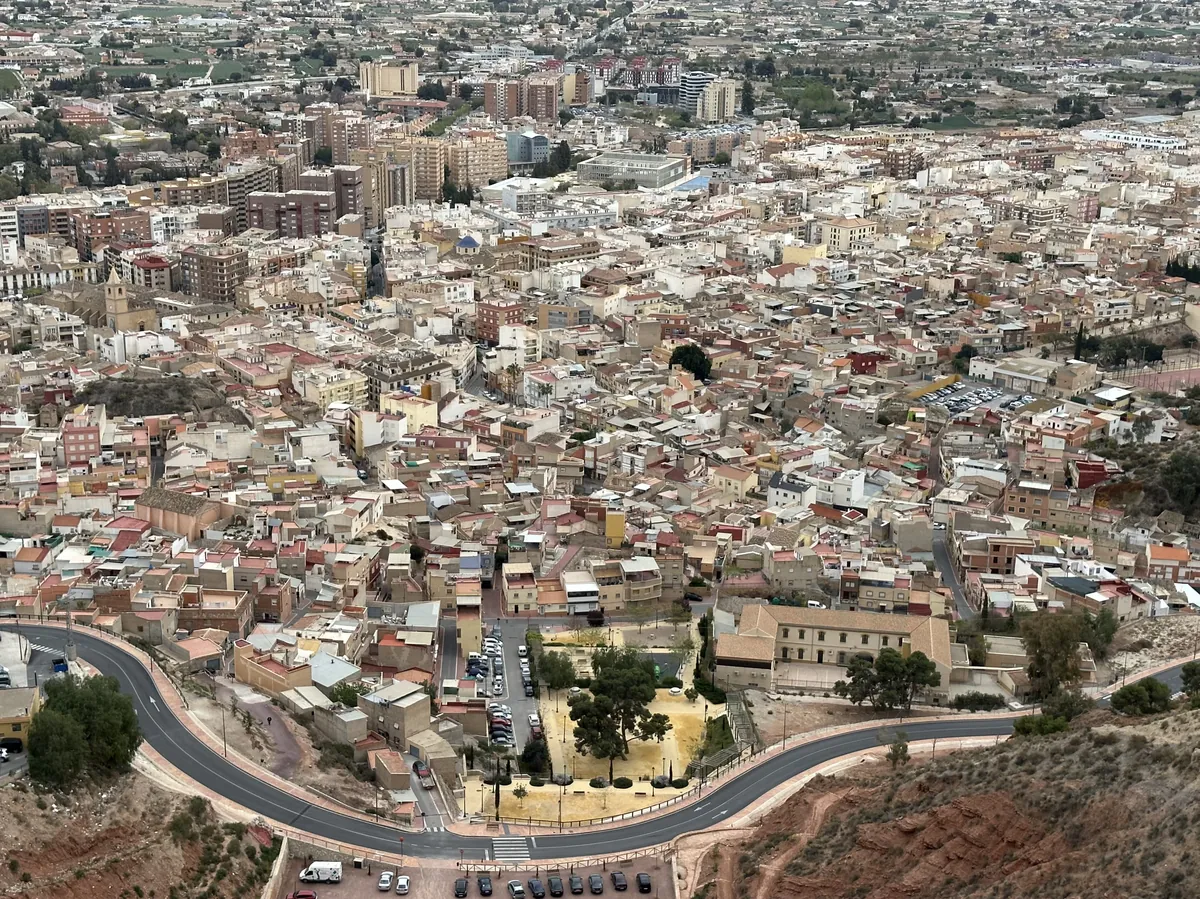
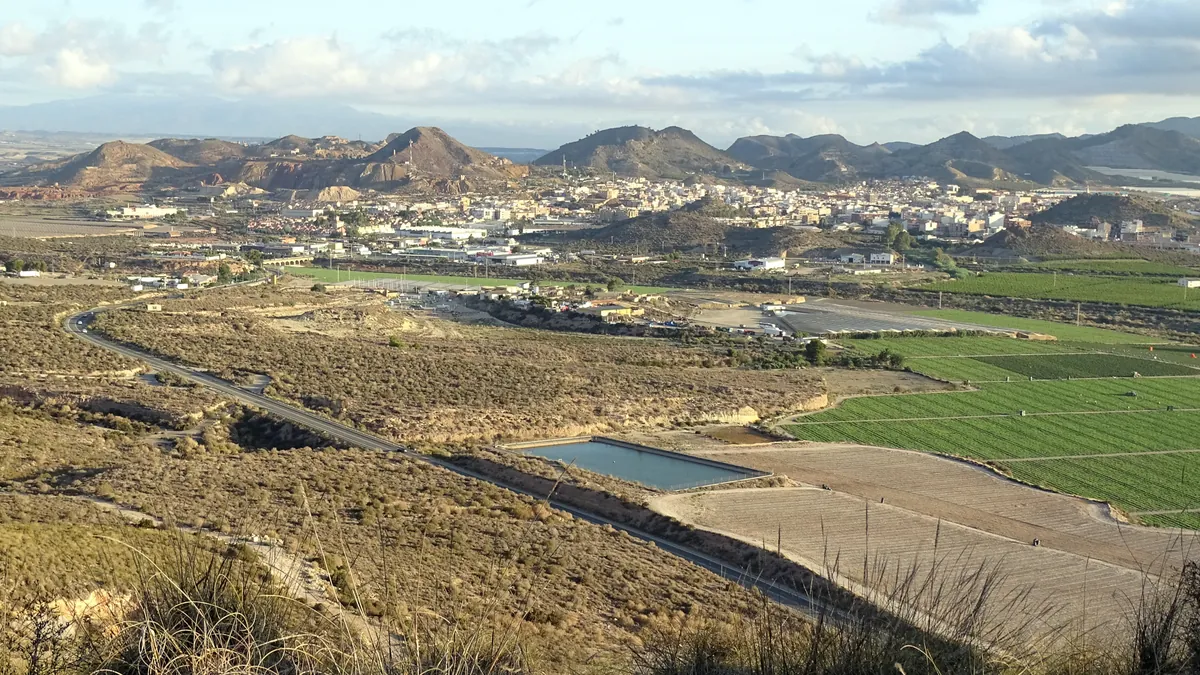
Fuente Álamo sits low and wide across the land. There is no dramatic arrival, no sudden reveal. It feels as though it has grown out of the fields that surround it, shaped by agriculture more than by spectacle. The pace follows the same rhythm: steady, practical, and tied to the seasons.
A Place Built for Fields, Not Walls
Unlike many towns in Spain, Fuente Álamo does not keep its past in narrow stone streets or defensive walls. It was founded in 1520, at a time when this region still carried the aftertaste of conquest and uncertainty. Instead of fortifying, the priority here was cultivation.
That decision is visible in the layout. The town spreads across flat ground, its streets wide and straight, as if drawn with a ruler. There was no need to retreat behind walls. The land needed to be worked, not defended.
The Church of San Agustín reflects this history without saying a word. Construction began in the 16th century, and the building carries the solid, dry character typical of southern churches. Murcian Baroque is restrained: less gold, more sunlight. Inside, the air smells faintly of wax and old wood. On a quiet weekday morning, it is likely to be empty. Light filters through the skylights and falls in rectangles across the red tiled floor, giving the space a calm, almost suspended atmosphere.
Eating What the Land Provides
Food in Fuente Álamo follows a simple rule: it comes from nearby. Lamb raised on the slopes of the Carrascoy mountains, lemons that remain on the trees well into winter, and products from traditional home slaughtering that still survive in some households.
Meals are straightforward. There are no long menus or elaborate rituals. You will find grills already smoking early in the day and simple tables where wine is served in jugs rather than bottles. It is food shaped by habit rather than presentation.
At the centre of it all is zarangollo. This local dish combines courgette, onion and egg, cooked together until it becomes something between a scramble and a soft sauté. It is prepared in well-used frying pans, sometimes held together with improvised repairs. If it is placed in front of you, the expectation is clear: eat it. Asking for a definitive recipe misses the point. Each household has its own version, and none is considered more correct than another.
Forty Kilometres of Quiet
The Vía Verde runs straight across the municipality for 40 kilometres. It follows the route of a former railway line that once linked the mining area of Cartagena with inland regions. Today, the tracks are gone. In their place is a path of compacted earth, bordered by pine trees and long stretches of silence.
Starting in Fuente Álamo, it is possible to head towards the port of Mazarrón without encountering a single car. The occasional runner might pass by, shirt soaked with sweat, but otherwise the route remains largely undisturbed. It offers a different way to understand the landscape: not as a backdrop, but as something continuous and expansive.
In autumn, as the sun lowers, the Carrascoy range takes on a purple tone. This is when many head up to La Peña del Águila, which rises to 1,066 metres. The path begins among pines and gradually shifts to limestone rock. From the summit, the Guadalentín Valley stretches out below, a wide expanse of lemon groves broken only by the red roofs of the town.
The wind moves steadily up the slope, carrying with it the dry scent of thyme. It is a place defined more by space and air than by landmarks.
August and the Sound of Celebration
The calm shifts in August. The fiestas of San Agustín officially begin on the 28th, but preparations start much earlier in the month. For a full week, the town changes pace completely.
Calle Mayor turns into a corridor of lights. Bars bring their tables out onto the pavement, and the fairground becomes a meeting point, much like the old frontón once was for previous generations. The atmosphere is louder, more crowded, and far less predictable.
During these days, Fuente Álamo no longer feels like it belongs solely to its residents. Visitors arrive, streets fill, and the balance tips towards celebration. Music continues late into the night. Queues form, and prices adjust to the surge in demand. It is a moment that divides opinion: lively and communal for some, overwhelming for others.
Getting There and Choosing Your Moment
Fuente Álamo is connected to the city of Murcia by the RM-2 road, a journey of about half an hour. The route passes through lemon groves and the occasional stretch of white plastic greenhouses that interrupt the view. There is no train station in the town, but buses run regularly to the regional capital. Parking is generally easy, except in August, when even empty plots fill up.
October stands out as the most balanced time to visit. The feria has ended, temperatures ease, and the lemon trees begin to flower. Mornings often start with low mist over the fields, which clears before mid-morning. By afternoon, the light turns soft and golden.
At this time of year, daily life settles back into its usual rhythm. Bars return to serving locals, and familiarity replaces the intensity of summer. Spring has its own draw, but Semana Santa brings processions that fill the streets with nazarenos, participants in traditional religious parades. Those looking for quiet may find it less suitable.
High summer tells a different story. In July, temperatures approach 40 degrees, and the town empties out. Those who remain do so out of necessity rather than choice. The lemon trees, however, stay where they are, enduring the heat as they always have.