Full Article
about Lorquí
Hide article Read full article
At half past eight in the morning, the Rapao waterwheel turns slowly, its 112 wooden buckets lifting water from the Segura with the sound of an old clock. From the iron bridge, you can watch the water spill into narrow channels that slip away among orange trees. This is the same noria that once irrigated 300 tahúllas of land, back when Lorquí had a quarter of its current population.
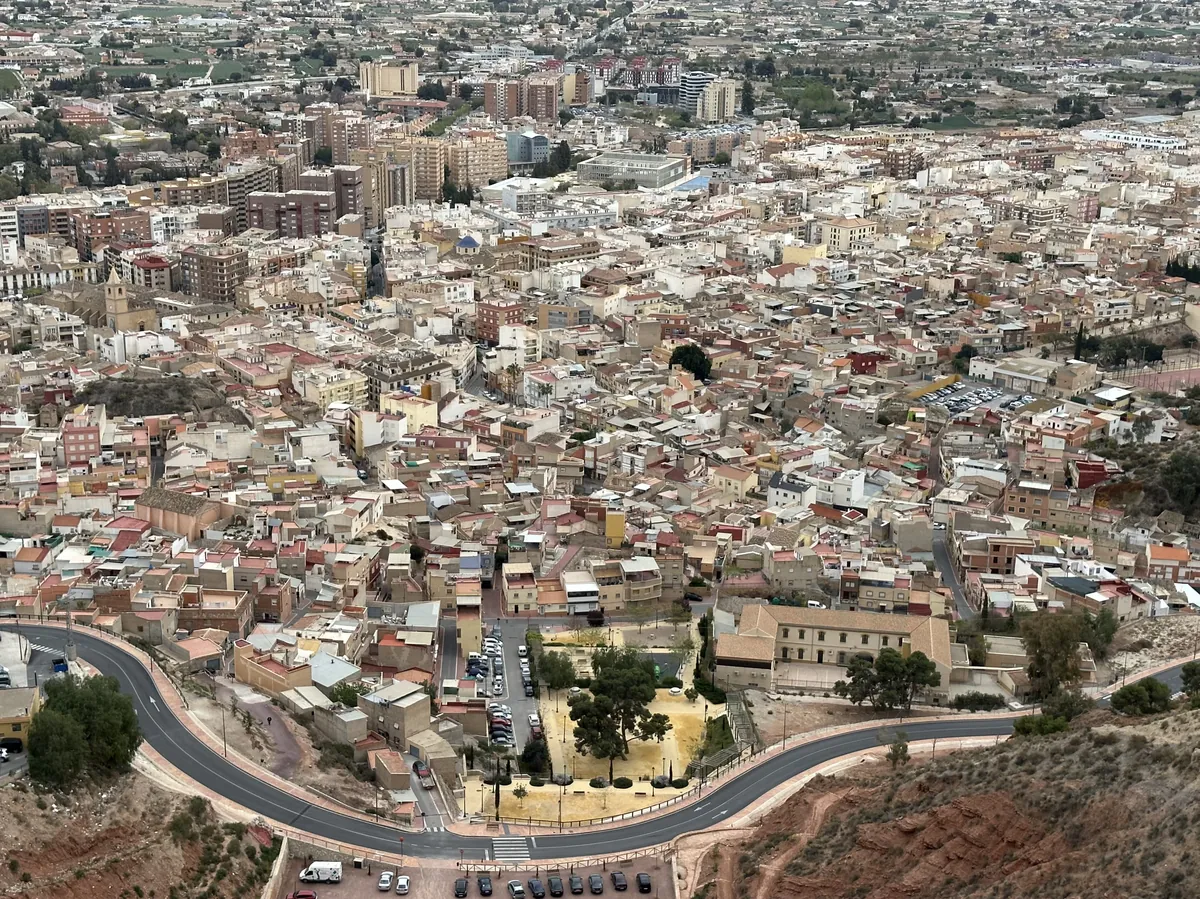
The town centre sits on a hill, its streets twisting as they did when they were Moorish enclosures. Walking up the slope of San Antón, the heat gathers on the earthen walls, and the lemon trees in the patios release a sweet scent that blends with freshly turned soil. At the top, the church of Santiago looks out across the valley with its red brick tower. Inside, the light is filtered and soft. Three sculptures by Salzillo, San José, Jesús Nazareno and the Dolorosa, seem almost to breathe in the half-shadow.
The river that explains everything
The Segura runs through Lorquí between stands of reeds that whisper when the breeze passes. Here the river is wide and unhurried, taking its time as it curves around a meander before continuing towards Murcia. On the left bank are the remains of an aceña, where grain was ground in the time of Al-Andalus. On the right, orange trees stretch down to the water’s edge.
Following the gravel path along the river, it is common to come across anglers who have been standing still for hours, watching a float that barely stirs. They do not ask why you are there. They assume you are passing through and leave you to it. The pace of the place seems to settle into the slow movement of the river itself.
Life in the rambla and the quiet of April
On 17 January, San Antón turns Lorquí outdoors. Families carry their tables and chairs to the rambla, a dry riverbed that becomes a social space, and light fires with orange wood. The smoke carries the scent of resin and grilled sausages. Children run about with blackened sticks, while older residents talk about who married whom before the war. It is a day when doors are open and food is shared, bread and mandarins passing from one group to another.
During Semana Santa, the mood changes. The procession of the Silence moves down the steep streets lit only by candles. Drums sound muted, as if absorbed by the clay walls. This has been repeated since the eighteenth century: Jesús Nazareno is carried down to the square and taken back up again before dawn. On weekdays there is usually space to sit on the steps and watch. On Good Friday, it is better to arrive early.
The hill of General Scipio
Behind the town rises the hill known as the cerro del General Escipión, a grand name for a slope covered in pines and rosemary. According to local tradition, the Roman consul ended his life here after defeat by the Carthaginians, although not everyone in Lorquí takes the story at face value. What is certain is the view from the top.
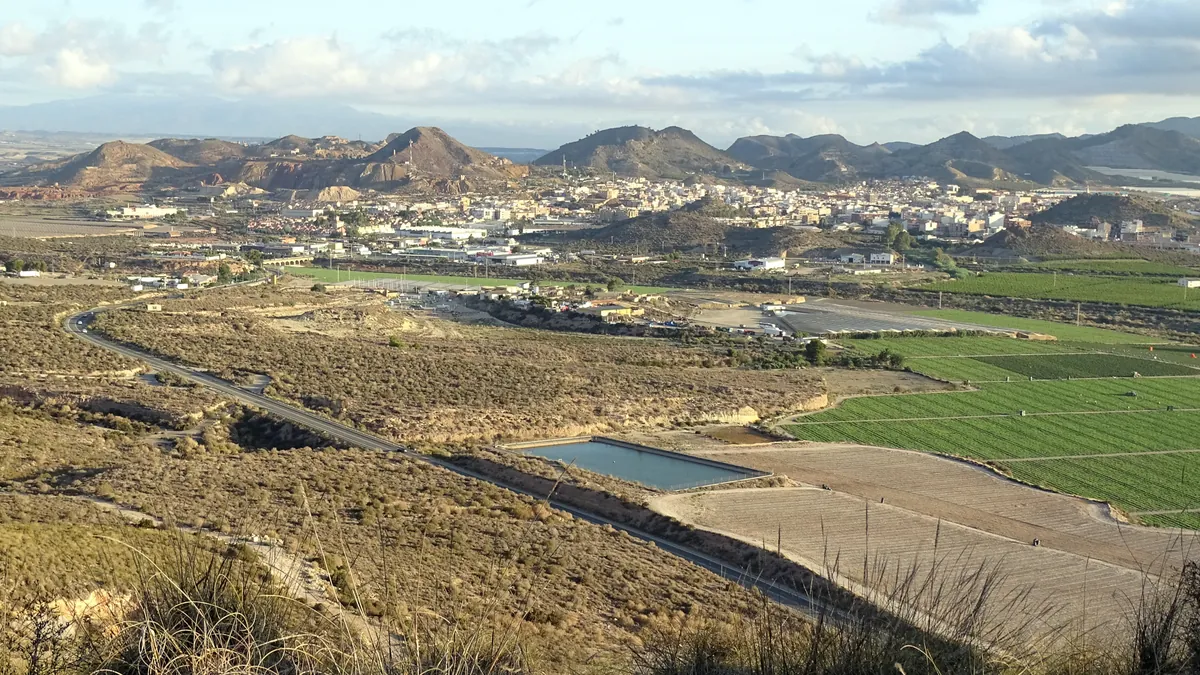
From there, the whole Ricote Valley opens out: terraced orchards, villages pressed close to the water, and the Segura winding through it all like a green ribbon. The walk up takes about twenty minutes along a path of pale stone that can be slippery after rain. It is worth bringing your own water, as there are no fountains or facilities at the summit.
Notes for the way
Lorquí lies about ten minutes by car from Alcantarilla and twenty-five from Murcia. There is an hourly bus from Murcia’s station, though the last return service is usually around half past eight in the evening. In August, weekends tend to fill with parked cars crowding the corners of the streets. Weekday mornings are quieter, when the town moves at a slower pace.
In October, during the Virgen del Rosario celebrations, women dress in the traditional traje de huertano and bring flowers to the church. It is their way of showing they are still here. If you happen to meet the procession, the expected gesture is simple: step aside and wait. There is no need to applaud or reach for a phone. Just watch as palm leaves sway in time with the band and the autumn sun warms the façades, just as it always has.