Full Article
about Molina de Segura
Hide article Read full article
Between the Segura Valley and the hillside
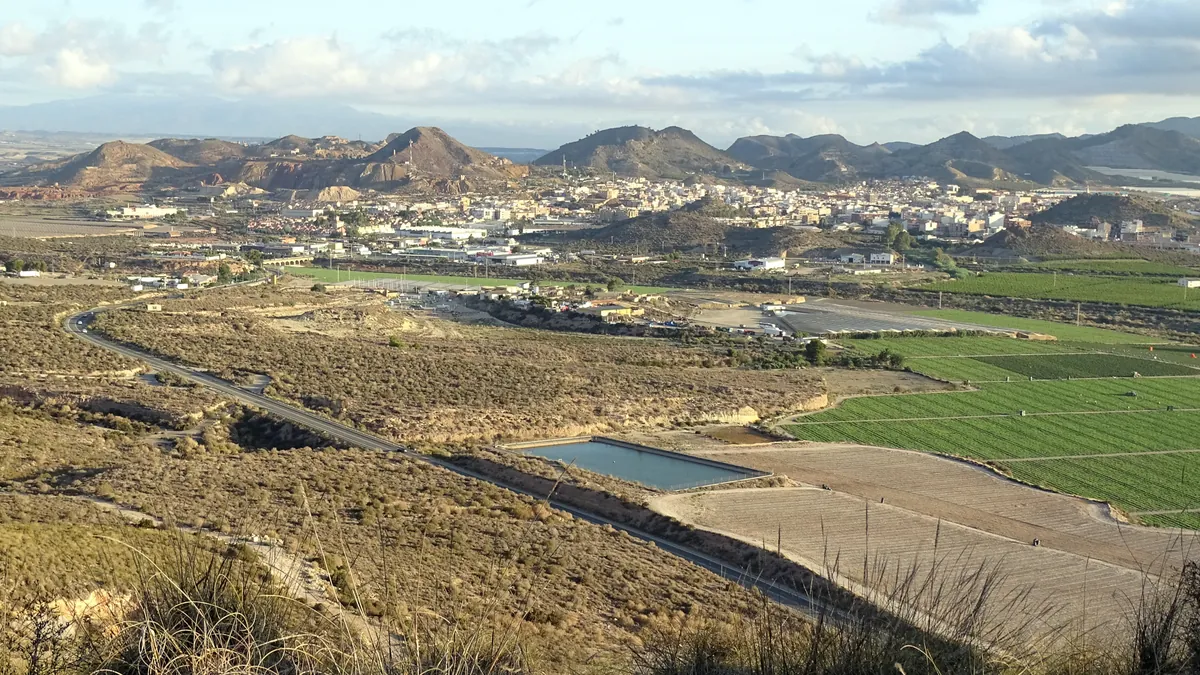
The bells of the iglesia de San Roque mark the early hours as daylight begins to clear over the Valle del Segura. From the hill of the Castillo, where fragments of the old wall still overlook the river’s course, the surrounding fields slowly come into view. Citrus groves spread out around Molina de Segura, their colours shifting with the light. The air carries the scent of freshly baked bread and still holds a trace of the night’s coolness before the heat builds.
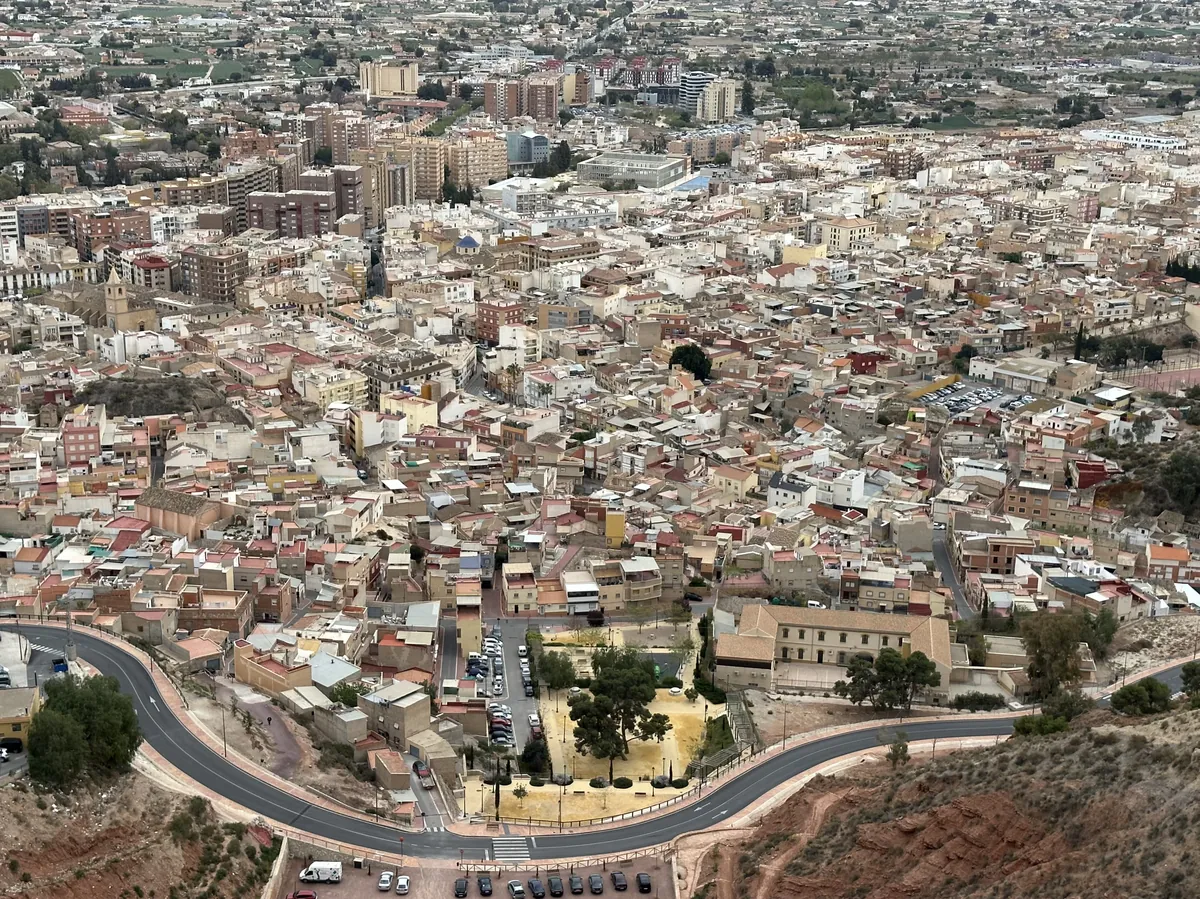
From this vantage point, the old town forms a compact maze. Roofs of curved Arab tiles sit tightly together, and the streets wind along the slope rather than cutting across it. Houses cluster closely, their rammed-earth walls designed to hold a steady temperature during the hottest hours. In winter, frost settles across the hillside, drifting down from the Sierra de la Espada. At around five hundred metres above sea level, the altitude makes itself felt in those colder months.
Water, walls and factory chimneys
The MUDEM occupies the remains of an Islamic fortification. Its nine-sided tower stands out in the region, both for its shape and for what it represents. From the top, the contrast is immediate. The traces of the 11th-century hisn share the same skyline as the chimneys of more recent industry, structures that defined the local economy for decades.
The route known as the “chimneys trail” crosses the town, marking the spots where machinery once dominated daily life. Some of these industrial elements remain upright, worn by time, reminders of a not-so-distant past. Along calle de la Virgen, an old flour mill has been turned into housing. Its hydraulic wheel is still fixed to the façade, an object from another era now embedded in everyday surroundings.
Stories about these places continue to circulate among residents. Many recall what they heard from earlier generations about work in the mills, before the flood of 1951 altered the landscape and its routines. The presence of water, whether in irrigation channels or in sudden surges, has always shaped life here.
Food rooted in the land
By midday, the smell of toasted pimentón drifts through the centre, blending with the scent of orange blossom. In local bars, migas ruleras appear with chorizo from the area. It is a dish that shifts with the seasons: served with melon in summer, with grapes in winter.
When temperatures drop, olla de cerdo with white beans finds its way onto menus. Another constant is mondongo viudo, a rice dish with potato that often catches visitors off guard. It looks simple, yet it holds a long-standing place in local cooking.
Arroz a la huertana reveals how closely food follows the agricultural calendar. Each household has its own version, shaped by what is available at the time. Broad beans in March, green beans in June, cardoon in December. The dish reflects the rhythm of work in the fields, those early starts when irrigation gates are opened and water runs through the acequias, as it has done for centuries.
Around the lagoon
Laguna de Campotéjar lies a short drive from the town. In spring, tamarisk trees fill with malvasía cabeciblanca, a duck species recognised by the male’s white head. Birdwatching here rewards patience. Calm conditions and early light often bring the best chances, when mist lingers over the water and the surrounding hills reflect on its surface.
A flat path of roughly three kilometres circles the lagoon. From it, a detour leads towards the rambla del Cigarrón. This is a landscape of esparto grass, a plant that supported generations of people in Molina. Its fibres were once essential to local crafts and livelihoods.
That connection has not completely disappeared. In the neighbourhood of las Capuchinas, some family workshops continue the tradition. The smell of soaked esparto still hangs in the air, a sensory link to the time before mechanisation changed production methods.
Festivals and shared rhythms
The calendar brings a steady sequence of celebrations. In September, the Virgen de la Consolación is carried down from her hermitage, marking the beginning of nine days of activity across the town. Shortly before that, the B-Side festival introduces live music into an unusual setting, using an industrial estate as its stage.
October shifts attention to street theatre. Performances take place in squares and on street corners, and it is common to see residents bringing chairs outside their homes to follow the action. The boundary between performers and audience becomes less defined during these days.
In Torrealta, Semana Santa includes a Vía Crucis that climbs towards the sierra by torchlight. The representation unfolds over several hours and reaches its final moment at dawn on Good Friday, with the crucifixion. It is a tradition experienced from within the local brotherhoods, rather than as a spectacle observed from a distance.
Notes for a stay
Molina de Segura is within easy reach of Murcia and can be approached by road through landscapes dominated by citrus groves. Travelling by car allows a more gradual view of the vega, where green and yellow tones stretch across the fields.
The climate shapes the experience. The dry heat of mid-summer can be intense, while autumn months such as October and November offer milder conditions for walking. In winter, the nearby sierra is often dusted with snow, and on clear days it is possible to glimpse the sea far away.
Accommodation here tends to be modest in scale. Traditional eating houses follow local routines, closing after the main service of the day, and cafés often serve coffee in simple glass cups. The atmosphere is defined less by large facilities and more by everyday habits.
Molina de Segura sits at a meeting point of past and present. Worn stone steps, irrigation channels, and industrial remnants all coexist with the ongoing life of the huerta. The result is a place where change has not erased what came before, but settled alongside it.