Full Article
about Moratalla
Hide article Read full article
The morning the town starts to beat
At six in the morning on Maundy Thursday, before the sun rises over the Peñón de la Encantada, the drumming begins. There is no single band and no formal procession. People step out onto the streets with their own drums and start playing wherever they happen to be. The sound spreads through the cobbled streets like a pulse that gathers strength as it moves.
Moratalla has practised this collective noise for centuries. It is a curious tradition, one that seems to grow out of silence rather than replace it. Each drummer follows their own rhythm, yet together they fill the town with a shared intensity that lasts for days.
A landscape shaped by rock
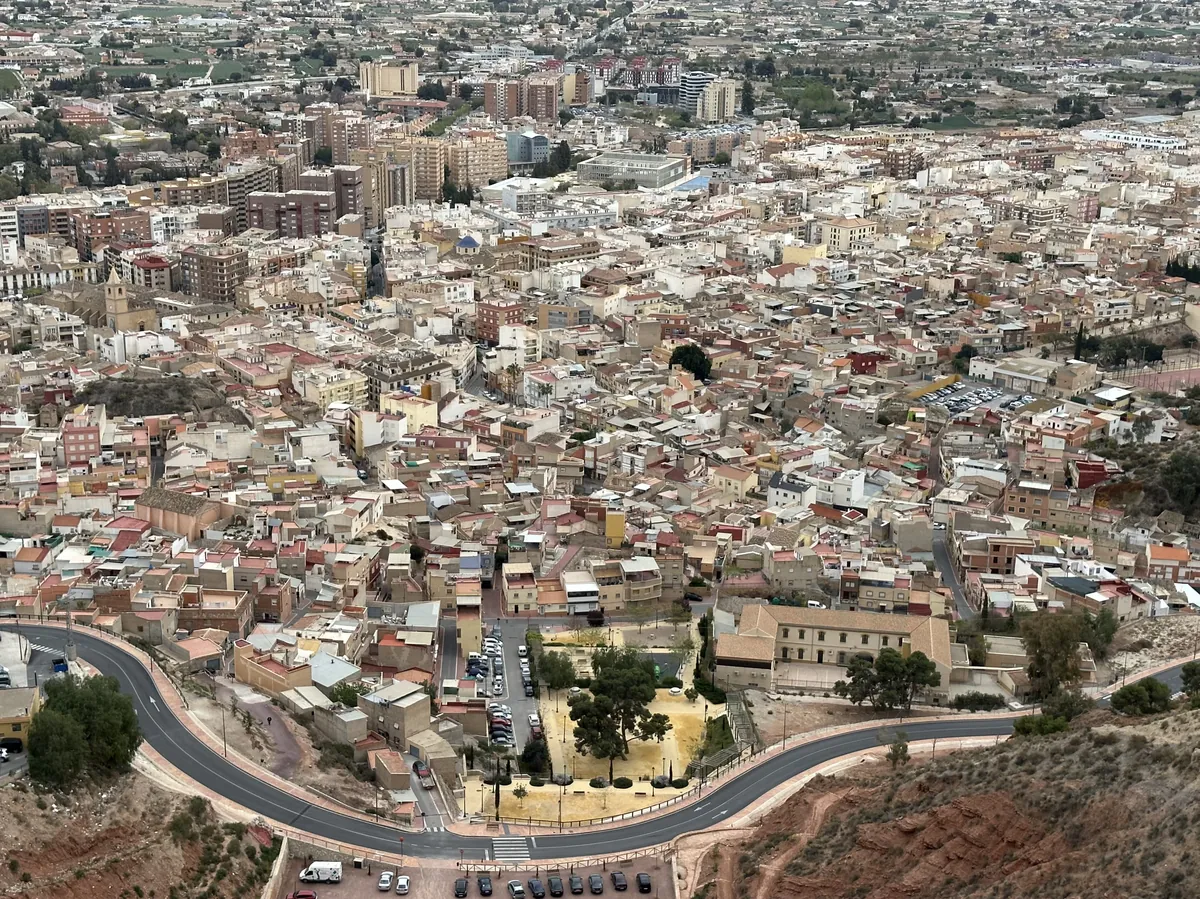
Moratalla makes most sense when seen from above. The town clings to a limestone hill at around 600 metres above sea level, overlooking the Alhárabe valley. The terrain here is not simply scenic. It determined who settled in this place and how they built their lives.
In the 9th century, Muslim settlers chose this high ground to construct a hisn, a fortified site designed to control the frontier with the taifa kingdom of Murcia. The castle that still stands today dates largely from later rebuilding, though its origins lie in that earlier structure. The street layout also reflects this past. Routes wind upwards in irregular zigzags, following the least steep paths rather than any planned grid.
The same rocky environment explains another defining feature of the area. Just a few kilometres from the town centre, in places such as Cañaíca del Calar and Fuente del Sabuco, there are shelters containing prehistoric cave paintings. These works date back to the Neolithic period. Simple red lines and schematic human and animal figures remain visible on the rock surfaces, traces of communities that chose these outcrops for refuge around 7,000 years ago. The wider area received UNESCO World Heritage status in 1998.
The drum as identity
The Fiesta del Tambor in Moratalla is not a parade in the usual sense. There is no single route and no fixed rhythm imposed from above. Each tamborista decides where to go and how to play.
Participants wear tunics in bright colours such as blue, red or yellow. Their faces are covered with a scarf, a distinctive local detail that sets Moratalla apart from other drumming traditions in Spain. Over Maundy Thursday, Good Friday and Easter Sunday, the entire town becomes a resonating space where sound seems to bounce from one street to the next.
The origins of the festival are not precisely documented. The most widely accepted version links it to a vow made during a plague in the 17th century. Even so, the exact date matters less than how the tradition has been passed down. Drumming is learned at home, from one generation to the next. Younger participants often compete in informal duels, pushing for speed and technical flair. Older drummers favour slower rhythms, focusing on endurance and steady repetition.
Castle walls and collective justice
From the Plaza de la Constitución, a steep climb leads up to the castle entrance. What stands today is mainly a 15th-century reconstruction, though parts of the earlier Islamic fortress remain. Its layout follows the uneven ground, and a keep rises above the rest, doubling as a viewpoint over the valley.
Above the main entrance, an iron grille still hangs in place. In 1465, the commander Alfonso de Vozmediano was executed there, accused of abuses against the local population. The event caused such an uproar that it reached King Henry IV, who intervened afterwards. The rusted grille remains as a stark reminder of how forcefully popular justice has been exercised in Moratalla.
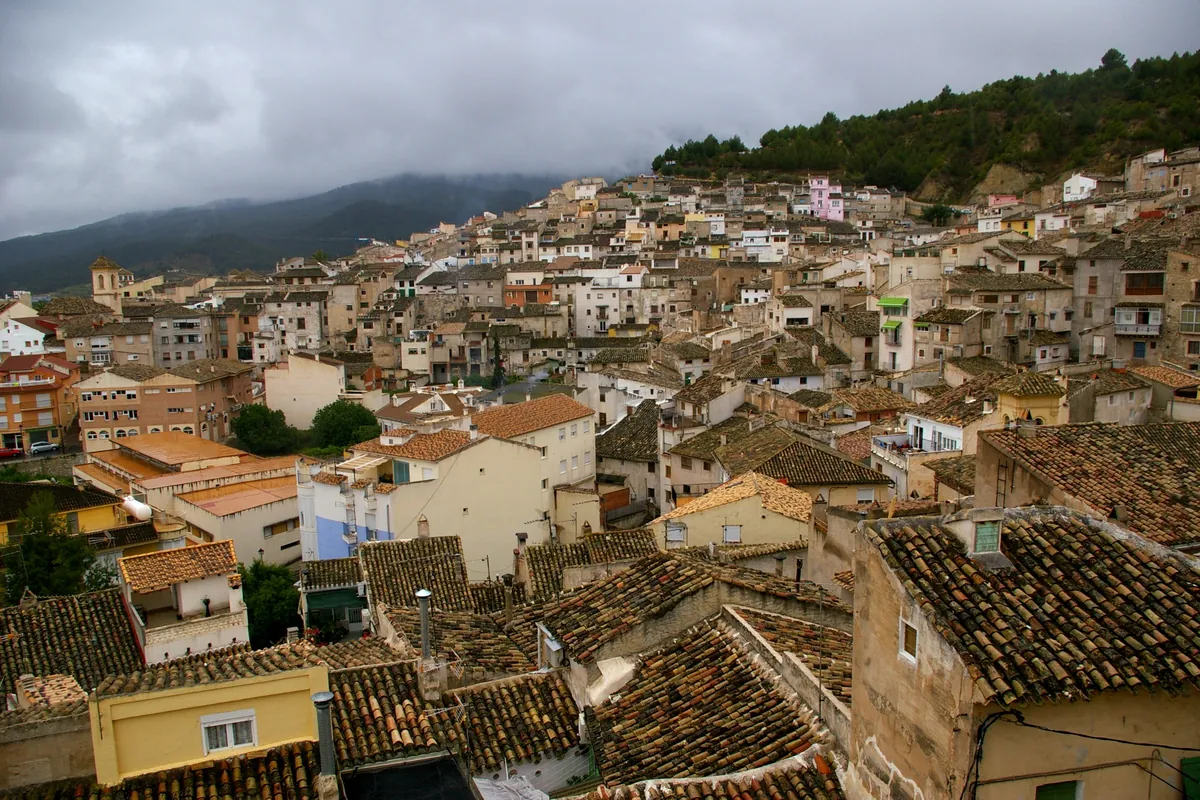
Descending through the streets around the castle reveals another layer of the town’s history. Traditional houses are built with masonry walls, wooden beams and roofs covered in curved tiles. Some still display carved coats of arms belonging to the families who once lived there. Nearby stands the Iglesia de la Asunción, begun in the 16th century by Francesco Fiorentino. Its Renaissance façade contrasts with the more rugged character of the surrounding buildings.
Food from the inland landscape
Moratalla’s cooking reflects what the surrounding land provides. Game such as wild rabbit, along with free-range chicken, appears frequently in local dishes. In autumn, wild mushrooms become part of the seasonal repertoire.
Rice with rabbit and chicken is prepared as a soupy dish, in keeping with inland culinary traditions. Morcilla is another staple, made with onion, rice and a blend of spices. Each butcher keeps their own proportions, giving subtle differences from one place to another.
Bakeries continue to produce marzipan using traditional methods. Here it tends to be drier than other well-known versions, made with locally grown almonds and less sugar. Wines come from Las Cañadas, where vineyards are planted on terraces at around 800 metres altitude. Garnacha and monastrell grapes ripen slowly in these conditions, and production is typically small-scale and family run.
Notes for the journey
Moratalla lies about an hour and a half from Murcia by road, following the A-30 and then the RM-714. The final stretch is along a regional road with bends.
July and August are best avoided due to the dry heat, which can be intense. Spring and autumn offer more comfortable conditions for walking to the rock shelters and exploring the surroundings. Anyone planning to experience the drumming festival should arrange accommodation in advance, as rural houses in the area tend to fill quickly. One day is enough to see the old town and the castle, while two days allow time to visit a rock art site and spend longer in the natural setting.