Ojós - Flickr
Región de Murcia · Orchards & Mediterranean

Ojós

At 132 m above sea level, Ojos sits low enough for oranges to ripen yet high enough for the night air to carry a chill even in May. The village occ...

548 inhabitants · INE 2025
132m Altitude

Why Visit

Best Time to Visit

summer

Saint Augustine agosto

Festivals
& & Traditions

Fecha agosto

San Agustín, Fiestas Patronales

Las fiestas locales son el momento perfecto para vivir la autenticidad de Ojós.

Full Article
about Ojós

Ocultar artículo Leer artículo completo

At 132 m above sea level, Ojos sits low enough for oranges to ripen yet high enough for the night air to carry a chill even in May. The village occupies a tight meander of the Río Segura, its single-arched suspension footbridge painted the same green as the irrigated terraces below. Stand on that bridge at sunrise and the water glints like polished pewter; look upstream and the river appears to double back on itself, cradling the settlement in a loop that medieval farmers turned into a patchwork of almond, lemon and olive plots.

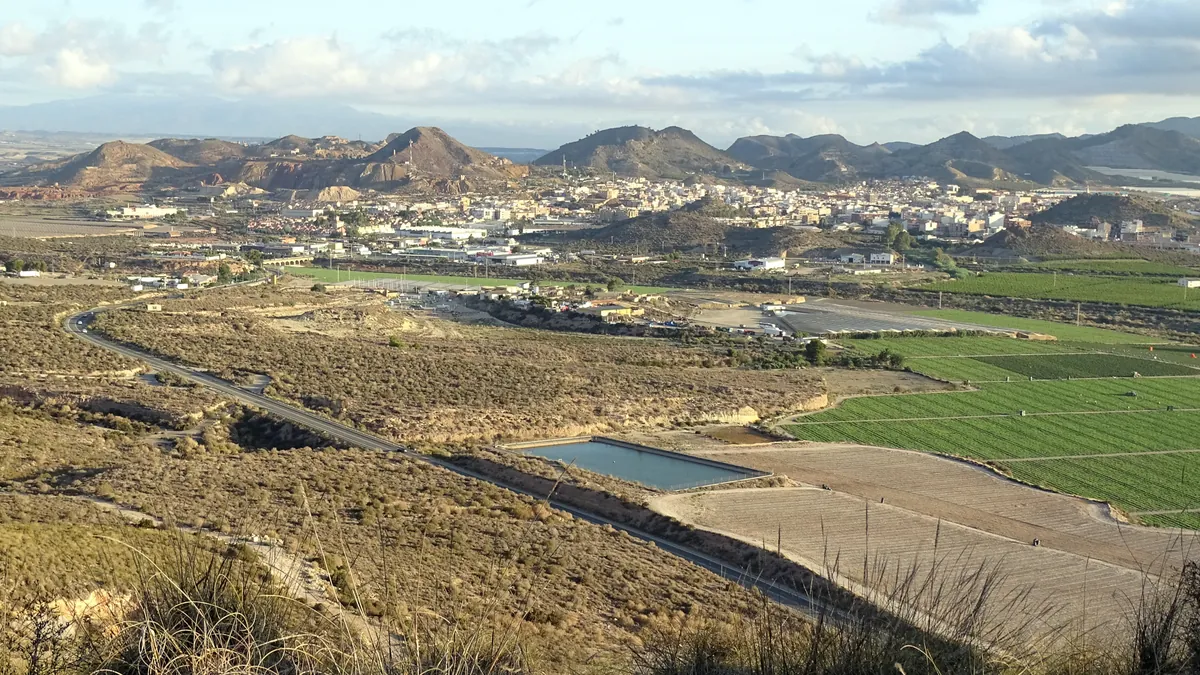
That loop is the first thing drivers notice after the 25-minute dash from Murcia-Corvera airport. The RM-533 winds down from the motorway, drops through chalky hills scarred by old quarries, then suddenly flattens into a ribbon of green no wider than a cricket pitch. Ojos appears on the right bank: white cubes, red tiles, a bell-tower that pokes above the canopy like a periscope. There is no ring road, no industrial estate, barely a petrol station—just the village, the river, and the agricultural terraces that climb the slope in neat stone-walled steps.

A Bridge, a Legend and a 500-Year Irrigation Ledger

The Puente Colgante, hung in 1988 to replace a rope crossing, is sturdier than it looks. British walking blogs praise its non-wobbly planks and the absence of vertigo-inducing bounce; children cycle across it, grandparents pause midway for photos. The bridge marks the start of the signed “Ruta de las Acequias”, a 6 km circuit that follows irrigation ditches cut by Moorish settlers and still governed by a medieval turno (rota) allocating water in 90-minute slots. Stone slabs carved with the date 1522 record disputes over flow rates—evidence that drought politics is nothing new in south-east Spain.

The path skirts smallholdings where owners hose down dusty aubergines and tie back tomato vines with strips of old sheet. You will hear the clack of shuttles from an open doorway: two women weaving esparto grass into the baskets once used for grape picking. Their workshop doubles as the village bakery after 11 a.m.; loaves emerge from a wood-fired dome blistered and heavy enough to double as doorstops. Buy one (£1.20) while it is still too hot to hold.

Halfway round, the track climbs 80 m to a limestone bluff known as the Salto de la Novia (Bride’s Leap). Legend says Moorish brides had to leap the gap to prove courage; reality says the “leap” is a yard-wide cleft above a dry gully, easily stepped. Beyond it, the view opens north to the Sierra de Villafuerte, south to the irrigated floodplain that Murcians call the “market garden of Europe”. On a clear March morning you can pick out the spa town of Archena 12 km away by the glint of its hotel swimming pool.

When the River Dictates the Calendar

Ojos owes its micro-climate to altitude and water. Summer temperatures hover five degrees below Murcia city, enough for terraces to stay in production while the surrounding semi-desert turns beige. Afternoon northerlies funnel up the valley, rattling cane windbreaks and keeping mosquitos at bay; nights drop to 18 °C even in July, so bedrooms rarely need more than a ceiling fan. Winter reverses the equation: cold air pools in the meander, frost blackens the basil, and the single village bar wheels in a two-bar electric fire that smells of toasted dust.

Access reflects the seasons. Heavy rain in October can lift the Segura above its banks and cover the lower allotments with a brown film of silt; the RM-533 is closed to lorries until sweepers clear the grit. Conversely, July and August bring coach parties from the Costa Blanca on a whistle-stop Ricote Valley circuit. They park beside the bridge, photograph the loop, buy an ice-cream from the mobile van that arrives at 11 sharp, and leave within 45 minutes. Stay overnight and you will have the place to yourself by six.

There is, however, nowhere official to stay. The ayuntamiento lists two rural houses, both booked months ahead by Spanish families at Easter. Most visitors base themselves in Archena, five minutes up the road, where the four-star Termas hotel wraps around thermal pools at 32 °C and charges £110 B&B in low season. From there Ojos makes an easy pre-lunch stop, or an evening circuit when the light turns the cliffs honey-coloured and swifts stitch the sky above the bridge.

Eating, or Why You Should Pack a Knife

The village has one bar, Casa Antonio, open Thursday to Sunday only. Antonio cooks whatever his sister brings from her huerta: migas with grapes in September, artichoke hearts in April, a thick bean and pork stew on winter Saturdays. A plate costs €9, wine from a plastic jug €1.50; cards are refused, conversation obligatory. Otherwise sustenance comes from the bakery (empanadillas filled with tuna, 80 c) or from the Saturday morning produce stall outside the church: wrinkled peppers, bunches of herbs, jars of dark honey labelled simply “de Ojos”. Bring a pocketknife and you can assemble a picnic on the riverbank within minutes of arrival.

For anything fancier you drive to Ricote (10 min) and sit on the terrace of Casa Pedro for slow-roasted lamb shoulder at €18, or continue to Archena where the spa hotel’s restaurant will serve you a tasting menu with local wine flights for £45. Neither destination breaks the valley’s low-key mood; both close by 10.30 p.m., so plan accordingly.

Walking Onwards, or Turning Back

If the 6 km irrigation loop feels short, extend the day along the GR-252, a long-distance path that follows the Segura upstream to Cieza. The stretch from Ojos to Ulea adds another 8 km through citrus groves and across a gorge where griffon vultures nest. A taxi back from Ulea costs €20 if you phone the previous evening; otherwise hitchhiking is considered safe and drivers rarely refuse a sweaty walker.

Cyclists find the valley roads quiet before 10 a.m.; after that, Spanish weekend riders in full Lycra descend from Murcia city and the verges echo with shouted “¡Buen camino!”. The climb from Ojos to Blanca (250 m gain over 7 km) is steady rather than brutal, rewarded by a mirador that looks straight down the meander. Road bikes suffice; mountain bikes are overkill unless you plan the rough track to Valentinilla reservoir.

Leaving the Loop

By late afternoon the sun slips behind the western ridge and the river turns leaden. Swallows gather on the telephone wires; somewhere a dog barks at the echo of its own voice. The last Madrid-plated car reverses awkwardly out of the lay-by, hazard lights blinking, and the village returns to its default rhythm of water, wind and the occasional clank of a distant irrigation gate. Ojos never asked to be a destination; it is content to remain a pause in the valley road, a place where geography once forced the river to hesitate. Visit with modest expectations—bring sturdy shoes, a few coins for the bakery, and time to stand still while the Segura completes its lazy circuit around the houses. Then drive away before the dark makes the bends feel narrower than they really are.

Key Facts

Region
Región de Murcia
District
Región de Murcia
INE Code
30031
Coast
No
Mountain
No
Season
summer

Livability & Services

Key data for living or remote work

2024
ConnectivityFiber + 5G
TransportTrain nearby
HealthcareHealth center
EducationHigh school & elementary
Housing~5€/m² rent · Affordable
CoastBeach nearby
Sources: INE, CNMC, Ministry of Health, AEMET

Planning Your Visit?

Discover more villages in the Región de Murcia.

View full region →

More villages in Región de Murcia

Traveler Reviews