Full Article
about San Javier
Hide article Read full article
Morning on a still shore
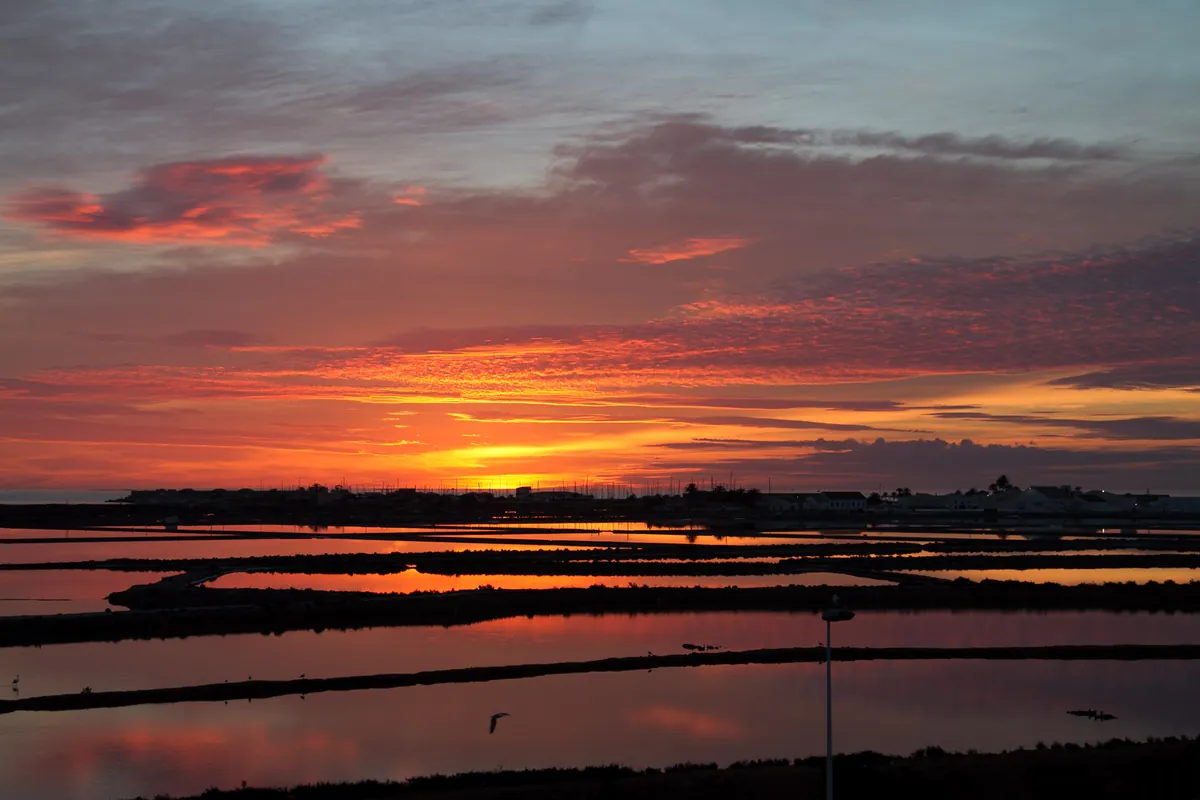
At eight in the morning along the promenade of Santiago de la Ribera, the Mar Menor lies so still it looks like mercury. A man threads a paddleboard between the empty tables of a beach bar. Gulls patrol the edge of the water with the slow confidence they keep for quiet hours. There is a faint smell of freshly baked bread, mingled with a salty, almost medicinal note that rises from the lagoon at dawn.
This is the first impression of San Javier: a place that moves gently before the day gathers pace. The light is soft, the shoreline open, and the lagoon sets the tone.
A body of water that plays tricks
The Mar Menor can be misleading. Anyone expecting the swell of the Mediterranean finds something else entirely: a shallow sheet of water that warms significantly in August. Children splash about without worrying about strong waves. Along the edge, dried strands of posidonia collect in dark clumps that crunch underfoot.
Cross the narrow strip of La Manga and the geography shifts. On the other side, the Mediterranean feels deeper in colour, its sandy seabed shifting under each step. These are two distinct worlds separated by a thin line of land. Each has its own rhythm.
The Mar Menor suits the early hours, before the easterly wind begins to ripple the surface. It rewards stillness and slow starts. The Mediterranean, by contrast, comes into its own later in the day. As evening approaches and the tide drops, shallow pools appear among the rocks, where small marine life shelters in the fading light.
Living with the sky overhead
By midday, the quiet breaks. A distant point appears on the horizon, followed by a streak of white cutting across the blue. The Patrulla Águila, the Spanish Air Force aerobatic team, practises its manoeuvres above the nearby air base. People look up almost without thinking. In San Javier, aviation is not a distant spectacle. It is part of everyday life. Pilots queue for bread at the same counter as everyone else.
In the neighbourhood of La Mota, where the military quarters are located, low houses line the streets with well-kept gardens. Around six in the evening, as the sun begins to lose its intensity, the sound of sprinklers fills the air. The scent of damp grass briefly overtakes the salt from the lagoon.
Eating by the lagoon
The food here is shaped by the Mar Menor. Caldero, the local rice dish, stands apart from other Spanish rice recipes. It is made with bomba rice, which absorbs a concentrated broth prepared from morralla, small fish used for stock, and rock fish such as pescadilla. It is served in heavy cast iron or clay pots that hold the heat long after it reaches the table. Tradition suggests letting it rest for a few minutes before eating, though that advice is often ignored.
On the terraces of Santiago de la Ribera, ensalada murciana appears regularly. It is a simple combination of sliced tomato, red onion, tuna preserved in escabeche, and hard-boiled egg. The key detail lies in the tomato. If it is too cold from the fridge, it loses the flavour that defines produce from this region.
For something sweet, borrachos are worth noting. These are almond sponge cakes soaked in sweet Monastrell wine. They are closely tied to December festivities, so they rarely appear during summer. Their absence in warmer months is part of the seasonal rhythm rather than an exception.
Between one season and the next
San Javier does not follow a typical spring. Instead, there is a long extension of summer that begins in March and stretches through to June. During this period, the town settles into a more natural pace. Outdoor terraces lose the steady flow of short-term visitors, and fishermen return to slow conversations by the water.
This is also a good time to explore the area of Roda. Old windmills stand against the sky with their sails motionless, reminders of an agricultural past that still lingers among newer developments. The contrast between past and present is visible without needing explanation.
September brings a shift that can catch people off guard. Days may start at around thirty degrees, only to drop sharply once night falls. A jacket becomes useful. The Mar Menor regains its quiet, and beach bars begin to pack away their furniture. The town feels as though it is turning back towards itself.
August, on the other hand, carries a different energy. Traffic builds along the access roads, and pressure on local services changes the everyday rhythm. Those looking for calm tend to avoid this period.
October often strikes a balance. The water usually remains warm enough for swimming, and the atmosphere is more relaxed. Conversations can unfold at an unhurried pace, even at the fish market, where talk turns to the quality of the week’s catch.
San Javier moves in cycles shaped by light, water, and season. It is not a place that tries to impress at every moment. Instead, it reveals itself gradually, in the stillness of morning, the noise of aircraft overhead, and the steady return to quiet once summer fades.