Full Article
about Santomera
Ocultar artículo Leer artículo completo
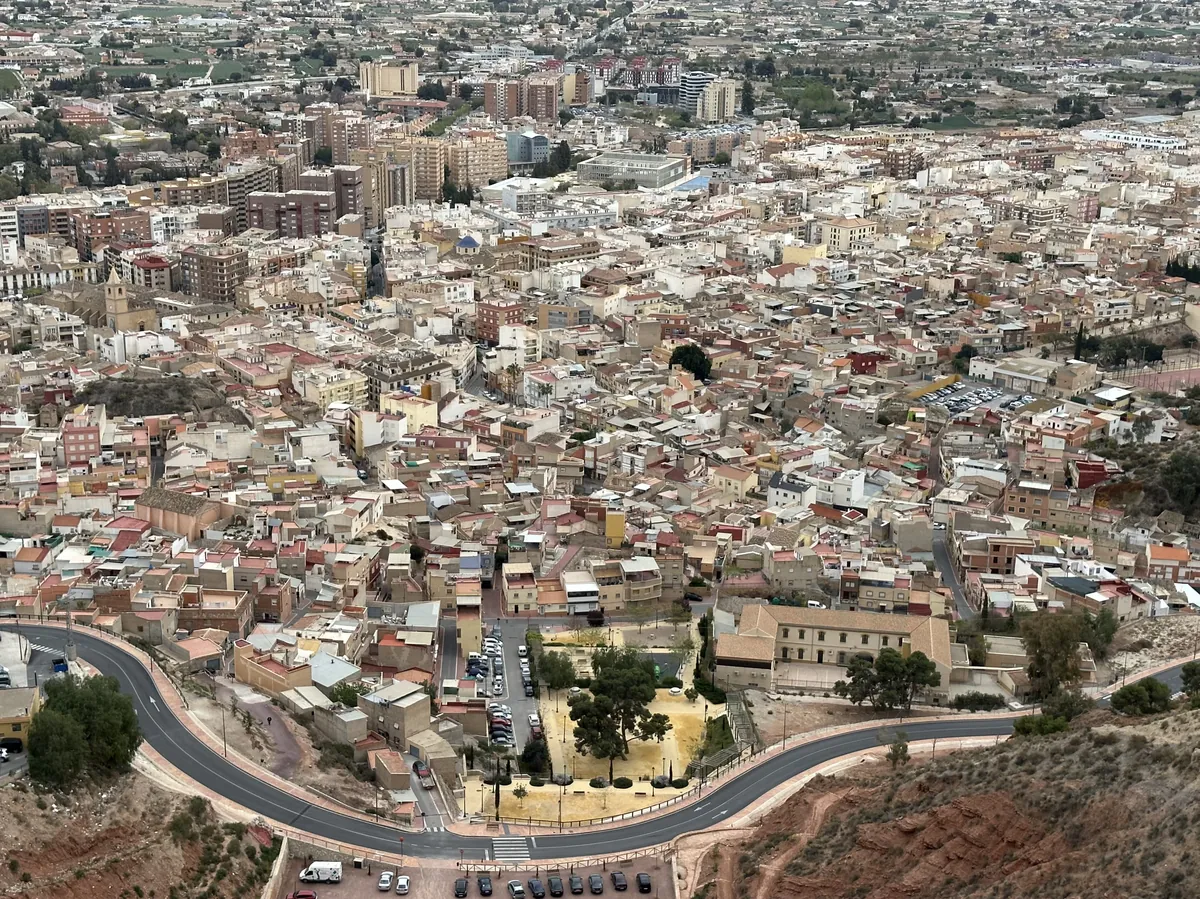
Thirty-five metres above sea level sounds almost flat until you drive in from the A-7 and see the lemon terraces drop away on either side of the RM-414. Santomera sits on a low ridge, high enough for the air to carry the scent of orange blossom over the diesel from the ring-road, low enough that the October sun still feels fierce at eleven in the morning. It is not the Spain of postcards: the church tower is handsome rather than soaring, the plaza has benches bolted to the concrete, and the supermarket opens at nine because half the village works in Murcia city and needs milk before the 25-minute crawl to the office.
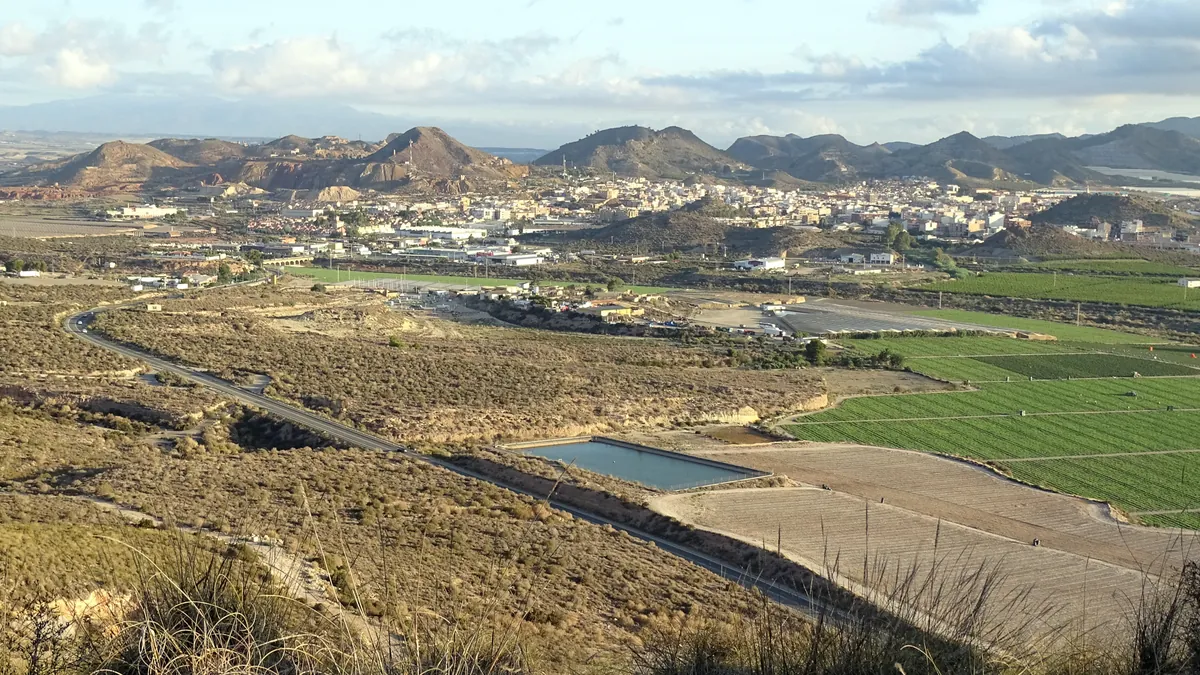
Yet that mix of orchard and asphalt is what makes the place interesting. Walk five minutes west of the Consum on Calle Ramón y Cajal and the pavements stop. Irrigation channels – little concrete troughs no wider than a drainage ditch – slice between plots of lemon and almond. Herons stand in the water like grey-clad sentinels while a farmer in white wellies starts the diesel pump that has replaced the old Arabic noria. The channels date from the twelfth-century irrigation system; the pump was bought on hire-purchase in 2018. Both still work.
The morning circuit: church, market, reservoir
Start early. The parish church of Nuestra Señora del Rosario unlocks at eight; inside, the baroque altarpiece is flood-lit by a motion sensor that clicks on with cathedral solemnity. By half past, the bakery opposite has sold out of the square pastries the locals call “pasteles de carne” – minced pork wrapped in thin, sweet bread. If you miss them, the bar on the corner does toasted mollete (soft white roll) with grated tomato and a slick of olive oil for €1.20. Eat it standing up; the zinc counter is the village noticeboard: rooms to rent, second-hand patio sets, a poster for October’s Moros y Cristianos that warns “plazas de alojamiento agotadas” in block capitals. Take the hint – every bed within 20 km is booked a year ahead for fiesta week.
With caffeine absorbed, follow Avenida de la Constitución south until the houses thin out and the asphalt turns into the reservoir path. The Santomera dam was built to regulate the Segura’s winter floods; the loop track is flat, tarmacked and almost always empty. Cyclists like it because the gradient never rises above two per cent; walkers like it because the water attracts kingfishers and the occasional osprey. Halfway round, a stone hut sells cans of beer from a cool-box. It advertises opening hours as “10-ish until the ice melts”.
What grows here, what turns up on the plate
The huerta is not decorative. Santomera’s 5,000 residents may commute, but the soil still pays rent. Lemons go to a co-op on the industrial estate; almonds are trucked to a processor in Alcantarilla; vegetables travel the other direction, into the village kitchens. Lunch tends to be simple and quick: a bowl of arroz caldero (fish and rice stew cooked in one pot) or a plate of roasted pimentón-rubbed pork with a squeeze of local lemon. Restaurante Carlos, on Plaza de España, will serve half portions if you ask – useful when the standard ration could feed a Murcia rugby squad. Staff speak enough English to translate “entrecôte” as “sirloin, grilled, chips on the side”, the default order for British visitors who’ve mislaid their phrasebook.
If you want to cook, the Friday market sets up beside the health centre from nine until two. Stalls sell mis-shapen lemons at €1.50 a kilo, bunches of flat-leaf parsley big enough to stuff a mattress, and vacuum-packed morcilla that travels home better than the fresh stuff. One stall specialises in “legumbres de la zona”: dried beans the colour of parchment that swell into the creamiest stew after an overnight soak.
Seasons: when to come, when to stay away
Spring is the easy sell. From mid-March the lemon blossom releases its sherbet scent and temperatures hover either side of 22 °C. The reservoir path is edged with wild fennel; storks commute overhead carrying twigs the size of broom handles. Accommodation is still available – two small guesthouses and a handful of Airbnb flats above the shops – and prices stay at winter rates until Semana Santa.
Summer is harder. July and August regularly hit 38 °C, the irrigation channels shrink to a trickle, and the village empties as families head for the coast. Bars reduce menus to toasted sandwiches; even the petrol-station café closes on Sunday afternoons. If you must come, cycle the reservoir at dawn and siesta through the middle of the day like everyone else.
Autumn brings the grape harvest in the outlying vineyards and, in even-numbered years, the full-dress Moros y Cristianos. Musket fire echoes off the blocks of flats at seven in the morning; processions clog the main road until midnight. It is colourful, noisy and impossible to park. Book early or stay in Murcia and catch the bus.
Winter is mild – daytime 16 °C, night-time 6 °C – but the huerta can feel bleak. Mist lifts off the Segura and the lemon trees are netted against frost. On the other hand, you get the reservoir path to yourself, and bars will fry fresh churros on Sunday without the usual queue.
Getting here, getting out again
There is no railway. From Alicante airport take the A-7 south for 55 minutes; from Corvera–Murcia it is 25 minutes on the RM-301. Both routes are motorway until the final exit, so you arrive with nerves intact even after an evening flight. Parking in the blue-zone centre costs €1 a day; outside the markings it is free and unrestricted – unheard-of in coastal Murcia.
Without a car, use the inter-city bus that leaves Murcia’s Estación de Autobuses at 07:15 and 19:00, returning at 07:45 and 19:30. The timetable is designed for commuters, not tourists, but it does mean you can lunch in Santomera and be back in Murcia for an evening flight. A taxi from the airport runs €30–35; agree the fare before you set off because the metered rate includes a rural surcharge that surprises even Spaniards.
The honest verdict
Santomera will never make the front cover of a regional tourist board brochure. It has no castle, no Michelin stars, no craft-beer tap room. What it does have is continuity: the same families farming the same plots, the same pastry recipe, the same bar owner who remembers your order from last year even if you don’t. Come for the lemon-scented cycle path, stay for a plate of rice that tastes of the field you passed an hour earlier, and leave before the October fiesta if you dislike crowds. Think of it as Murcia’s ante-chamber rather than the main attraction – a place to slow the pulse before the coast, or to steady it after the city.