Full Article
about Totana
Hide article Read full article
A slow start under a hard sun
At half past six in the morning, the smell of freshly baked bread drifts down Calle La Puerta and meets the scent of cooked broad beans already being prepared for the midday michirones, a traditional Murcian stew. In Plaza de la Constitución, early customers wait with a newspaper tucked under their arm, shoes worn from years of routine. Voices stay low. Totana wakes gently, with the sense that the day will be long and the sun unforgiving.
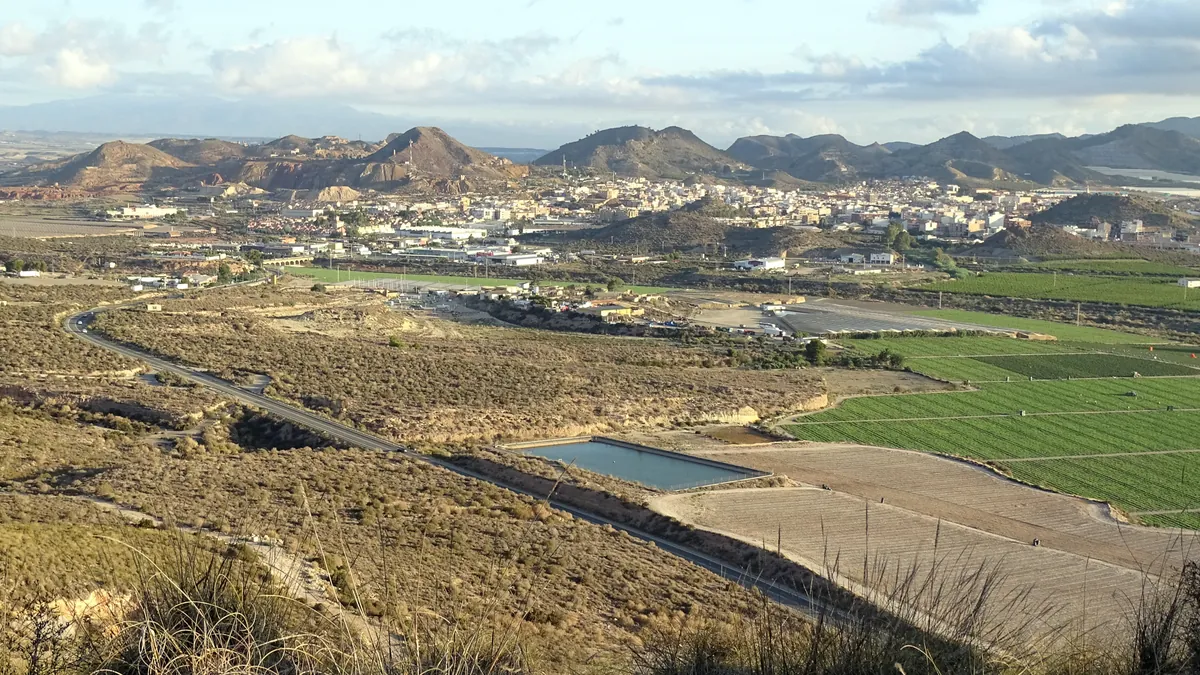
The town spreads across flat ground, yet wherever you turn there is a reminder of height: Sierra Espuña, pale with limestone, watching over everything. The horizon feels close here. Market gardens stretch as far as the eye can see, olive groves sit in terraces, lemon trees bend under the weight of fruit. In July, when the tramontana wind dries the mouth, the air carries the scent of hot earth and scorched greenery. In January, after a cold drop storm, the same fields smell of mud and fresh grass, and wooden clogs cling to the tracks.
The orchard sets the pace
Totana makes little sense without its farmland. The traces of Arab irrigation systems remain, known as the Sendico del Agua. Stone channels wind between lemon trees, orange groves and vegetable plots. Walking along them becomes an exercise in following scent: orange blossom first, then wild mint growing along the edges, then smoke from small fires where pruned branches are burned.
During harvest months, tractors pass through the town at seven in the morning carrying baskets of lemons still wet with dew. On Thursdays, the market fills with sacks of broad beans, the same ones later shelled while sitting on doorsteps with the radio playing in the background.
Santiago and old timber
The Church of Santiago appears suddenly at the end of a narrow street scented with soap and bread dough. Its façade is austere, stone darkened over time, yet inside the ceiling opens out like a fan: a Mudéjar coffered ceiling created by Esteban Riberón in 1549. The dim light smells faintly of wax and old incense. Outside, in the square, a lemon tree planted a century ago casts shade over stone benches where card games unfold with well-worn decks.
On Sundays at midday, the church fills with the scent of cologne and blessed bread. When the bells ring half past twelve, their echo fades across the rooftops.
Climbing to Santa Eulalia
From the town, the Santuario de Santa Eulalia appears as a white mark set high on the hillside. The route up is eight kilometres, a climb that rewards patience rather than speed. The lower stretch runs through Aleppo pines, the air scented with resin and crushed thyme. Higher up, the path turns to limestone and crunches beneath each step.
Halfway along stands La Nevera, an eighteenth-century snow pit built in dry stone, once used to store ice for the coast. Air from inside carries a damp, mouldy smell, like an abandoned cellar. The final stretch zigzags in full sun. At the top, the sanctuary smells of incense and heated stone. Nuns often sell pastries known as pastas de cierva, made with local almonds. Water from the tap, tasting faintly of iron, brings relief after the climb.
La Bastida and a distant past
Three kilometres from the centre, the landscape shifts to dry scrubland with rosemary and cantueso, a type of lavender. Here lies La Bastida, an Argaric settlement dating back four thousand years that once held importance across the Iberian Peninsula. The site spreads over a limestone hill, with stone walls emerging from reddish soil.
Visitors are given a helmet and walk along dusty paths that smell of earth and salt. Guides often explain that burials took place in ceramic jars, and that women wore copper necklaces which oxidise into a sea-green colour. At the highest point, the wind carries the scent of goats grazing among the scrub. On the way down, a fine layer of red dust clings to shoes, only disappearing once it meets asphalt.
Notes along the way
October feels balanced. Temperatures settle around twenty-five degrees, grapes are sold from doorways, and the smell of must lingers in the streets. Bars serve zarangollo, a simple dish of courgette and egg typical of the region, and local wine accompanies conversation.
Those seeking quiet might avoid the days of the patron saint festivals, when the squares fill with noise and movement. In August, a wide-brimmed hat is useful: the sun hits directly and there is little shade in the orchards. On market Sundays, parking near the station roundabout makes things easier, as the centre narrows into a slow-moving stream of cars weaving between shopping trolleys and bags of broad beans.
As evening falls, when the bells of Santiago strike eight and the sky takes on a rust-coloured hue, the town smells of firewood and freshly cooked food. Families sit out on porches. The sound of table tennis echoes from a garage somewhere. From behind closed doors comes the aroma of gazpacho with rabbit. Totana does not deal in postcard images. It offers something simpler: an ordinary evening that tastes of lemon and unhurried life.