Full Article
about Urdazubi / Urdax
Historic town with monastery and prehistoric caves; on the Baztan route of the Camino de Santiago
Hide article Read full article
Urdazubi / Urdax: un pueblo en la frontera
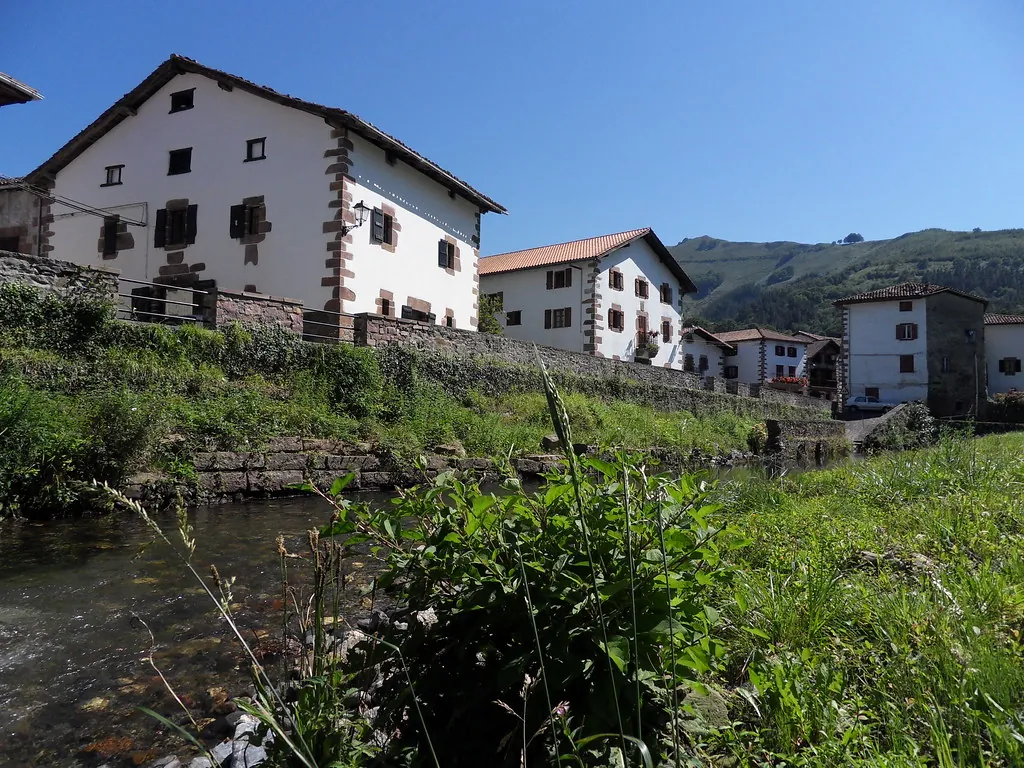
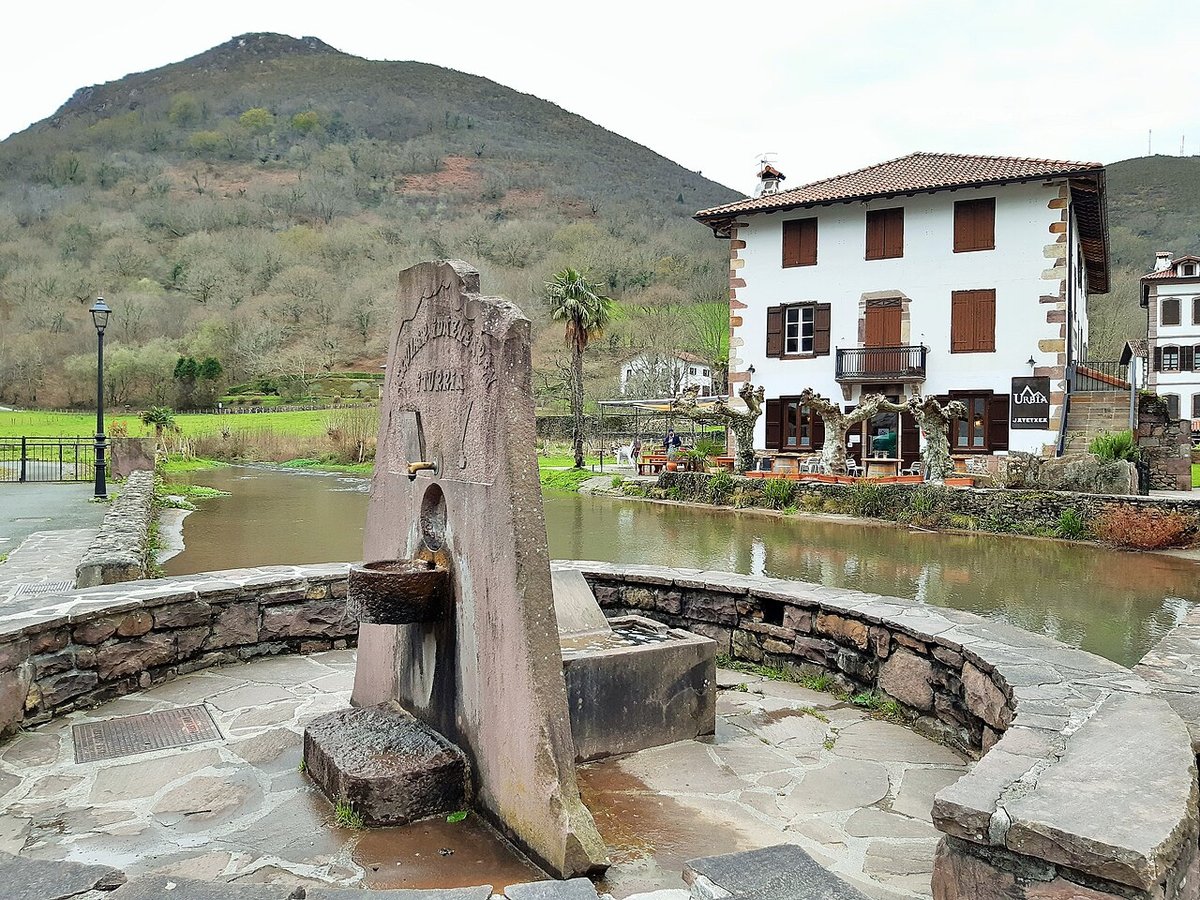
Urdazubi/Urdax se encuentra en el extremo norte de Navarra, justo donde el valle de Baztan se encuentra con la frontera francesa. Tiene poco más de trescientos cincuenta habitantes. Su historia, y su forma, están determinadas por ser un punto de paso. El río Urtxuma lo atraviesa de lado a lado, y las casas se alinean junto al agua sobre un terreno que no deja mucho espacio para extenderse.
El nombre en euskera suele traducirse como “puente de los cerdos”, una referencia a las antiguas rutas de trashumancia que cruzaban aquí. Ese carácter de lugar de cruce no ha desaparecido. Se percibe en los caminos que salen del pueblo hacia los collados que marcan la muga con Francia.
Un monasterio en la ruta secundaria
La presencia más sólida en la historia local es el monasterio de San Salvador. Una comunidad religiosa, vinculada a los canónigos premostratenses, está documentada desde el siglo XII. Su ubicación no era casual: se asentaba junto a una variante del Camino de Santiago, la llamada ruta del Baztan, utilizada por peregrinos que venían del norte de Europa. Nunca fue la principal, pero aseguró un flujo constante de viajeros.
El edificio actual es el resultado de varias reconstrucciones. Sufrió daños considerables a finales del siglo XVIII, durante los conflictos entre la monarquía española y la Francia revolucionaria en esta zona fronteriza. La iglesia parroquial de la Asunción forma parte del conjunto monástico. Su torre es el elemento que más destaca al acercarse al pueblo por carretera. En el interior, la arquitectura muestra capas de distintas épocas, propia de un espacio en uso continuo durante siglos.
El agua que modela el paisaje
La relación con el agua aquí es fundamental y va más allá del río visible. Al noroeste del pueblo están las cuevas de Urdazubi, una red de galerías kársticas formadas por la filtración en la roca caliza. El propio Urtxuma discurre en parte por este sistema subterráneo. Las visitas son guiadas. En el interior, la temperatura es baja y el suelo, húmedo; conviene calzado adecuado.
Junto al cauce, aguas abajo del núcleo urbano, se conservan varios molinos hidráulicos. Algunos están rehabilitados y muestran con claridad el mecanismo que aprovechaba la corriente para moler el grano. El paseo hasta ellos es corto y directo, sin pérdida posible.
Caminos de contrabando y bosques de hayas
Las laderas que rodean Urdax están cubiertas por bosques atlánticos, principalmente hayedos. Los senderos que parten del pueblo hacia la frontera fueron durante décadas rutas de contrabando. Hoy están señalizados y su recorrido da una idea precisa de cómo se vivía una frontera porosa, definida más por la orografía que por los tratados.
En otoño, estos bosques cambian por completo. Las hayas adquieren tonos ocres y la actividad se centra en la recogida de setas. En Navarra esta práctica está regulada; es necesario informarse sobre los permisos requeridos antes de adentrarse con una cesta.
Cómo visitar Urdazubi/Urdax
El clima en el valle es húmedo. La lluvia es frecuente incluso en verano, y muchos caminos pueden estar embarrados. Forma parte del carácter del lugar.
El pueblo se recorre a pie en poco tiempo: el núcleo junto al río, el monasterio y el paseo hasta los molinos pueden hacerse en una mañana tranquila. Para las cuevas hay que consultar los horarios de las visitas guiadas.
Urdazubi/Urdax no es un destino de grandes monumentos. Funciona mejor como una parada dentro de una ruta más amplia por el Baztan o por los Pirineos occidentales. Su interés está en lo que permanece: la huella de un cruce de caminos, la fuerza del agua y la memoria de una frontera vivida a pie de monte.