Full Article
about Etxalar
Border village known for its pigeon traps and spotless architecture; discoid gravestones in the cemetery
Hide article Read full article
The echo of the San Salvador bell hangs in the air a moment longer than the sound itself, a slow fade against damp stone. The square is quiet, save for the scrape of a broom on a doorstep further down. This is the hour when the village feels most itself: the light a flat, pearly grey, the scent of last night’s hearth smoke still clinging to the granite.
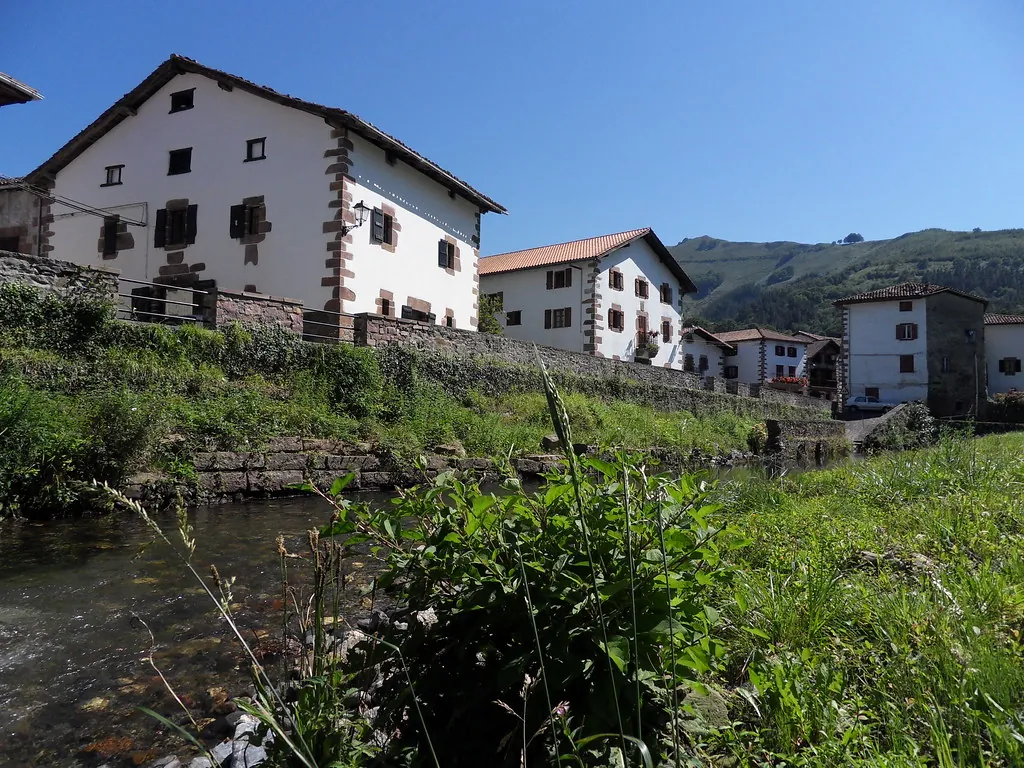
Etxalar rests on the soft, green folds of the Bortziriak in Navarra. Its streets follow the gentle dip of the land, past thick-walled houses and out into meadows where the only sound is often the tear of grass under a horse’s teeth. It’s a place that asks for your eyes, not your haste.
The quiet weight of San Salvador
The church isn’t just at the centre; it is the centre. A block of stone and shadow that holds the arcaded square in place. Inside, it’s cool and dim, the baroque altarpieces swallowing what little light filters through. You’ll likely have it to yourself. Outside, life passes under the arches: a few parked cars, someone crossing with a bag of groceries. In summer, voices might gather here for an evening, but for most of the year it’s a space of transit, not destination.
On cobbles and under deep eaves
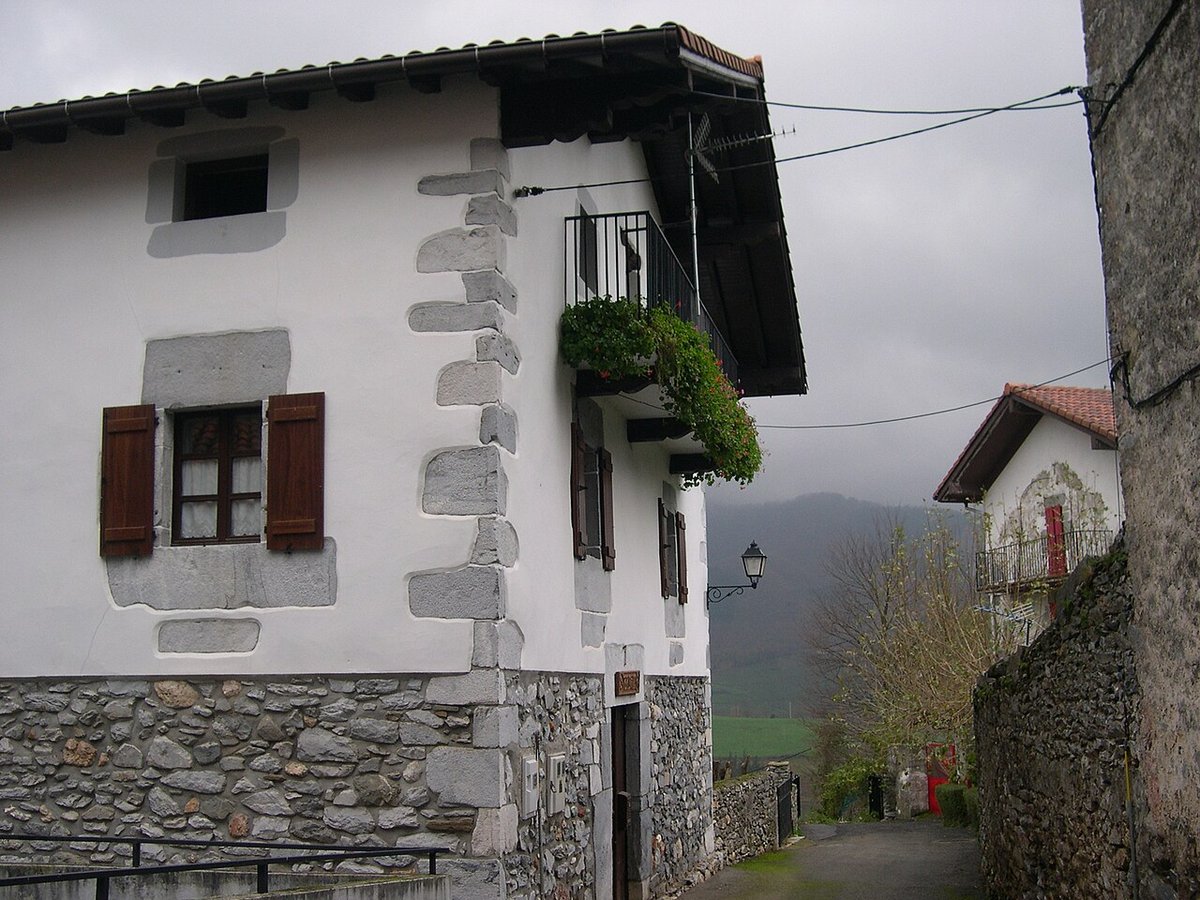
The lanes that slip away from the square are narrow, their cobbles worn smooth in the middle. The houses here are serious things, built from the 16th century onwards, with timber frames darkened by rain and eaves that jut out far enough to shelter you from a sudden shower—a useful feature. Look up: you’ll see carved shields, wooden balconies stacked with flower pots, and stonework that shows its age through cracks and lichen. Not everything is pristine, and that’s what gives it texture.
A plain, functional town hall marks one end. From there, Calle Mayor holds a concentration of these old homes, best seen in the late afternoon when the low sun picks out the grain in the wood.
Walking into the wet green
The countryside doesn’t wait at the outskirts; it seeps in. A five-minute walk from any edge of the village puts you on a dirt track between pastures. The climb towards Olabidea is steady, through oak and beech stands. From there, the view opens up to show the full, quilted valley. Go in autumn after rain: the path will be slick with mud and fallen leaves, and you’ll want boots that grip. The mud isn’t an inconvenience here; it’s part of the terrain.
A calendar marked by custom
Life still turns on a mix of feast days and field work. The main festivals cluster in August, filling the square with music and dancing that draws families back from across the valley. Other times, there are pilgrimages to hermitages or communal meals tied to the harvest. Some older practices persist quietly, like family-scale butchering for winter stores. In the surrounding hills, you might see the long nets strung for paloma (wood pigeon), a centuries-old method of hunting migratory birds that passes through these mountain corridors.
Light, mud, and timing
Come between May and October if you want dry feet and long days. Spring is a shock of green; autumn brings misty mornings and forests smudged with ochre and rust. Winter is damp and introverted, with darkness falling early by mid-afternoon.
Even in summer, you can find quiet by rising with the bell or walking out as others settle for lunch. The road from Pamplona winds north into the Bidasoa valley, becoming narrower and more sinuous as you approach—drive expecting bends.
Etxalar works as a pause in a journey or a base for the Bortziriak villages. Don’t come with a checklist. Come to notice how the moss grows on north-facing walls, to walk until your boots are heavy with clay, to hear how long a bell’s echo can last in still, damp air.