Full Article
about Beriáin
Former potash-mining village turned residential area near Pamplona; its old quarter survives.
Hide article Read full article
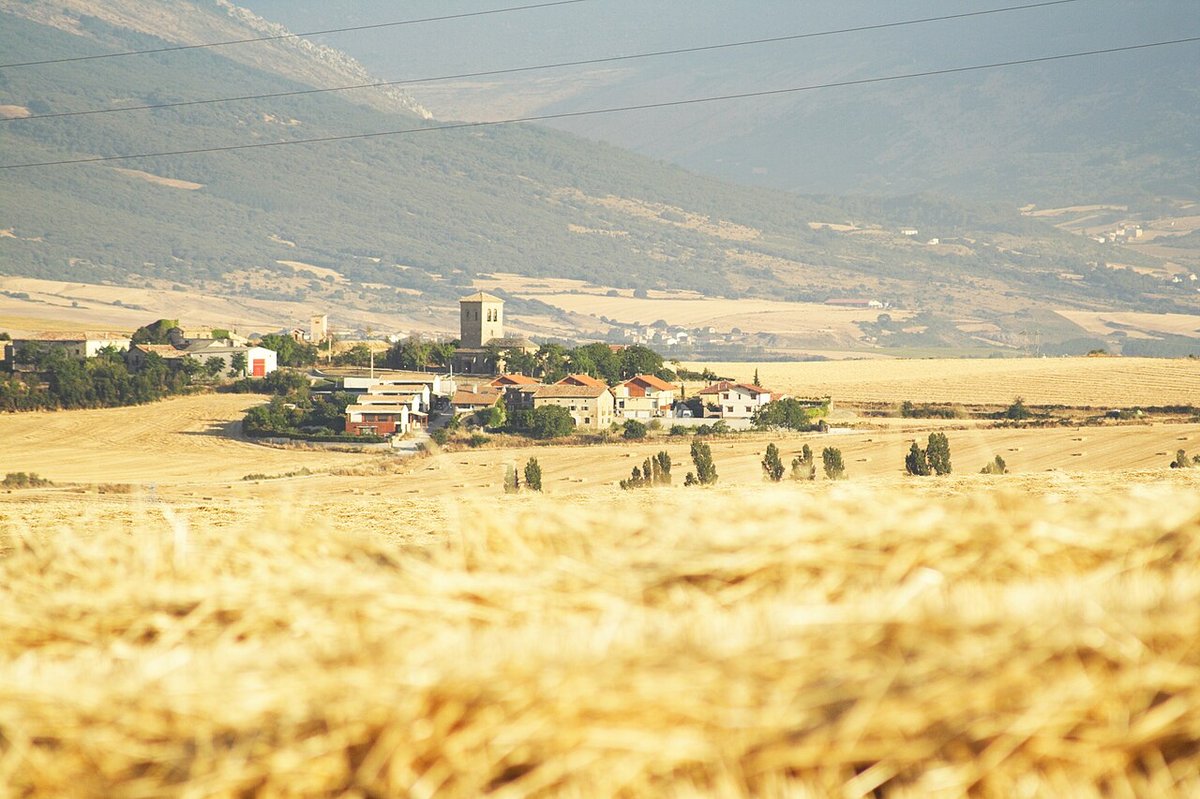
The smell of fresh bread drifts from a panadería on Calle Mayor just after seven, mixing with the damp, turned-earth scent from the fields that still press in from the edges. A motorway hums in the distance, a constant low note, but here on the streets the sound is of shutters rolling up and the first cars heading out towards Pamplona, a ten-minute drive away. The light at this hour is thin and pale, catching the pale stone of the church tower and the whitewash on the older houses huddled around it.
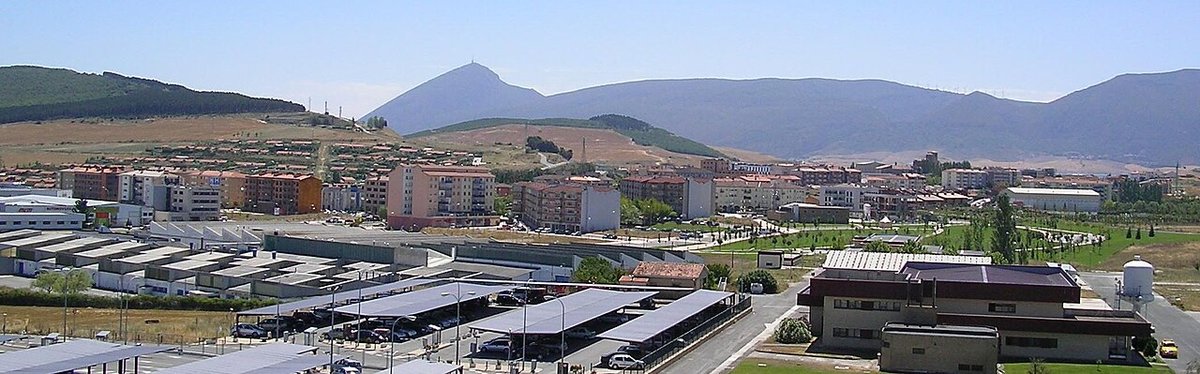
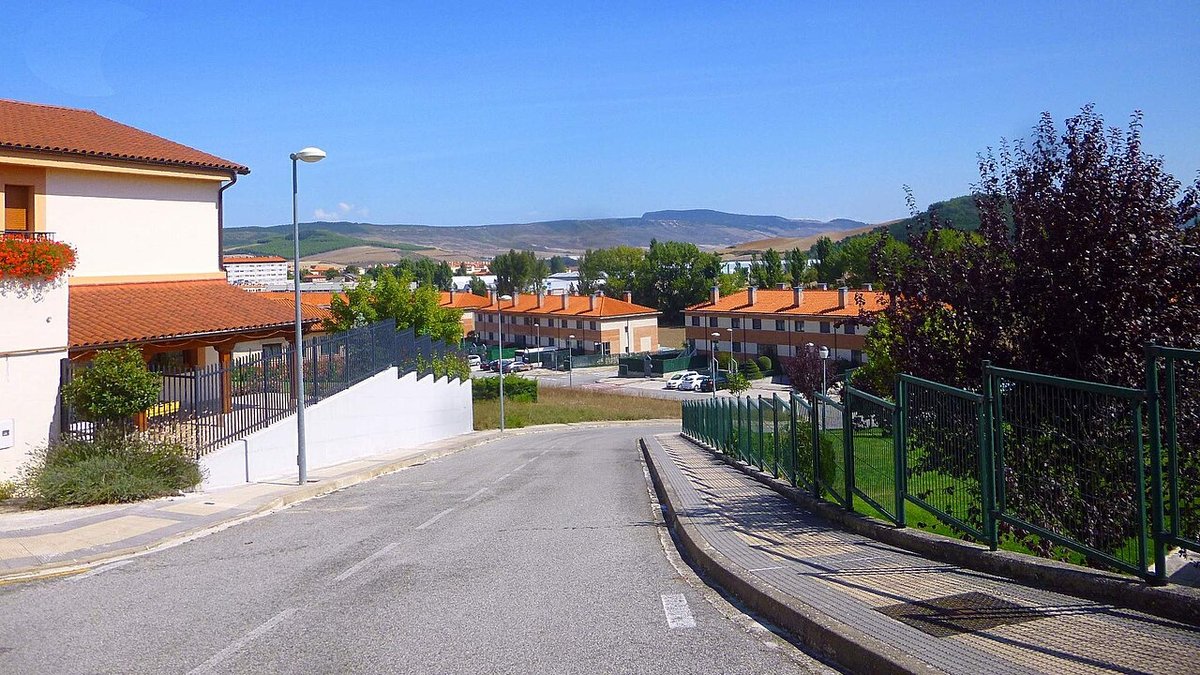
This is a place of two distinct textures. The original core, with its narrow, bending lanes, feels anchored. Then, walking uphill towards the barrio known as El Poblado, the geometry changes. The streets straighten into a grid. The houses, functional blocks with small front gardens, were built in the latter half of the last century for families who came to work the potash mine. The planning is palpable; it feels like a neighbourhood that was drawn first and lived in later.
The imprint of the mine
The potash operation reshaped Beriáin’s rhythm and its skyline. Before the mid-20th century, this was a small farming community. The industry brought people from Andalucía, Extremadura, and Castilla, swelling the population and stamping this new district onto the landscape. You can see time passing here now: some gardens are overgrown, the green paint on the lampposts is flaking, a few shutters look permanently closed. But in the early evening, neighbours still sit on benches under the plane trees. Their conversations, carried on at a measured pace, often drift back to shifts underground, to the lorries that rumbled out loaded, to the reddish dust that used to settle on everything.
That layer of memory hasn’t faded. It sits in the straight lines of the streets and in the quiet pragmatism of the architecture—a clear chapter from Spain’s industrial history written directly into the land.
San Martín and the slow centre
The church of San Martín has occupied the high point of the village for centuries. Its square tower, built from pale stone, watches over a plaza that acts as a hinge between the old quarter and the newer expansions. Traces of Romanesque carving survive around the entrance, worn smooth by weather and centuries. Inside, it smells of candle wax and old wood, with a faint coolness that holds even on a warm day.
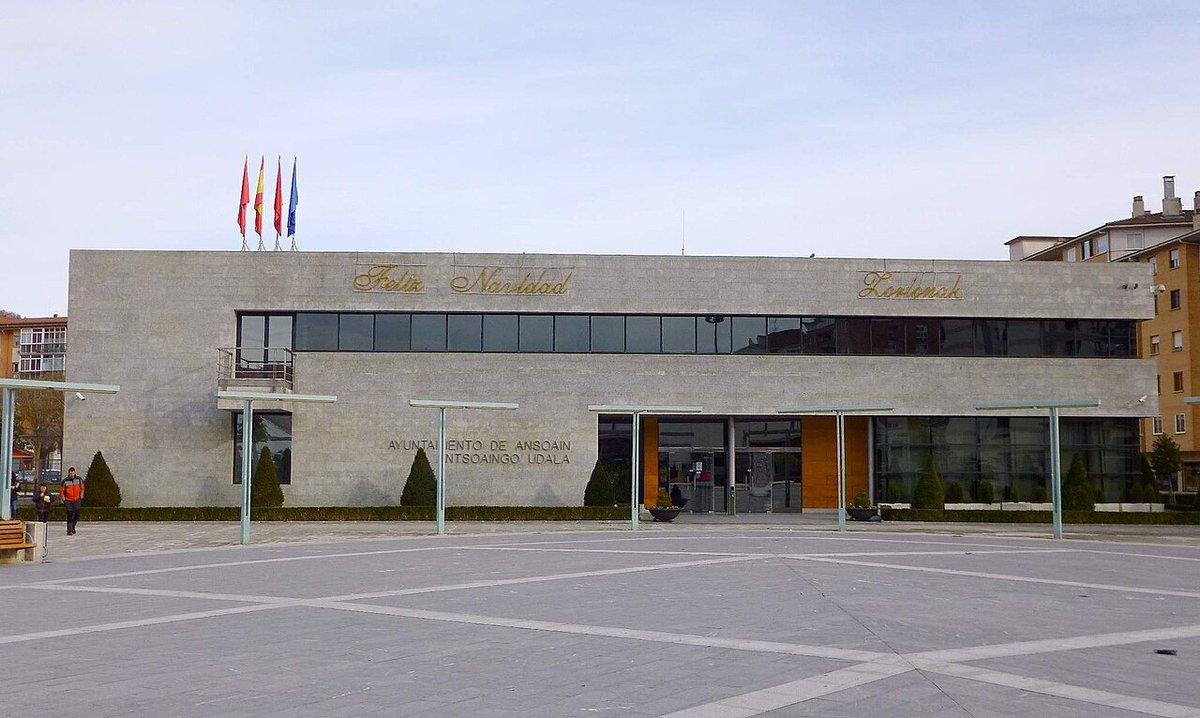
This plaza is where things happen without seeming to happen. On Sunday mornings, it fills with the sound of greetings and children chasing footballs. People pause to talk before heading home, their voices echoing slightly off the stone walls of the ayuntamiento. It’s an unassuming space that quietly asserts itself as the village’s steady centre.
Where the streets end
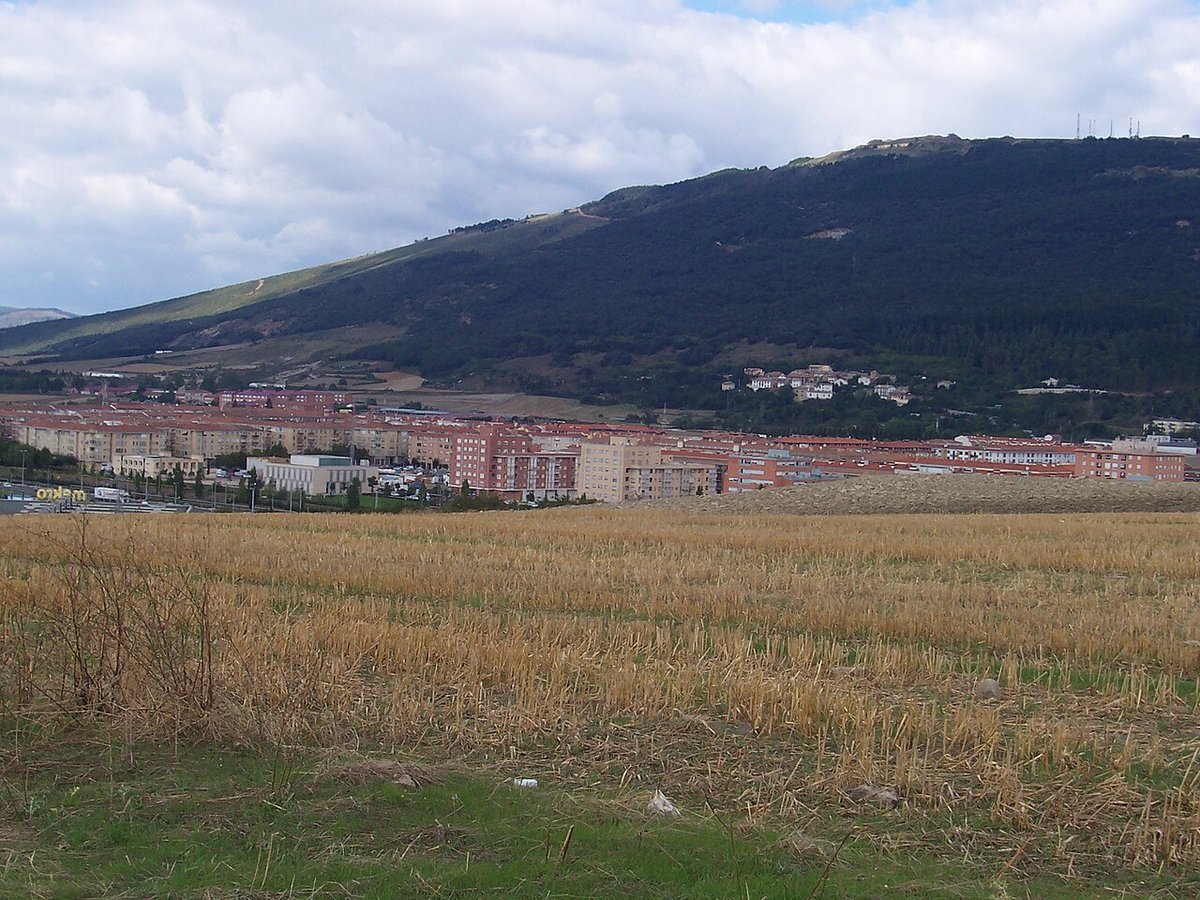
Follow any street east or south and within minutes you’re on a dirt track between fields. In April and May, these are seas of green barley and wheat, rippling in waves when the wind comes down from the Pyrenees. Red poppies dot the margins. You can hear sprinklers hissing to life in the early morning, their water catching the light for a second before falling to the soil with a damp slap.
Sometimes you’ll hear sheep bells before you see the flock, moving slowly along ancient vías pecuarias that skirt the village boundaries. The openness here is what stays with you. The land rolls out flat towards Pamplona, broken only by distant grain silos and the dark line of distant sierras. It’s a basin landscape—wide-skied, exposed, quietly immense.
A practical rhythm
Come in spring or autumn if you want to walk these tracks comfortably. Summer sun here is fierce and direct; if you visit then, be out by ten in the morning or wait until after six in the evening, when the light turns gold and long shadows stretch across the fields.
Its connection to Pamplona is seamless by car—the turn-off from the A-15 is unmistakable—and many treat it as a quiet dormitory. But stay past dusk. As commuter traffic fades, a different sound emerges: sparrows in the ivy, a dog barking somewhere in El Poblado, maybe the faint clang of a gate. From that higher neighbourhood, you can look north across the whole basin: fields, scattered warehouses, lights beginning to prick on in distant towns. It’s not a postcard view. It’s simply what’s there—a mix of soil, history, and daily life held together under a wide Navarran sky.