Full Article
about Bidaurreta
Small village in the Etxauri valley; quiet and farming, with the sierra as backdrop.
Hide article Read full article
A small village at its own pace
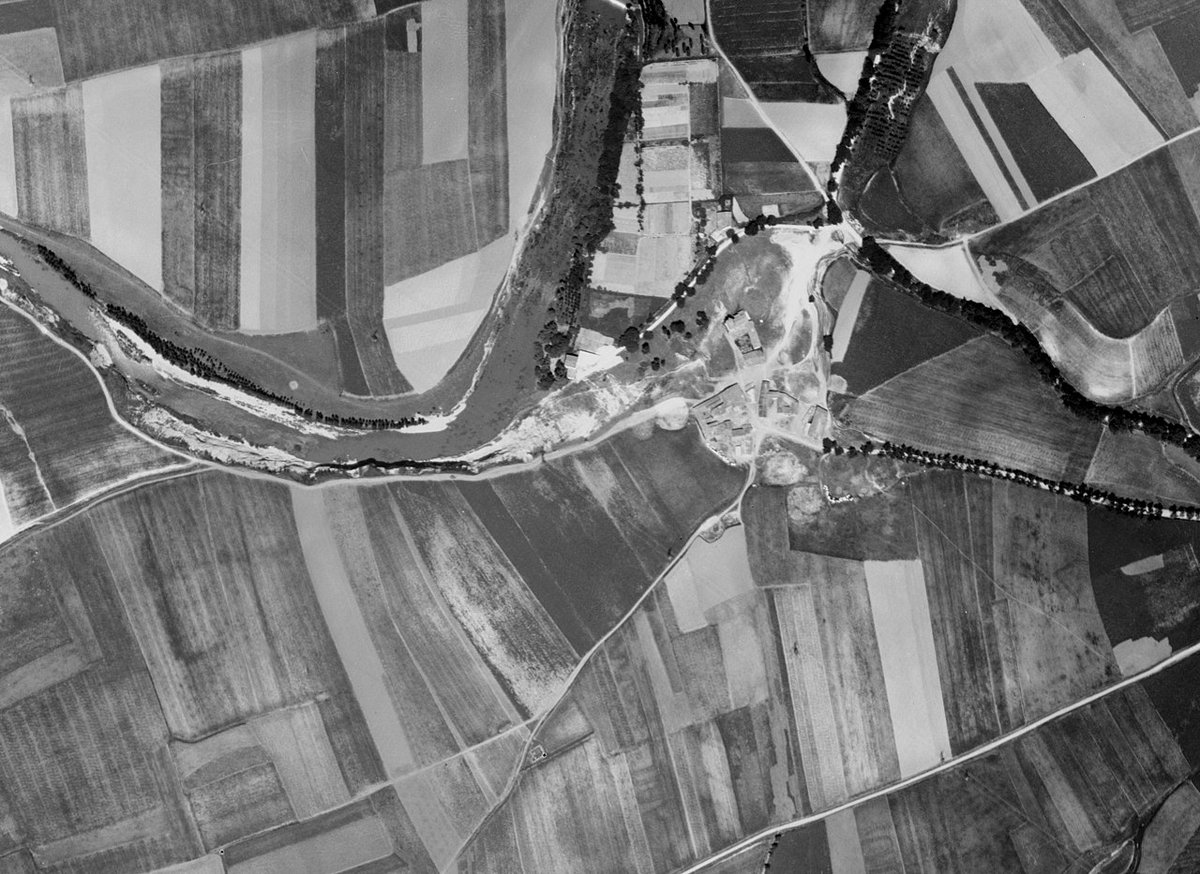
Bidaurreta is the sort of place you come across almost by accident, like when you take a short detour just to see what’s there and the sound of the main road suddenly drops away. Set in the Cuenca de Pamplona, around half an hour from the Navarrese capital, this village of roughly 180 residents moves at a different rhythm. Cereal fields stretch out around it, the streets are short and straightforward, and the passing of time still feels tied to the harvest.
This is not somewhere for ticking off sights. Bidaurreta works better as a brief pause: a walk, some fresh air, then back on the road.
A quick look around the village
You can walk across the whole village in twenty or thirty minutes without really noticing. The layout is simple, with straight streets and an easy sense of orientation.
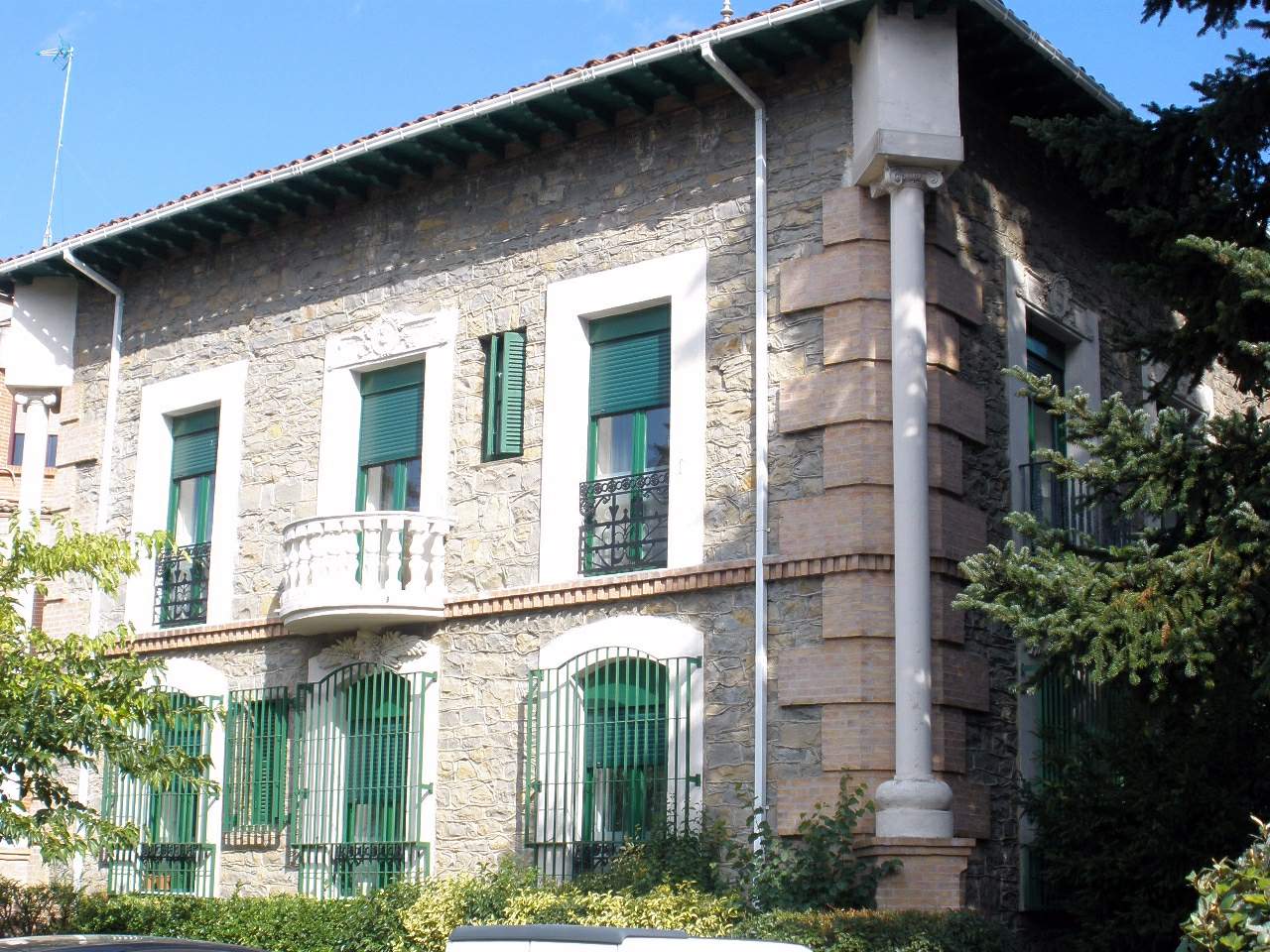
The houses are built in sandstone, with façades that favour practicality over decoration. Large doorways hint at storage for tools and equipment, small iron balconies overlook the street, and wooden window frames add a quiet continuity. It is the kind of architecture shaped by agricultural life, where function matters more than display.
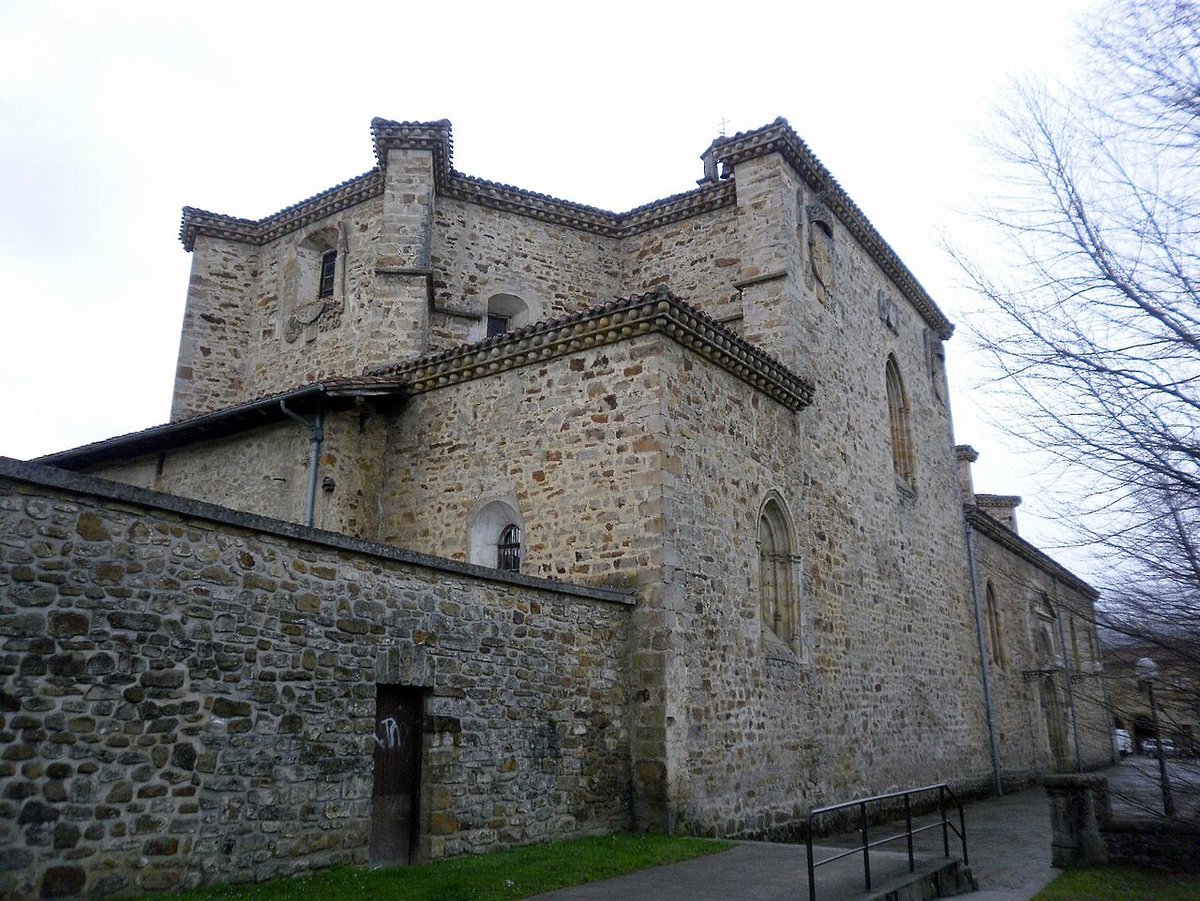
At the centre stands the parish church of San Juan Bautista. Its presence is restrained. It does not stand out for size or elaborate detail, and that feels consistent with many small settlements in Navarra, where the church has long served as a meeting point rather than an artistic attraction. Here, it blends into the daily life of the village rather than dominating it.
Walking out into the fields
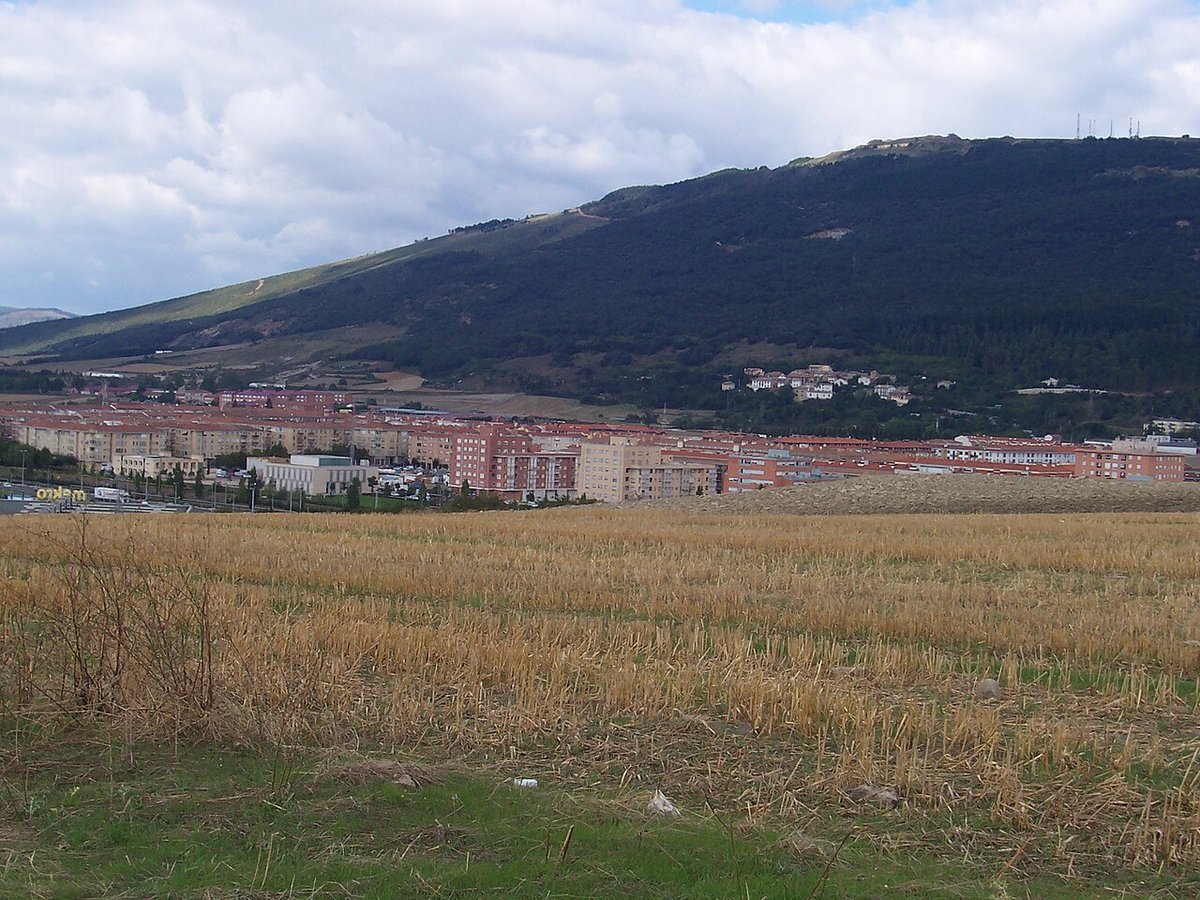
The surroundings are defined by farmland. As soon as you leave the built-up area, agricultural tracks begin to cut through plots of cereal, mainly wheat and barley.
In spring, the landscape turns a consistent green, almost uniform in its tone. By late summer, it shifts completely. The colours become golden, stubble replaces tall crops, and the occasional tractor appears in the distance. It is the same land, but it feels like a different place.
There are no marked walking routes. Instead, you follow the same tracks used by local farmers and gradually watch the village recede behind you. The terrain is gentle, with no major slopes, so the experience is less about covering distance and more about moving slowly and taking in the surroundings.
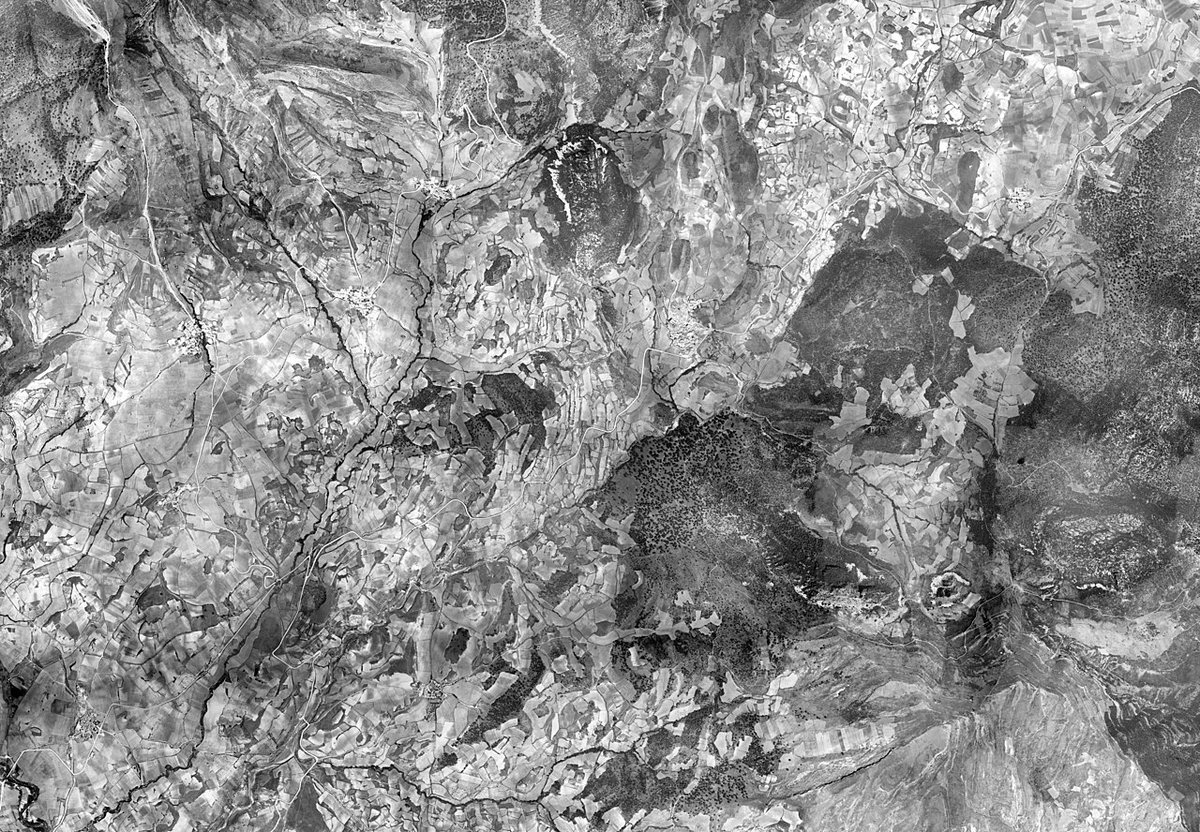
Low rises around the municipality open up wider views of the Cuenca de Pamplona. There is no need to climb a mountain to get a sense of the landscape. Sometimes a slight incline is enough to see how the fields fit together, stretching out towards the horizon in a patchwork of cultivated land.
Exploring by bike
The network of agricultural tracks also makes it easy to get around by bicycle. There is nothing technical or particularly demanding here. The paths are generally compact, with the occasional short incline and long, steady stretches between fields.
It is the kind of terrain where speed becomes secondary. The focus shifts naturally towards the landscape, rather than the distance covered or the pace maintained.
Fitting Bidaurreta into a route
Bidaurreta is not a place to dedicate an entire day to. It works best as a short stop while travelling through this part of Navarra.
Nearby villages such as Etxauri, Ciriza and Belascoáin sit within easy reach, and the wider area of the Cuenca de Pamplona lends itself to linking several stops together, whether by car or by bike. The idea is simple: move through the area, stop when something catches your attention, and continue on.
A typical visit might involve arriving, taking a walk through the village, heading out briefly along the field tracks, and within a little over an hour having a clear sense of what the place is like.
When to go and getting there
Spring and early summer are usually the most rewarding times to walk here. The fields are green and the landscape feels open and expansive. In autumn, the colours become more muted, with many plots freshly worked. There are no large wooded areas to bring dramatic seasonal colour, but there is a calm, end-of-season atmosphere tied to the agricultural cycle.
Bidaurreta lies about 20 to 25 kilometres from Pamplona. Travelling by car is the most practical option, connecting via the local roads that cross the basin. Once there, everything is done on foot.
If it has rained in the previous days, it is worth wearing footwear that can handle mud. The agricultural tracks become muddy quite easily.
A place that stays true to itself
Bidaurreta is, at its core, a village that continues to function as a village. There are no major attractions designed to draw visitors, no sense of staging or spectacle. What you find instead is a straightforward slice of rural life in this part of Navarra.
For anyone curious about the agricultural landscape of the Cuenca de Pamplona, and willing to experience it at a slower pace, it makes sense to stop for a while. Sometimes that is exactly what is needed.