Full Article
about Betelu
Former royal spa town; village tucked between mountains with a unique microclimate and beautiful trails
Ocultar artículo Leer artículo completo
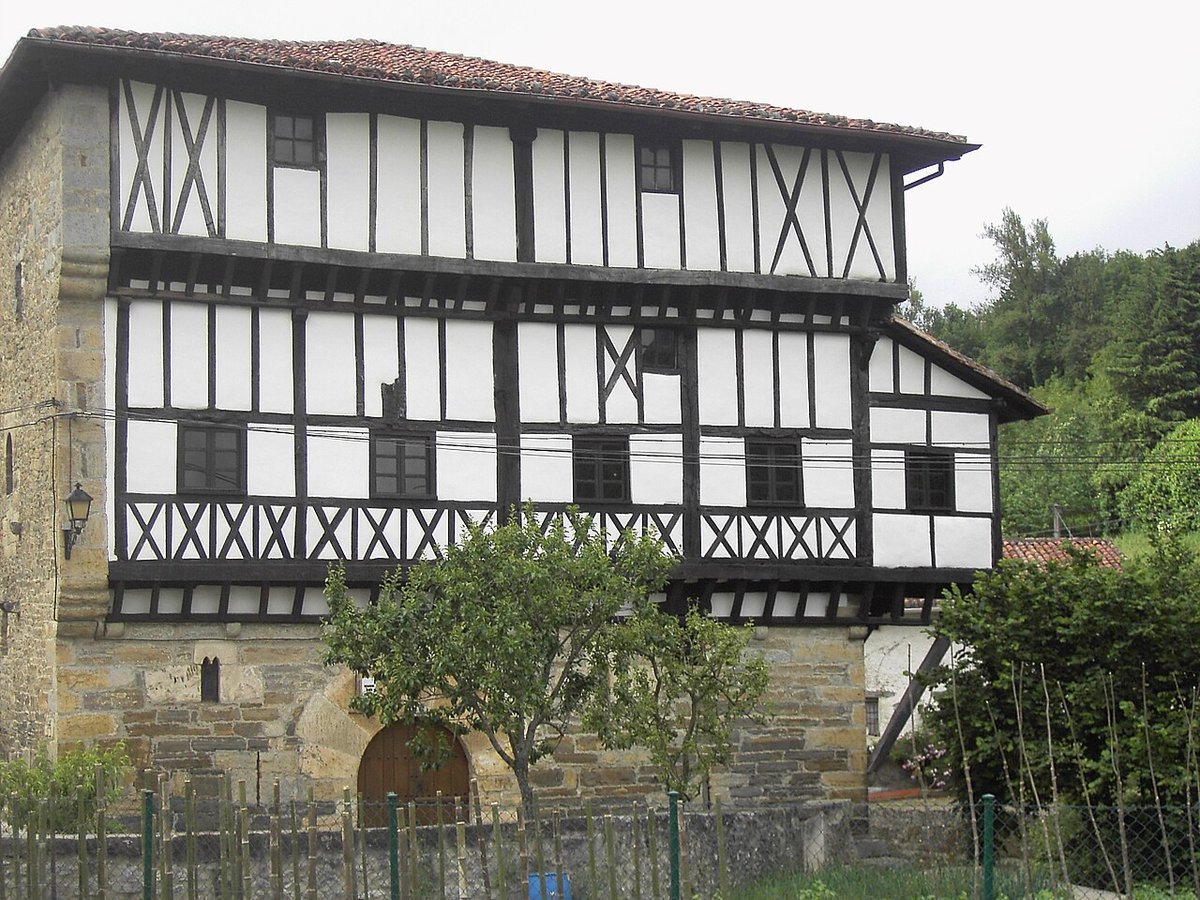
The NA-2040 twists upwards through beech woods so dense that the tarmac stays slick long after rain has stopped. At 650 metres, the road levels out and Betelu appears—not with a flourish, but with the quiet confidence of a place that has been farming the same narrow valley since the 11th century. Stone houses shoulder right up to the lane; their red-tiled roofs carry moss the colour of old pound coins. You have left the cereal plains of southern Navarra behind in less than forty minutes.
A village that still works for a living
There is no postcard-perfect plaza. Instead, the heart of Betelu is a working junction: the church of San Miguel on its slight rise, the bar-restaurant with its tractor-diesel terrace, and the fronton court where locals still play pelota most evenings. Walk the single main street at seven in the morning and you’ll meet two things: the bread van doing its rounds and the smell of cattle feed drifting from stone barns. Many houses have a name-plate rather than a number: Arotzenea, Zaldua, Iturriotz. They are not museum pieces; wood smoke curls from chimneys even in June.
The church itself is late-Gothic, restored with such restraint that the only colour inside comes from a 17th-century Flemish triptych kept dim behind glass. Locals expect visitors to push the heavy door quietly; if you arrive during the 11 a.m. Sunday mass you’ll hear the priest switch between Spanish and Basque without ceremony—Navarra’s bilingualism in miniature.
Footpaths, fog and the Plazaola tunnel
Betelu sits on the southern lip of the Aralar range, so every track heads either steeply up or sharply down. The easiest outing is the old railway line, now the Camino Natural del Plazaola. Pick it up two kilometres north-west of the village (signed Plazaola off the NA-2040). The gravel surface is level enough for a hybrid bike, but most walkers simply potter the 5 km to the abandoned Uitzi tunnel, where bats click overhead and the temperature drops ten degrees. Allow ninety minutes return; bring a torch—mobile flashlights drain fast in the damp air.
If you prefer height to tunnels, follow the yellow-arrowed footpath that starts beside the church. It climbs 400 metres in ninety minutes through beech and oak to the meadow of Urbia, where horses graze among Neolithic dolmens. The summit ridge of Aralar is another two hours on, but even the meadow gives views north to the Pyrenean snowline that are quite sufficient for most British thighs.
Weather changes faster than a Ryanair departure board. A clear dawn can collapse into hill fog by eleven, especially in April and October. Pack a waterproof even if the bar terrace feels balmy; the same Atlantic fronts that keep the valley green can drench a path in minutes.
Lunch at the only table in town
There is one public dining room: Bar-Restaurante Betelu, open every day except Tuesday. Menu del día is €14 (cash only) and arrives in three waves: soup or salad, trout that was swimming the previous evening, and a rice pudding thick enough to stand a spoon in. Weekend specials revolve around a T-bone (chuletón) the size of a steering wheel; halves are happily boxed up for later. Vegetarians get the house tortilla—three centimetres of egg and potato, still runny in the middle. Local cider from Astigarraga is poured theatrically from height; one bottle (€6) is plenty for two.
Coffee comes with a complimentary shot of patxaran, a sloe-flavoured liqueur that tastes like Christmas pudding in liquid form. Nursing it buys time to watch grandfathers teach toddlers to swing a pelota bat against the church wall—sport as public living room.
When to come, and when to stay away
Spring brings lambs, wild garlic and the brightest greens Europe can muster; walkers share paths with shepherds on quad bikes moving flocks to higher pasture. Autumn is the photographer’s choice—copper beech against dark pine—but also the wettest; afternoon showers are almost contractual. July and August stay refreshingly cooler than the Ebro basin, yet the village doubles in population with second-home families from Pamplona. The single hostal books up weeks ahead; if you must visit mid-August, arrive on a weekday and secure the room before you unpack the car.
Winter is quiet, occasionally snowy, and increasingly popular with British motor-tourers who’ve read about “empty Spain”. Empty it may be, but daylight lasts only from nine to five, the bar shuts early, and the lovely gorge road can ice over in shadow. Unless you crave solitude and carry snow chains, January is best left to the locals.
Making it part of a bigger trip
Betelu works as a night-stop between Bilbao and San Sebastián, yet it deserves at least one full day of walking. Base yourself here, then drive the 35 minutes to medieval Estella or the 50 minutes to the wine hills of Rioja Alavesa. Pamplona’s morning encierro practice ring is 40 minutes south—far enough to sleep peacefully, close enough for breakfast churros afterwards.
Fly into Bilbao with easyJet or Vueling; hire cars wait at the terminal. From the airport it’s 1 h 45 min on the A-63, toll €9.40 each way. Fill the tank before the mountains—service stations thin out after Alsasua. There is no sensible public transport: the weekday bus from Pamplona reaches nearby Agoitz at 14:30, too late for lunch and too early for check-in.
The honesty clause
Betelu will not change your life. It offers no Michelin stars, no souvenir shops, no evening stroll past Renaissance palaces. What it does give is a snapshot of rural Navarra still functioning on its own terms: cows milked at dawn, cider poured at noon, paths that smell of damp earth rather than sunscreen. Stay a night, walk the railway tunnel, eat the trout. Then leave the valley to its fog and its farmers—both of whom, you suspect, prefer it that way.
