Full Article
about Lekunberri
Tourist and service center for the Aralar area; starting point of the Plazaola Greenway
Hide article Read full article
The exit you keep passing
Some places feel like those motorway exits you always notice but never take. You drive past again and again and think, another day. That often happens with Lekunberri. It sits between Pamplona and San Sebastián, an easy detour, yet most people carry on. It is a strange oversight, because once you do turn off and enter the town, it feels a bit like ignoring a busy local bar. If it is full, there is usually a reason.
A “new place” with old foundations
The name gives it away. Lekunberri means “new place” in Basque. The irony is clear as soon as you arrive. It is “new” in the way a well-kept village house can look freshly painted while resting on centuries-old stone.
Its charter dates back to the 12th century, so there is nothing recent about its origins. What you notice instead is a sense of continuity. Life here does not feel staged or revived, it just carries on. Like a kitchen where something is always simmering.
The church of San Juan Bautista is a good example. It is Gothic, built in the 14th century, and it does not require any knowledge of architecture to make an impression. Step inside and it has the same effect as coming across an old oak tree deep in the hills. It was there long before, and it will still be there long after.
Above the valley stands the sanctuary of San Miguel de Aralar. The climb up shifts your perspective in an instant. The Larráun valley spreads out below, mountains close in on every side, and the quiet feels complete. It is the kind of silence that is hard to come by in a city unless the power goes out.
The greenway that keeps you going
Any mention of tourism in Lekunberri tends to circle back to the Vía Verde del Plazaola. It makes sense. This is the sort of route that starts as a short walk and turns into something longer without you noticing.
The path follows the old railway line that once linked Pamplona with the coast. Today it stretches for more than fifty kilometres, passing through tunnels, wooded sections and open parts of the valley. The surface is easy underfoot or on wheels, and that changes your sense of distance. You set off with half an hour in mind and end up checking the time because the morning has slipped away.
There is also something about the rhythm of the place. People walk, cycle, stop, then carry on. An older man on an electric bike once summed it up in a simple way: the train used to do this journey, now people do it themselves.
That idea stays with you. It starts as a gentle walk, then maybe a bike ride, and before long you are looking ahead to see how far the next tunnel might be.
Food that follows the landscape
The food in Lekunberri makes sense when you look around. There are pastures, there are cows, and there is no need to complicate things.
The chuletón, a large T-bone steak, sets the tone. It turns a quick meal into something that stretches out. You sit down expecting something simple, and before long the table is still full and the conversation has shifted to whether there is room for a bit more cheese.
The meat usually comes from local cattle. That shows in the flavour, but also in how it is talked about. Farming here is not presented as a show for visitors. It is simply the work people have always done.
Then comes the cheese. This part of Navarra is closely linked to Idiazabal, a cheese known for its smoky aroma and a hint of the stable. The smell is distinctive. For some, it brings back memories of rural summers in farmhouses, much like the smell of petrol brings back roadside stops on long drives.
A simple piece of advice fits here: arrive hungry. Trying to eat lightly in this setting feels out of place, like walking into a cider house and ordering nothing but water.
When the pace shifts
Autumn changes the rhythm of the town. The festivities around Pilar, held over several days, quickly turn a calm atmosphere into something more lively.
The dances performed by the dantzaris draw attention straight away. Their movements repeat patterns that have been passed down through generations. The steps feel fixed in place, like a recipe that works exactly as it is and does not need altering.
In the centre, the old public washhouse is still there. These days it is more often looked at than used. It has a similar effect to old telephone boxes. They are no longer essential, but they remind you how everyday life used to work.
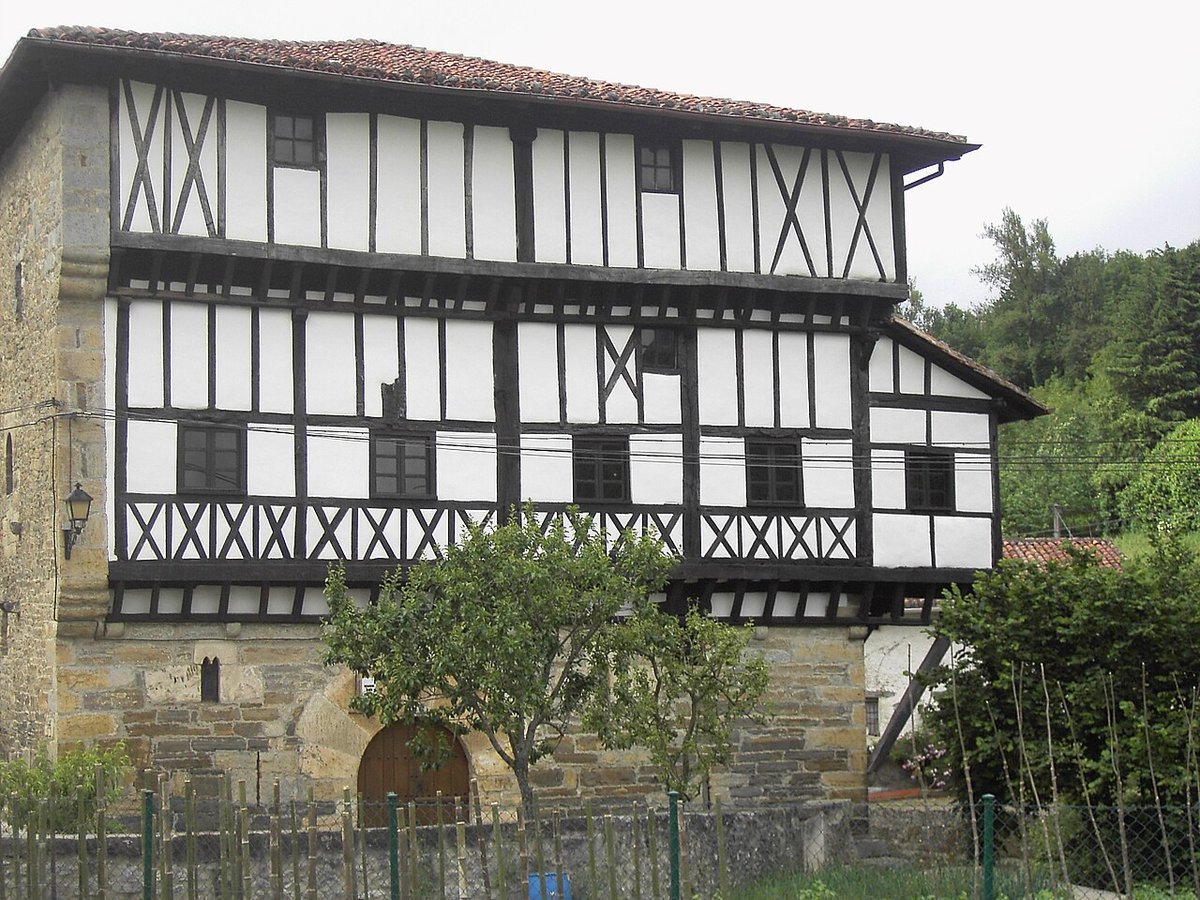
The houses around it keep their traditional form: stone walls, wooden balconies, roofs that have seen more winters than anyone can count. Nothing here feels arranged for display. It is simply the town continuing with its daily life.
During one small procession, a child asked a passer-by if they had come to watch cycling. The answer was no, just a walk. The child seemed satisfied with that and replied that this is a good place for walking.
That brief exchange captures the place better than any guide.
A detour that changes the day
Lekunberri lies about forty minutes from Pamplona and under an hour from San Sebastián. On a map it looks like a convenient pause on the way somewhere else. In practice, it rarely stays that way.
You stop with the idea of stretching your legs and end up staying longer than planned. The setting makes it easy: mountains close by, long paths to follow, and food that restores your energy afterwards.
It is not the largest town in Navarra, nor the most photographed. That is not really the point. Everything here works together in a straightforward way.
A simple approach suits it best. Park, take a walk, and let the place set the pace.