Full Article
about Areso
Small municipality on the border with Guipúzcoa; green, damp mountain setting ideal for livestock and retreat.
Ocultar artículo Leer artículo completo
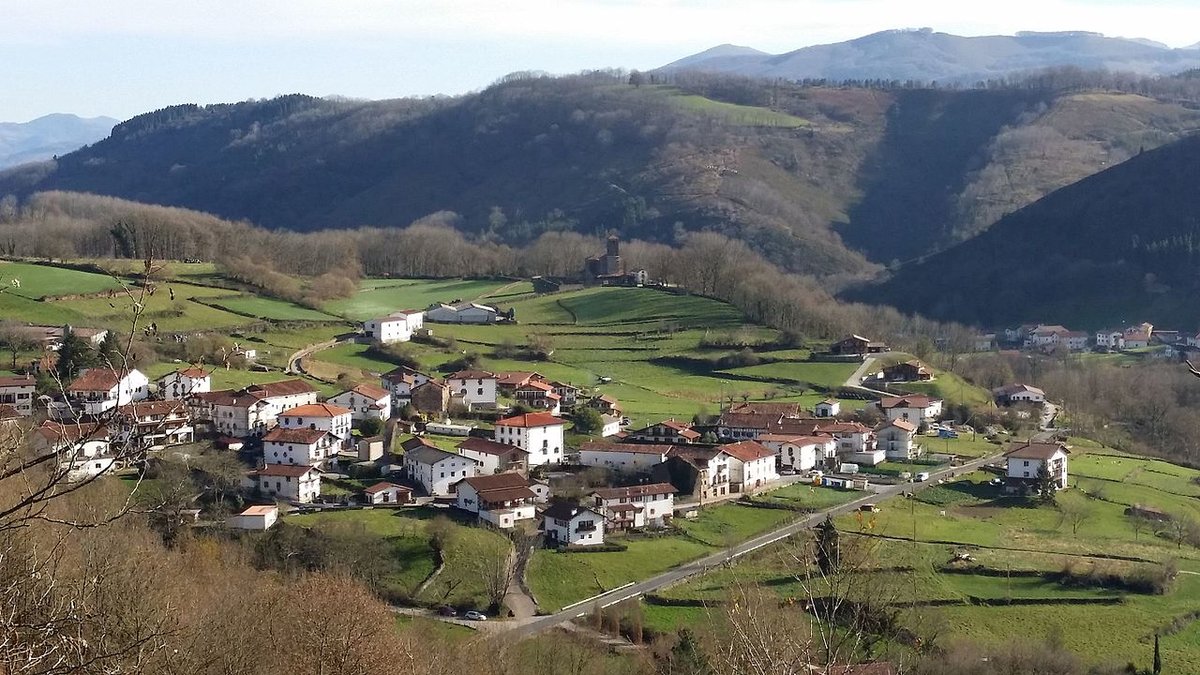
The church bell strikes eleven somewhere above the stone roofs, yet only a handful of chimneys show smoke. At this height, 466 m above sea level, the morning mist still clings to the lanes of Areso, softening the granite corners and turning every footstep into a muffled echo. You can walk from one end of the village to the other in six minutes, but most visitors slow down without thinking; the air is cooler than down on the Navarra plain and lungs take a moment to adjust.
Stone, Tile and Sudden Silence
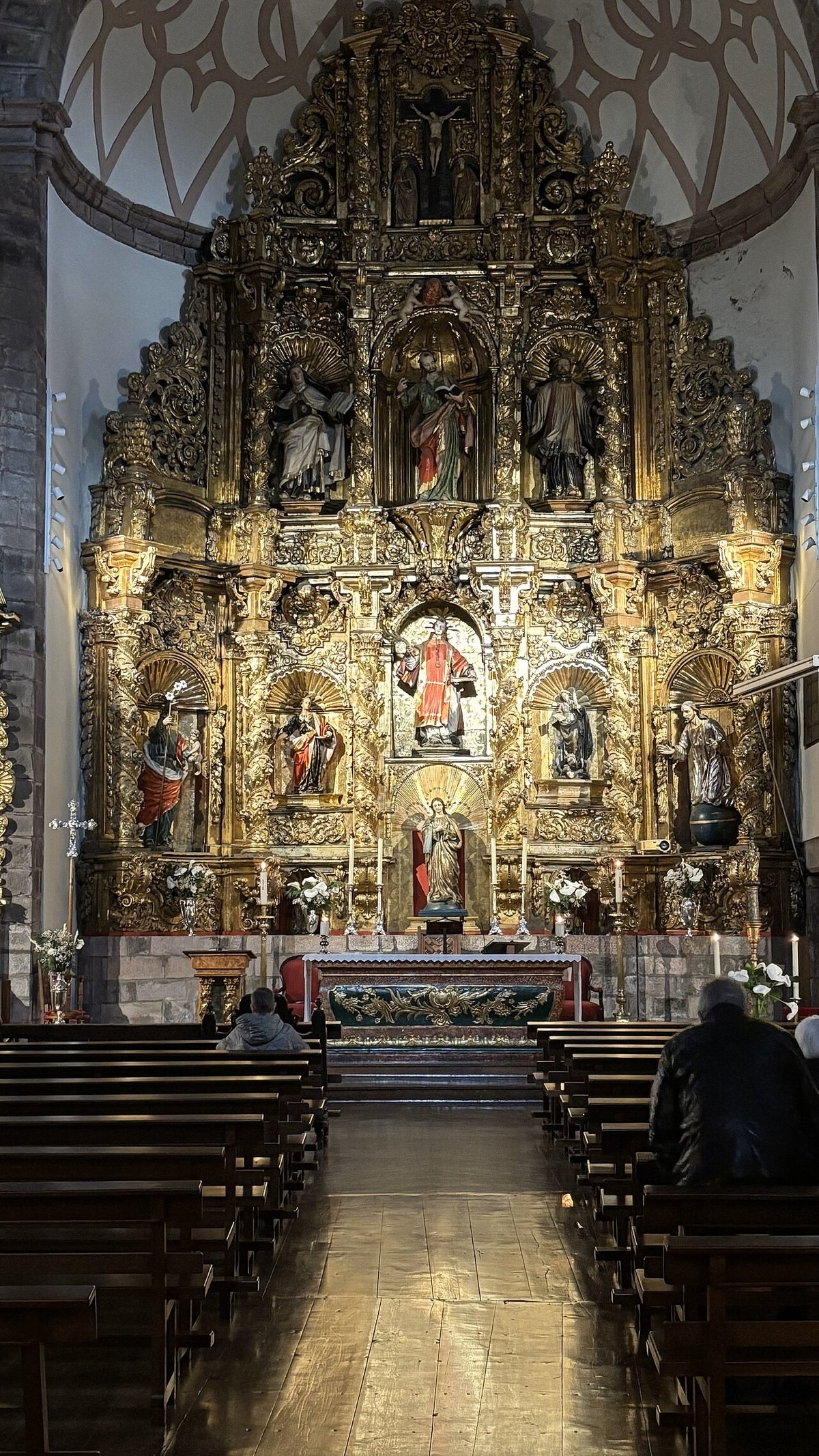
Houses here grew out of the same quarry that built the parish church of San Miguel Arcángel. Look up and you’ll notice dates pressed into lintels – 1742, 1816, 1889 – plus iron balconies painted ox-blood red and timber eaves darkened by decades of rain. The church door is usually shut; locals recommend the 11:30 Sunday Mass if you want to see the gilded wooden retablos without knocking for the key-keeper. Otherwise the building does what parish churches were meant to do: anchor the settlement, mark the hours, and give map-makers somewhere to plant the village name.
Outside the church a narrow plaza tilts toward the old washing trough. Elderly residents still fill plastic jugs here, insisting the piped mountain water tastes better than the municipal supply. Politeness costs nothing, so greet them with “egun on” or “buenos días” and you’ll likely be asked where you’re walking. Have an answer ready; footpaths divide almost immediately beyond the last house and mobile signal drops to one bar before the beech wood begins.
Paths that Start at the Letterbox
Three waymarked routes leave the village, all colour-coded on wooden posts that disappear in heavy fog. The shortest loop, roughly 4 km, climbs south-west through hay meadows until the track narrows into a single-file path. After twenty minutes the hum of the NA-710 dies altogether and the only sound is cattle bells somewhere in the valley. Another kilometre gains 180 m of elevation; the reward is a natural stone bench overlooking the Ultzama basin. On clear days you can pick out the white houses of Larraun; more often the view is a shifting grey screen punctuated by kites or the occasional griffon vulture.
Maps suggest longer linear hikes toward the Lizarraga pass, but remember you’re starting at only 466 m, not 1,200 m like in the Pyrenean valleys. Distances feel longer because the terrain rolls rather than soars. Carry water; the higher fountains often run dry in late summer and café stops don’t exist until you reach Oitz, 12 km away by foot but 25 minutes by car.
When the Leaves Turn and the Cars Multiply
October transforms the beech wood into a copper cathedral and Areso briefly overflows. Weekend traffic backs up along the access lane, boots crunchle through acorns, and every lay-by hosts families carrying wicker baskets. Mushroom hunting is legal on communal land provided you carry a regional permit (€5 online, checked by forest guards). Locals mutter about “setas-turistas” who rake the leaf litter and leave plastic wrappers; better to join a guided walk run by the Ultzama tourist office if you want to learn without alienating neighbours. Ceps, parasols and trumpet chanterelles appear after the first September storms, yet a poor year means empty baskets and disappointed faces at the bakery counter.
Spring offers wild garlic and gentler temperatures but brings the risk of atlantic fronts that can park over the valley for days. One April in three records more than 200 mm of rain; paths then become ankle-deep clay and the village smells of wood-smoke and wet sheep. Waterproof boots are not optional; fashion trainers return to the car in a shade best described as Navarra beige.
A Place within a Day’s Reach of Britain
Pamplona airport, 42 km south, receives Saturday-only flights from London Stansted between March and October. A hire car is the quickest link: take the A-15 north, exit at Berriozar, then follow the NA-710 through Cizur and Olcoz until the brown sign points left for Areso. Journey time is 40 minutes on quiet roads, an hour if trucks are unloading in Burlada. Without wheels, weekday buses leave Pamplona’s Calle Yanguas y Miranda at 08:15 and 18:00, stopping in Areso forty-five minutes later. The service shrinks to one return run on Saturdays and nothing at all on Sundays, so plan accordingly.
Accommodation is limited. The village itself has nine rooms spread between two rural houses: Casa Zubietxe (three doubles, shared kitchen, €70 B&B) and Casa Areso (six en-suite rooms, evening meals on request, €85 B&B). Both occupy 18th-century stone builds with wi-fi that remembers the twentieth century. Booking ahead is wise during mushroom season; owners will sometimes open a second night if weekday trains from Madrid are full.
Bread at Dawn, Music in September
The bakery window lights up at 06:30 and sells out of walnut loaf by 09:00. There is no supermarket; basics such as milk or tinned tuna come from the adjoining frontón bar whose opening hours follow the owner’s family schedule rather than any posted timetable. If the metal shutter is half-closed, knock politely. Evening meals are catch-as-catch-can unless you pre-ordered at your guesthouse; otherwise drive 9 km to Villava where restaurants line the main street and stay open past 22:00.
Fiestas alter the rhythm. San Miguel Arcángel, weekend nearest 29 September, brings a brass band, sack races and a communal paella cooked over vine prunings. August’s smaller celebration is basically a school reunion: temporary bars, late-night cards, and teenage bands testing amplifiers against the stone houses. Light sleepers should request rooms at the back.
What Areso Doesn’t Do
It does not supply souvenir shops, petrol stations or cash machines. The single ATM disappeared when the bank closed in 2014; the nearest is in Zizur Mayor, 18 km back toward Pamplona. Phone coverage is patchy inside houses, so download offline maps before leaving the tarmac. In winter the access lane can ice over; local farmers scatter straw but the council only grits the school bus route. Chains are rarely needed, yet a hesitant driver can block the single track and create a tailback of impatient mushroom hunters.
Nor should you expect Alpine drama. The highest beech forest sits below 1,000 m; snow falls, melts, and turns paths to caramel within days. Photographers hoping for Christmas-card drifts often leave disappointed, though January can surprise with hoar frost that silvers every twig.
A Useful Stop, Not a Fortnight’s Base
Areso works best as a breather on a circular tour: arrive mid-afternoon, walk the beech loop, eat breakfast bread at dawn and move on to the limestone gorges of Aralar or the beaches of San Sebastián, an hour away by car. Treat it as the antidote to motorway fatigue rather than the region’s headline act and the village repays the visit with silence that lingers longer than the mist.