Legasa. Lavadero.jpg
Lozano Manzanedo · CC0
Navarra · Kingdom of Diversity

Bertizarana

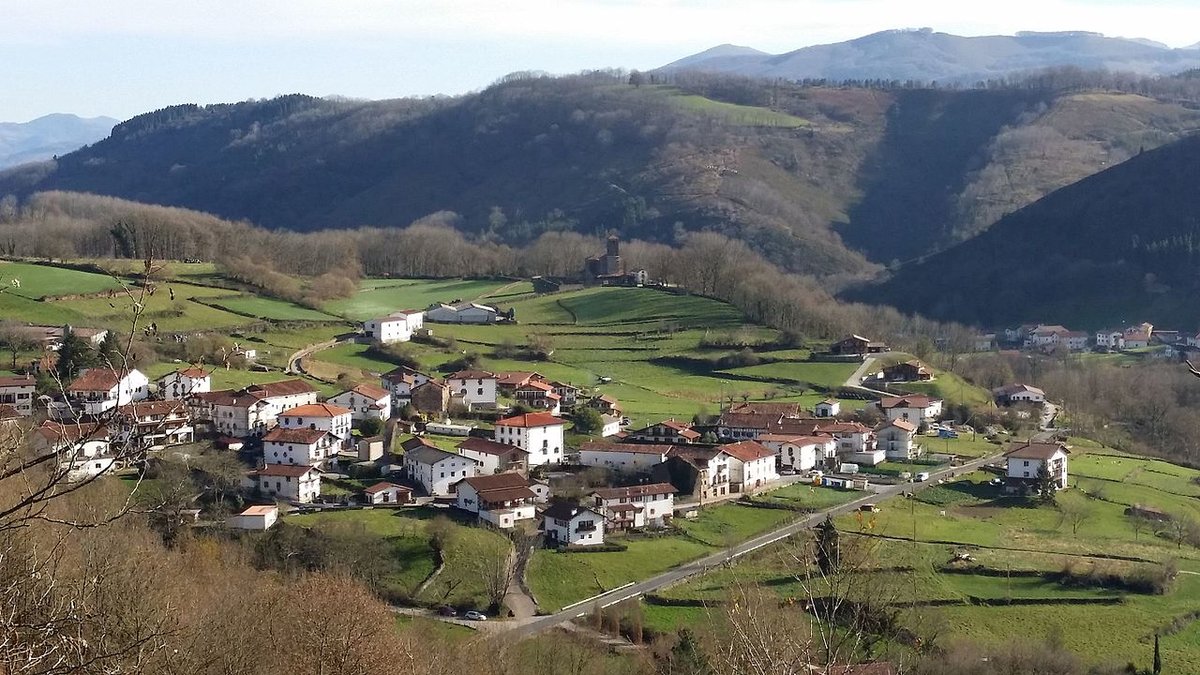
The morning mist clings to the valley floor at 200 metres above sea level, while the surrounding peaks push past 800 metres. Bertizarana isn't one ...

668 inhabitants · INE 2025
136m Altitude

Why Visit

Mountain Bertiz Natural Park Visit the botanical garden

Best Time to Visit

summer

San Juan Festival (June) junio

Things to See & Do
in Bertizarana

Heritage

  • Bertiz Natural Park
  • Aizkolegi Palace

Activities

  • Visit the botanical garden
  • Hiking

Festivals
& & Traditions

Fecha junio

Fiestas de San Juan (junio)

Las fiestas locales son el momento perfecto para vivir la autenticidad de Bertizarana.

Full Article
about Bertizarana

Cantabrian valley that hosts the Señorío de Bertiz Natural Park; lush nature and historic botanical garden

Ocultar artículo Leer artículo completo

The morning mist clings to the valley floor at 200 metres above sea level, while the surrounding peaks push past 800 metres. Bertizarana isn't one village but a scatter of farmsteads across these slopes, where the Bidasoa River has carved a green corridor between Navarra and the Basque Country. Six hundred and twenty-seven people live here, though you'd be hard-pressed to find them all at once. They've spread themselves across 50 square kilometres of oak and beech forest, meadowland and winding lanes that dead-end at stone houses with dark slate roofs.

The Forest That Time Forgot

Most visitors come for the Señorío de Bertiz, a 2,000-hectare pocket of Atlantic woodland that feels distinctly out of place this far east. The climate here owes more to Bilbao's rainfall than Pamplona's sun-baked plains. Annual precipitation tops 1,500 millimetres, creating a humid microclimate where ferns carpet the forest floor and moss grows thick on century-old beeches. It's the sort of place where locals greet you with "¿Llueve?" instead of "¿Qué tal?"—because asking about rain isn't small talk, it's practical planning.

The Natural Park's interpretation centre sits in a converted palace, its 18th-century gardens laid out by someone who understood that northern Spain's weather demands year-round structure. Stone bridges arc over ornamental ponds, while camellia bushes bloom from February onwards, providing colour when the forest remains stubbornly winter-brown. Entry costs €3, and the botanic garden within warrants at least an hour of anyone's time. Here, rhododendrons from the Himalayas grow alongside local laurels, though it's the native specimens that prove most fascinating—particularly the three-metre-wide chestnut that predates the palace by several centuries.

Walking trails radiate from the gardens in concentric circles of difficulty. The shortest, a 45-minute loop along the Artikutza stream, stays mostly flat and offers plenty of shade for summer visitors. Those with sturdier boots can tackle the five-hour circuit to Mendaur peak at 855 metres, where the view stretches across three autonomous communities on clear days. The park office provides free maps, though mobile signal dies within minutes of leaving the car park. Download offline maps beforehand, or embrace the novelty of navigating by wooden signposts and common sense.

When the Weather Makes the Rules

Summer brings its own calculations. July and August temperatures hover around 24°C in the valley, but humidity levels turn gentle slopes into sweat-inducing climbs. The forest provides natural air-conditioning beneath its canopy, though weekend crowds can transform the main car park into a tailback stretching half a kilometre along the NA-4400. Arrive before 10 am or after 4 pm to avoid the worst congestion. Midweek visits reward with near-solitude, broken only by the occasional local walking their dog or the distant chainsaw hum of forestry work.

Winter access tells a different story. The road from Pamplona climbs steadily for 40 minutes, gaining 400 metres of elevation before dropping into the Bidasoa valley. Snow falls infrequently at this altitude, but when it does, the regional government restricts access to essential vehicles only. Even without snow, January's average high of 9°C and persistent drizzle makes waterproof trousers as essential as the €1.50 café con leche you'll crave afterwards. The forest transforms under these conditions—bare branches create cathedral-like spaces, while the river swells to a brown torrent that would terrify summer paddlers.

Spring and autumn provide the sweet spots. April's wildflowers carpet roadside verges with purple foxgloves and white wood anemones, while October's beech leaves turn copper and gold against dark green holly bushes. These shoulder seasons also bring the most reliable weather—cool mornings giving way to warm afternoons, with enough rainfall to keep the forest lush without turning trails into mudslides.

Beyond the Park Gates

Bertizarana proper consists of neighbourhoods rather than a central village. Oieregi, the administrative heart, clusters around a 16th-century church and a single bar that opens sporadically. The bar serves tortilla and sandwiches when the owner's around, though calling ahead isn't an option—the phone number changes with the seasons, literally. Better to pack provisions in Elizondo, twenty minutes drive north, where the supermarket stocks local Idiazabal cheese and the bakery does a roaring trade in pastas de te—small biscuits perfect for trail snacking.

The dispersed settlement pattern means traditional farmhouses appear around every bend, their stone walls thick enough to regulate temperature without modern heating. Many operate as casas rurales, renting rooms to walkers for €60-80 per night. These aren't boutique conversions but working farms where guests share breakfast tables with farmers discussing livestock prices. The arrangement suits those seeking authenticity over luxury, though light sleepers should pack earplugs—roosters here observe no Sabbath.

Local produce follows the seasons. Wild mushrooms appear from October through December, with locals guarding their harvesting spots as jealously as British anglers protect fishing beats. The tourist office in Elizondo can arrange guided foraging walks, though these require advance booking and command premium prices at €45 per person. More reliable are the weekly markets: Wednesday in Elizondo, Saturday in Doneztebe/Santesteban, where farmers sell seasonal vegetables and the occasional hunter offers wild boar salami wrapped in suspiciously plain packaging.

Getting There, Getting Around

Public transport reaches Bertizarana twice daily on weekdays, with a single bus from Pamplona departing at 2 pm and returning at 7 am. This timetable suits nobody except perhaps insomniac hikers. Rental cars prove essential, though the final approach requires nerves of steel. The NA-121-A from Pamplona narrows to single-track sections where two cars passing requires one to reverse to the nearest lay-by. Sat-nav systems frequently underestimate journey times—add 20% to whatever Google suggests, more if rain has brought down the inevitable branch across the road.

Parking at the Natural Park holds 80 vehicles, insufficient for summer weekends but ample during quieter months. Alternative access exists from the Basque side via Doneztebe, though this involves crossing the river at a ford that becomes impassable after heavy rain. Check water levels at the interpretation centre before attempting this route, unless fancy explaining to the rental company why their Seat Ibiza is now an artificial reef.

Accommodation options cluster in three price brackets. Budget travellers can score hostel beds in Elizondo for €25, though these fill quickly with Camino de Santiago walkers during summer. Mid-range casas rurales offer doubles from €70 including breakfast, typically featuring homemade jam and eggs from chickens you'll hear but never see. The splurge option—Hotel Udaberria in Doneztebe—commands €120 per night but provides the area's only restaurant with proper vegetarian options and a wine list extending beyond Rioja.

The honest truth? Bertizarana rewards those who adjust their expectations to its rhythms. Come seeking nightlife or Michelin stars and you'll leave disappointed. Arrive prepared for early nights, muddy boots and conversations about rainfall that would bore your London friends rigid, and you'll understand why those 627 residents chose altitude over amenities. The forest doesn't care about your Instagram following—it'll still be here when the last filter fades, growing quietly while the rest of us argue about whether somewhere can be "undiscovered" when it's marked on every Ordnance Survey map ever printed.

Key Facts

Region
Navarra
District
Norte
INE Code
31054
Coast
No
Mountain
Yes
Season
summer

Livability & Services

Key data for living or remote work

2024
ConnectivityFiber + 5G
HealthcareHealth center
EducationElementary school
Housing~5€/m² rent · Affordable
Sources: INE, CNMC, Ministry of Health, AEMET

Official Data

Institutional records and open data (when available).

  • Palacio de Reparacea, Palacio de Erreparatzea
    bic Monumento ~0.5 km
  • Puente de Reparacea
    bic Monumento ~0.6 km
  • Torre-Palacio Jaureguizarra, Casa-Torre Jauregizar
    bic Monumento ~4.1 km
  • Artola I
    bic Monolito - Menhir ~4.9 km
  • Otaltzu Ekialde (Otaltzu 1 Ekialde)
    bic Dolmen ~1.8 km
  • Otaltzuazpia
    bic Dolmen ~1.5 km
Ver más (29)
  • Artola Ekialde (Artola 2 Ekialde)
    bic Dolmen
  • Aiantsoro Mendebalde (Aiaintsoro 3 Men.)
    bic Dolmen
  • Artola Mendebalde (Artola 1 Mendebalde)
    bic Dolmen
  • Aiantsoro Ipar I (Aiantsoro 2 Ipar)
    bic Dolmen
  • Aiantsoro Ekialde (Aiantsoro 1 Ekialde)
    bic Dolmen
  • Otaltzu Mendebalde (Otaltzu 2 Mendebal.)
    bic Dolmen
  • Miate
    bic Dolmen
  • Amaburu Mendebalde (Amaburu 1 Mendeb.)
    bic Dolmen
  • Mallurketa
    bic Dolmen
  • Amaburu Ekialde (Amaburu 2 Ekialde)
    bic Dolmen

Planning Your Visit?

Discover more villages in the Norte.

View full region →

More villages in Norte

Traveler Reviews