Full Article
about Donamaria
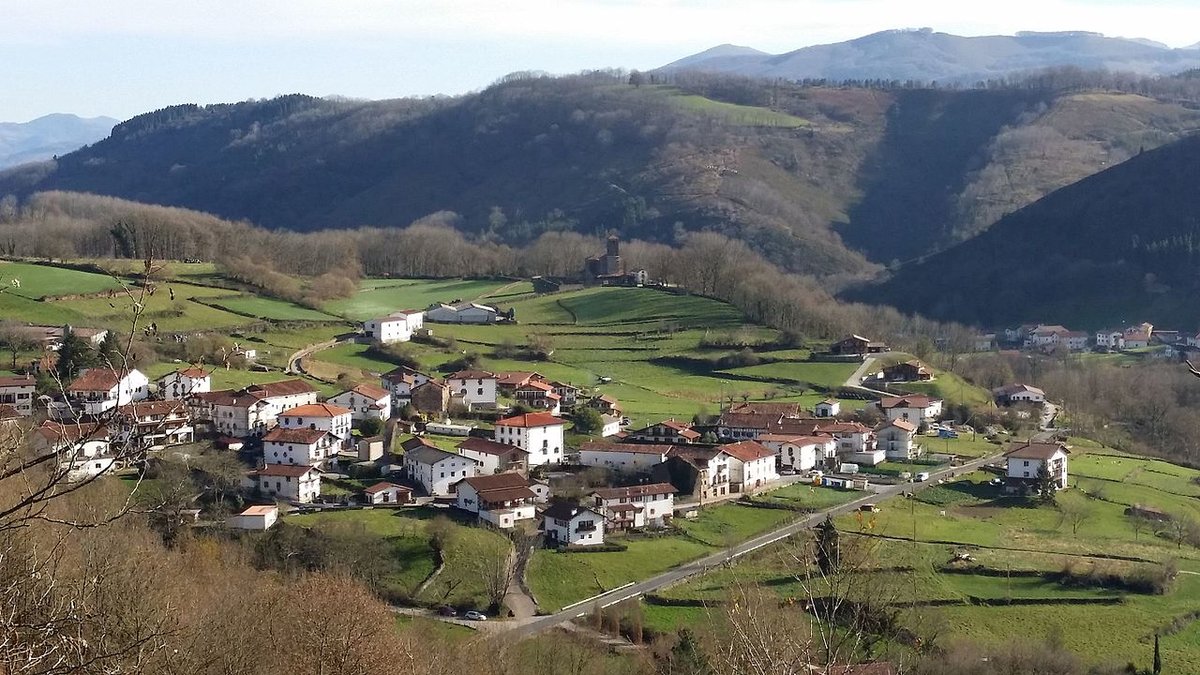
Green valley known for its medieval Torre Jauregia with a timber frame; idyllic landscape of farmhouses and meadows.
Ocultar artículo Leer artículo completo
The first thing you notice is the hush. Not silence exactly—cattle low somewhere below the lane, a tractor turns over—but the kind of quiet that makes a British mobile phone chirp like a fire alarm. At 250 m above sea level Donamaria feels higher: Atlantic oak woods press in from every side and the air carries the sharp scent of cut hay you thought had vanished with childhood summers in Shropshire. Then the church bell strikes the half-hour and you realise the village is alive, just unwilling to shout about it.
Houses Scattered like Sheep
Forget a tidy square and postcard row. Donamaria spills across a fold in the valley, stone farmhouses dotted among lanes so narrow that two passing cars have to breathe in. The building style is part-Navarrese, part-Basque: white lime render below, dark timber balcony above, many painted the deep ox-blood red that keeps woodworm at bay. Look closer and you’ll spot dates—1789, 1834—chiselled into lintels, plus the occasional coat of arms left by families who made enough money in Cuba or Venezuela to return and flaunt it. There is no single “old quarter”; instead history is sprinkled across hedgerows and cow pastures, which makes a morning wander oddly addictive. One gate leads to a medieval threshing floor, the next to a barn still stacked with last winter’s beech logs.
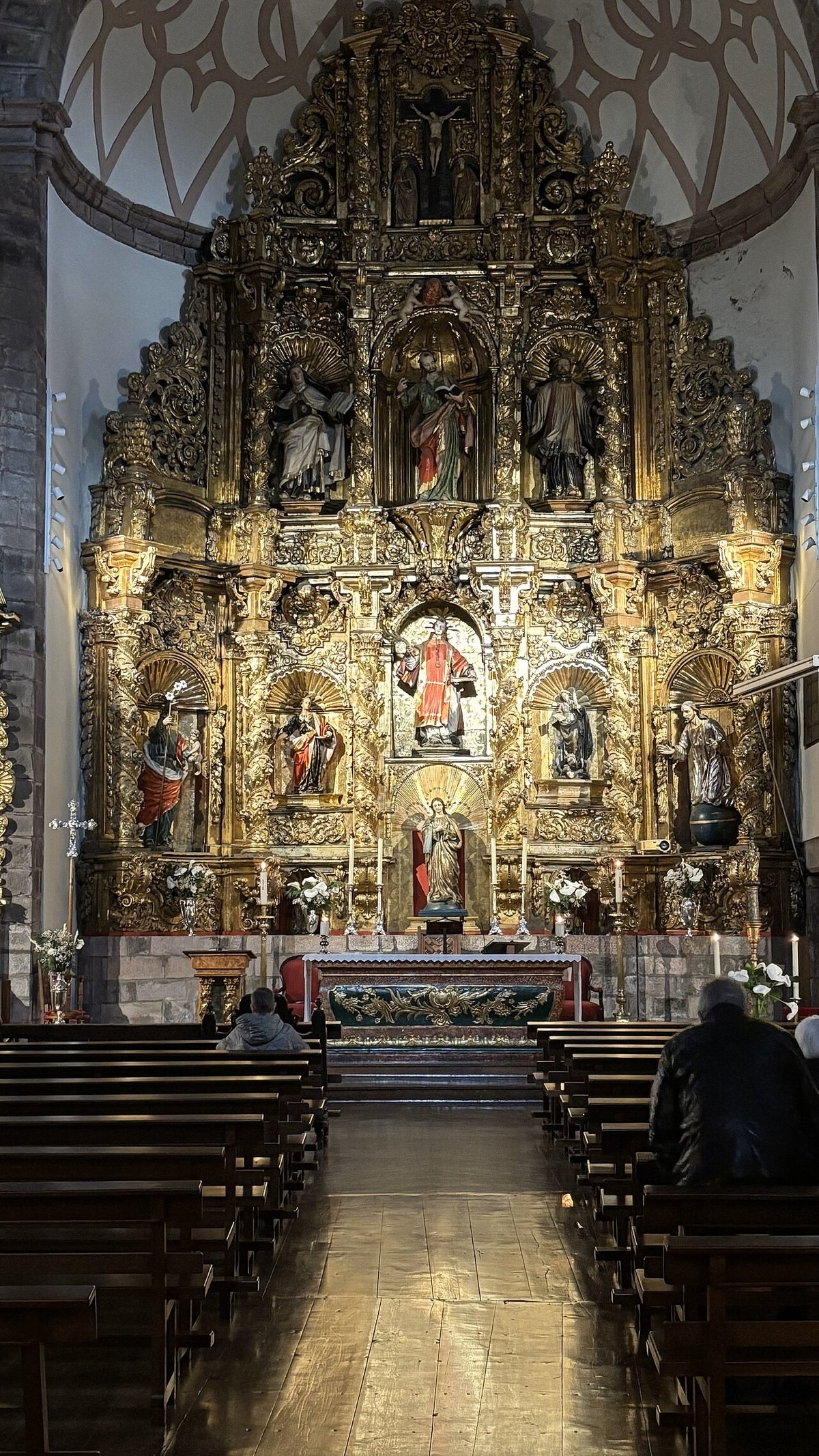
San Esteban church sits slightly above the scatter. Push the heavy door (it’s usually unlocked until dusk) and you step into a cool stone nave that started life in the 13th century, suffered a Baroque makeover, then picked up some cheerfully clashing neo-Gothic windows in the 1890s. The altar-piece is pure theatre: gilt swirls, painted clouds and a cluster of saints who look faintly surprised to find themselves in rural Navarra. Pause here on a hot afternoon and you’ll hear the oak beams tick as they cool—wood talking to stone, no admission charge.
Trails that Start at the Edge of the Road
Donamaria marks the southern gateway to the Bidasoa’s “green corridor”, a network of foot and cycle paths that shadow the river from the Bay of Biscay almost to Pamplona. The GR-121 long-distance route passes straight through; follow the red-and-white waymarks uphill and within twenty minutes you’re under beech trees, looking down on a patchwork of meadow and maize that could double for Devon—until you notice the circling Griffon vultures. Maps are downloadable but phone signal evaporates once you leave the tarmac, so screenshot the junctions. A straightforward out-and-back is the track to Azpilikueta (4 km), where an abandoned stone mill makes a good picnic perch above the stream. Mountain bikers can loop south-west on forest roads to the ruins of Arotzenea chapel, a 16 km ride with 350 m of climbing—tough enough to justify the almond cake when you return.
Come October the same tracks become mushroom motorways. Local families set off at dawn with wicker baskets and the air of people who know exactly which fallen log hides the first ceps. Collecting is allowed with a €15 regional permit bought online, but boundaries are poorly signposted; if you can’t tell a parasol from a death cap, leave the picking to others and simply enjoy the colour show. Beech leaves turn the colour of burnt toast, bracken glows rust and the first mists coil up the valley like dry ice.
A Restaurant that Fits inside a Living Room
There is no shop in Donamaria, only a bar-cum-grocery that doubles as the bus ticket office and keeps Spanish retail hours: shuts at two, re-opens “maybe six, maybe seven”. Plan accordingly. The village’s one restaurant, Club Ranero, occupies what was once a farmhouse kitchen; six tables, a single ham hook, and a Michelin Bib Gourmand that arrived thanks to dishes built on local cheese, river trout and mountainside herbs. The menu changes daily, but if you see magret of duck with apple compote it’s a safe order for palates used to gentler seasoning. Vegetarians can expect roast piquillo peppers stuffed with Idiazabal rice rather than yet another goat-cheese tart. Portions are Navarrese—generous—so the €25 menú del día is lunch and supper unless you’re fresh off the trail. Booking is not optional: ring ahead or WhatsApp +34 948 45 80 28; they will answer in Spanish but “reserva para dos, mañana a dos treinta” usually works. Sunday lunchtime is the one slot they keep for walk-ins, yet even then you may find yourself eating at 16:00 because the earlier sitting ran long.
Evenings wind down fast. Street lighting is minimal, and once the church bell counts ten the village seems to exhale and turn in. Bring a torch if you’re staying outside the centre; the lane to several rural B&Bs is unlit and cows don’t reflect in headlights.
When to Arrive, When to Stay Away
April to mid-June is the sweet spot: daylight stretches past 21:00, pastures are emerald and the temperature hovers around 22 °C—think Cotswolds with sharper shadows. July and August turn warmer but rarely oppressive; the valley’s Atlantic influence keeps nights cool enough for a jumper. Autumn brings colour and fungi, also the highest chance of fog rolling up from the Bidasoa and erasing every view. Winter is green but wet; snow is rare at village level yet the pass from Pamplona can collect slush after January storms. If you do visit between December and February, pack shoes with tread and expect short, whisky-coloured afternoons.
Bank holidays see an influx of Basque and Navarrese families; accommodation totals fewer than forty rooms, so Easter and the 1st of May sell out early. Conversely, a Tuesday in March can feel post-apocalyptic: bar closed, no bread delivery, just the bell and the drizzle.
Getting Here, Getting Out
The easiest route from Britain is Biarritz airport (1 h 30 min by car), followed by Bilbao (2 h) or Santander ferry if you’re driving from Portsmouth. From Pamplona it’s 55 km on the N-121-A to the Bera turn-off, then 12 km of winding valley road. There is no petrol station in the valley—fill up in Bera or Doneztebe before you dive in. Buses run twice daily from Pamplona, timed for school and shopping rather than tourists; the stop is outside the church, timetable taped inside the bar door. Cyclists following the Bidasoa green-way should load up with water in Vera—Donamaria’s single public fountain occasionally dries up in August.
Mobile coverage is patchy. Vodafone UK drops to GPRS on the high street; EE fares better near the church tower. Wi-Fi in most lodgings is perfectly adequate for email, useless for streaming rugby highlights.
The Honest Verdict
Donamaria will not hand you bucket-list sights. Give it two rushed hours and you’ll leave wondering why you bothered. Stay overnight, walk the lanes at cow-milking time, share the bar counter with men in berets arguing about tractor parts, and the village starts to make sense: it is rural Spain before the souvenir shop moves in. Come prepared—carry cash, book dinner, download maps—and you’ll find the slow creep of tranquillity that no spa brochure can fake. Miss the preparations and you may simply discover how long a Spanish afternoon can feel when the nearest open café is a twelve-kilometre hike away.