Full Article
about Leitza
A town known for Basque rural sports and the setting of *Ocho apellidos vascos*; green, mountainous surroundings.
Ocultar artículo Leer artículo completo
The sheep cheese arrives on a wooden board still carrying the imprint of mountain pastures. It's November, and the woman behind the market stall in Leitza's main square wraps the Idiazabal slowly, explaining how her neighbour drove the flock down from summer pastures just last week. This isn't a performance for visitors—there are none today, save a couple from Bilbao buying chistorra for the drive home. The Friday market fills only half the plaza, but what's here matters: local honey cloudy from the comb, bunches of wild thyme, and talos—corn flatbreads—cooked on a portable griddle that smokes in the cold morning air.
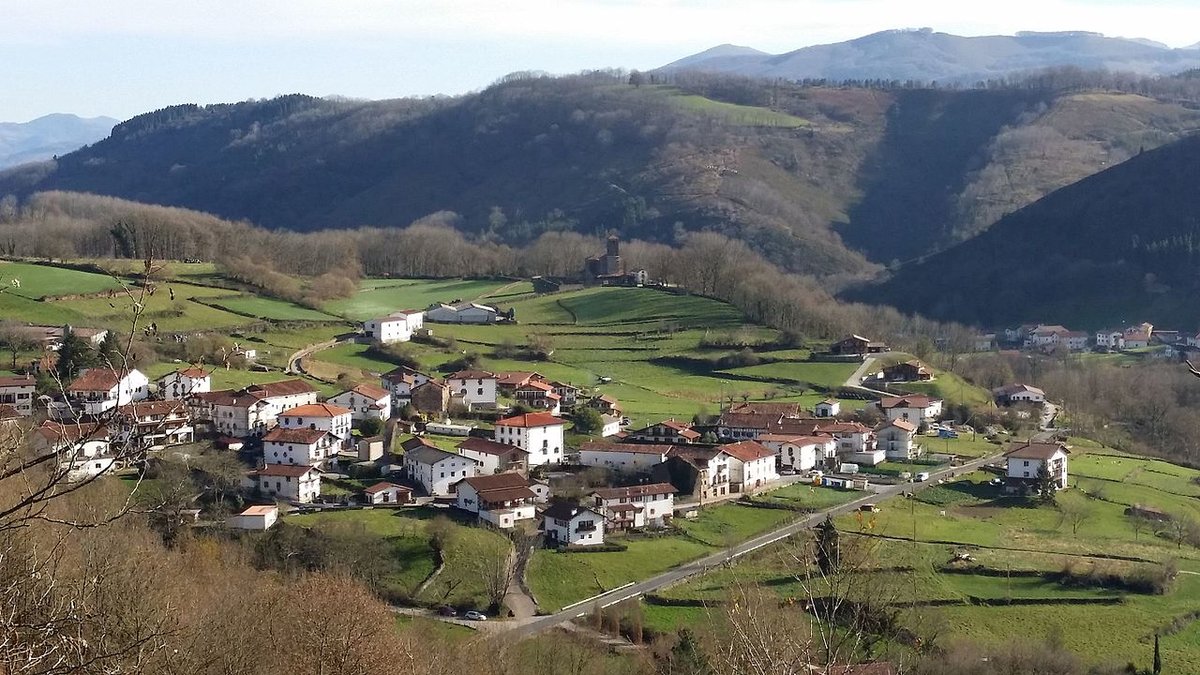
At 490 metres above sea level, Leitza sits where Navarra's green northern hills begin their roll towards the Basque Country. The mountains here aren't the dramatic Sierra Nevada variety—they're working hills, folded and forested, where oak and beech woods alternate with pastureland that stays improbably green even in winter. The village spreads along a ridge, its stone houses built from the same grey limestone that pokes through the surrounding fields. Many still bear the traditional Basque half-timbering, though several sport fresh political murals that British visitors sometimes find unsettling. They're not directed at tourists—just local conversations happening in paint rather than pixels.
The Sound of Hammers
Walk down Calle Mayor past the seventeenth-century Palacio de Jauregia and you'll hear it: the rhythmic clang of metal on metal that gave Leitza its Basque name. For centuries, this was an iron-working village, its forges producing everything from agricultural tools to cannonballs. The industry faded in the last century, but the sound remains—now it's the village blacksmith working on decorative gates and the odd hunting knife, carrying on a tradition that predates the Conquest.
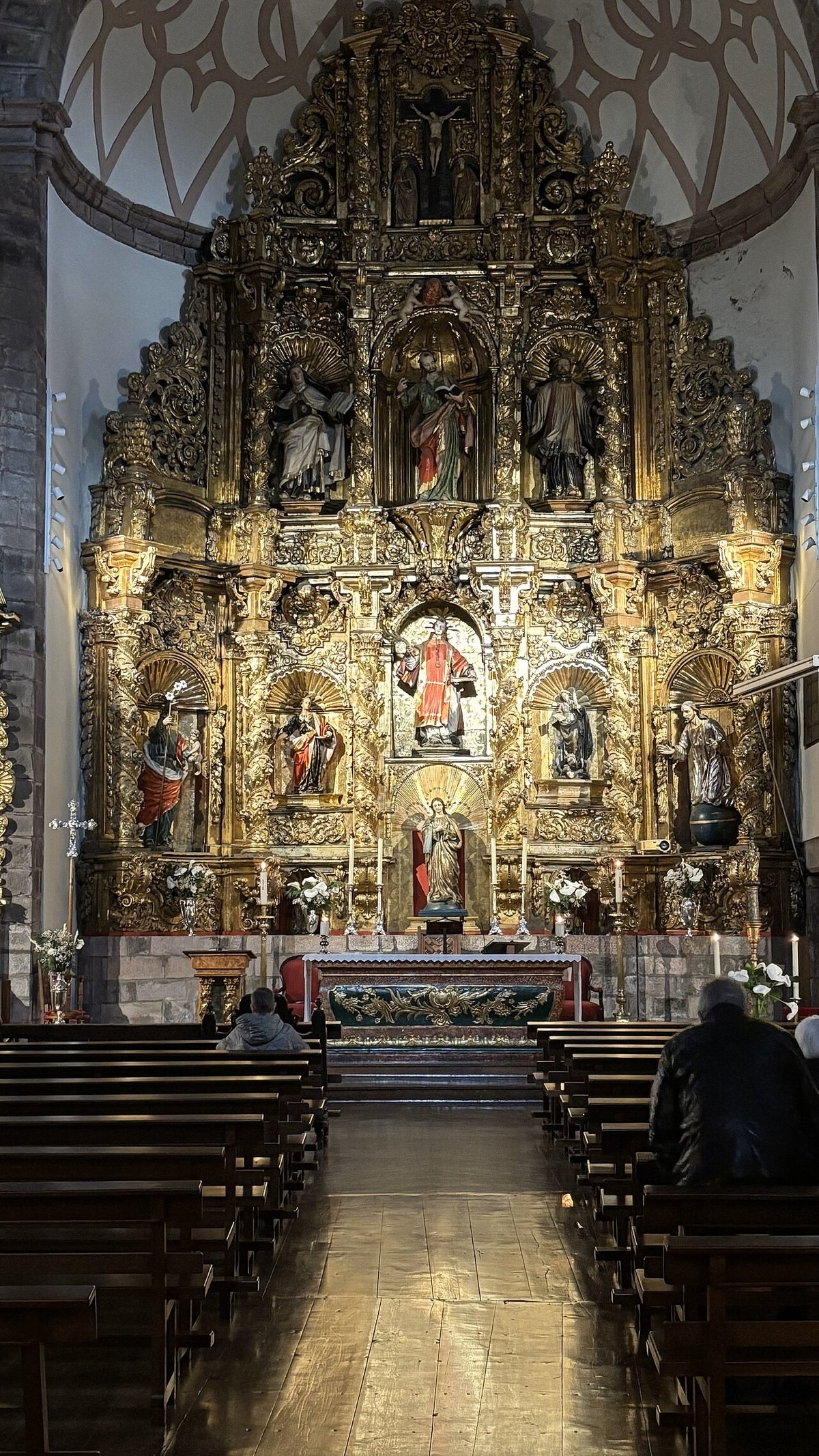
The church of San Juan Bautista anchors the old centre, its weathered stone facade looking out over a plaza where elderly men play cards under plane trees. Inside, the atmosphere is cool and dim, heavy with incense and the weight of rural faith. The baroque altarpiece is worth a glance, but the real interest lies in the side chapels where local families have memorialised their dead in photographs that span generations—wedding portraits beside military uniforms, children who never grew old beside couples who celebrated their diamond anniversaries.
What the Woods Remember
Within ten minutes' walk of the centre, Leitza dissolves into countryside. Paths strike out between dry-stone walls, past borda farmsteads where chickens scratch in the yard and wood smoke curls from chimneys. The camino to the abandoned village of Aritzaleku climbs through beech woods that turn copper in autumn, their leaves forming a carpet that muffles footsteps. It's a gentle three-hour round trip, passing an old ermita where shepherds still leave offerings of bread and wine.
For something more ambitious, the trail to Mount Uzturre takes about five hours return. The summit offers views across three provinces—Navarra, Gipuzkoa and Álava—though local wisdom suggests checking weather before setting out. Cloud can drop suddenly here, reducing visibility to metres and turning familiar paths into mazes. When it's clear, you can trace the Plazaola railway line as it snakes through the valley, its tunnels and viaducts now part of a greenway that cyclists tackle between Pamplona and the Basque coast.
The cycling route deserves attention. Six kilometres of gentle uphill pedalling brings you to Lekunberri through tunnels cut by nineteenth-century navvies, their brickwork still intact. Bike rental requires planning—none available in Leitza itself, so arrange in Pamplona or San Sebastián before arriving. The surface is compacted gravel, manageable on hybrid bikes, though you'll want lights for the tunnels even at midday.
Fire and Food
Basque cuisine tends towards the sea, but here in the mountains, it's the land that provides. Lamb arrives from flocks that graze the surrounding hills, their meat tasting faintly of wild thyme and mountain herbs. At Restaurante Iruso, the chuletón—a sharing steak cut from mature beef—comes to the table on a hot stone, cooked rare unless you specify otherwise. It's the size of a small plate and costs around €28, enough for two with a side of pimientos de Padrón.
The local trout, wrapped in Serrano ham and pan-fried, offers a lighter option. Served simply with salad, it tastes of cold mountain streams rather than fish farms. For the unadventurous, talos con chistorra provides a Basque equivalent to a hot dog—the corn tortilla wrap slightly sweet against the paprika-spiked sausage within. Vegetarians should manage, though options shrink outside summer when vegetable gardens lie dormant.
Cider houses open their doors from January to April, when the new vintage flows freely. The ritual remains unchanged: stand in line, catch the stream in your glass, drink immediately. At Sagardotegi Zelaia, they'll throw in a cod omelette and txuleta steak for around €25—book ahead weekends when half of San Sebastián drives up for the experience.
When the Mist Comes Down
Leitza's beauty is conditional. Between November and March, Atlantic weather systems roll in, bringing mist that can sit for days. The village doesn't close—life continues with the rhythm it has maintained for centuries—but visitors expecting blue-sky photographs may be disappointed. When cloud lifts, the compensation is immediate: woods washed clean, air sharp enough to taste, and views that stretch to the Pyrenees on the clearest days.
Summer brings different challenges. From mid-July to late August, temperatures hover around 30°C—not excessive by Spanish standards, but enough to make afternoon walks unappealing. The village fills with returning families, children who've grown up in Bilbao or Barcelona spending August with grandparents. Evenings become sociable, bars stay open past midnight, and the main square hosts concerts that continue until the Guardia Civil suggest otherwise. Accommodation books solid for the San Juan fiestas (23-25 June) and again for the August celebrations—visit outside these periods unless you enjoy crowds.
Practical Realities
The drive from Pamplona takes an hour via the NA-121, a mountain road that demands attention rather than nerve. Buses run twice daily except Sundays, but schedules suit locals rather than visitors—last departure back to civilisation leaves at 19:00. Without wheels, you're dependent on taxis or your own feet after dark.
Cash remains king. Several bars and the smaller guesthouses don't accept cards, including the half-timbered Musunzar guesthouse that British visitors praise for its Swiss-chalet appearance and reasonable rates (doubles from €65). ATMs exist, but the single machine in the main square sometimes runs dry weekends—plan accordingly.
Winter visitors should pack properly. Snow falls occasionally, more often at higher elevations, but damp cold penetrates regardless. Proper walking boots aren't optional—the limestone paths become treacherous when wet, and medical services require a drive to Pamplona. Mobile reception is patchy in the surrounding hills; tell someone where you're walking.
The Village That Didn't Sell Out
Leitza won't suit everyone. There's no cathedral, no Michelin stars, no boutique hotels offering spa treatments. What exists is subtler: a place where traditional life continues alongside rather than despite visitors, where the cheese tastes of actual pasture and the forest begins at the edge of town rather than an hour's drive away. Come prepared to walk, to eat simply but well, and to accept that conversation may require gestures when Spanish fails and Basque proves impenetrable.
Stay two nights minimum. The first day familiarises—walk the old centre, lunch at Bar Aralar, afternoon stroll through beech woods. The second brings understanding: morning market shopping, longer walk or cycle ride, evening cider if season permits. By the third morning, you'll either be planning your return or wondering why you didn't head to San Sebastián instead. Both reactions are valid—Leitza doesn't court popularity, it simply continues, hammer-strokes and all.