Full Article
about Oitz
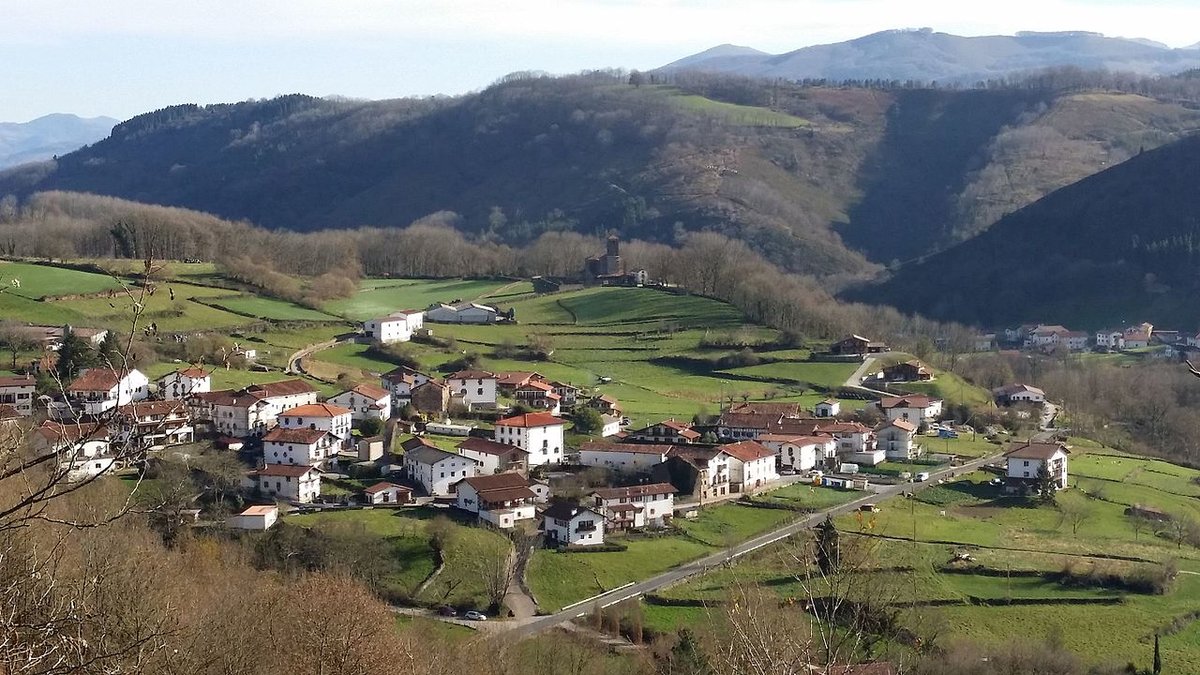
Oitz village on the mountainside; views over the valley and surrounding Atlantic forests
Hide article Read full article
A very small village in the north
Oitz is a small village in the north of Navarra, with around 136 inhabitants. It sits at about 187 metres above sea level, surrounded by meadows and low hills. The setting feels quiet and open rather than dramatic, with a landscape shaped by everyday rural use.
The village itself is compact. One short visit is enough to see it, and walking is the easiest way to get around. If you arrive by car, park carefully and avoid blocking access to farmhouses, as many of them are still working homes.
Services here are very limited. It makes sense to bring water or something to eat if you plan to stay for a while, as there is little in the way of facilities once you arrive.
Most of the buildings are traditional stone farmhouses, known locally as caseríos. They have sloping roofs designed for the damp climate typical of this part of Navarra. The overall impression is practical rather than decorative, shaped by weather and daily life rather than tourism.
A simple village layout
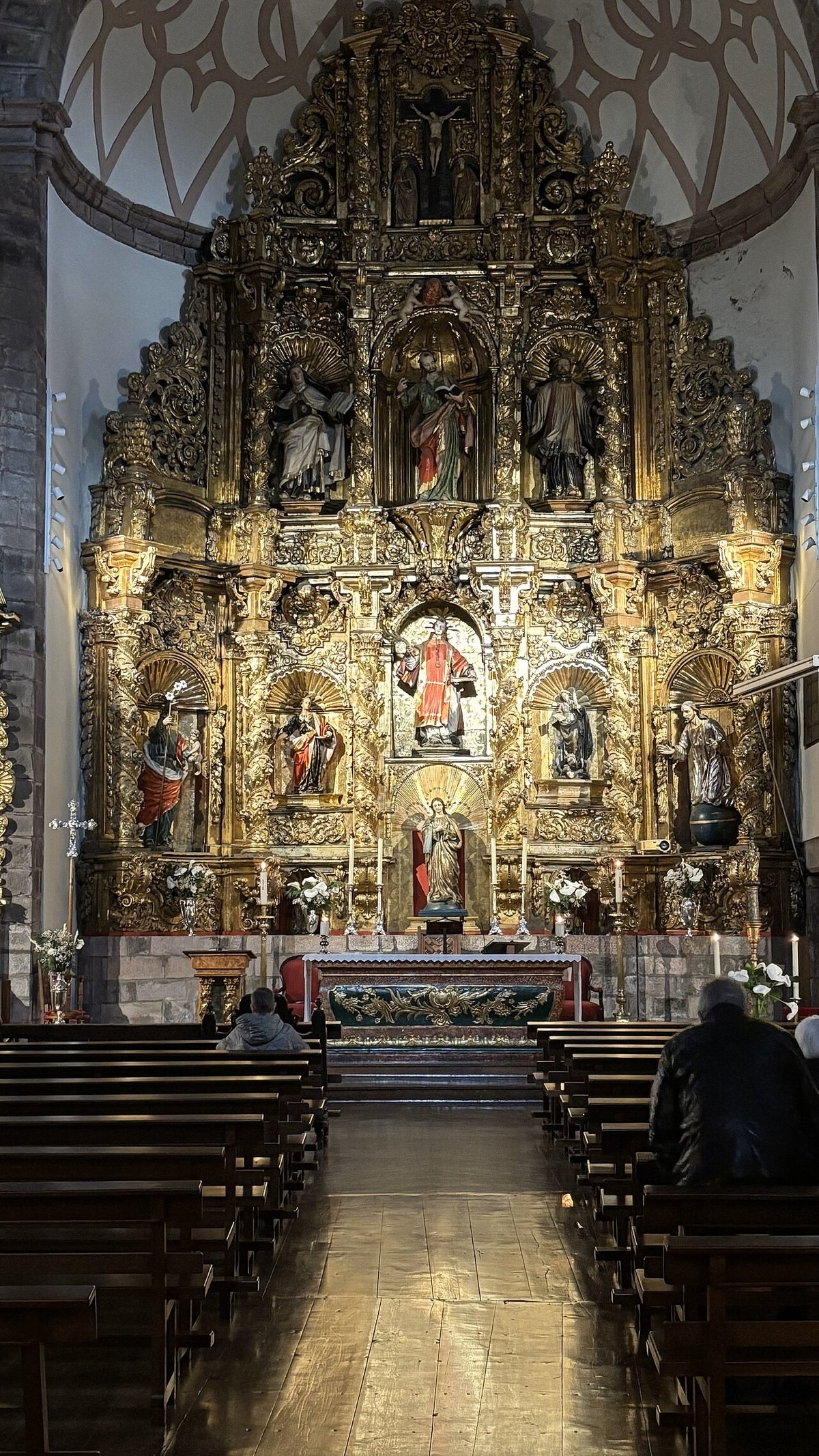
The centre of Oitz is organised around a short street, with the church as its main reference point. The church itself is modest. There are no grand façades or striking decorative elements, just a straightforward building that fits naturally into the scale of the village.
Attention tends to shift from the church to the surrounding houses. The caseríos are the most interesting part of Oitz. They are large, built in stone, and often include wooden features on balconies or under the eaves. Many are still in use, and it shows. These are not preserved buildings arranged for visitors, but homes that continue to serve their original purpose.
Beyond the houses, the landscape immediately opens into enclosed meadows edged with hedges, along with small patches of woodland. There are no marked viewpoints or specially prepared walking routes. The paths around Oitz are rural tracks used in everyday life, linking fields and nearby areas rather than guiding visitors.
Walking and slowing down
Time in Oitz is usually spent walking. Several tracks lead out from the village, crossing meadows and gradually climbing towards slightly higher ground. From these points, there are views over the surrounding valley, though nothing is signposted or arranged as a formal lookout.
These paths are not heavily marked. It helps to pay attention to your route, especially if you are unfamiliar with the area. They are working paths first and foremost, not designed as walking trails with regular signs or directions.
The pace here is slow. The area suits those who enjoy quiet surroundings, whether that means walking without distractions or watching for birds. There is often more activity in the fields early in the day or towards evening, when the landscape feels more alive.
A short visit is enough
Oitz works best as a brief stop rather than a full-day destination. An hour is usually enough to get a clear sense of the place. Walk along the main street, stop by the church, and then follow one of the paths leading out of the village. Within minutes, you will be surrounded by open countryside.
There is not much else to see within the village itself, and that simplicity is part of its character. It is a place that does not try to offer more than it has.
Common mistakes to avoid
Some expectations do not fit Oitz particularly well. It is not a destination for monuments or long visits filled with attractions. The village is very small, and its appeal lies in its everyday rural setting.
Parking can also be an issue if not handled carefully. Some entrances lead directly to houses or farmland, so it is important not to block them. If there is any doubt, it is better to leave the car at the entrance to the village and continue on foot.
Weather is another factor to keep in mind. After rain, the paths can quickly become muddy. Conditions change fast, and suitable footwear makes a difference if you plan to walk.
When to go
Spring and autumn are generally the most pleasant times to visit. The landscape is green, and temperatures tend to be mild, which suits walking and spending time outdoors.
Summer can feel heavy around midday, especially under direct sun. In winter, fog and rain are common, and daylight hours are shorter, which limits how much time can be spent outside.
Getting there and practical notes
Oitz is reached from Pamplona by heading north and then continuing along smaller roads towards the villages in the valley. The final stretch is on a local road, which reinforces the sense of arriving somewhere tucked into the landscape rather than on a main route.
Facilities in the village are very limited, so it is best to arrive prepared with whatever you might need during your visit.
A simple approach works well here: stop, take a walk, and then continue through the valley. Oitz makes more sense as a short pause along the way than as a place to spend an entire day.