Full Article
about Saldías
Small mountain village in Malerreka; surrounded by forests and scattered farmhouses.
Hide article Read full article
A village that wakes slowly
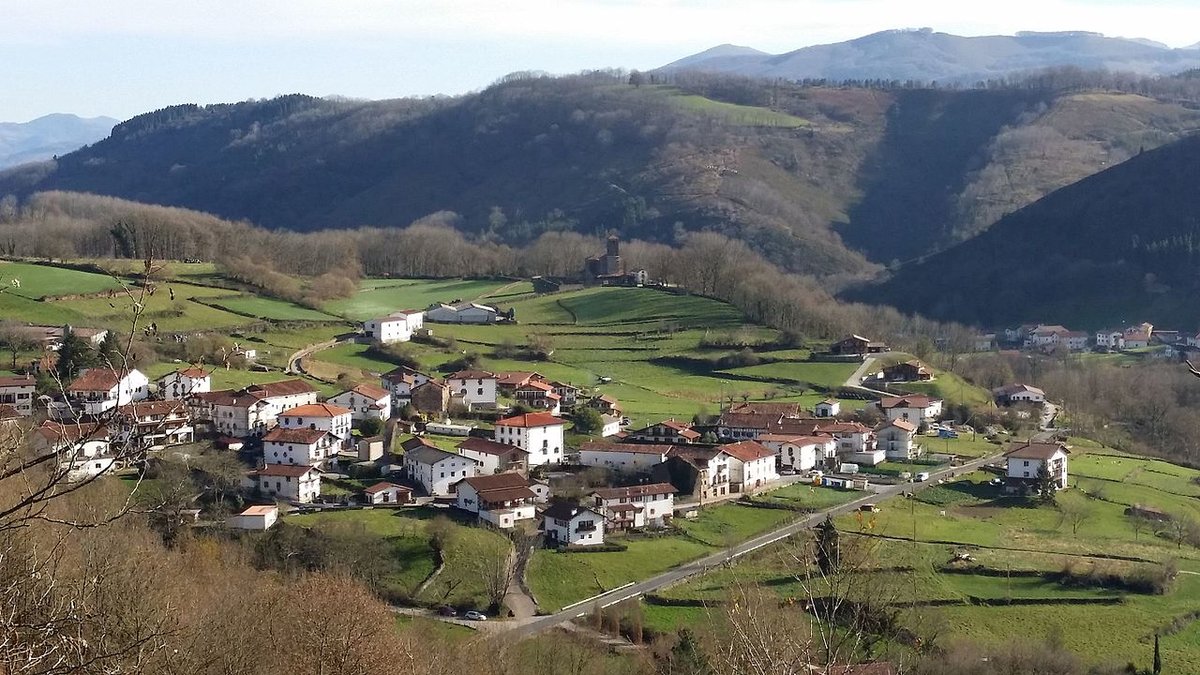
Early in the morning, Saldías is still half asleep. A door opens somewhere, a car jolts into motion as it rolls downhill, and water runs steadily in the fountain on the square. The houses, built from grey stone with reddish roofs, cling to the slope as if they had grown there gradually, one above the other.
Saldías is one of those small villages in the north of Navarra where the landscape does not begin beyond the edge of town. It is already part of it. Between the houses, there are sloping meadows, vegetable plots and patches of woodland that turn a deep ochre in autumn. With around 125 residents, life moves at a different pace here. Sit for a while and the same neighbours will pass by more than once over the course of a morning.
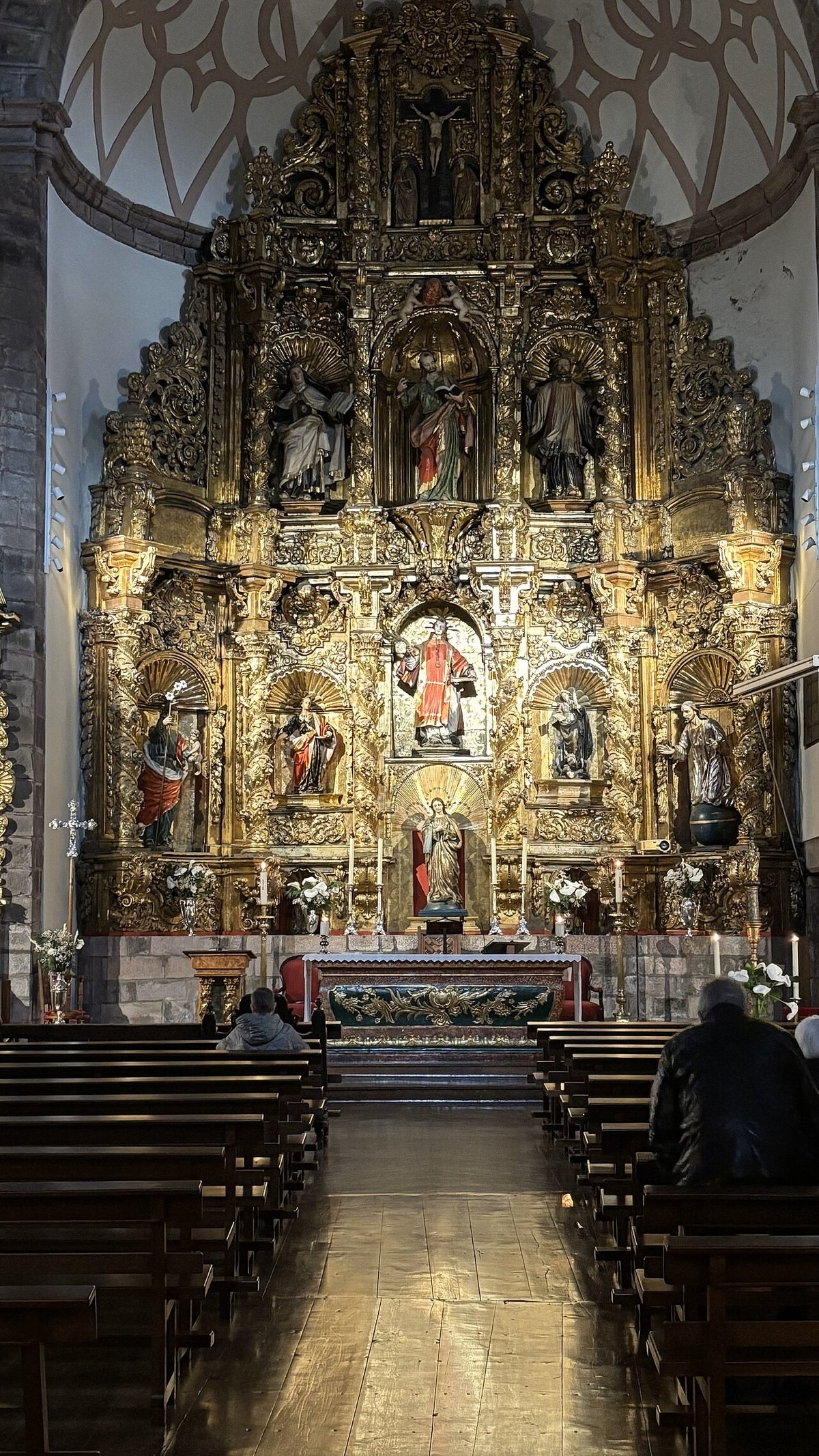
The church of San Juan stands near the centre of the village. It is a restrained building of dark stone, with a square bell tower rising above the rooftops. A closer look reveals small details that are easy to miss: marks carved into lintels, thick wooden doorways, iron balconies where pots appear in summer.
Short streets, steep slopes
The village centre is small and best explored without any plan. Streets are short, and in places quite steep, often opening out suddenly towards the surrounding landscape. Some houses display coats of arms on their façades, while others are simpler, with uneven walls that show different phases of construction over time.
The small square, next to the fountain, sees moments of activity. Someone pulls up briefly in a car, a short conversation unfolds beside the stone bench. It is not somewhere designed for lingering for hours, but it invites a pause, a quick look around.
Comfortable footwear is a good idea. The cobbled surfaces and slopes, especially after rain, can be slippery. Rain is frequent in this part of Navarra, and it shapes the feel of the place as much as the buildings do.
Where the landscape takes over
A few minutes’ walk beyond the last houses is enough for the village to give way to open meadows and dirt tracks. These paths link bordas, traditional rural buildings used for farming, small plots of land and wooded areas. Many have been used for generations, whether for livestock or for reaching higher ground to work in the hills.
From slightly elevated points above Saldías, there are wide views over the Ezkurra valley and the slopes covered in beech and oak forests that surround the area. On clear days, several rounded peaks typical of northern Navarra can be seen in the distance. When fog rolls in, which happens often here, the landscape closes in and feels more enclosed and damp, with the scent of wet earth lingering in the air.
For those who enjoy walking, several paths and tracks begin directly in the village. They are not technical routes, but it is sensible to carry a map or a track if planning a longer outing, as some paths branch off between meadows and woodland.
In rocky outcrops and open areas, griffon vultures can often be seen gliding overhead. In spring, there is also constant movement among smaller birds in hedgerows and fields, adding a quiet layer of sound to the surroundings.
Getting there and moving around
Reaching Saldías by road is straightforward, although the final kilometres involve a fair number of bends, as is common in this part of northern Navarra. It is worth taking the drive slowly, especially in rain or fog.
Within the village, parking space is limited. Visitors usually leave their cars near the entrance or in spots where they do not block access for agricultural vehicles, which remain part of daily life here.
Seasons in Saldías
Spring and autumn are often the most rewarding times to visit. In spring, the meadows are intensely green and dotted with small flowers. In autumn, the surrounding woodland shifts quickly in colour, and the low afternoon light filters between the slopes.
Summer brings a little more activity at weekends, particularly with people returning to the village or spending the day in the area. During the week, the atmosphere settles back into its usual calm.
In winter, the weather takes the lead. Thick fog can linger for hours, and light snowfall sometimes reaches nearby higher ground. Walks tend to be shorter, but the landscape takes on a different texture: damp grass, smoke rising from chimneys, and a deeper quiet than in other seasons.
A brief stop in northern Navarra
Saldías is not defined by major monuments or long lists of sights. The village can be explored in a short time. It works best as a pause along a wider journey through northern Navarra, or as a base for walking in the nearby valleys.
Sometimes it is enough to follow a path just beyond the village, climb a little higher and look back. From there, the clustered houses on the slope and the surrounding meadows come into view. Many visits end in exactly this way: unhurried, with little noise beyond the wind moving through the trees.