Sunbilla 1824 Edward Hawke Locker.jpg
Edward Hawke Locker (1777-1849) · Public domain
Navarra · Kingdom of Diversity

Sunbilla

At 120 metres above sea-level, Sunbilla sits low for a mountain village—yet the Bidasoa valley walls rise so steeply that the church tower still ha...

672 inhabitants · INE 2025
116m Altitude

Why Visit

Mountain Stone bridge Cycling tourism

Best Time to Visit

summer

San Tiburcio Festival (August) agosto

Things to See & Do
in Sunbilla

Heritage

  • Stone bridge
  • Bidasoa Greenway

Activities

  • Cycling tourism
  • Hiking

Festivals
& & Traditions

Fecha agosto

Fiestas de San Tiburcio (agosto)

Las fiestas locales son el momento perfecto para vivir la autenticidad de Sunbilla.

Full Article
about Sunbilla

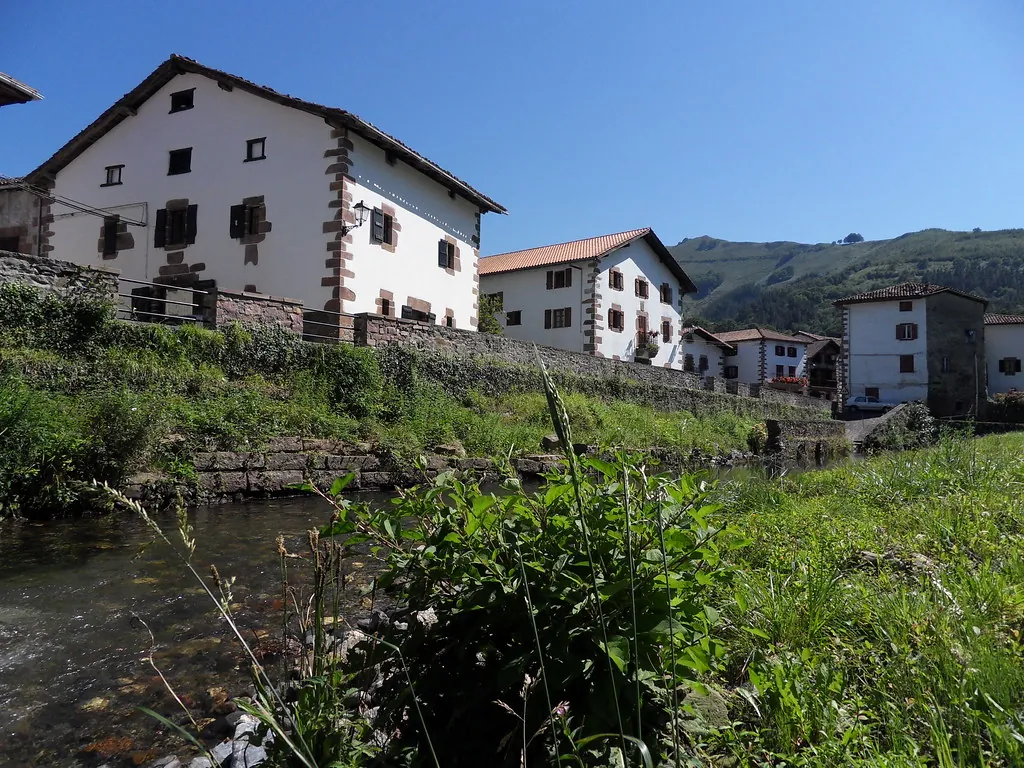
Town split by the Bidasoa river and linked by a medieval stone bridge; green, cyclist-friendly setting

Ocultar artículo Leer artículo completo

A green Navarre that feels like the Basque Country

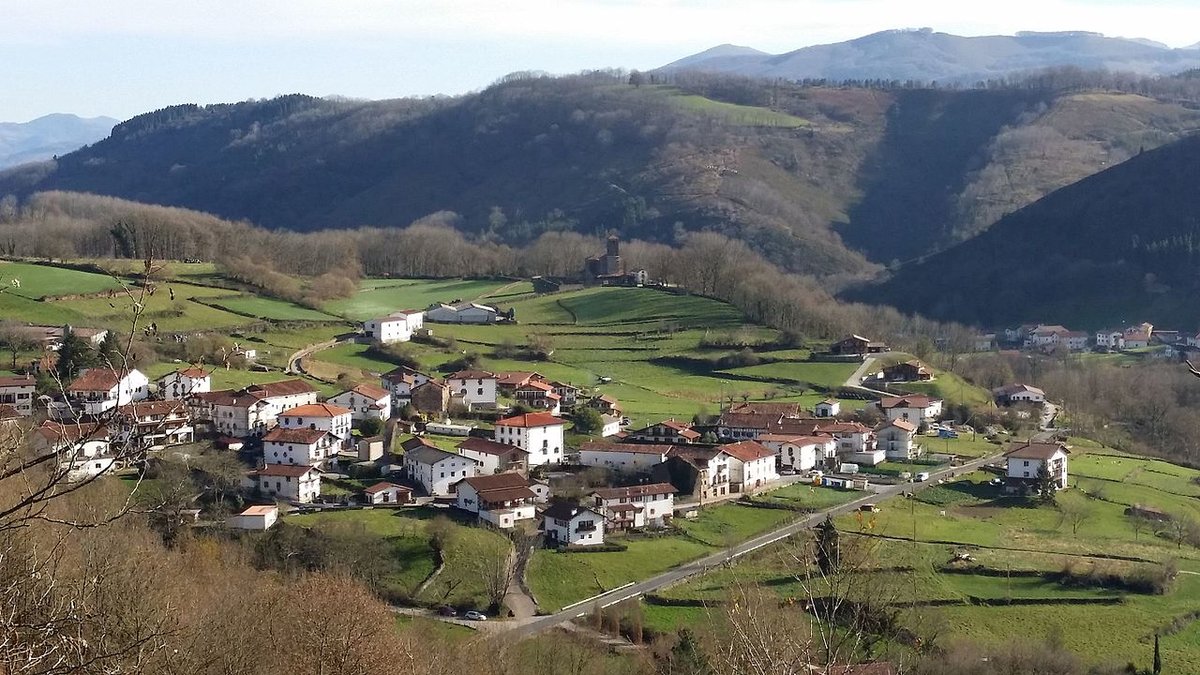
At 120 metres above sea-level, Sunbilla sits low for a mountain village—yet the Bidasoa valley walls rise so steeply that the church tower still has to crane its neck to see the sky. The effect is a pocket of Atlantic weather: even in July the grass stays vivid, the air smells of damp stone, and clouds can roll in before you’ve finished your coffee. Locals treat sunshine as a pleasant surprise; visitors should pack the same waterproof they’d take to the Lake District.

The village numbers barely 670 souls, enough to fill a single Sutton suburb street. Houses climb the south-facing slope in terraces of ochre stone and dark timber, their balconies glazed against the rain rather than open to the sun. Look up and you’ll spot carved dates—1789, 1832, 1901—together with family initials that turn façades into modest stone passports. Nothing is whitewashed; this is not Andalucía. The colour comes from geraniums in tin buckets and the occasional red Mini parked beside the river bridge.

Riverside circuit and the church that may not open

A lap of Sunbilla takes twenty minutes if you stride, an hour if you dawdle. Start at the lower bridge where the Bidasoa slides over a weir; the water is tea-brown after rain and loud enough to drown conversation. A paved path hugs the east bank, shady and flat—pushchair-friendly, though you’ll share it with villagers walking dogs and the odd cattle truck heading to pasture upstream. Two hundred metres brings you to the second bridge, a 1950s concrete affair with views back to the old mill. Turn uphill here and you’re in the core: narrow lanes, drainage gutters running like taps, and the parish church of San Juan Bautista watching over the lot.

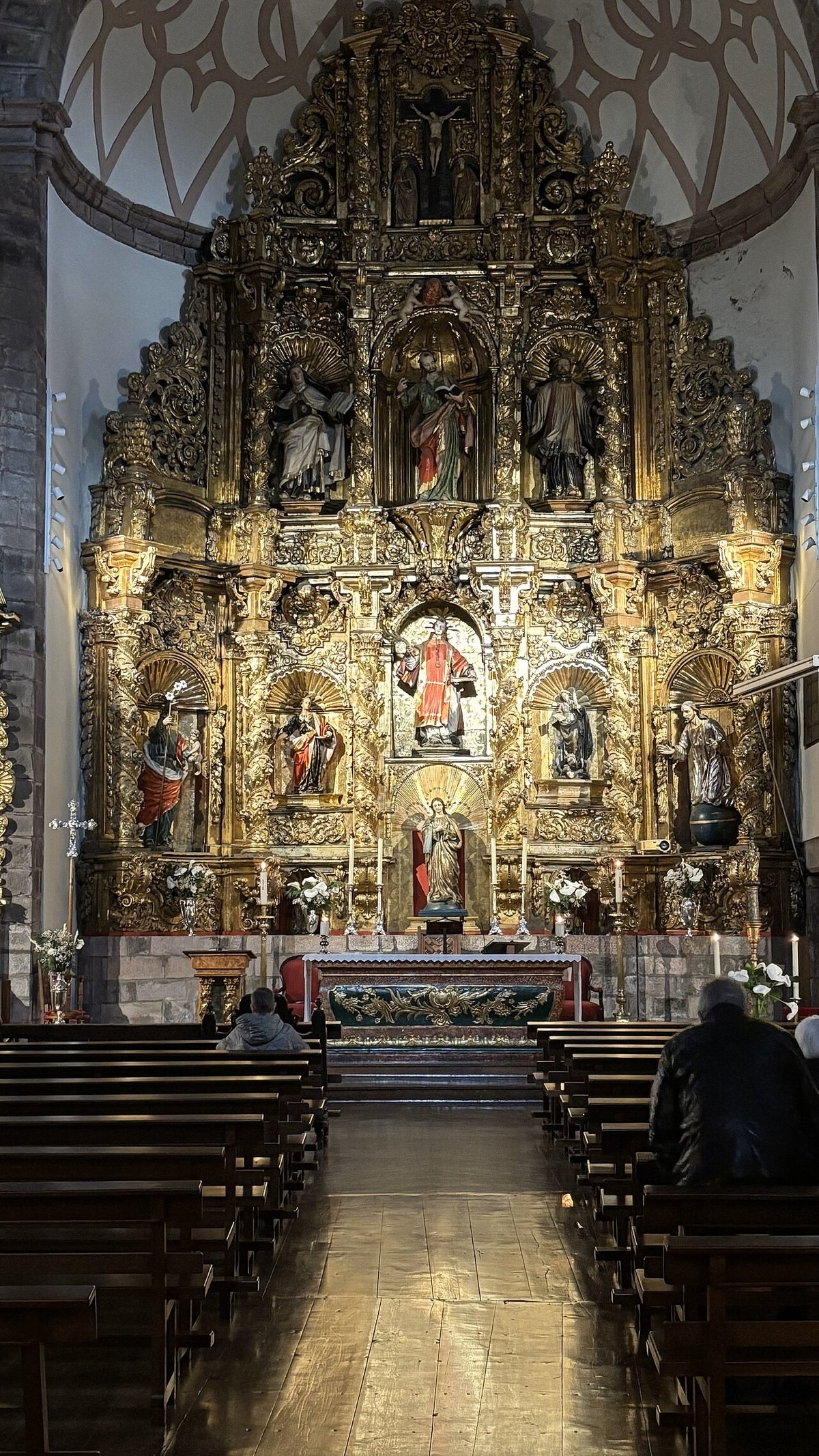
The baroque tower is the village compass; lose sight of it and you’ve wandered into somebody’s barn. The heavy wooden door is usually shut. Mass times are posted on a laminated sheet that curls in the humidity, but no promise is made for tourists. If you find it open, step inside: the nave is cool, the walls painted an unexpected powder blue, and the gold leaf on the altarpiece actually glows on gloomy days. Otherwise, content yourself with the outside staircase where wedding photos are taken—confetti wedged between the stones tells the story.

Steak, cider and the menu that never changes

Hunger is best solved at Restaurante Ariztigain on the main road, identifiable by the smell of charcoal and the house rule that lunch finishes at 15:30 sharp. The menú del día is £14 mid-week and rotates around three options: grilled chicken, entrecôte, or hake—each accompanied by chipped potatoes and piquillo peppers. Ask for “sin picante” and the waiter will nod as though speaking a password; this is Basque-Navarre borderland, but they understand the British palate. Vegetarians get a roasted vegetable stack drowned in olive oil and applause.

Cider comes in 750 ml bottles that look like missiles. The ritual—holding the bottle above your head and letting the liquid arc into a tilted glass—adds a millilitre of theatre and subtracts a pound of carbonation. The taste is sharp, almost white-wine dry, and only 5 % ABV, so you can still steer afterwards. If you prefer grape, the house red from nearby Tierra Estella is served at cellar temperature, which in Sunbilla means decidedly cool.

Walking tracks: boots optional, OS spirit helpful

Sunbilla is not a trailhead town; think of it as a pleasant water stop rather than an expedition base. That said, three waymarked paths leave from the upper houses. The easiest climbs 150 m through chestnut woods to the Ermita de San Cristóbal, a one-room chapel with benches outside and a view across the valley to the railway tunnel mouth at Endarlatsa. Allow 45 minutes up, 25 down, and expect mud after October.

A longer circuit (7 km, two hours) follows the GR-11 red-and-white blazes south-east towards Baztan. The gradient is gentle by Pyrenean standards but still notices the custard cream you ate at elevenses. Mid-route you’ll pass an abandoned hamlet, roofs caved in, orchards run wild—perfect for a Game-of-Thrones moment until you realise the only dragon is the neighbour’s tractor. The trail re-enters Sunbilla via the top lane, where elderly residents sit on plastic chairs rating walking poles like Strictly judges.

Winter changes the deal. Snow is rare at village level, yet the access road from the N-121-A can ice over at 400 m. If you’re travelling between December and February, carry chains even if the hire firm shrugs and says “not usually needed”. Summer, by contrast, is benign: 25 °C max, cooler under the trees, but bring a layer for the 16 °C evening that rolls in at 20:00 sharp.

Where to sleep and how not to plug in

Most overnighters stay at Camping Ariztigain, a kilometre downstream on the Pamplona road. Pitches are terraced into the hillside, which gives the rear row spectacular valley views but means level ground is theoretical. British caravanners note: only about half the plots have 10-amp hook-ups, and the sockets are tucked at ankle-height in rocky corners. Bring a 25 m cable or prepare for creative parking. Sanitary blocks are heated, spotless, and labelled in four languages; the middle shower button delivers 90 seconds of scalding water—long enough if you’ve planned the choreography.

Static cabins are available for £70 a night in May, £95 in August, and include access to the municipal pool across the lane. The pool is free to campers and heated by the same mountain stream that chills your cider: 24 °C in July, 19 °C by late September. It shuts if lightning is forecast, a regular afternoon event. Plan swims for the morning and you’ll have the lanes to yourself.

Timing crowds, rain and the Spanish school holidays

Sunbilla never explodes, but it does swell. The last week of June brings the fiesta of San Juan: temporary bar huts, a brass band that rehearses outside your window, and a communal barbecue where half a lamb costs €18 a kilo. Book camping pitches early; by 29 June the site is full of Pamplona families recovering from the chupinazo.

August is second-busiest. Spanish schools are off, the campsite adds a third waiter, and restaurant tables are gone by 21:00. Yet even then you can find solitude on the riverside path at 08:00, when only the heron is fishing. The sweet spot for Brits is early May to mid-June or mid-September to October: flights to Bilbao are cheaper, the lanes smell of lime blossom or chestnut smoke respectively, and the menú still costs £14.

The honesty clause

Come for a single Instagram sunset and you’ll leave underwhelmed: Sunbilla is too small for a full day of sights and too wet for guaranteed golden hour. Treat it as a place to slow the itinerary—linger over coffee, walk until your shirt sticks to your back, then retreat to the campsite terrace while clouds blot out the peaks. You might stay two nights, probably not three, and that is exactly the pace the village is built for.

Key Facts

Region
Navarra
District
Norte
INE Code
31226
Coast
No
Mountain
Yes
Season
summer

Livability & Services

Key data for living or remote work

2024
ConnectivityFiber + 5G
HealthcareHospital 12 km away
EducationElementary school
Housing~5€/m² rent · Affordable
Sources: INE, CNMC, Ministry of Health, AEMET

Official Data

Institutional records and open data (when available).

  • Suspiru Hego (Suspiru 1 Hego)
    bic Dolmen ~2.4 km
  • Suspiru Ipar (Suspiru 2 Ipar)
    bic Dolmen ~2.4 km

Planning Your Visit?

Discover more villages in the Norte.

View full region →

More villages in Norte

Traveler Reviews