Full Article
about Zubieta
Traditional village known for its Joaldunak carnivals alongside Ituren; ecomuseum mill
Hide article Read full article
A small village in a green valley
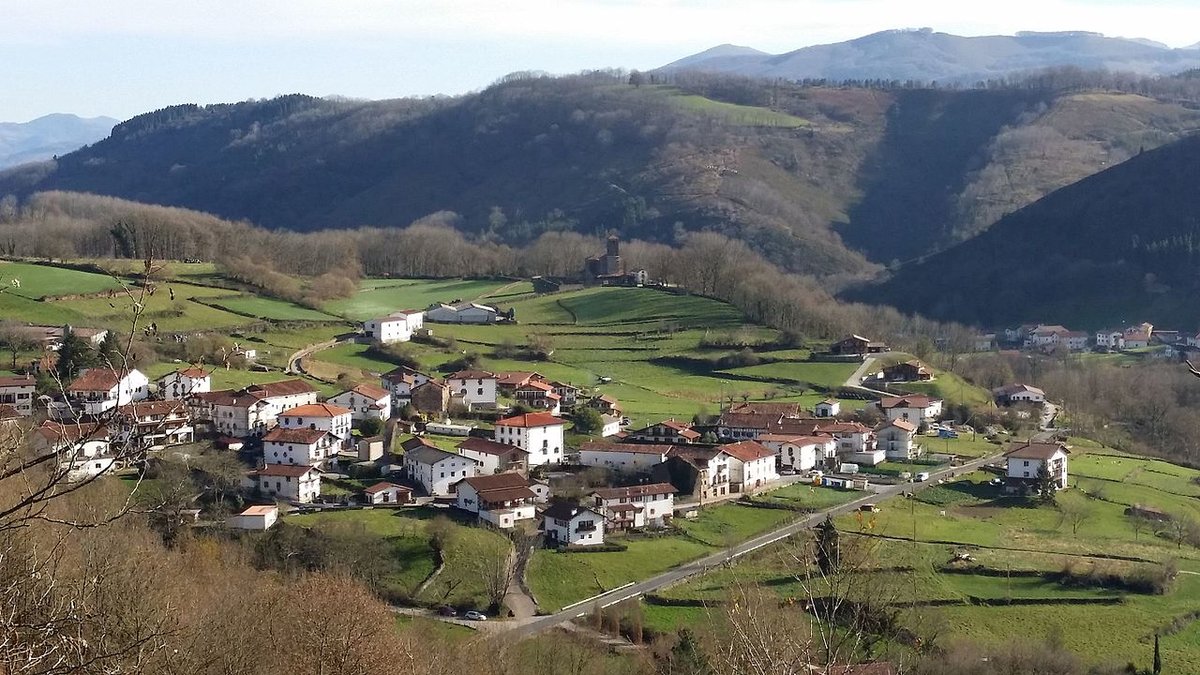
Zubieta is a village in the north of Navarra with fewer than three hundred inhabitants. It sits in a damp valley framed by meadows and areas of Atlantic woodland, where beech and oak are common. The river runs along the valley floor and has influenced how the settlement has grown over time.
The layout is simple and easy to read. Houses line a main road, with smaller paths branching off towards scattered farmsteads known as caseríos. These buildings are not grouped tightly together, but spread out across the surrounding land, reflecting a rural way of life closely tied to farming.
The architecture follows that same logic. Stone walls provide solidity, timber frames add structure, and broad roofs protect against frequent rain. Many homes show layers of change, with extensions or alterations added over different periods. This gradual evolution is typical in places where houses are adapted to suit new needs as generations pass.
A rural past that still shapes the present
For centuries, local life depended on livestock and small-scale subsistence crops. That economic base explains why the village remains modest in size and why so many buildings are linked to agricultural work.
Some façades display carved coats of arms. These do not point to great noble families, but they do suggest households with a certain standing within the local community. In northern Navarra it was common for particular caseríos to hold land, livestock, or shared responsibilities within the valley. These roles helped organise daily life and resource use in a landscape where cooperation mattered.
The overall impression is of a place shaped less by grand events and more by continuity. The village reflects a long relationship between people and land, where change tends to be gradual rather than dramatic.
The church and the heart of the village
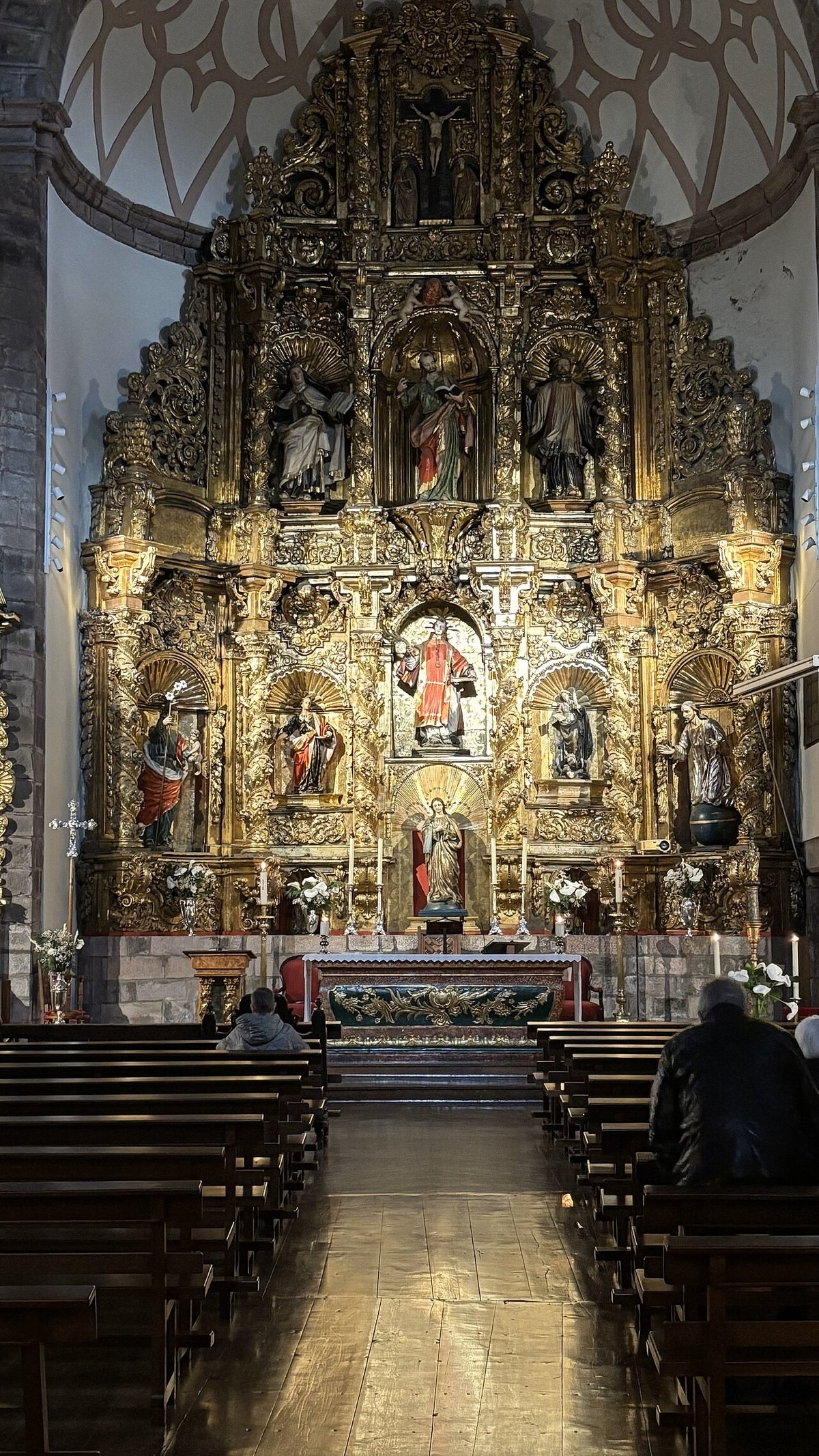
The parish church is dedicated to San Juan Bautista. The building as it stands today took shape in the Early Modern period, although later alterations have been made. Its structure is simple, in keeping with rural churches in this part of Navarra.
Its position is just as important as its design. The church stands close to the main axis of the village, part of a shared space that also includes the road and the informal meeting area around it. In small settlements like Zubieta, these elements often overlap, creating a central point for both daily routines and social interaction.
Walking along the main street brings out the detail of the houses. Wooden balconies run along upper floors, large doorways once allowed carts to pass through, and some entrances are marked by small carved stone shields. These features are not decorative in a grand sense, but they reveal how buildings were used and adapted over time.
The mill and the story of maize
Near the river stands the old mill of Zubieta. For a long time it played a central role in the local economy. Grain from nearby caseríos was brought here to be ground, especially maize, which became an important crop in the area.
The building has been preserved and still helps explain how this type of water-powered installation worked. The lower part is built in stone, giving it strength against the flow of water, while the upper levels are in wood. River water was channelled towards the mechanism that drove the millstones.
This is more than a single structure by the river. The mill represents a key part of the valley’s agricultural history, showing how natural resources were used to support everyday life. It connects the landscape directly with the work that sustained the community.
Paths through fields and woodland
Several rural tracks lead out from the village centre towards meadows and wooded areas. These paths are used by farmers and livestock keepers, and they are often shared with walkers.
The landscape follows a pattern typical of northern Navarra. Green plots are marked out by hedges, slopes are covered in woodland, and caseríos sit at short distances from one another rather than forming dense clusters. This creates a sense of openness without isolation.
The routes themselves are not particularly demanding. It is enough to follow the main tracks without straying too far. Weather plays a role in how they feel, though. Rain is frequent in this region, and after wet days some sections can become muddy.
These paths offer a way to understand the surroundings at a slow pace. They link the village to the land that supports it, and they reveal how closely daily life is tied to the terrain.
Food, farming and daily rhythms
Livestock farming still has a presence in the area. The latxa sheep is part of both the landscape and the local economy, recognised for its role in producing milk used to make Idiazabal cheese. This cheese is made in different parts of northern Navarra and reflects a wider pastoral tradition.
In the homes of the valley, cooking remains connected to nearby produce. Lamb, seasonal vegetables, preserved foods prepared for winter. These are dishes rooted in domestic routines rather than formal cuisine. They were designed for long working days and a damp climate, where hearty meals were practical as well as sustaining.
Food here is not presented as something separate from daily life. It is another expression of the same agricultural system that shapes the fields, the buildings, and the rhythms of the village.
A short and grounded visit
Zubieta can be explored quickly. In less than an hour it is possible to see the village centre, the church, and the immediate surroundings of the mill.
The best approach is to walk without rushing. Following the main street first, then heading towards the river, makes it easier to understand how water, pasture, and woodland have influenced the settlement. The layout becomes clearer when seen on foot.
Conditions can vary depending on the weather. During colder months or after several days of rain, the ground may be wet and paths muddy. In this part of Navarra, the weather can shift easily, even on days that begin clear.
Zubieta does not rely on standout attractions or large landmarks. Its interest lies in how everything fits together: the houses, the river, the fields, and the quiet continuity of rural life.