Full Article
about Arce
A broad pre-Pyrenean valley with scattered settlements; home to the Nagore reservoir and landscapes of striking natural beauty.
Hide article Read full article
A Place Where Very Little Happens, by Design
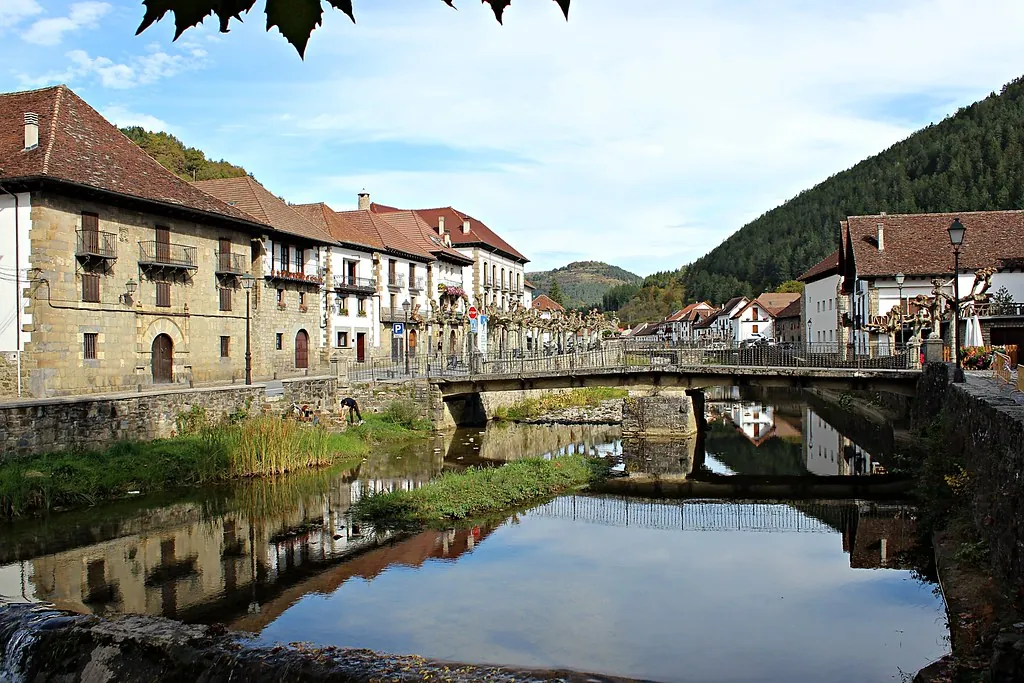
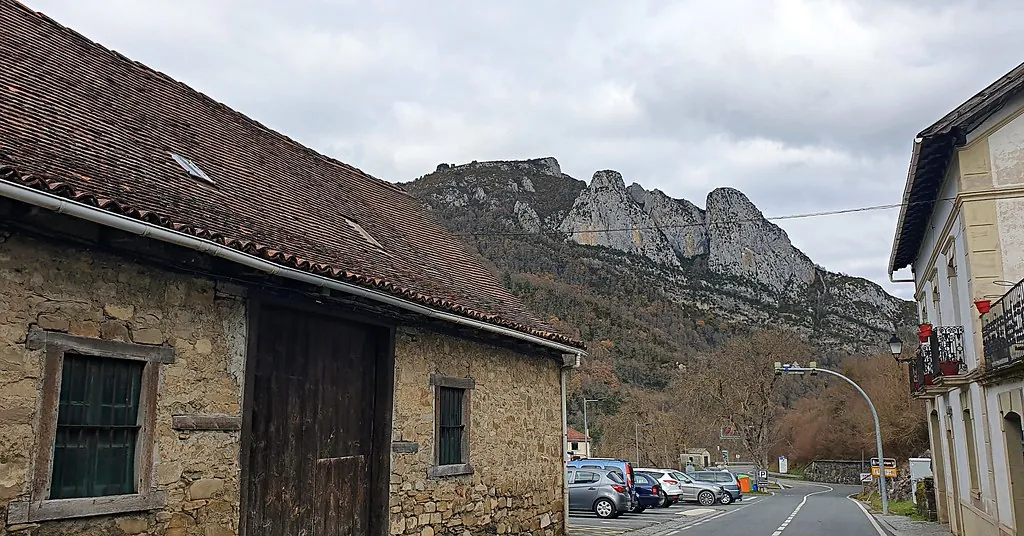
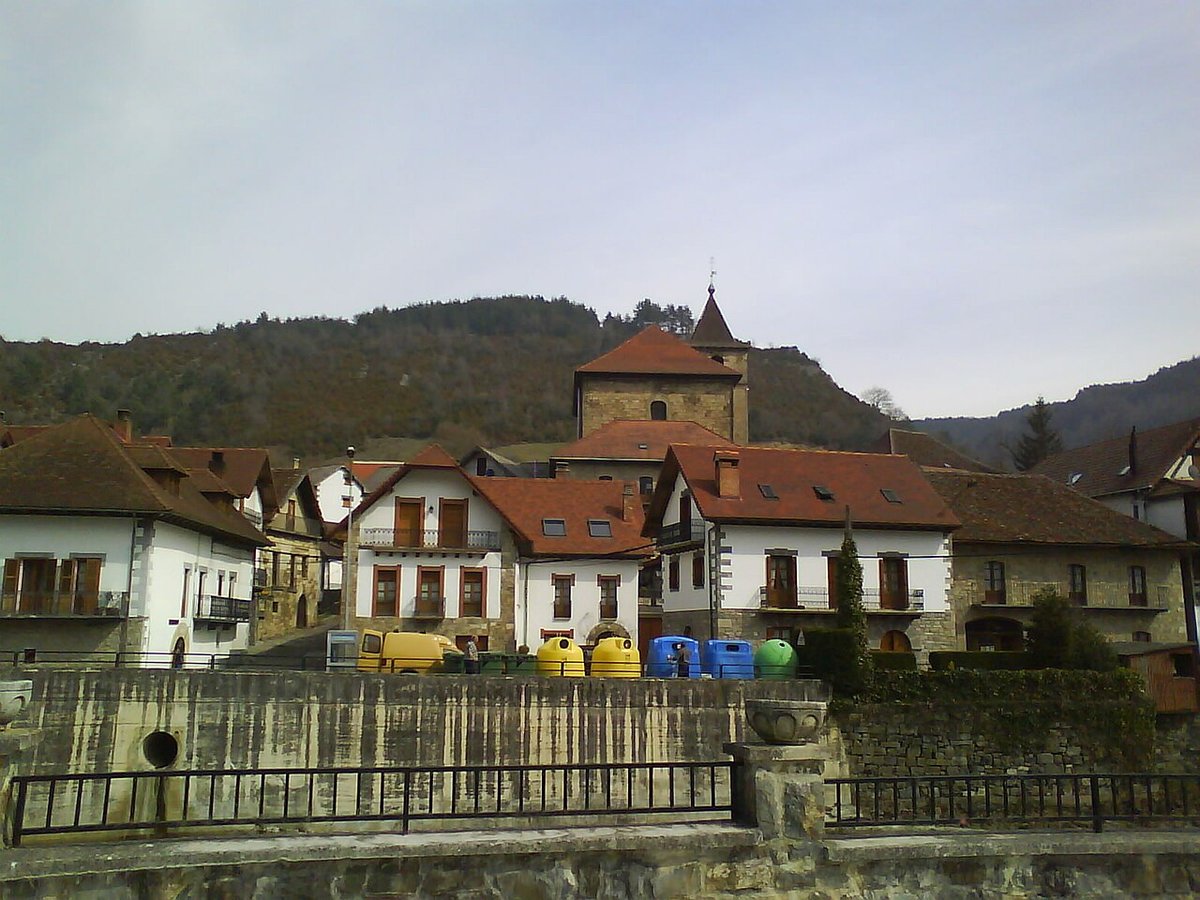
Arce is the kind of place you arrive at by car and think, “there’s not much going on here.” That impression is not wrong, and it is very much the point. This municipality in the Navarre Pyrenees is made up of several small villages scattered across a valley, with stone farmhouses, damp meadows and roads that take their time getting anywhere.
Anyone arriving in search of landmarks or a packed historic centre full of sights to tick off may need to adjust expectations. In Arce, the plan tends to be simpler: walk for a while, look around, and get a sense of how a valley works when agriculture still shapes daily life.
More Valley Than Village
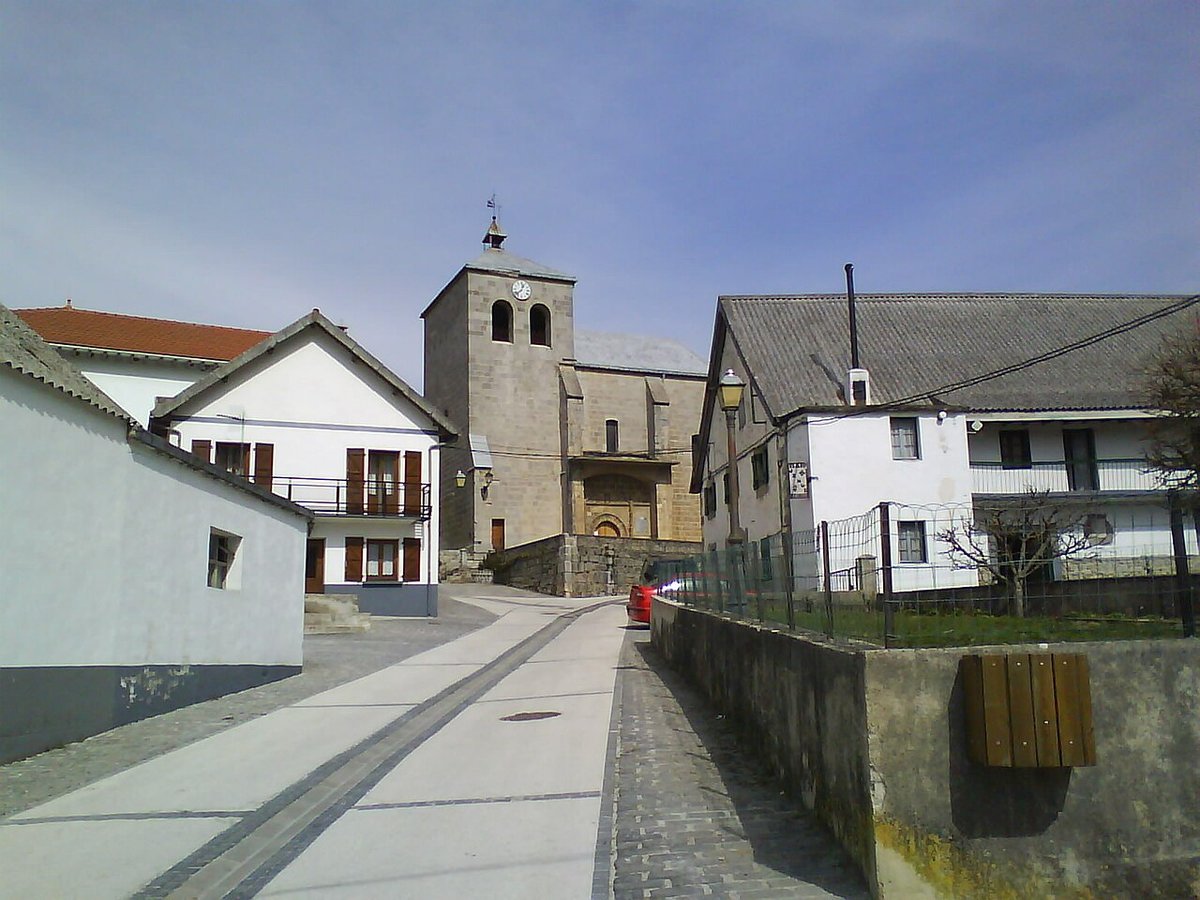
When people refer to “Arce”, they are really talking about a group of small settlements spread out across the valley. Houses cluster around a church, with barns, stables and fields beginning almost at the front door.
The landscape is typical of the Navarre Pyrenees: sloping roofs, thick stone walls and paths linking neighbourhoods and nearby villages. There are no streets lined with shops or lively squares at all hours. What you are more likely to come across is a local resident, a tractor, or a dog that seems to know the terrain better than any visitor.
It is a setting where space matters. The distance between one cluster of houses and another is part of the rhythm of the place, and the valley itself feels like the main character rather than any single village.
Walking Without a Plan
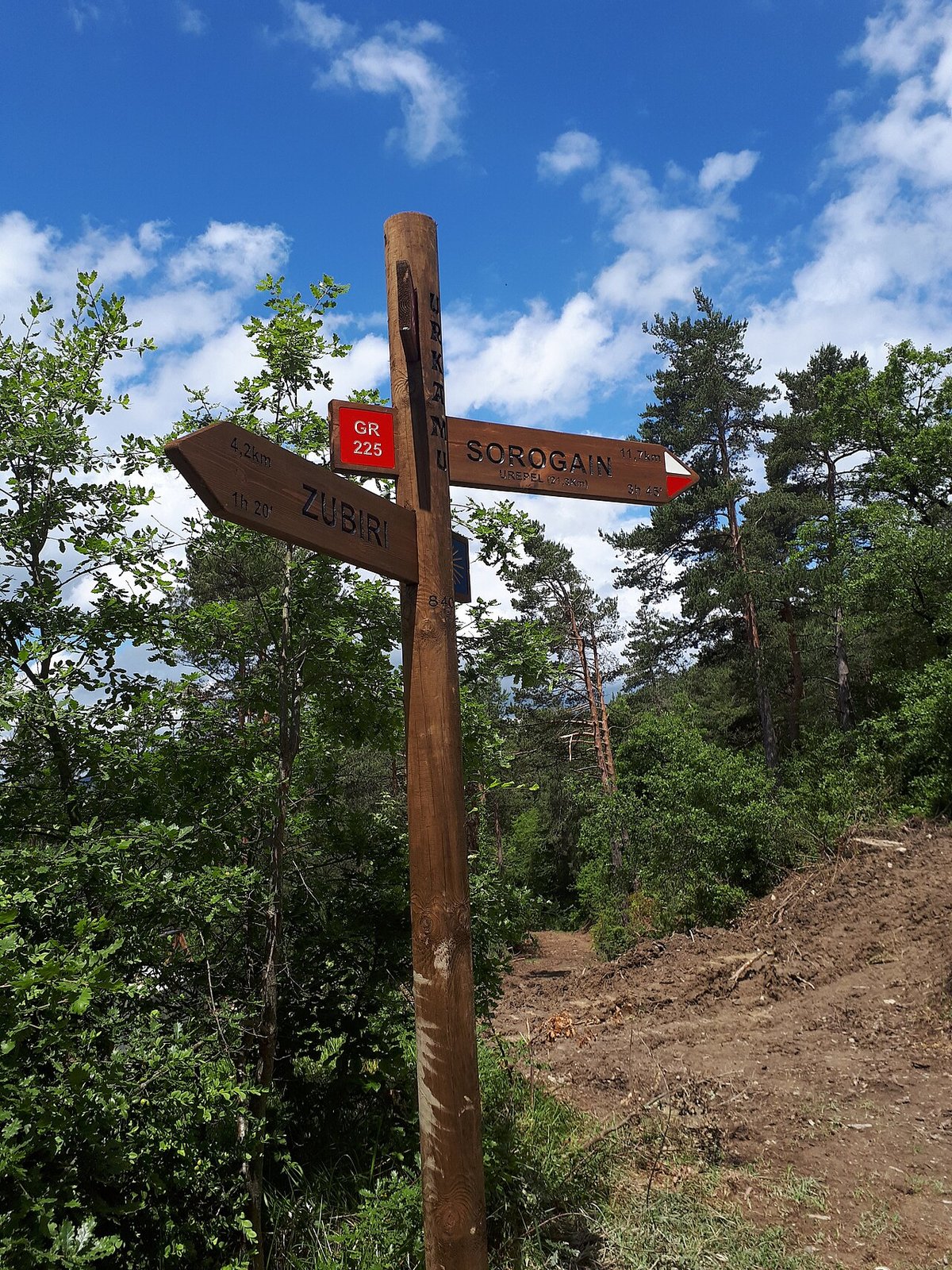
Arce does not require a carefully planned itinerary. In fact, the best approach is often to head out on foot along any track or path that starts from the village where you happen to be staying or passing through.
The valley mixes grazing meadows with patches of woodland, beech, oak and some pine. On cloudy days, these forests carry the quiet that is so characteristic of the Pyrenees. In summer, cows are often seen close to the paths. In autumn, the colours shift quickly and the landscape changes with them.
These are not dramatic, headline-grabbing routes of the sort featured on mountain guide covers. They are quieter walks, the kind taken without rushing and without checking the time every few minutes.
Walking here is less about reaching a specific viewpoint and more about noticing small changes: how the ground softens underfoot near the meadows, how the trees close in along certain stretches, or how the valley gradually opens out again.
A Landscape That Still Works
One of the most striking aspects of Arce is that the countryside is not a backdrop. It is actively worked. Much of the landscape is tied to livestock farming, particularly cattle and sheep.
Late in the afternoon, it is common to see animals making their way back towards stables or areas close to the houses. For those who live here, this is routine. For visitors, it offers a clear sense of how the day is organised in the valley.
There is also small-scale, artisanal production linked to sheep’s milk, which forms the basis of some traditional cheeses from northern Spain. This is not always visible to visitors, as many of these are family-run operations working on a modest scale.
What stands out is how integrated everything feels. The fields, the buildings and the daily routines are closely connected, and that connection shapes the atmosphere of the place.
Cycling, with a Flexible Mindset
The valley has a number of rural tracks that can be explored by bike. That said, it helps to arrive with the right expectations: this is not a network of perfectly signposted cycle routes.
After heavy rain, some paths turn muddy, and there are stretches where getting off and pushing the bike becomes necessary. There are also private plots of land and tracks that change depending on agricultural use. Having a GPS device or a reliable map can make a significant difference.
For those who enjoy a bit of improvisation, trying out different paths and seeing where they lead, Arce can be an interesting place to spend time cycling. It is less about following a fixed route and more about adapting as you go.
When the Valley Feels at Its Best
Spring and autumn are often the most rewarding times to experience Arce. The valley is green, the forests are active with change, and walking is comfortable.
Summer also works, although in more open areas the midday sun can be intense. Winter brings a more austere version of the landscape: colder temperatures, shorter days, and secondary roads that can become tricky if snow or ice appears.
Each season shifts the tone of the valley rather than transforming it completely. The underlying rhythm remains steady throughout the year.
Understanding Arce in a Short Visit
If time is limited, the approach can be very simple. Park the car, walk through whichever settlement you are in, and take the first path that leads towards the meadows or the forest.
Within ten or fifteen minutes on foot, you are already outside the village. That is where the place begins to make sense: the sound of livestock, the scattered houses, and the valley gradually opening up.
Arce is not somewhere that makes an immediate impression. It reveals itself slowly. Approached with the right expectations, as a working valley without embellishment, it tends to offer more than it first suggests from the road.