Full Article
about Erro
A broad Pyrenean valley crossed by the Camino de Santiago; deep forests and legendary mountain passes
Hide article Read full article
The first light in Erro is a pale, cool blue that settles on the stone of the houses and the dew on the grass. The air smells of damp earth and, faintly, of last night’s hearth smoke. Cowbells sound from different points in the meadow, a scattered, metallic conversation that seems to set the pace for the morning. This isn’t a landscape you see all at once; you piece it together walking past wooden gates, along paths worn smooth by generations heading to the same fields.
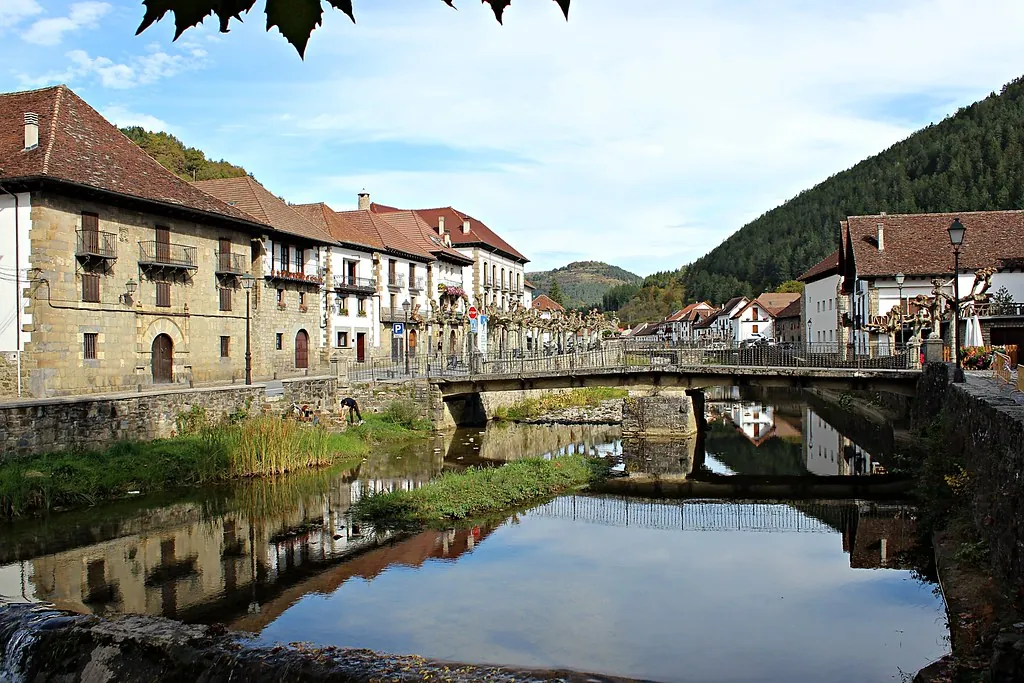
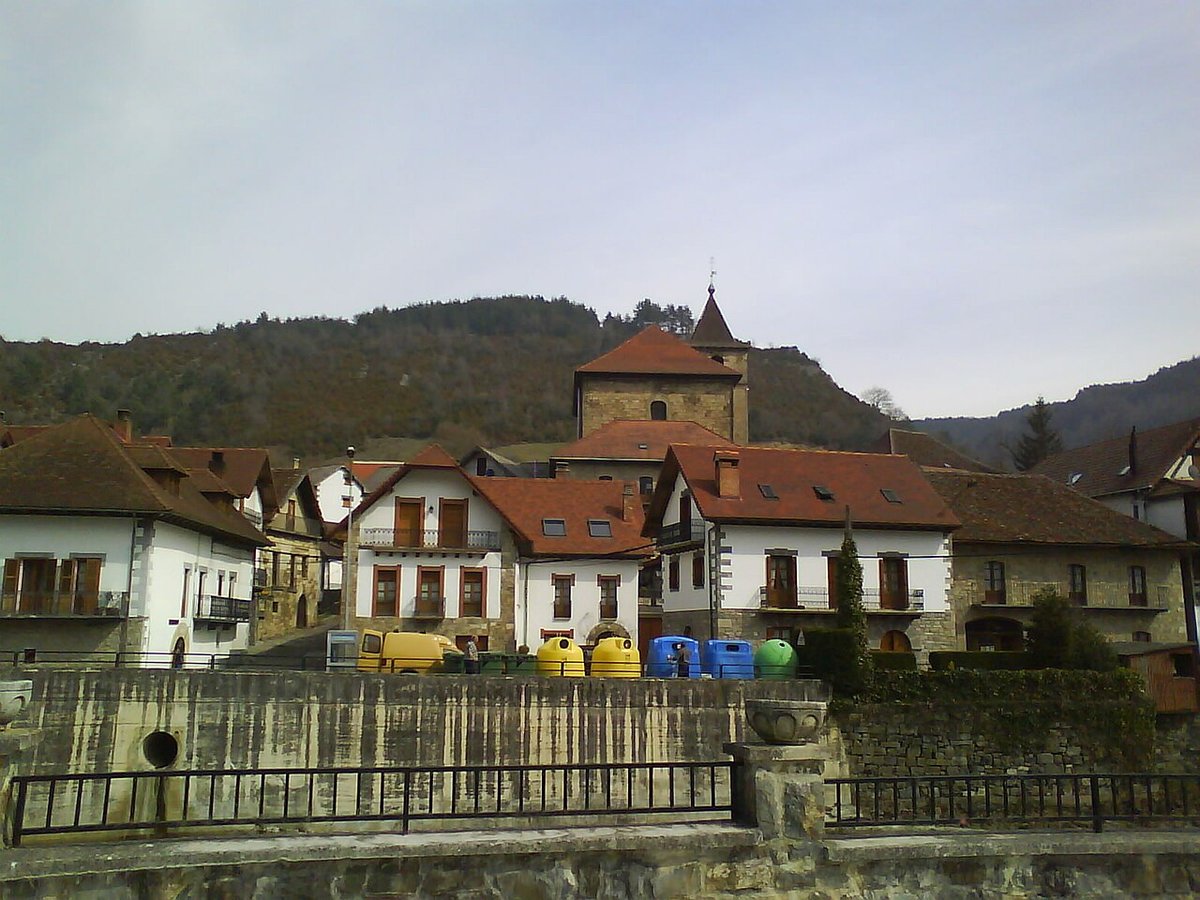
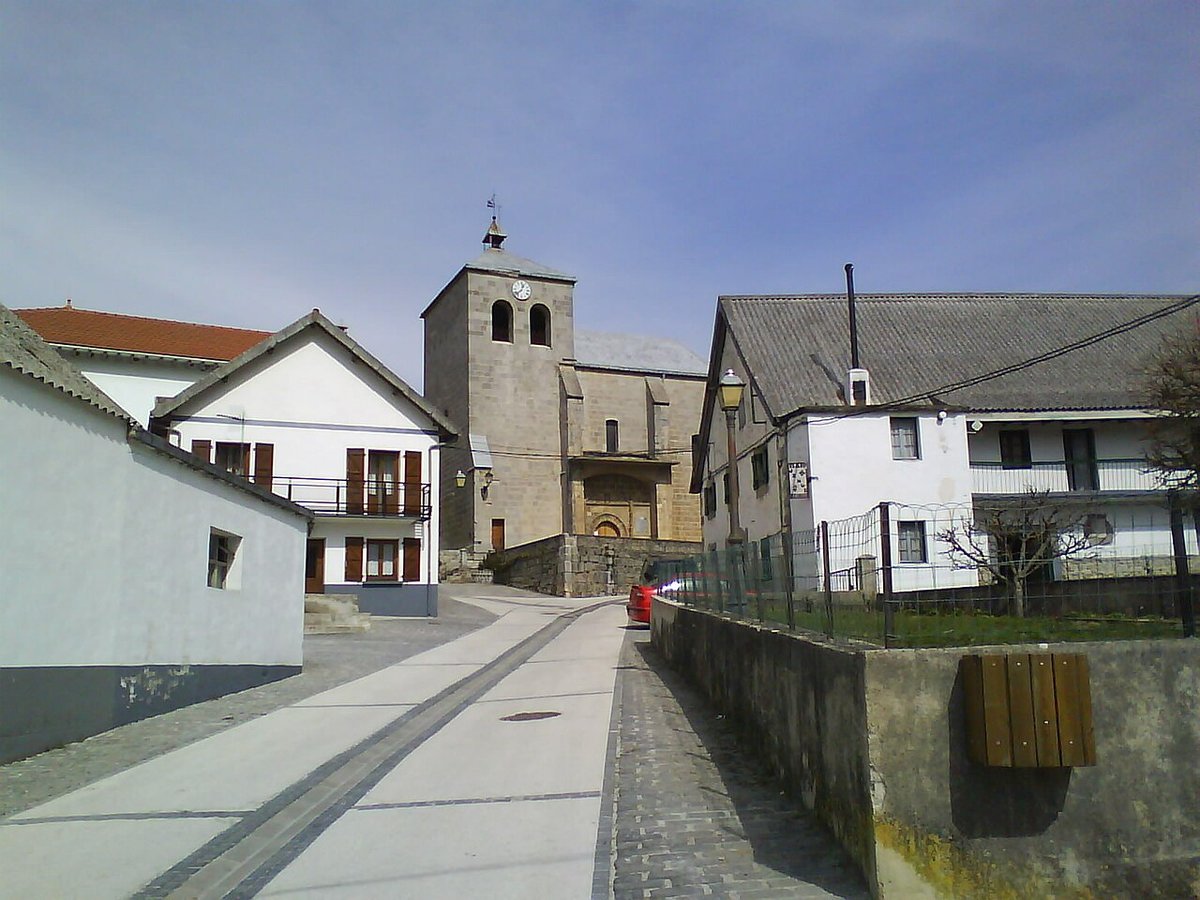
Walking through Erro means noticing the width of an old doorway, built for a cart, or the way the sun warms one side of the arcaded walkway while the other stays in shadow. The church of San Esteban sits at one end of the village, its plain stone and unadorned bell tower speaking of a quiet, functional faith. The square in front of it is often empty, just a few parked cars and the sound of your own footsteps.
The scattered villages of the valley
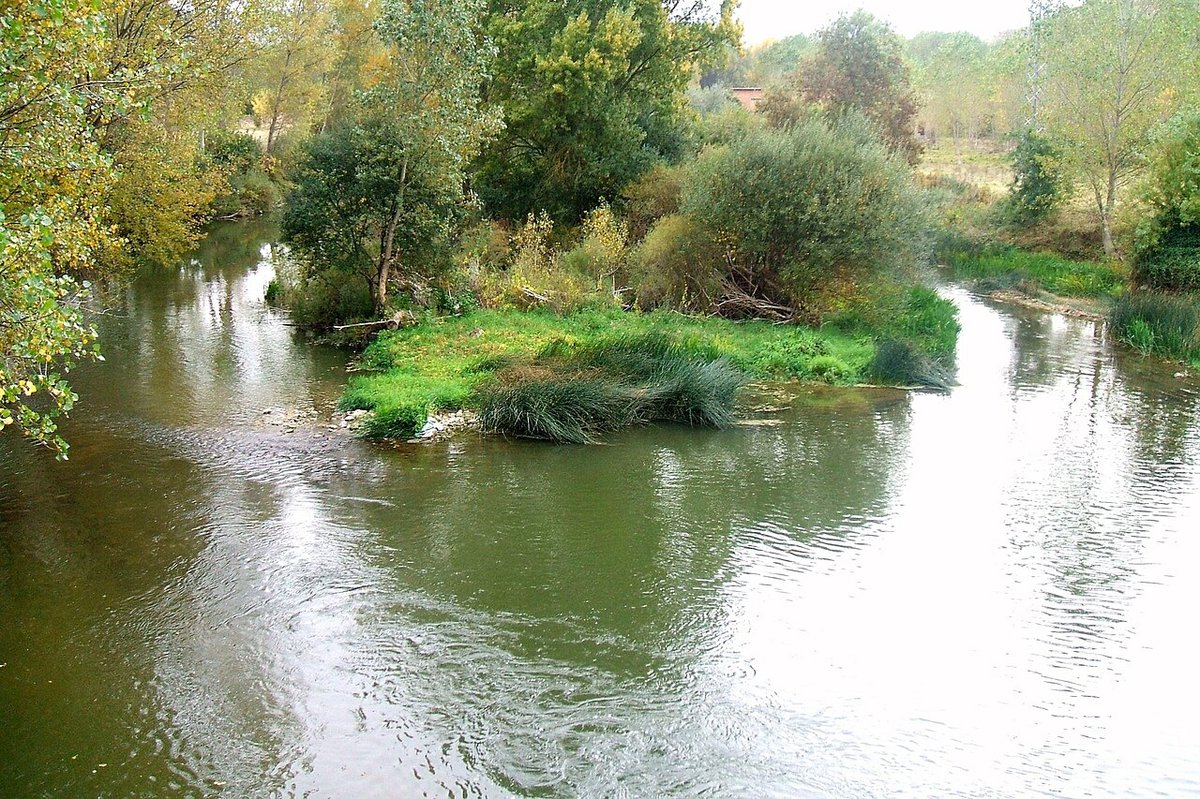
Erro is not one place but several. Lintzoain, Zilbeti, Bizkarreta-Gerendiain—their names appear on signs along a road that dips and rises between rounded hills. You drive from one to another in minutes, each a small cluster of stone and slate roofs surrounded by pastures. The connections feel older than the asphalt: a footpath cutting across a field, a shared stream where willows grow.
In autumn, the beech woods on the higher slopes turn a rusty gold, and the forest floor becomes a thick carpet of leaves that silences your walk. In summer, the light is sharper, bleaching the dry grass in the meadows and drawing out the scent of pine resin from the warmer air. You learn to read the weather here by watching the clouds gather around the peaks to the north.
Walking the old ways
You can leave your car. A web of paths and farm tracks connects the villages, routes used for moving livestock or getting to a isolated barn. They are practical, not picturesque. You’ll pass stone walls green with moss, gates fastened with wire, and always the sound of water nearby—a spring by the roadside, a stream rushing over rocks after rain.
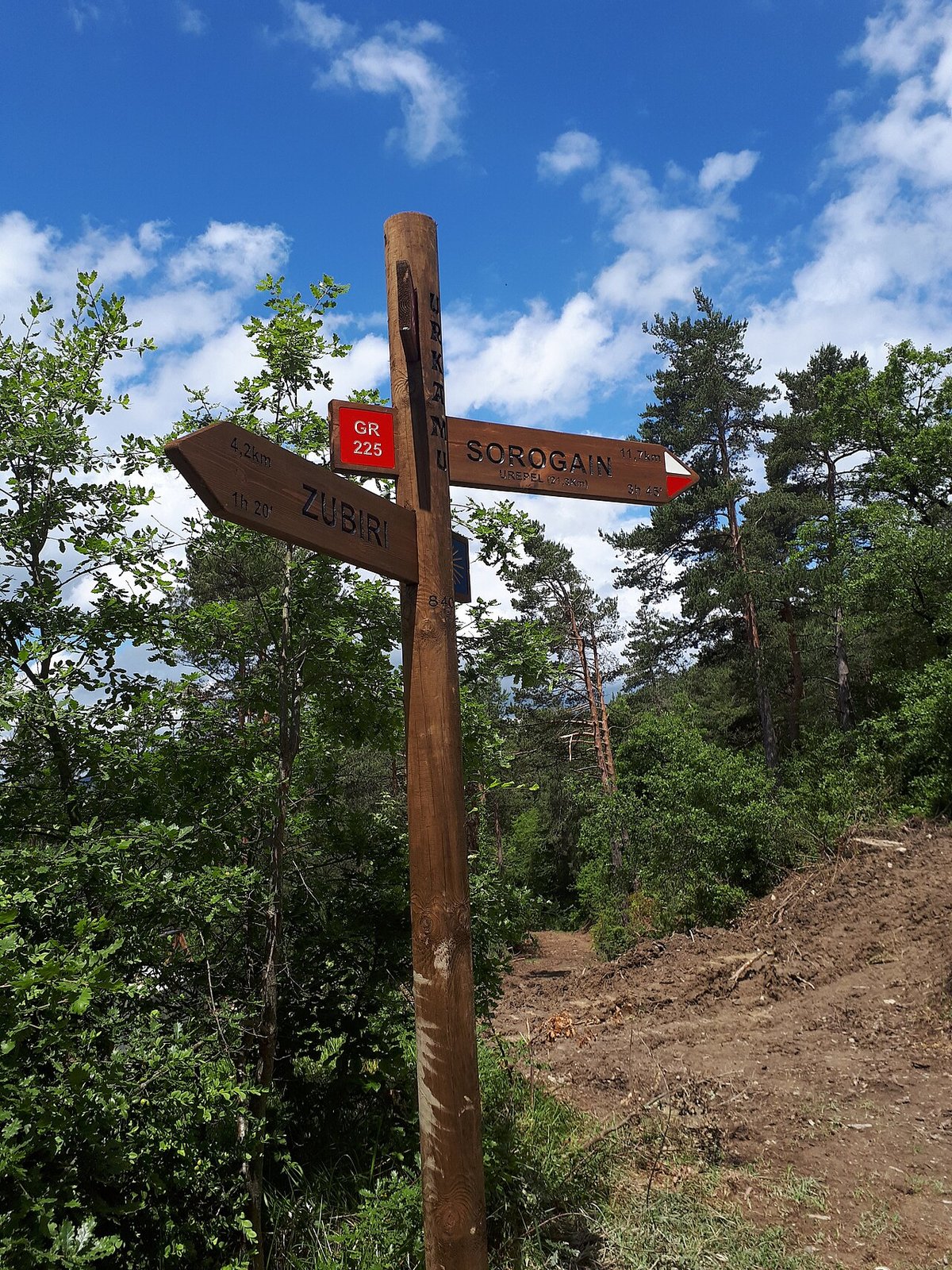
The Camino de Santiago passes through here, too, following this natural corridor up toward Roncesvalles. Walking a stretch of it, even just for an hour, you feel its ancient logic: it chooses reliable ground, shelter where it can find it. The walking is rarely strenuous; it’s more about rhythm than ascent. After rain, however, these clay paths turn to slick mud that clings to your boots.
The quiet hunt of autumn
When the autumn rains come, the atmosphere in the woods changes. The air grows damp and carries a deep smell of rotting leaves and wet bark. The sound of the wind is different here, softer, caught in the canopy. This is when you’ll see locals walking slowly, eyes fixed on the ground at the foot of pines and oaks.
Mushroom foraging is a serious tradition here. Baskets are for saffron milk caps or black trumpets, though finding them requires knowledge and luck—the harvest is different every year. If you go looking, know the local rules first: there are limits on how much you can take, and some areas may be restricted entirely.
A practical rhythm
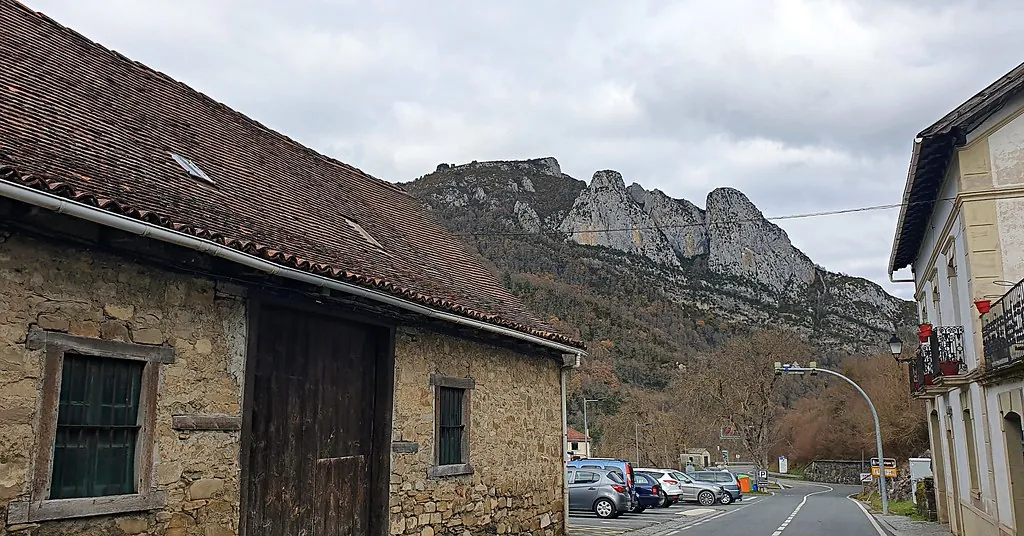
Erro asks for little more than your attention. Park in one of the villages—there’s usually space near the church or frontón—and walk. You’ll see hay barns with roofs sunken under the weight of years, cattle grazing right up to the edge of the tarmac, and laundry hanging in a sheltered backyard.
The weather shifts quickly. A clear morning can give way to afternoon fog that rolls down from the hills, swallowing the distant pastures. Even in summer, the temperature drops noticeably when the sun goes behind a cloud or sinks behind a ridge. A fleece in your pack is never a wasted item.
You won’t find grand viewpoints with placards explaining what you’re seeing. What you get instead is more subtle: the particular chill of air moving down from a beech forest, the texture of centuries-old stone under your palm, and the slow, daily evidence of life in a high valley. Come midweek if you can; weekends bring more traffic on that winding road to Pamplona.