Full Article
about Esparza de Salazar
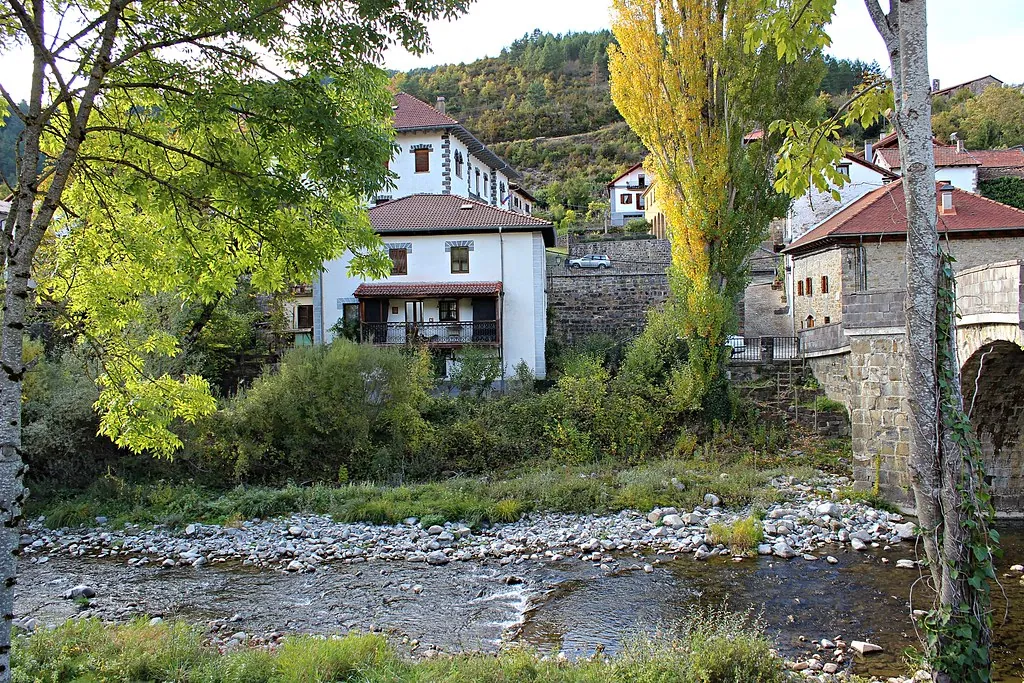
Esparza de Salazar: a Salazar Valley village with well-kept Pyrenean architecture and a quiet riverside setting.
Hide article Read full article
A village on the slope
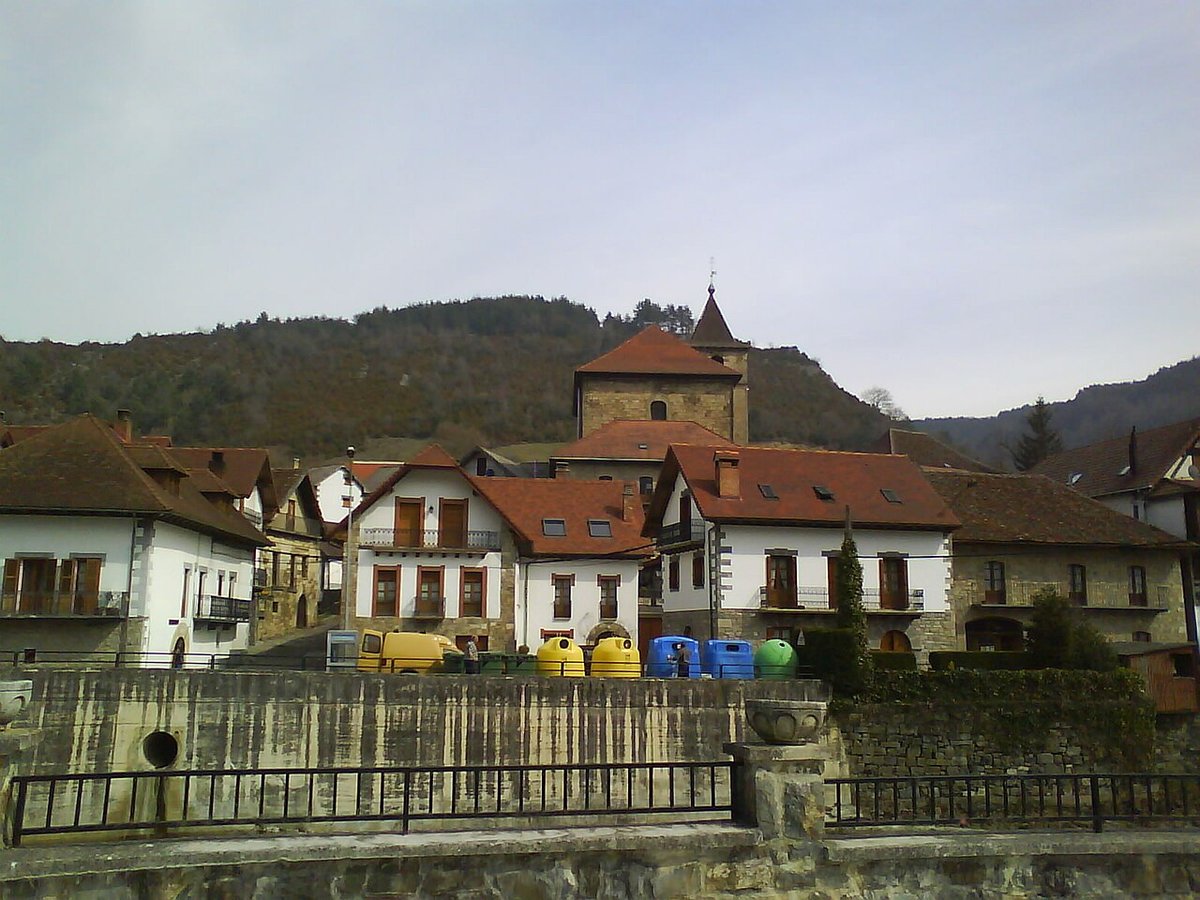
Early in the morning, when the valley still sits half in shadow, Esparza de Salazar appears as a small cluster of stone houses set against the hillside. Silence dominates. Now and then a car passes along the valley road, its sound bouncing off the walls before fading towards the river. With only a few dozen residents, daily life moves at a different pace.
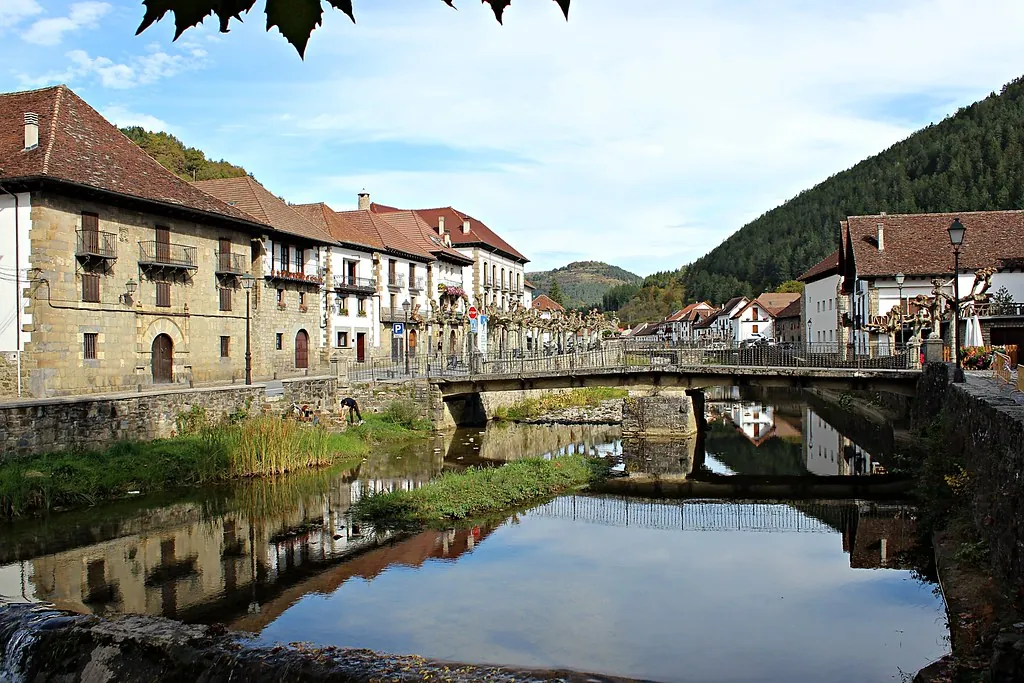
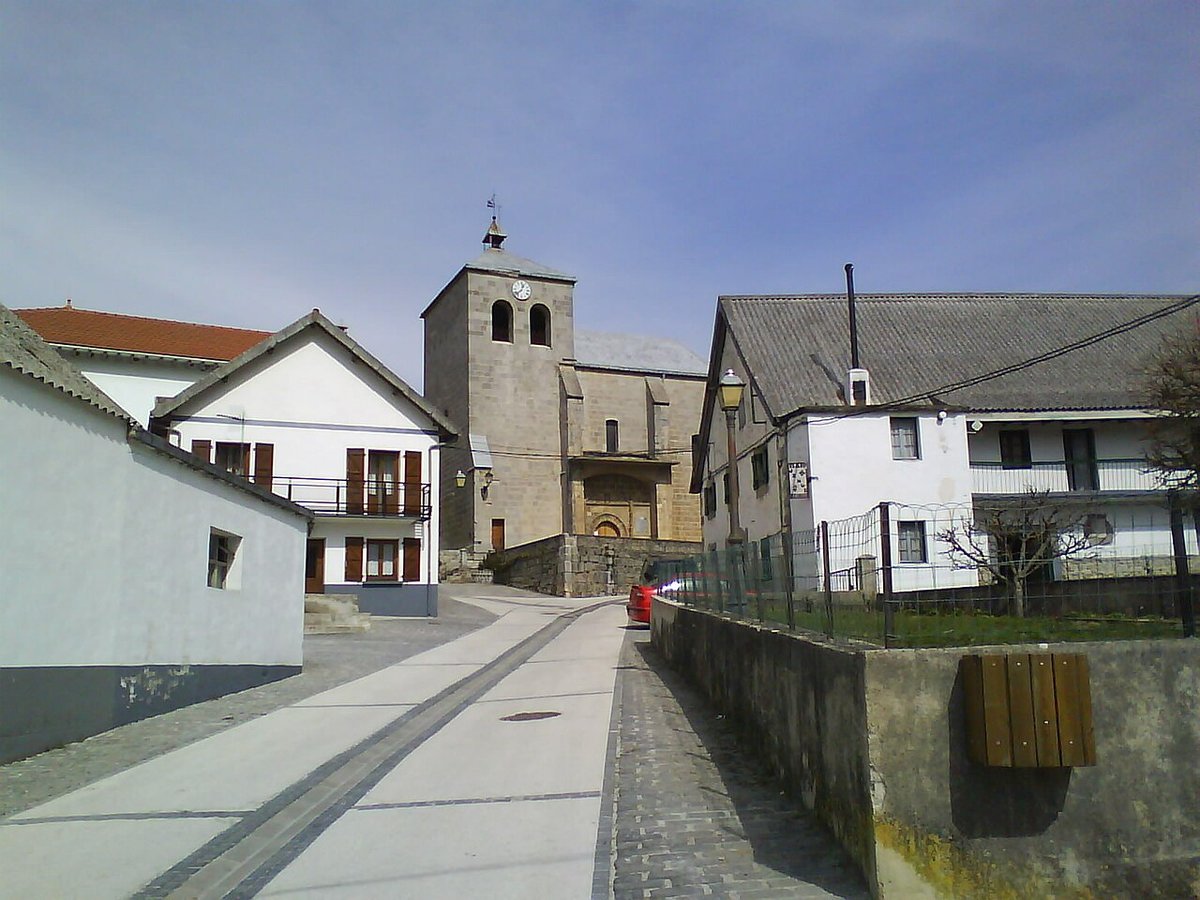
Esparza de Salazar lies in the Navarrese Pyrenees, in the valley shaped by the upper course of the river Salazar. The village is compact, with two or three streets crossing around the church of San Andrés. Stone defines everything: thick façades, dark roofs, and deep doorways that offer shelter in winter from snow and the north wind.
The church stands at the centre of the settlement. Its square bell tower rises above the rooftops and can be seen from almost anywhere in the village. The walls feel solid and restrained, built with longevity in mind. Even from outside, there are signs of long use. Doors show wear, steps have been smoothed by years of footsteps.
Around it, the houses form a fairly uniform whole. Some are well kept and lived in, others appear closed for much of the year, with wooden shutters and dark iron fittings. A slow walk reveals small details: names carved into stone doorways, old rings once used to tie animals, walls built from uneven stones without much concern for symmetry.
Paths that lead into the woods
A few minutes from the last houses, dirt tracks begin. Step away from the village and the first oaks and beeches appear, mixed with maples and the occasional pine. The valley holds a deep green colour for much of the year. When the wind moves through the canopy, the sound of the forest can be heard even from within the village.
Spring brings fresh shoots along the edges of the paths, along with tall grass. Autumn changes the ground completely, covering it with a thick layer of damp leaves that soften each step. Walking here is generally straightforward, although mud quickly forms in shaded areas after several days of rain.
Among the trees, traces of earlier rural life remain. There are stone enclosures and small წყრო fountains that once supplied water for livestock and for people working in the hills. They are not always signposted, so it helps to pay attention if these subtle traces of the past are of interest.
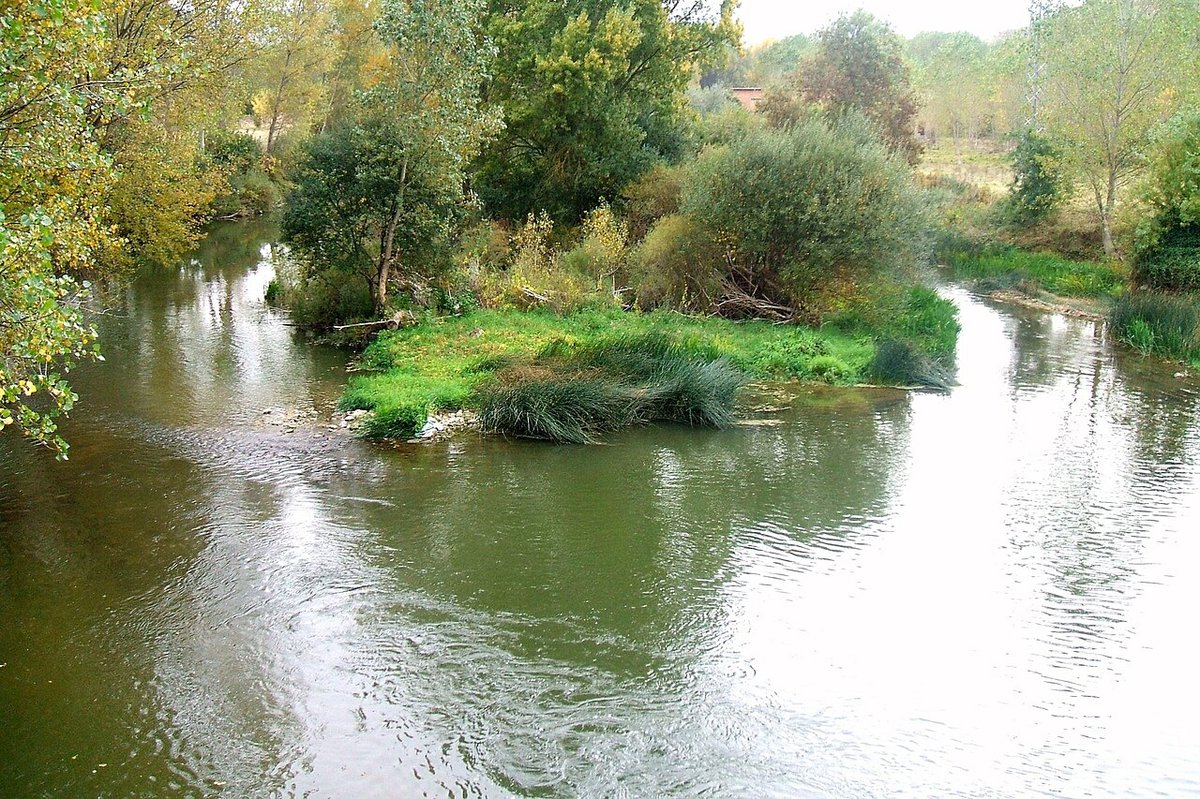
Along the Salazar valley
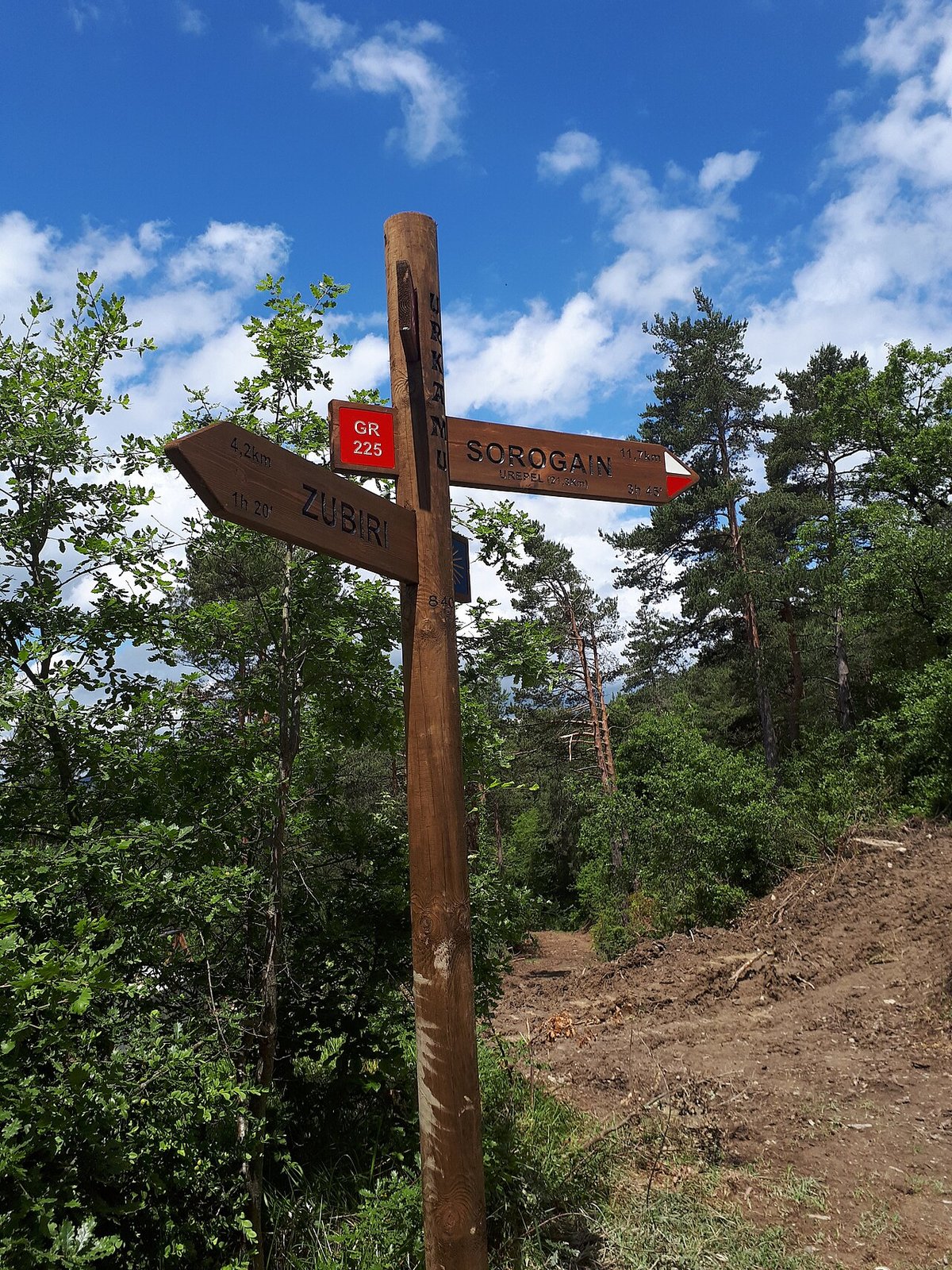
One of the common walks links Esparza with Burgui, following paths that cross meadows and wooded areas. The distance is only a few kilometres, so many people in the valley choose to walk it when the weather allows. The route has no major difficulty, though sections can become slippery after rain.
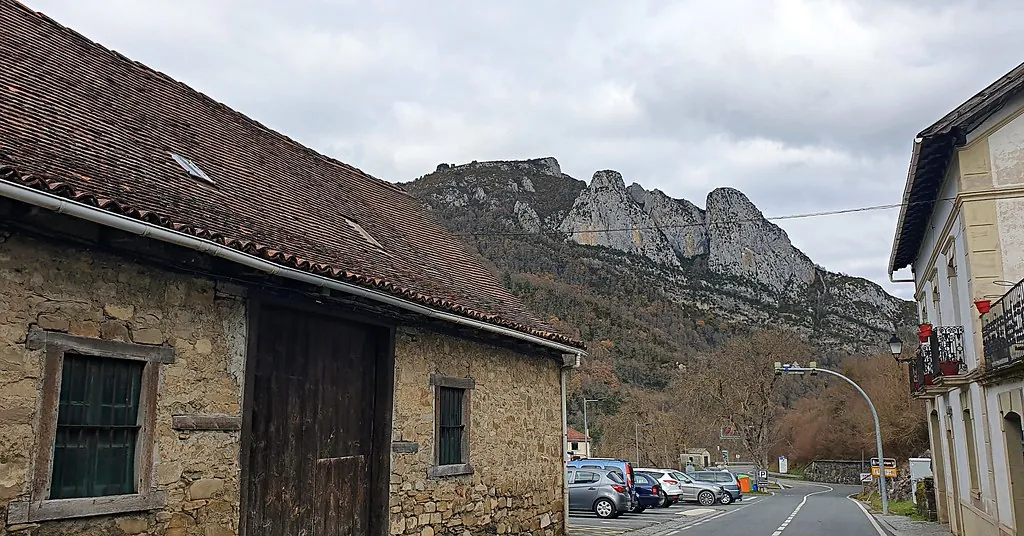
By car, the journey between the two villages is short, following the road that runs along the valley. These are narrow roads with gentle bends and light traffic for most of the year.
Paths that climb above the village open up views towards the head of the Salazar valley. Forested mountains stretch out alongside sloping meadows. On clear days, the view feels broader than expected for such a small settlement.
A place that stays small
It is worth arriving in Esparza de Salazar with a clear idea of what it is: a very small village. It can be crossed on foot in a matter of minutes, and there is no constant range of services open throughout the year. Life here follows a quiet, domestic rhythm.
That is also where its appeal lies. A slow walk allows time to notice details that pass unnoticed in a rush: smoke rising from a chimney in winter, the sound of wind moving down the valley, long afternoon shadows stretching across stone walls.
When to come and what to know
Spring and autumn are usually the most pleasant seasons for walking in the surrounding area. Temperatures make longer walks comfortable, and the forest shifts colour noticeably within a few weeks.
Winter can bring frosty mornings and very short days. When fog settles between the mountains, visibility drops along the paths. Summer brings warmer conditions, especially in more open areas during the middle of the day.
Footwear with a firm sole is advisable. Rural paths in this area are often damp or covered with leaves, and muddy sections appear after rain.
Getting there
From Pamplona, the usual route follows the road towards Lumbier, then continues up the valley in the direction of Burgui before turning onto local roads towards Esparza de Salazar. These roads are generally quiet, although they become narrower as they approach the village.