Full Article
about Ezcároz
Capital of the Salazar Valley; a village with services and beautiful traditional architecture
Hide article Read full article
Morning by the river
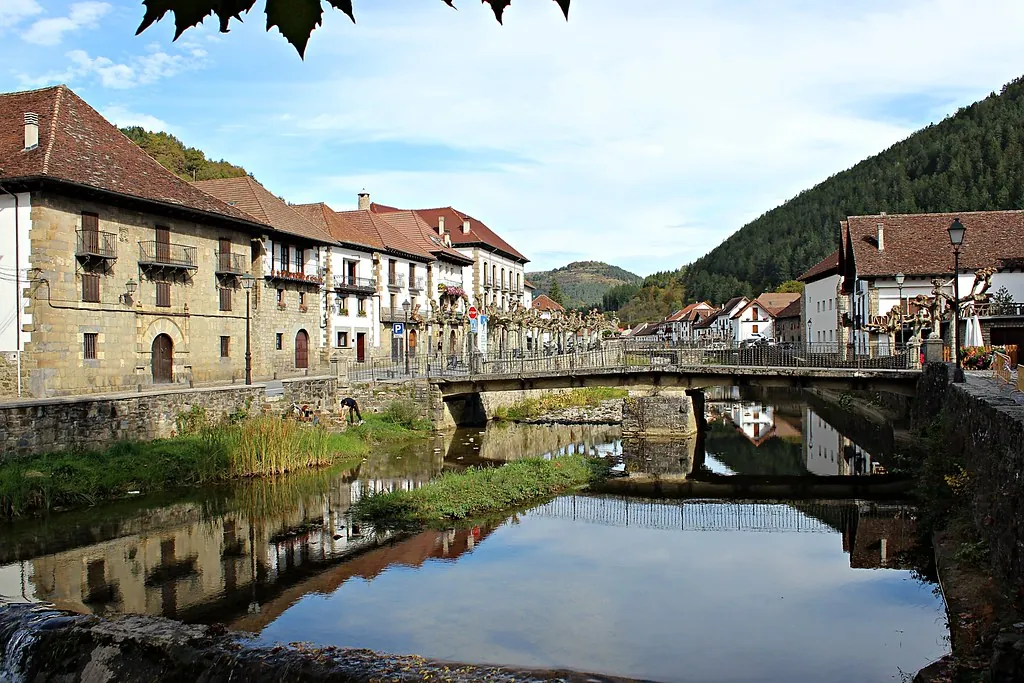
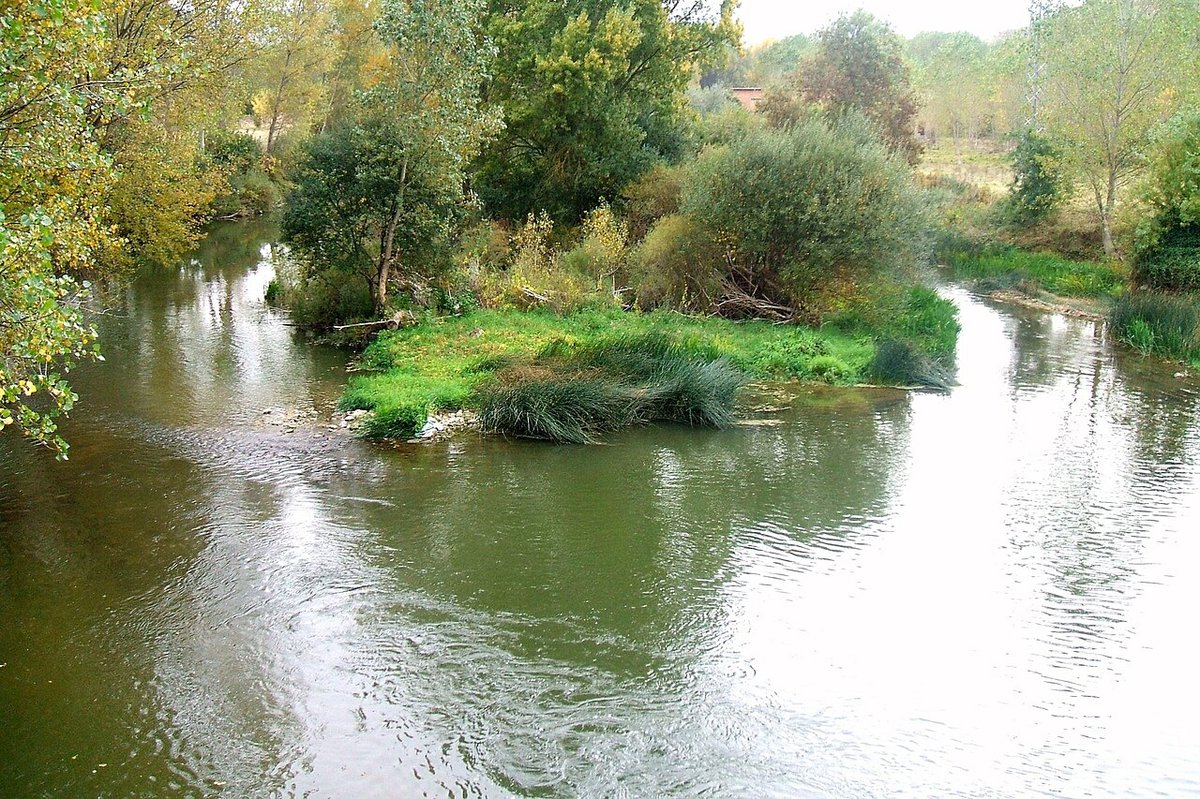
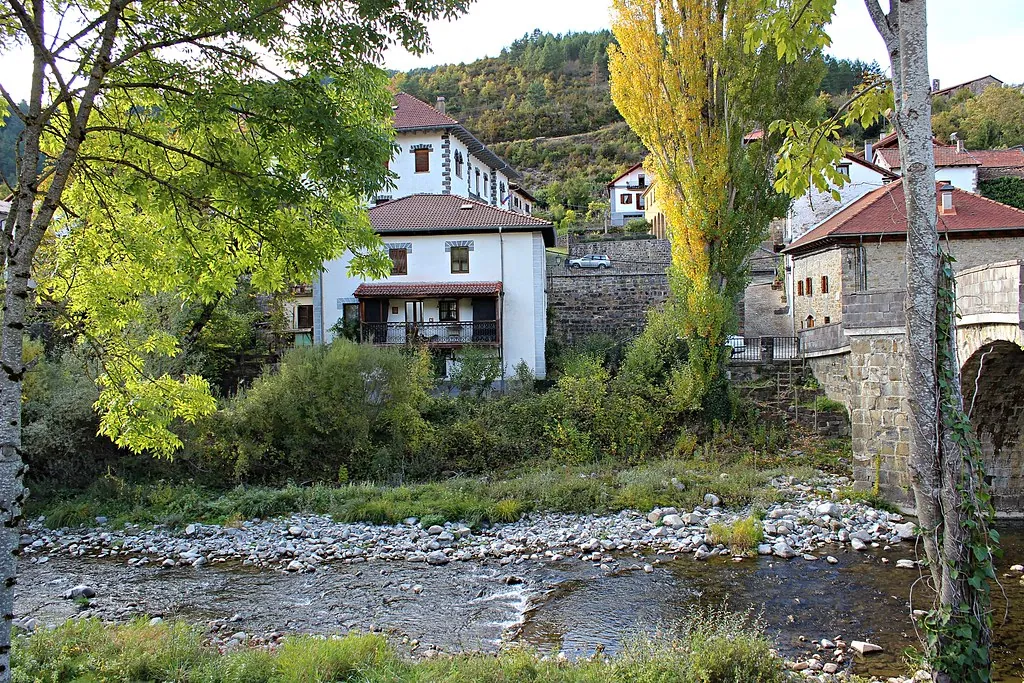
Early in the day, before the sun fully clears the slopes, the river is louder than the village itself. The water runs fast and cold beside the bridge, and the air carries that damp scent left behind by nights in the Pyrenees. From here, the stone houses line up along Calle Mayor, their thick walls and sloping roofs built with winter in mind. This is how many mornings begin in Ezcároz, a village in the Salazar Valley in the Navarrese Pyrenees.
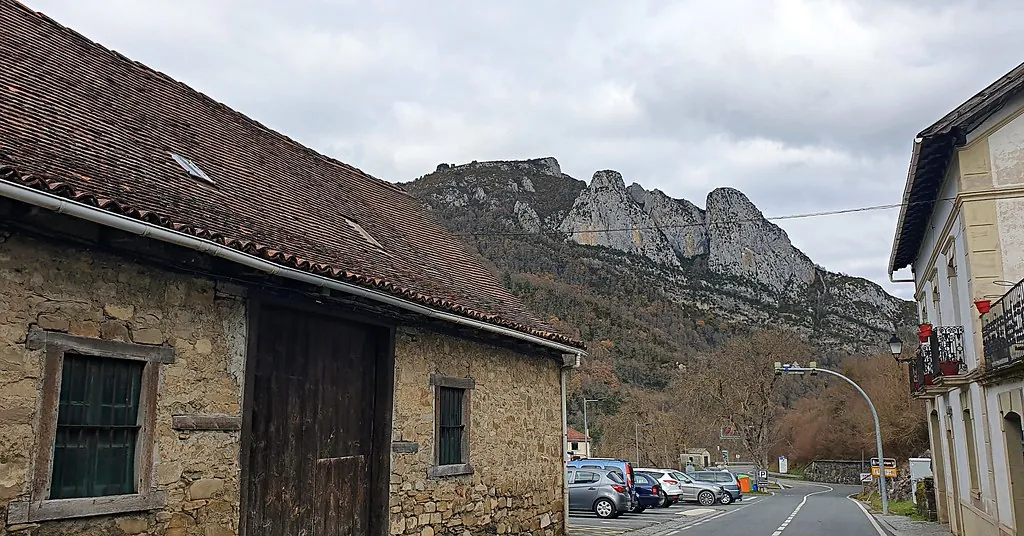
The road into Ezcároz narrows as it passes through meadows. Flocks appear around some bends, scattered across the fields and enclosed by wooden fencing. In the distance, on clear days, the higher peaks still hold snow well into spring.
A slow walk through the centre
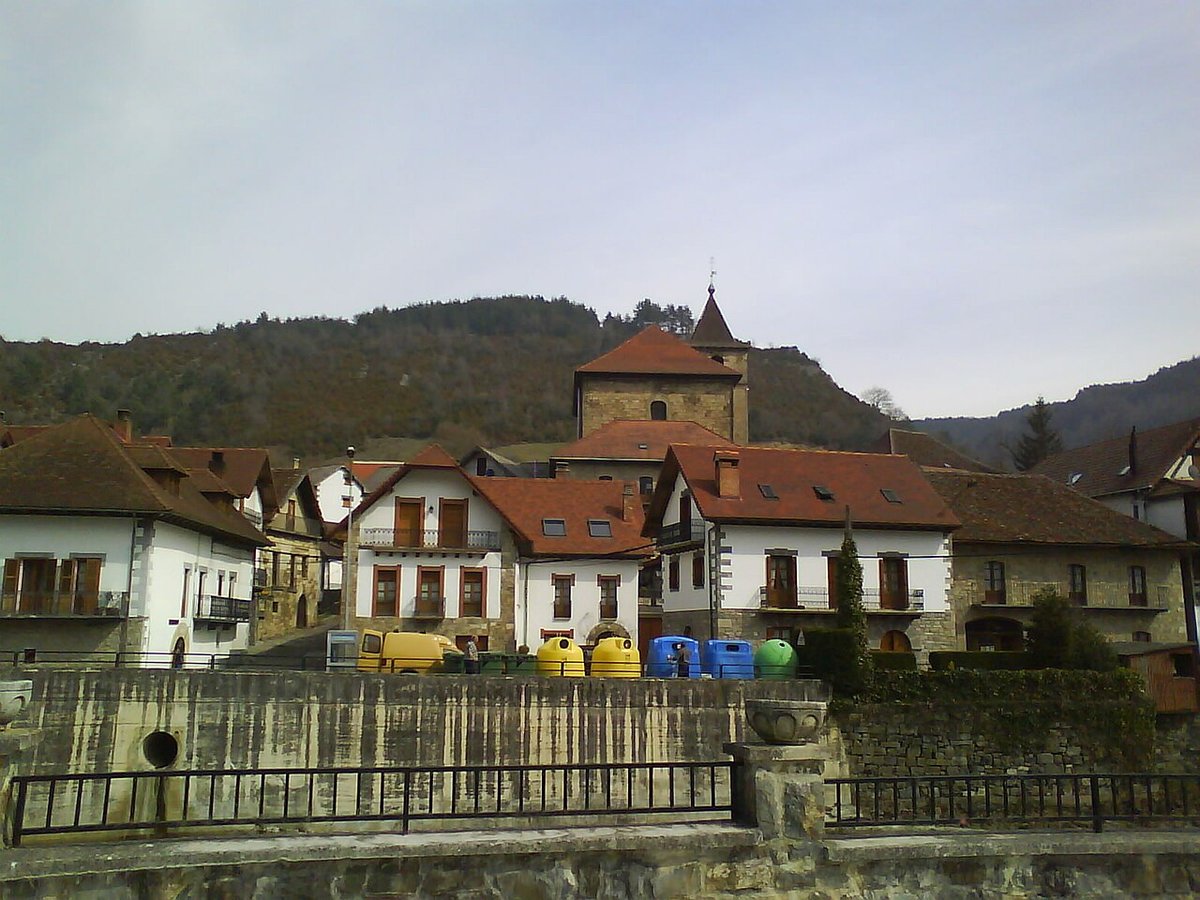
Ezcároz is small enough to cross quickly, but it rewards a slower pace. The houses share a clear visual unity: grey stone, wooden balconies darkened by years of harsh weather, and carved coats of arms set above doorways. On bright days, sunlight reflects off the façades and casts sharp shadows across the narrow streets.
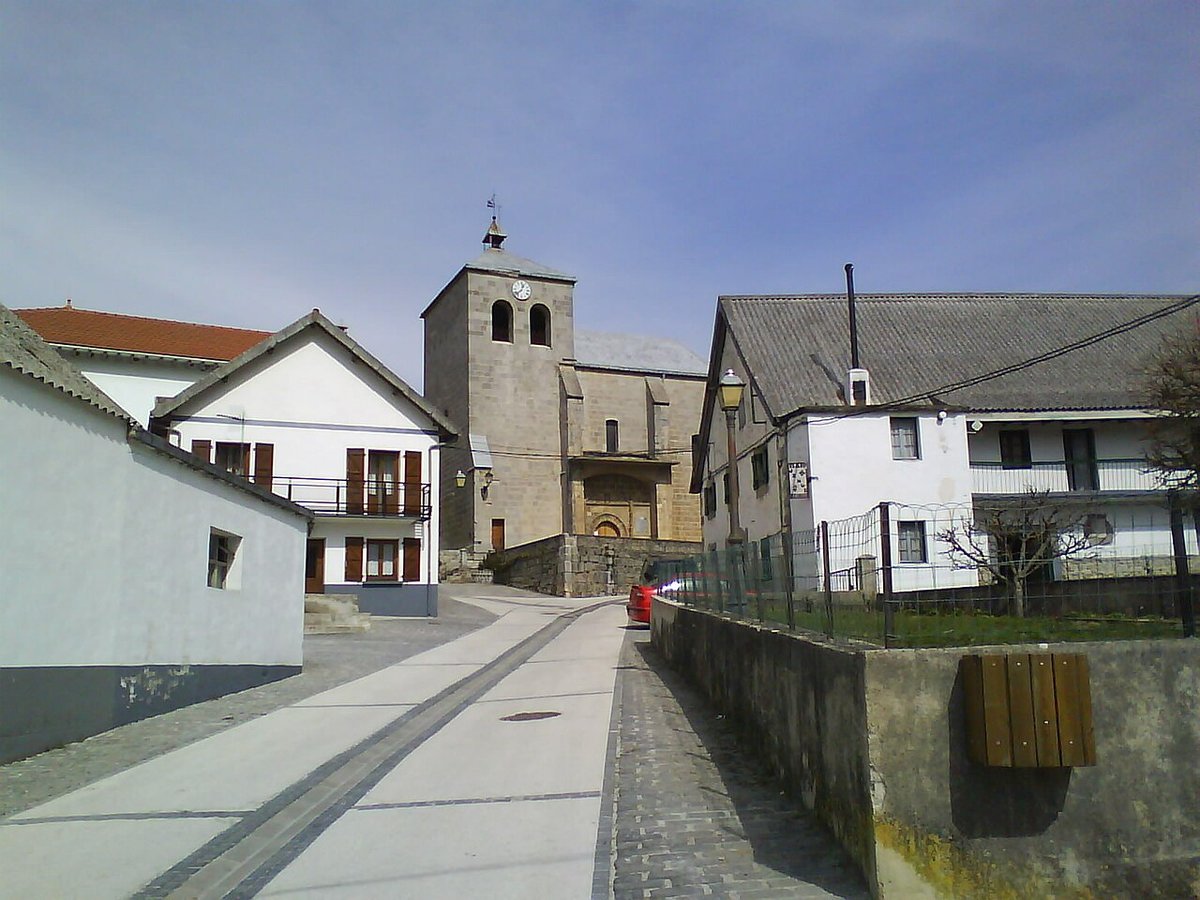
At the centre stands the church of San Esteban. The current building dates back several centuries, generally placed in the early modern period. It has the solid appearance common in mountain churches: thick walls, minimal decoration, and a tower visible from almost anywhere in the village. Inside, traces of old mural paintings remain. The colours have faded, yet they are still recognisable when viewed up close.
From the main square, smaller streets branch off. Some slope gently down towards the river, others climb slightly towards the outer houses. The historic centre is not large; it can be covered in half an hour. The interest lies in the details: heavy wooden doors, lintels marked with carved dates, and stacks of firewood piled neatly against façades.
Paths that begin at the edge of the village
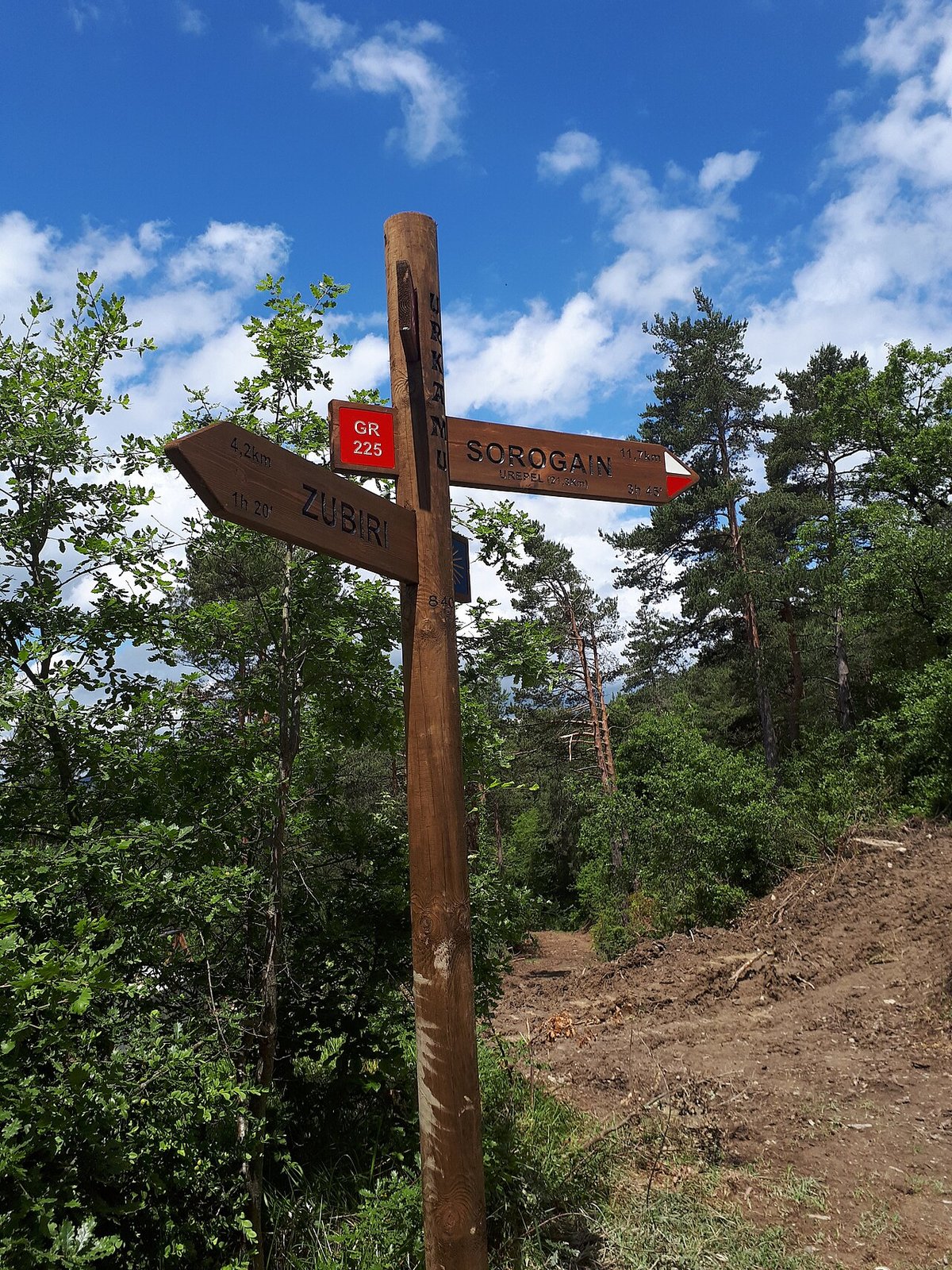
The boundary between village and countryside is abrupt. The last houses give way to the edges of the forest. Several marked paths start within Ezcároz and lead straight into woodland made up of beech, oak and pine.
In spring, the ground is usually damp and dark, covered with leaves that have not yet fully broken down. In autumn, the change is more visible, with the forest shifting colour over a short span of time. Walking here is often about sound as much as sight. Birds move unseen among the branches. Dry leaves crackle underfoot. At intervals, the sound of small streams emerges as they make their way down towards the valley.
Winter alters the landscape significantly. Snow can cover meadows and paths for days at a time. Anyone arriving during that season should check the forecast before heading out and ask locally about the condition of routes, as some trails become difficult to follow once everything is white.
The wider Salazar Valley
Roads and tracks extend from Ezcároz into the rest of the Salazar Valley. Not far away, the terrain rises and opens up into broader views. Meadows stretch out, forested slopes climb upwards, and on clear days the valley can be seen at length.
Some routes are easy and pass through dense woodland. Others descend towards small rivers where water runs over pale limestone rock. In autumn, people often walk along the forest edges in search of wild mushrooms. Collection is usually regulated, so it is worth checking the rules beforehand.
Wildlife is another part of the landscape, especially at the beginning and end of the day. Birds of prey can often be seen circling above the meadows. Movement among the trees hints at animals moving through the forest, even if they remain out of sight.
Food shaped by the mountains
The cooking in this part of the Pyrenees stays close to what is produced locally. Lamb and beef feature regularly, along with hearty stews suited to colder weather. Seasonal vegetables appear according to the time of year, and cured cheeses often come from farms within the valley or nearby areas.
Autumn brings wild mushrooms into the kitchen when the season has been good. Trout is still fished in the rivers around the valley, although its presence on the table depends on both the time of year and current regulations.
There is little elaboration in these dishes. The focus stays on straightforward recipes adapted to a mountain climate and long working days outdoors.
Seasons in Ezcároz
Each season brings a noticeable change to the surroundings. Spring turns the meadows an intense green, and daylight increases quickly. Summer tends to remain mild, particularly in the afternoons when cooler air comes down from the mountains.
Autumn is perhaps the most visually striking period in the valley’s forests. Beech and oak trees shift colour almost at once, transforming the hillsides over a short period. Winter, by contrast, makes itself felt through the cold and frequent snowfall. Main roads are usually kept open, but smaller access routes and paths can remain covered for days.
A small village within a wide valley
Ezcároz does not rely on major landmarks. A short, attentive walk is enough to understand its rhythm: solid houses, surrounding meadows, and a river that sets the pace of the valley. The scale is modest, yet the landscape around it extends far beyond the village itself.