Full Article
about Garralda
Administrative capital of Aezkoa; rebuilt after a 19th-century fire, it has a tidy mountain-village feel.
Hide article Read full article
A village shaped by its setting
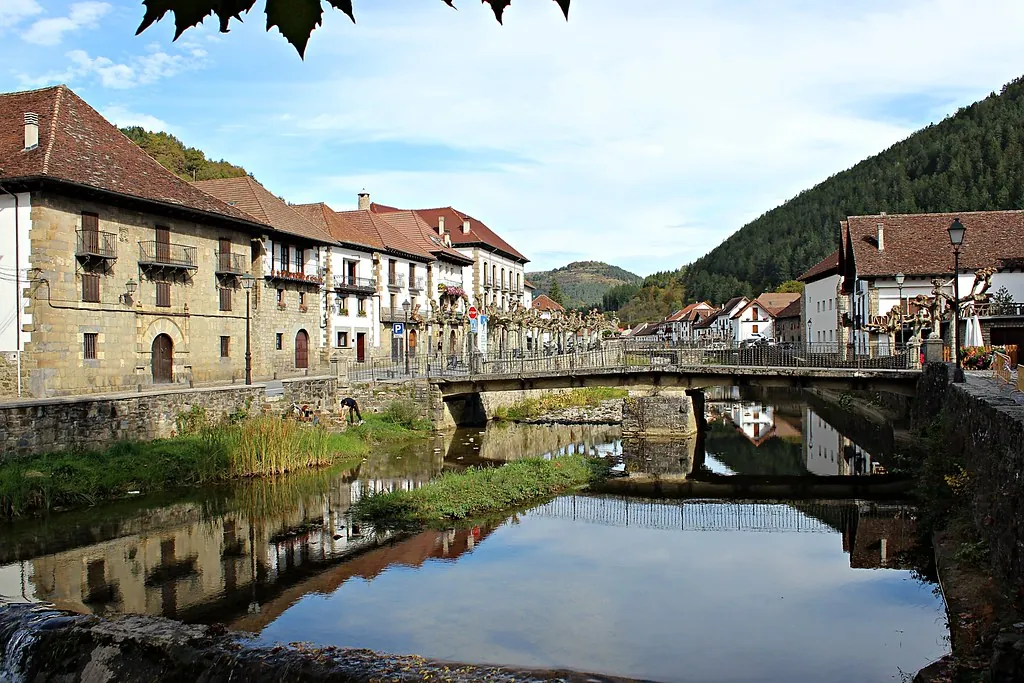
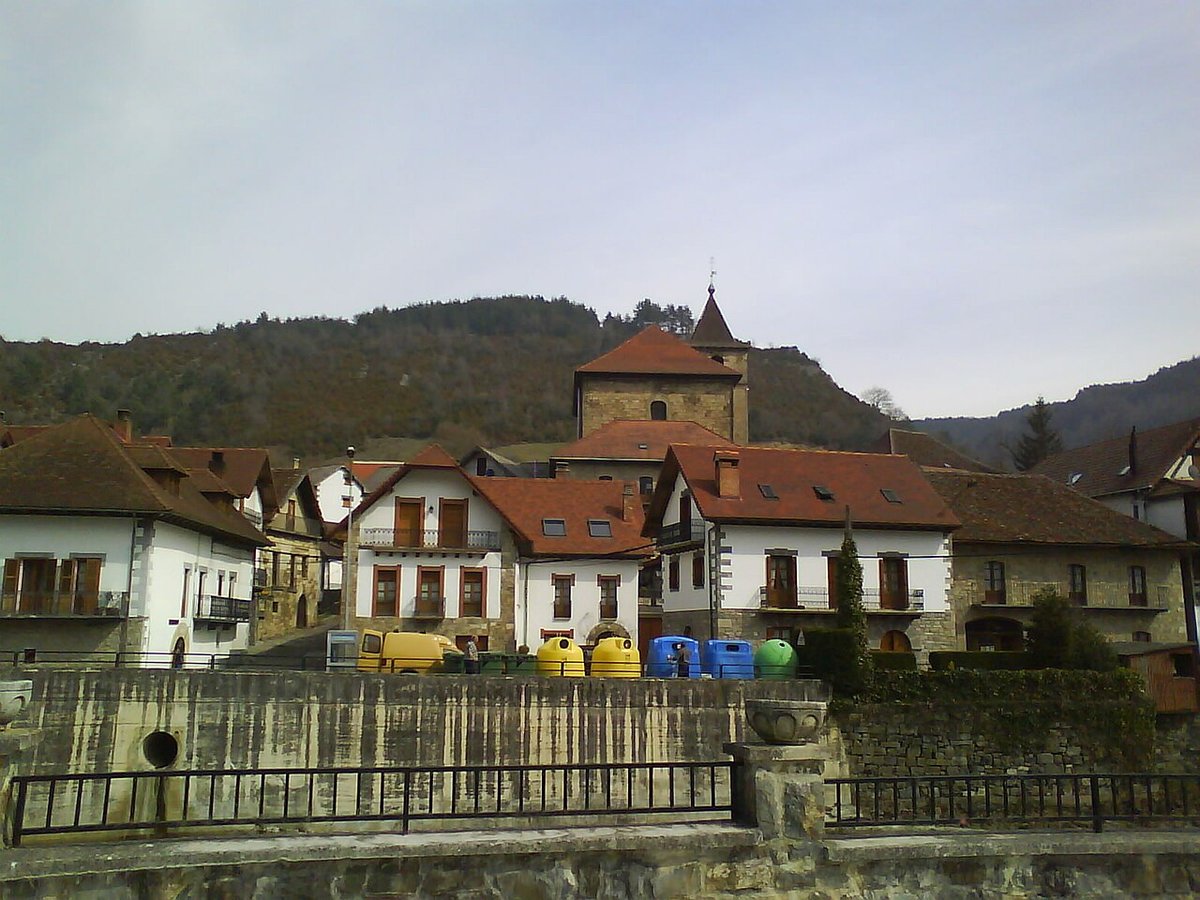
Tourism in Garralda is closely tied to its geography. The village sits in the Aezkoa valley, in the Navarrese Pyrenees, at around 800 metres above sea level and surrounded by beech forests that cover much of the nearby slopes. With fewer than two hundred residents, it keeps a compact layout of stone and timber houses, many with slate roofs and coats of arms on their façades. The forest begins almost as soon as the last houses end, and that proximity shows in the dampness of the air and in the quiet that settles in at dusk.
The setting explains much of what Garralda is. It is a place where the natural environment is not something separate but part of daily life, shaping both the look of the village and the pace at which things happen.
Traces of history in everyday spaces
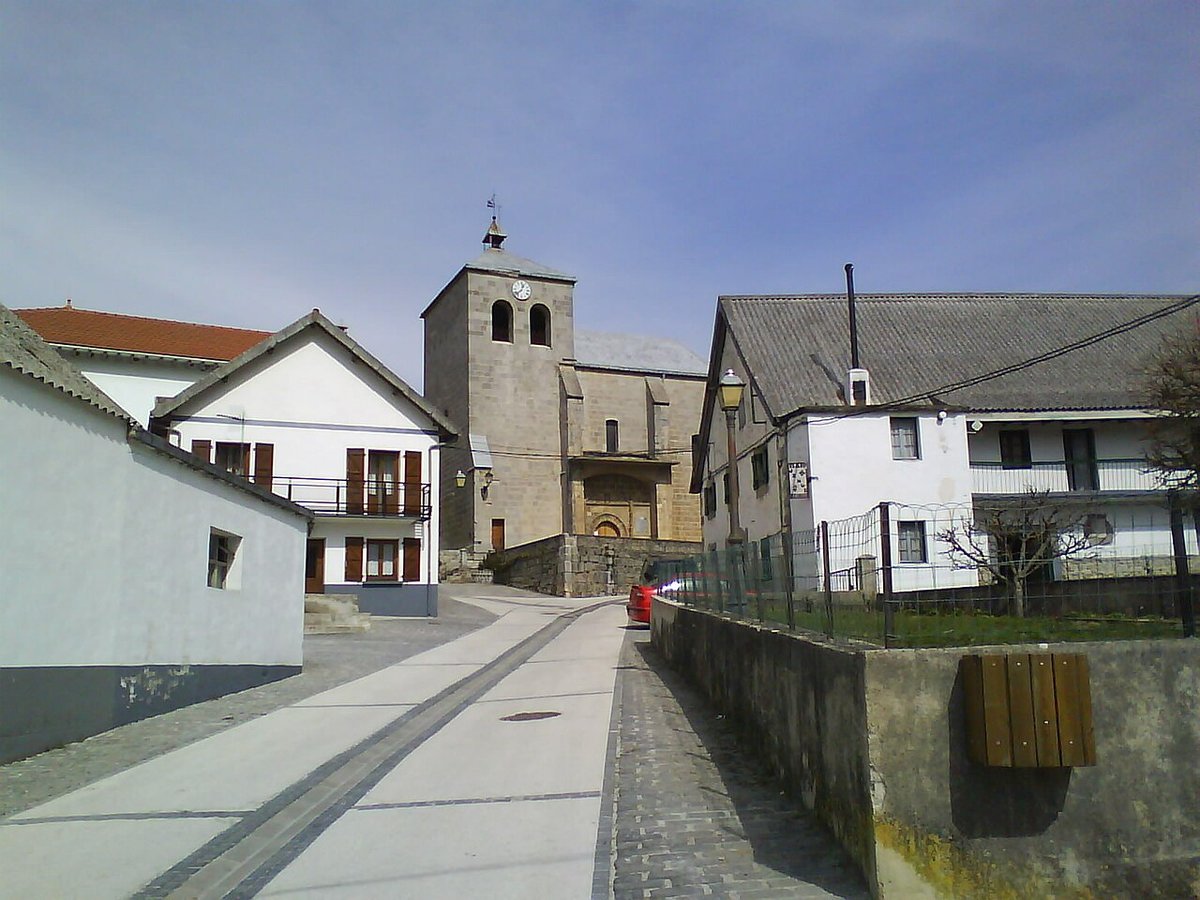
The parish church of San Pedro was built in different phases, as is common in many Pyrenean villages. It is not a large building, yet inside it holds a Baroque altarpiece that rewards a slow look. Its interest lies less in scale and more in what it represents. Churches like this reflect small communities that built within their means, creating spaces that match the size and rhythm of local life.
Walking through the centre, the traditional houses of the valley are easy to recognise. Stone walls, wooden balconies and wide entrances that once served agricultural purposes still define the streets. There is no set route to follow. A simple wander along a couple of streets is enough to notice details in the façades while the village continues its normal routine.
The beech forest at the doorstep
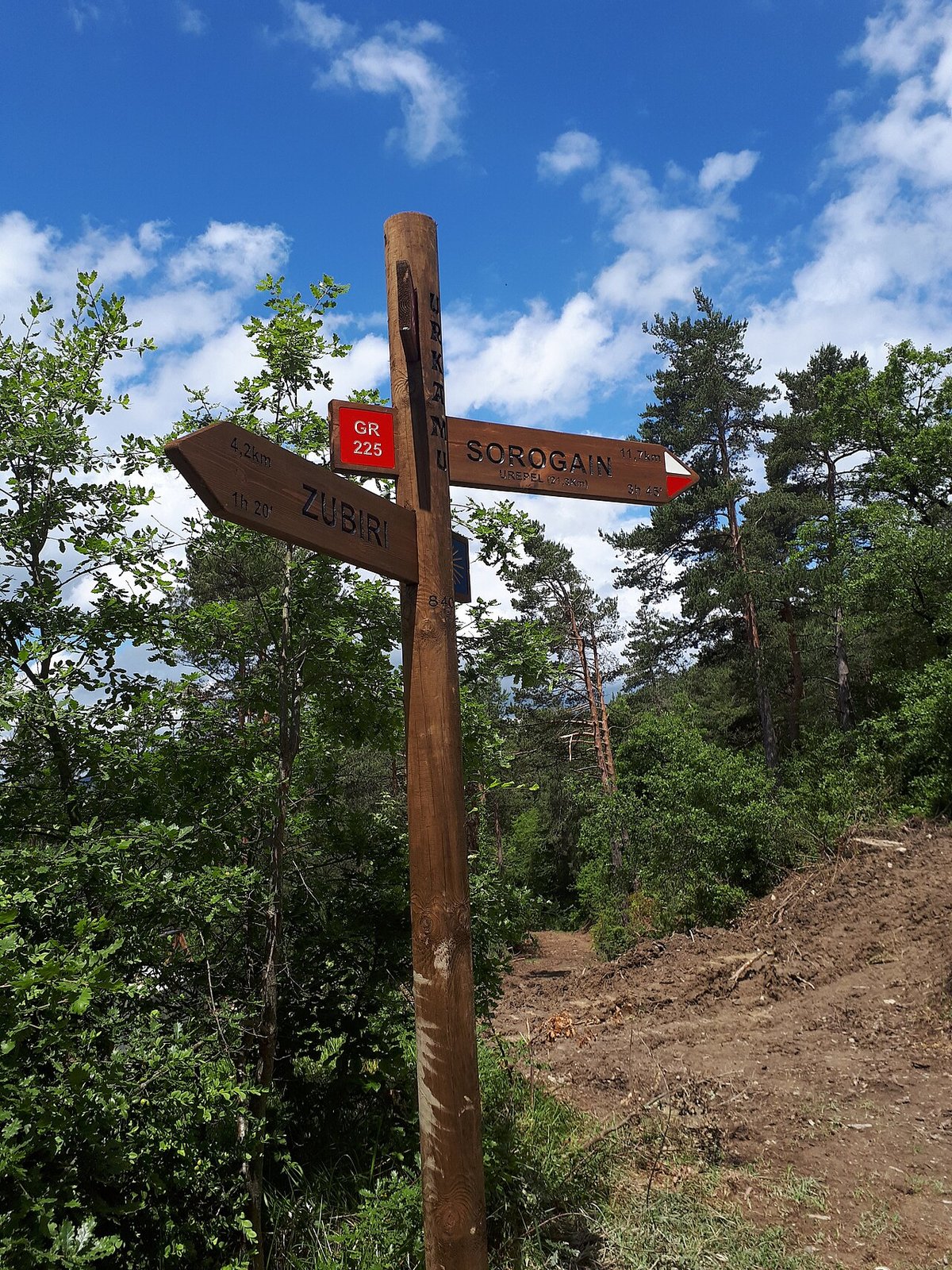
One of Garralda’s most distinctive features is how close the forest lies. Several tracks and paths begin almost at the edge of the village and lead straight into the beech woods. In autumn the shift in colour is clear, but the area has its appeal throughout the year. In summer the forest keeps temperatures low, while in spring the ground is often covered with new shoots and fresh leaves.
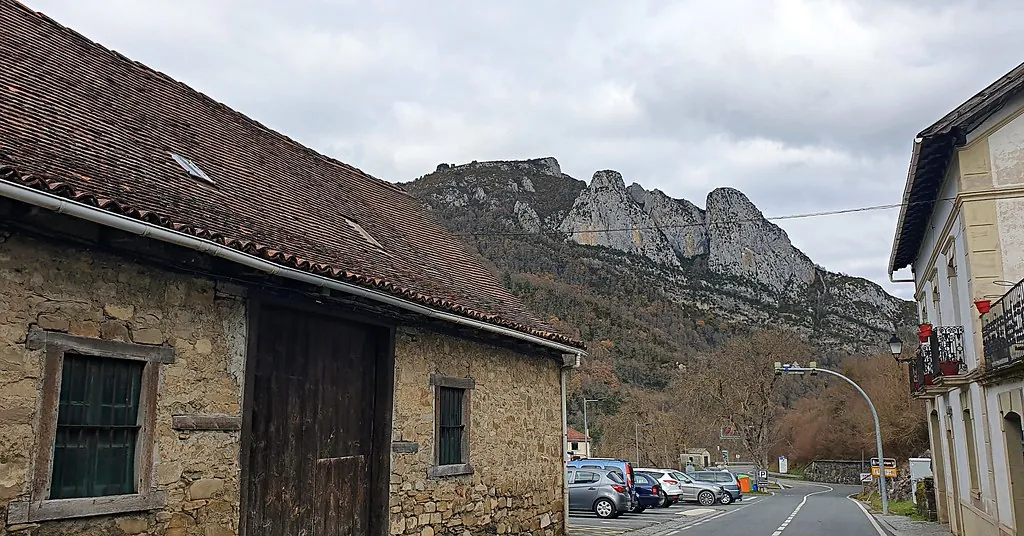
From the surroundings of the village it is also possible to climb towards the Peñas de Garralda, a rocky formation rising above the valley. The walk is not particularly long, though some sections are steep. From the top, the layout of the Aezkoa valley becomes easier to understand, along with the continuous spread of forest that defines the landscape.
A small place with a steady rhythm
Garralda does not have a structure designed around tourism. Everyday life remains closely linked to the valley and to nearby villages, where more services are concentrated. Even so, the area commonly offers products connected to livestock and the forest, such as meat, honey or cheeses made in the Navarrese Pyrenees.
The size of the village shapes everything. There is not a wide range of options or extended hours, something typical of small settlements in this part of Navarra. The experience here is quieter and more local, with few distractions from the surrounding environment.
Local calendar and practical notes
The patron saint festivities are usually held around San Pedro at the end of June, as in other places in the north of Spain. During the summer, the Aezkoa valley organises various cultural and sporting activities, some linked to traditional rural sports. These are not large-scale events but local gatherings where people from different villages in the valley come together.
In a short visit, the whole centre of Garralda can be explored easily. The main interest lies in observing the domestic architecture and stepping into the church. From there, it is worth walking towards the edge of the forest. Within minutes, the landscape changes and the village slips out of view.
With a bit more time, the climb towards the Peñas or a walk along nearby forest tracks helps to understand the setting in which Garralda sits.
Reaching the Aezkoa valley involves mountain roads that are narrow and winding, with generally light traffic. From Pamplona, the journey usually takes a little over an hour, depending on the route.
Services in the village are limited, so it is sensible to plan basic shopping or fuel before arrival. For walking, comfortable footwear is enough. Many streets are paved with stone, and the forest paths can remain damp even on clear days.