Full Article
about Izalzu
The smallest village in the Salazar Valley; gateway to the Irati Forest from Ochagavía
Hide article Read full article
A village that lowers the volume
Some places make you instinctively quieten down the moment you step out of the car. Izalzu has that effect. You arrive, close the door, and what you notice is the creak of wood, a dog barking somewhere in the distance, and wind moving through the leaves. With just 38 residents, tourism in Izalzu is not about ticking off landmarks or filling a schedule. It is about understanding how a very small village fits into the landscape of the Navarrese Pyrenees in northern Spain.
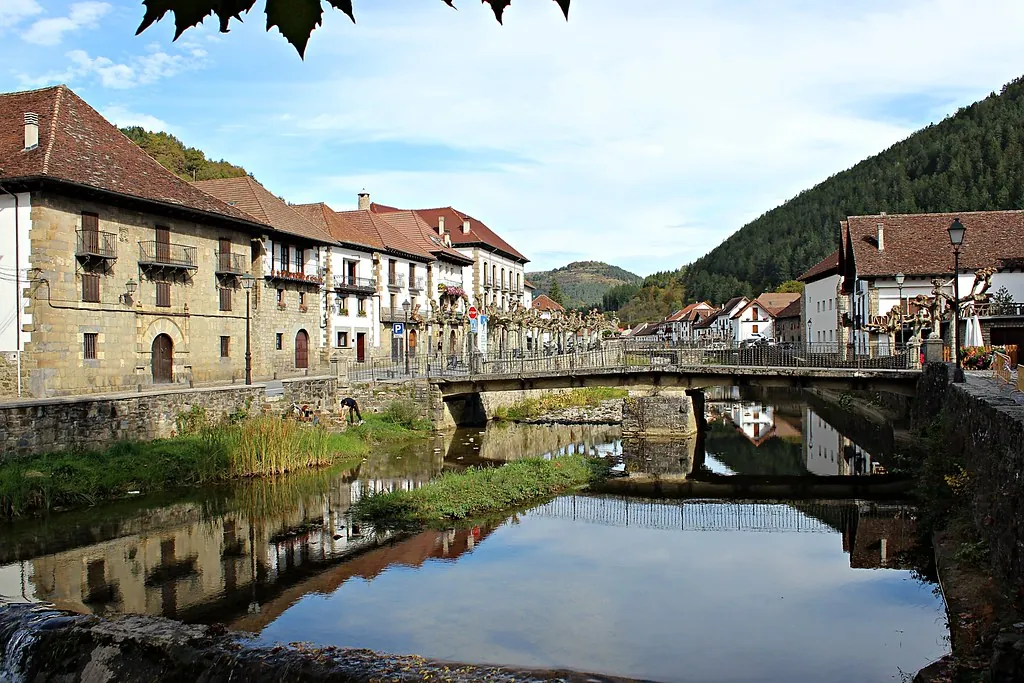
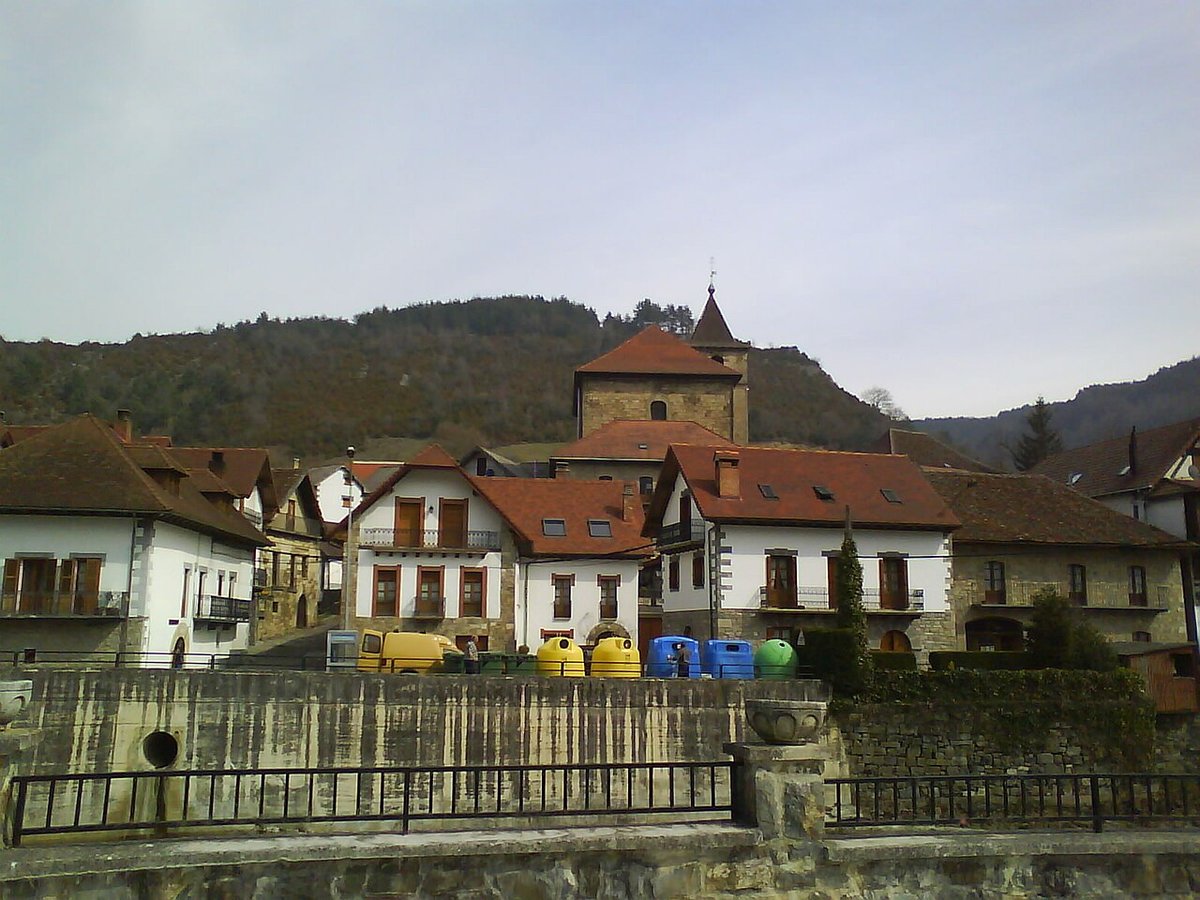
The village centre is compact: a cluster of stone and timber houses gathered along a slope. Everything feels designed with long winters in mind. Thick walls, dark roofs, and short streets that you can walk in minutes. In ten or fifteen minutes you can cross the whole place, but the point is to slow down and notice details such as wooden balconies, old doorways, and overlapping roofs that follow the incline of the land.
Walking through Izalzu
Moving through Izalzu is essentially that: walking past a handful of houses that still serve their original purpose. There is no sense of staging or decoration for visitors. These are homes built to endure cold, snow and difficult months. That practical approach shapes how the village looks.
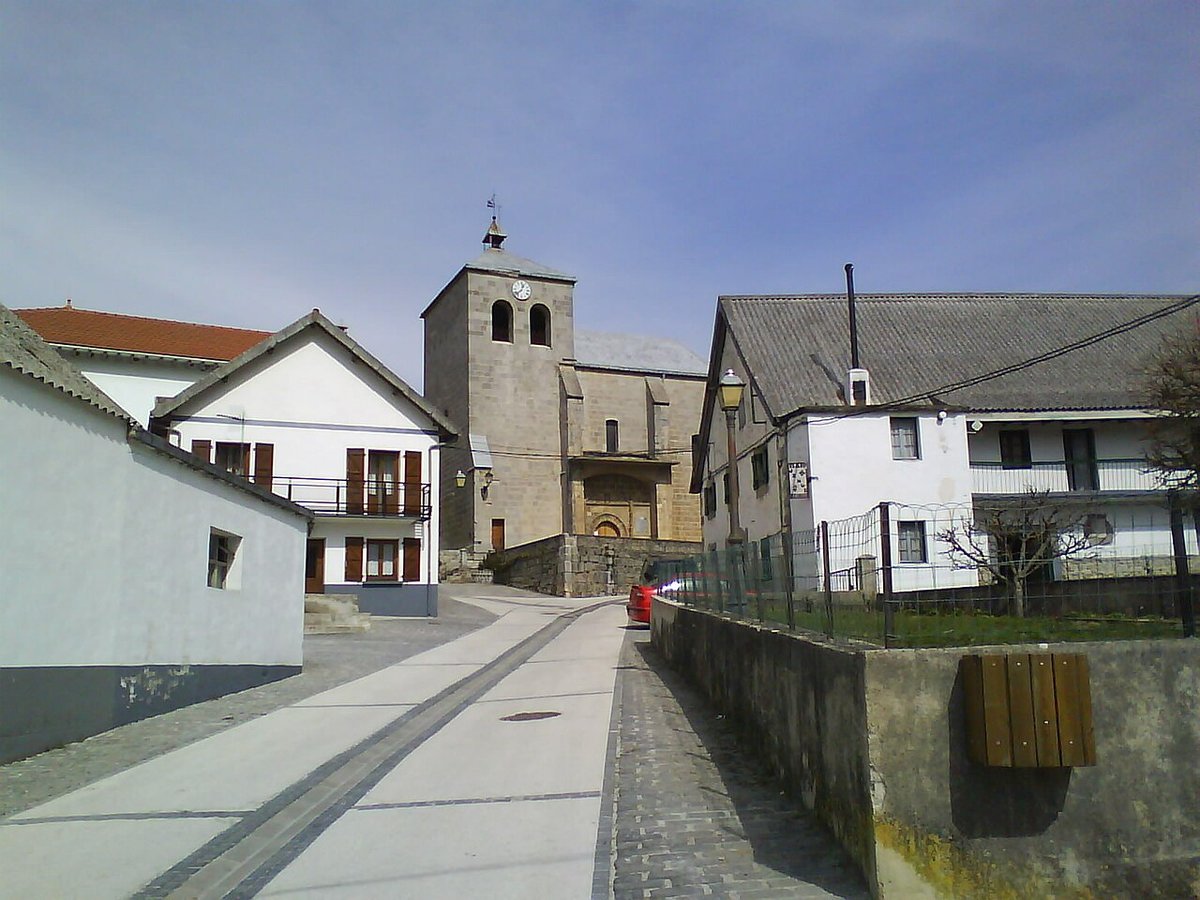
The parish church of San Martín acts as a natural point of reference. It is not monumental or imposing. Instead, it is a restrained building that has been altered over different periods. Walking around it gives a clear sense of how the village is organised. There is nothing grand about it: stone construction, a compact shape, and the mountains close at hand.
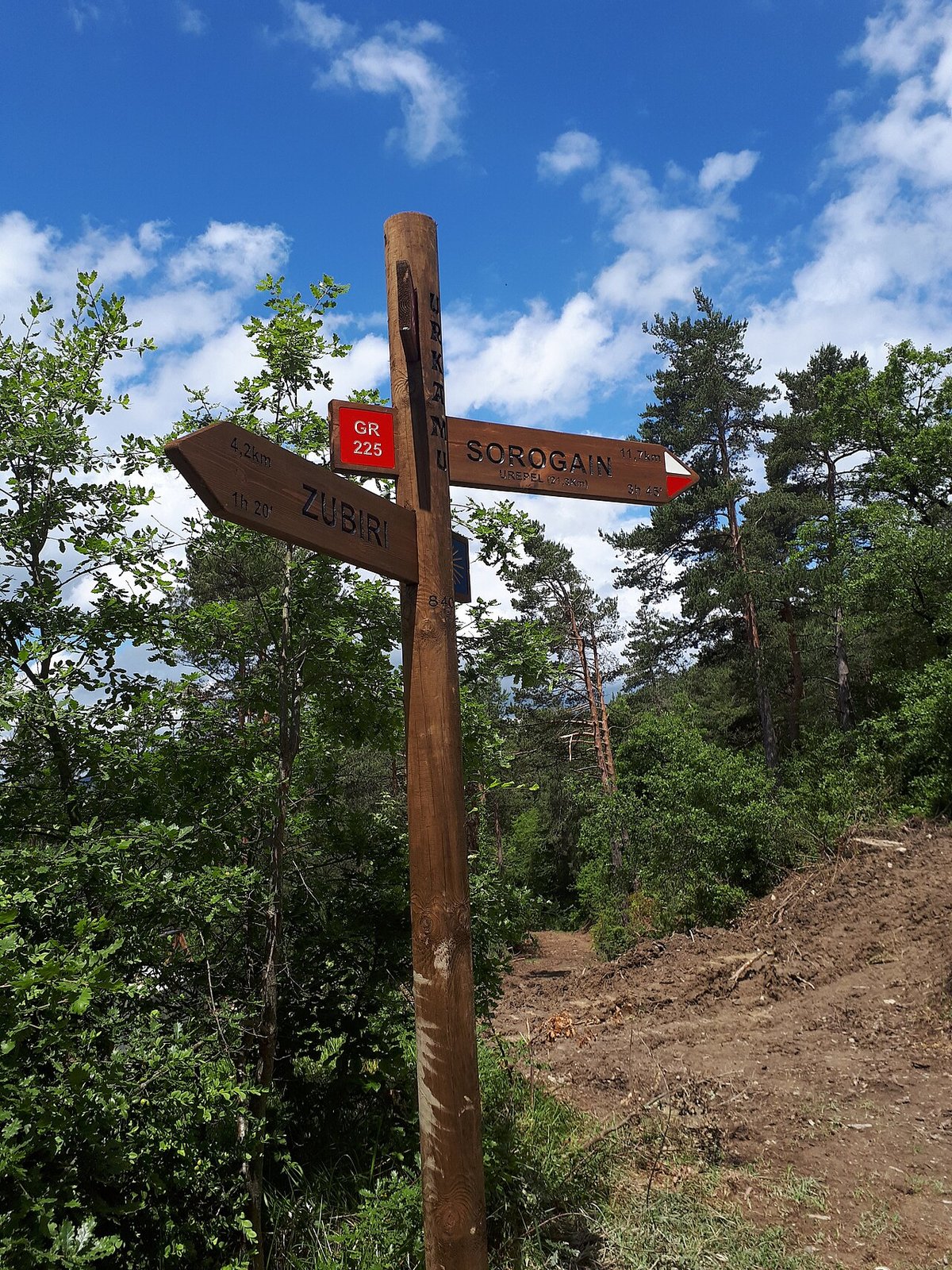
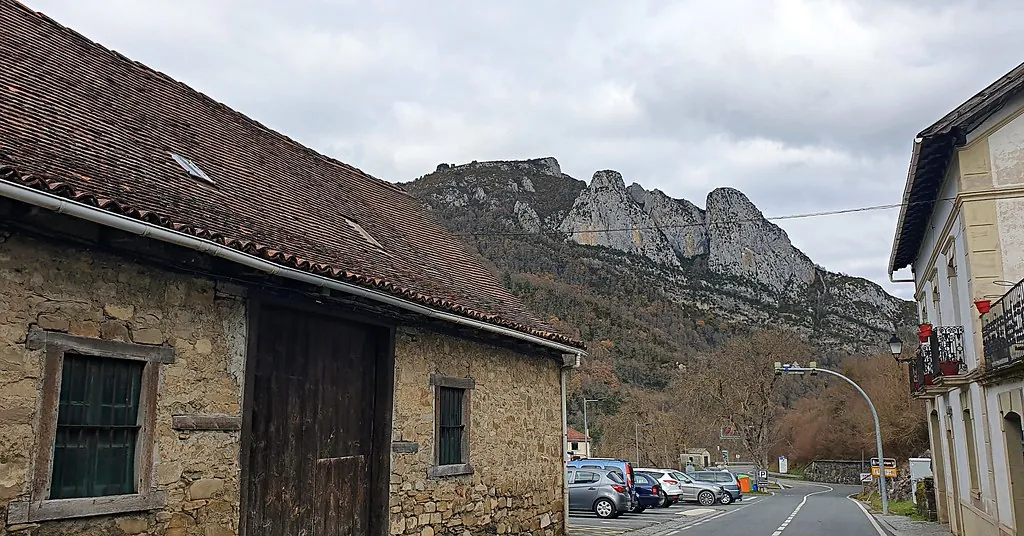
As soon as you leave the built-up area, the landscape changes. Beech and oak forests begin almost at the edge of the last houses. Some nearby paths open up views over the Roncal valley and towards Pyrenean peaks that appear clearly on bright days. Walk a little further along these trails and the village quickly disappears behind you, replaced entirely by woodland and mountain terrain.
Time outdoors and how to approach it
Izalzu works best when treated as a starting point for a short walk in the surrounding area. The nearby paths go up and down quite a bit, so it helps to be prepared. This is not terrain for smooth-soled trainers, and it is not the place to ignore changing conditions.
In autumn, the beech forests transform the landscape. The ground fills with fallen leaves and the woods become visually denser. It is not a dramatic or noisy shift, but rather the kind of scene that makes you stop and take in your surroundings for a moment.
For those who want to extend their route, there are more demanding walks in the area. The Navarrese Pyrenees are known for quickly changing weather. A clear day can close in with mist in a short space of time, and familiar paths can feel completely different. It is worth checking the forecast carefully before setting out.
If you only have two hours
A short visit is enough to get a good sense of Izalzu. In that time, you can walk along the main streets, head up towards the higher part of the village for views over the valley, and circle the church of San Martín to understand the scale and layout of the place. From there, a brief walk along one of the forest paths gives a clear impression of the surrounding environment.
It is the kind of stop that fits naturally between longer routes or as part of a journey through the Roncal valley.
When to go and what to expect
From May to early October, getting around is generally easier. Paths are more accessible and the days are longer. Autumn, especially in the nearby beech woods, brings a noticeable change in the landscape.
Winter is more complicated. Snow and ice can appear easily, and some secondary roads become tricky to navigate. Even so, when the valley wakes up under a blanket of snow, the quietness of the place becomes even more pronounced.
Even in summer, temperatures can drop in the evening, so carrying an extra layer is a sensible idea. If you plan to walk the nearby paths, footwear with a good grip is useful, as the ground can be damp or muddy.
There is another practical detail to keep in mind. As such a small settlement, Izalzu does not always have places where you can buy water or food. It is best to bring what you need with you before heading out.
A brief pause rather than a destination
Izalzu is small enough that in a couple of hours you will have a clear idea of what it is like. There are no shops filled with visitors or busy terraces. It does not seem interested in becoming anything other than what it already is.
It works best as a short pause within a wider route through the Roncal valley or the Navarrese Pyrenees. You stop, walk for a while, look out over the valley, and then continue on your way.
Izalzu does not try to impress. It sits close to the mountains and carries on at its own pace. Sometimes that is exactly what you want to find when travelling through this part of the Pyrenees.