Full Article
about Navascués
A district with a striking Romanesque church; gateway to the Pyrenean valleys and gorges
Hide article Read full article
A village shaped by its setting
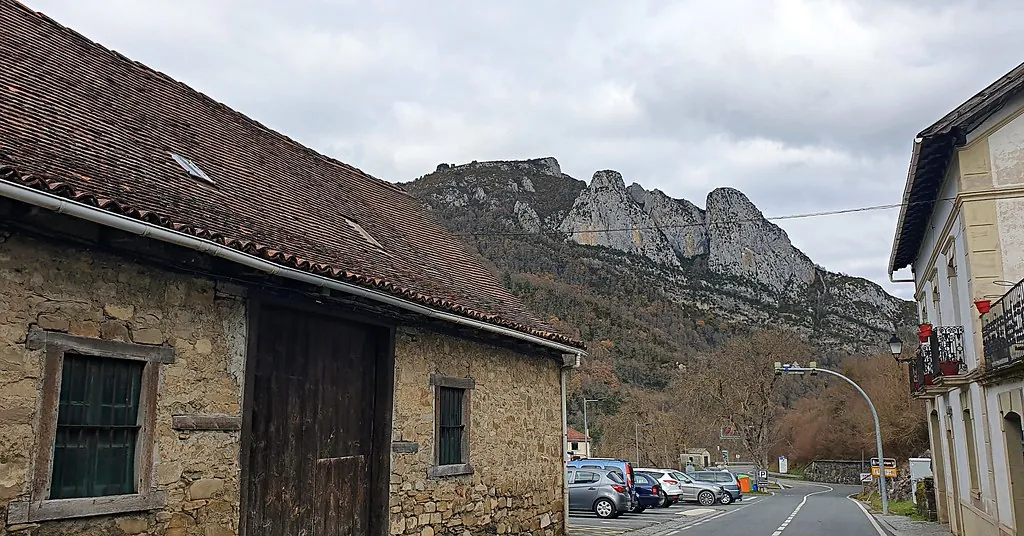
On the southern side of the Navarrese Pyrenees, Navascués sits at 636 metres above sea level, in a valley where woodland and pasture still define daily life. With just over a hundred residents, the village remains very small in scale, and closely tied to the landscape around it. That sense of proportion is central to any visit here.
Tourism in Navascués tends to revolve around simple things: walking through the surrounding countryside, noticing how the settlement is arranged, and spending time in a place where quiet is still part of everyday life. There is little in the way of spectacle. Instead, the appeal lies in paying attention to what is already there.
The village layout and its details
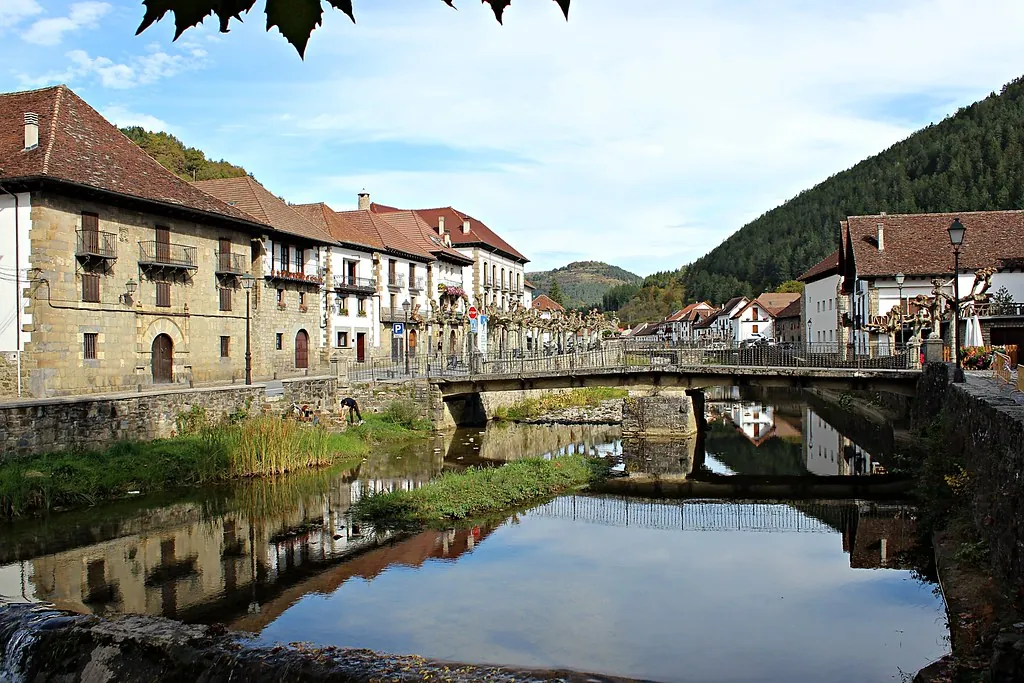
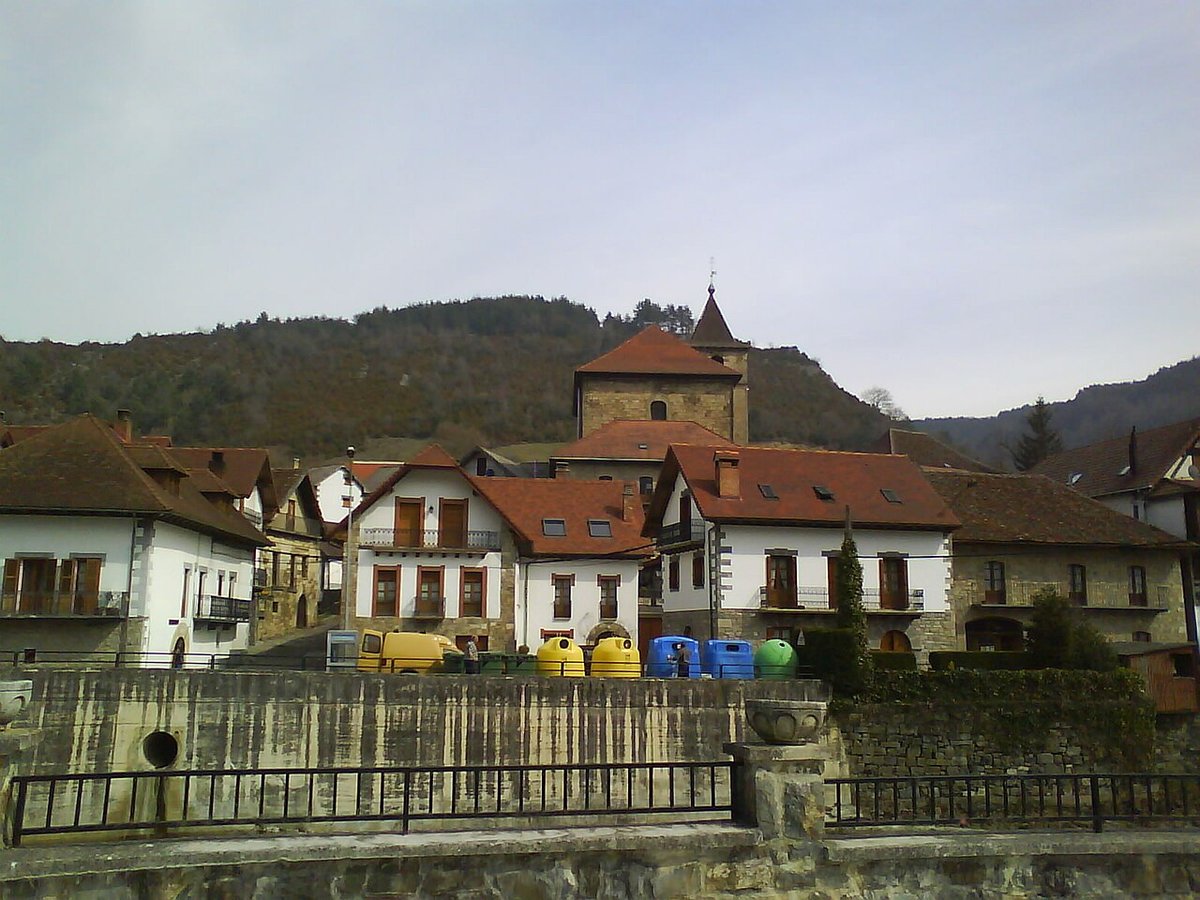
The centre follows the pattern seen in many small Pyrenean villages: narrow streets, houses built from stone and wood, and roofs designed to withstand long winters. Deep eaves and carefully worked lintels reveal a practical architecture that still leaves room for detail, particularly if you take the time to look closely.
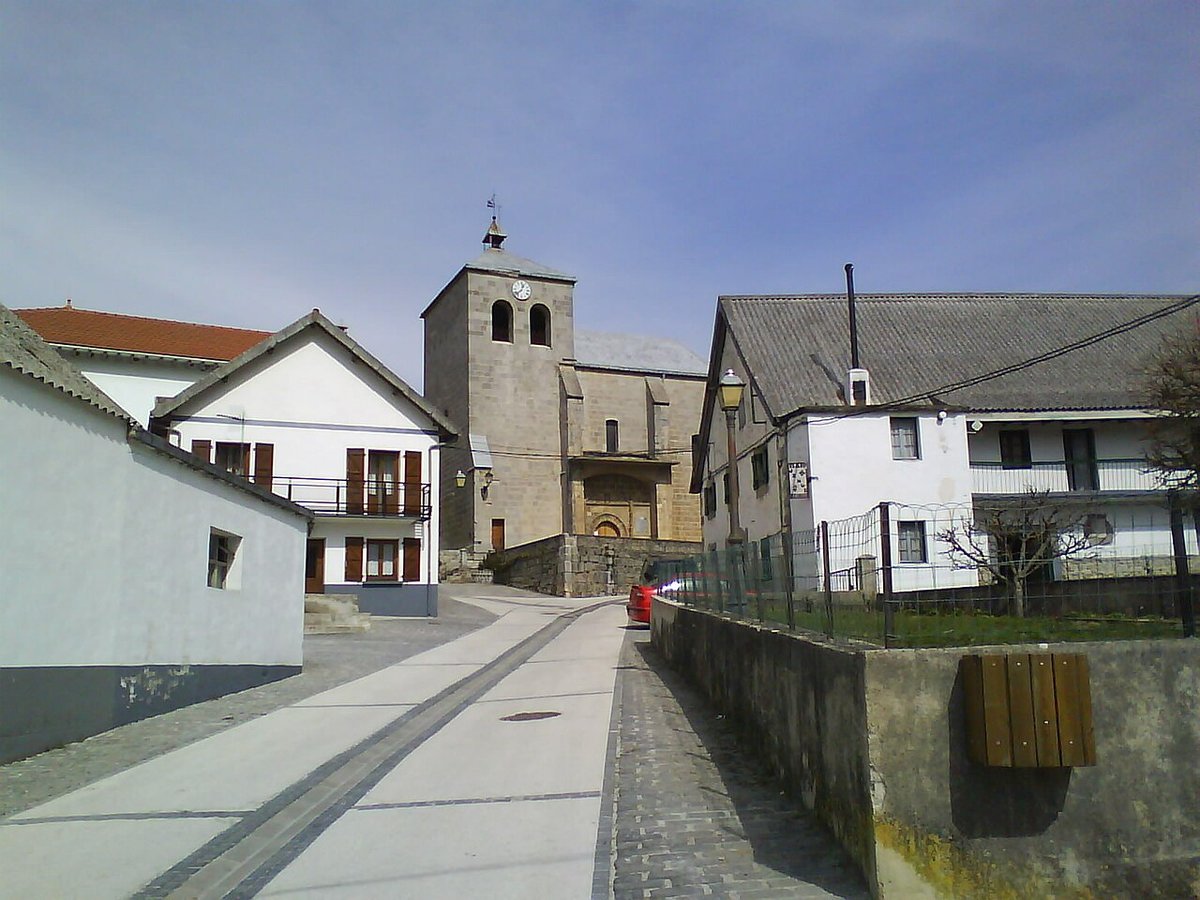
At the heart of the village stands the parish church of Santa María del Campo. Its origins are medieval, though the current building reflects later alterations. The entrance shows Romanesque elements, and some of the capitals still display carved figures. It is not always open, which is common in villages of this size. Asking a local resident is often the simplest way to gain access if you wish to see the interior.
Beyond the houses, the landscape opens up quickly. Meadows used for grazing stretch outwards, while the slopes beyond are covered in woodland. In the damper areas, beech and oak are especially common, giving the valley a varied texture that changes through the year.
Walking routes and the valley landscape
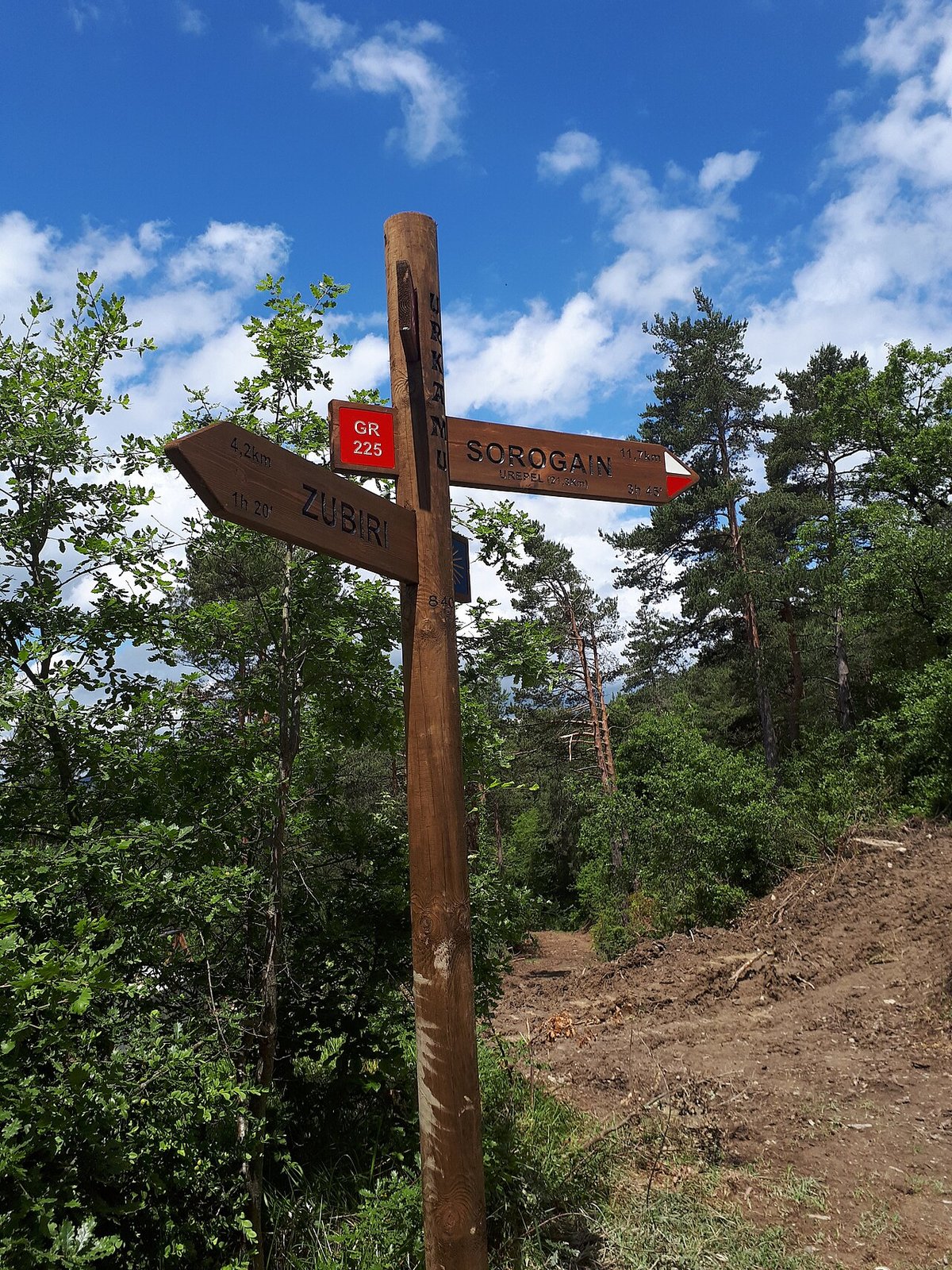
Navascués is best understood by walking a little beyond its streets. Tracks and paths begin right from the village, climbing towards the hills or following the valley floor. These routes were traditionally used for farming and livestock, and many still serve that purpose.
Some lead towards higher pastures, where herds were once moved seasonally. Not all of these paths are signposted, and their condition can vary a great deal depending on the time of year. Wet periods can leave them muddy, summer brings tall grass, and winter may cover them in snow. For a safer walk, it is usually sensible to ask locally about the current state of the routes.
In autumn, it is common to see people searching for mushrooms in the nearby forests. This is a widespread activity in many parts of northern Spain, but it requires caution. It is best attempted only with proper knowledge of the species, as there are regular warnings each year about mistakes and confusion.
When the valley changes
Spring and autumn are probably the most rewarding times to see the valley. Within a few weeks, the landscape shifts noticeably. Meadows turn a vivid green in spring, while later in the year the woodland takes on ochre tones.
Summer brings long days, which allow for unhurried walks. Even so, midday heat can be stronger than expected for a mountain area. Winter presents a different picture, with frequent frosts and occasional snow. These conditions can make access by road or track more difficult.
Those looking for a quieter atmosphere will generally find it during weekdays and outside holiday periods, when the village returns to its usual pace.
A short walk through Navascués
Navascués can be explored quickly. In less than an hour, it is possible to cross the village, look at some of the older houses, and walk out towards the surrounding meadows.
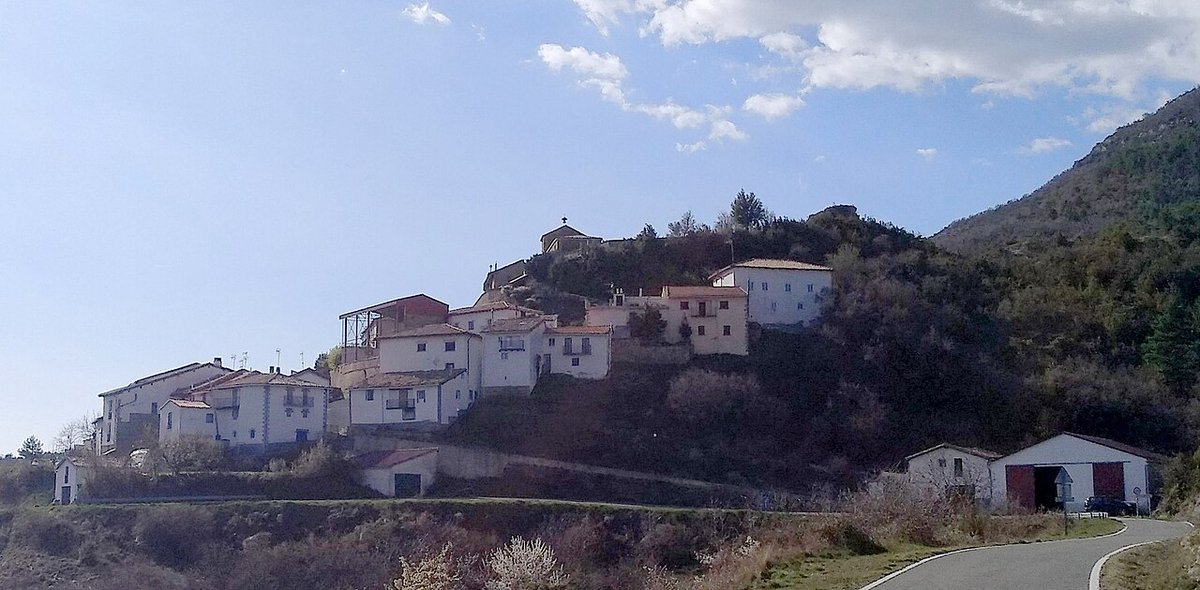
From certain points at the edge of the settlement, the view opens across the valley. Sitting there for a while gives a clearer sense of the place: a small cluster of buildings, enclosed by hills, with very little noise. The scale becomes evident in that moment, as does the relationship between the village and its surroundings.
What to keep in mind
Navascués is a very small village, and it does not offer a wide range of services or a structured programme of visits like other parts of the Pyrenees. Many people pass through briefly or use it as a quiet base for exploring this area of Navarra.
It helps to arrive with the right expectations. This is a straightforward place, closely tied to the valley and its rural way of life. The interest lies less in ticking off sights and more in the setting itself, and in the understated history that can be sensed rather than clearly displayed.