Full Article
about Oronz
Small village in the Salazar Valley; set on a river terrace with good views.
Hide article Read full article
A quiet start in the Pyrenees
Early in the day, before the sun fully clears the mountain line, Oronz is almost silent. A distant dog might break the stillness, along with the soft movement of wind through the tops of beech trees. The stone walls of the houses hold the night’s chill, and the air carries that damp scent typical of Pyrenean valleys. Tourism in Oronz begins in this subdued way, with a village that has only a few dozen residents and a pace that feels deliberately slow.
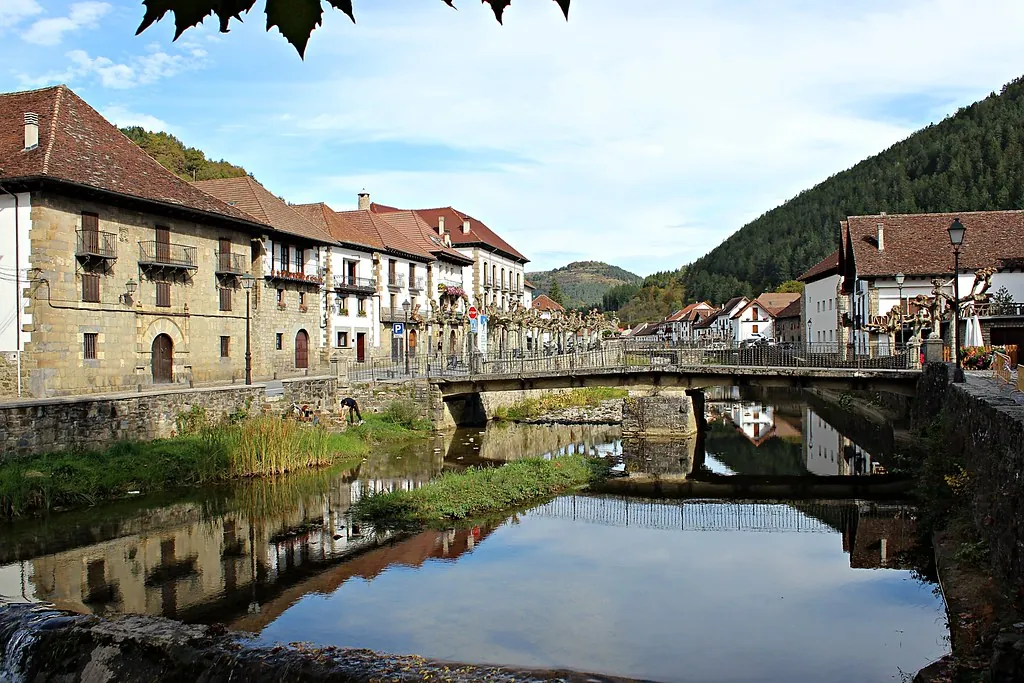
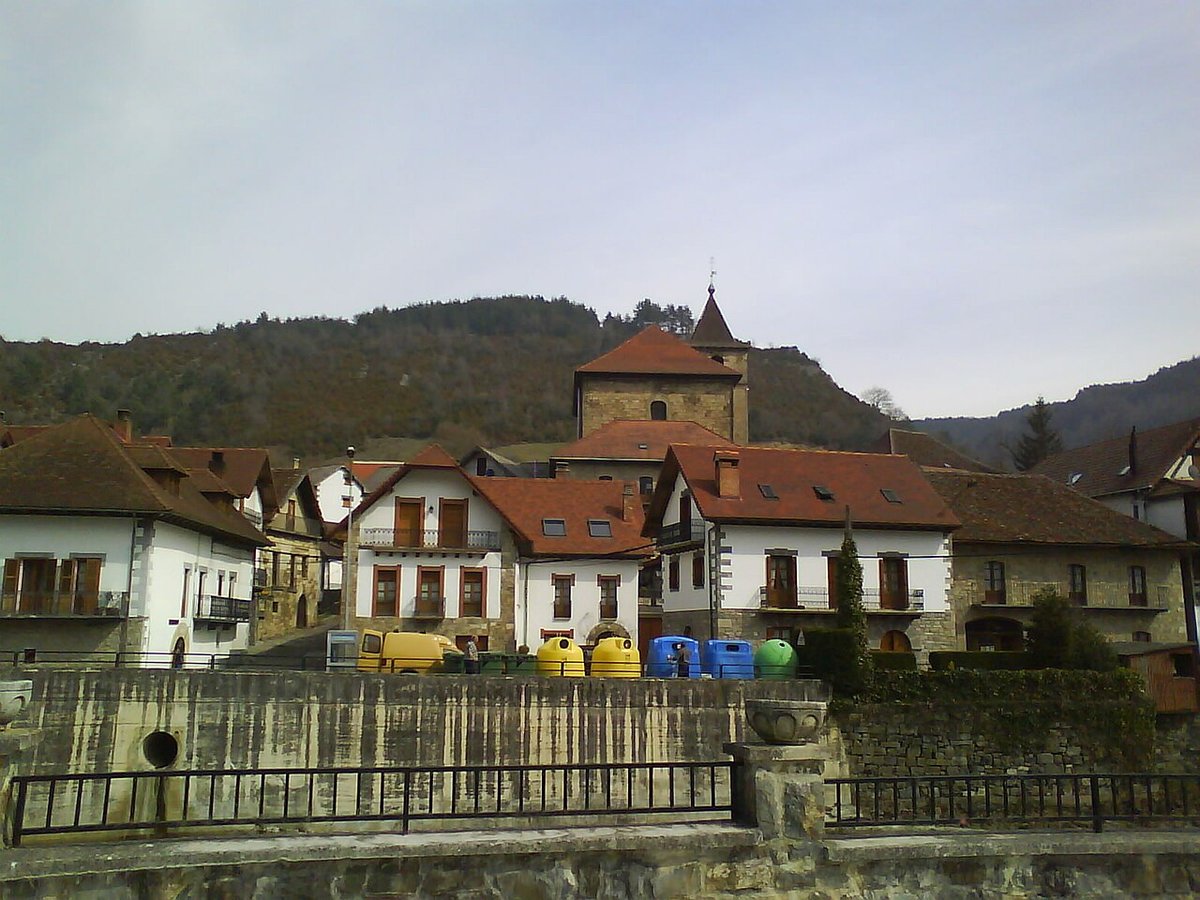
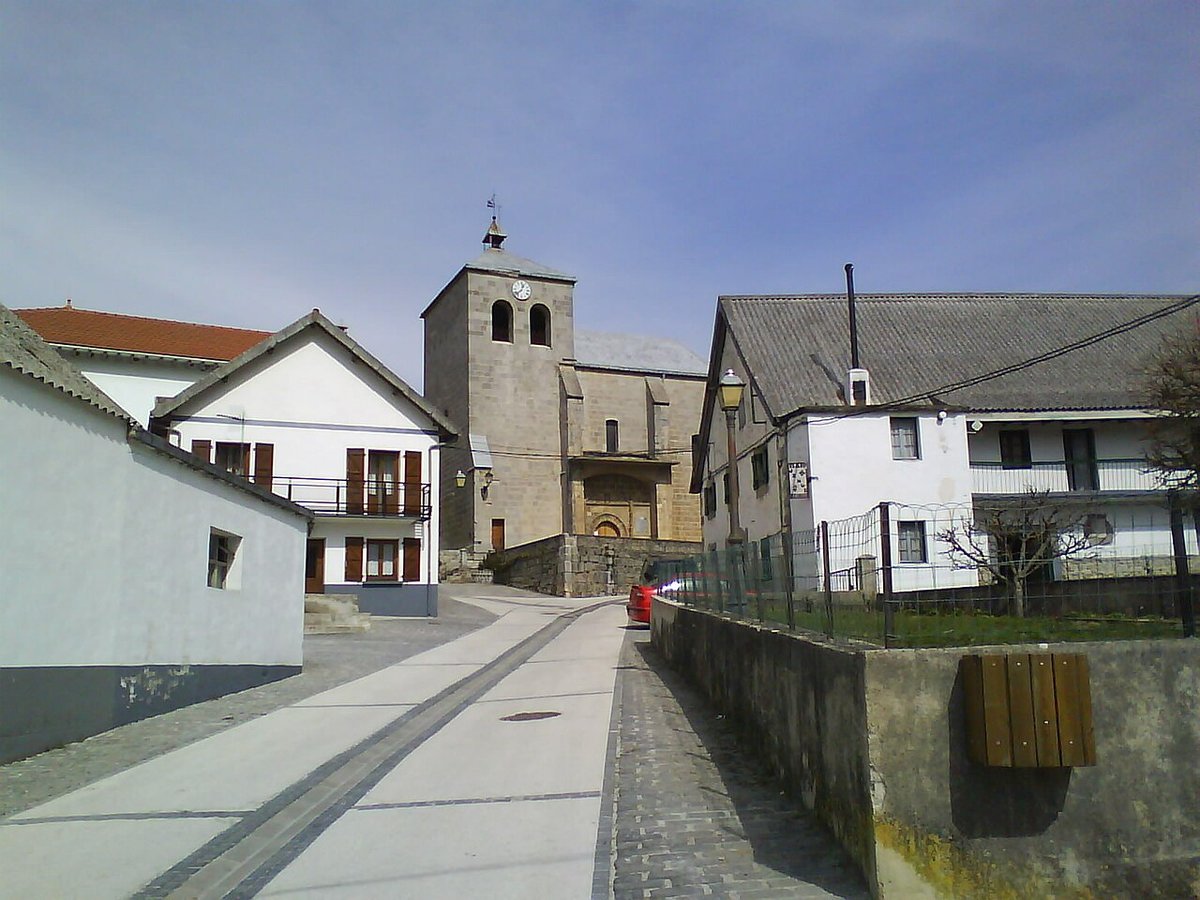
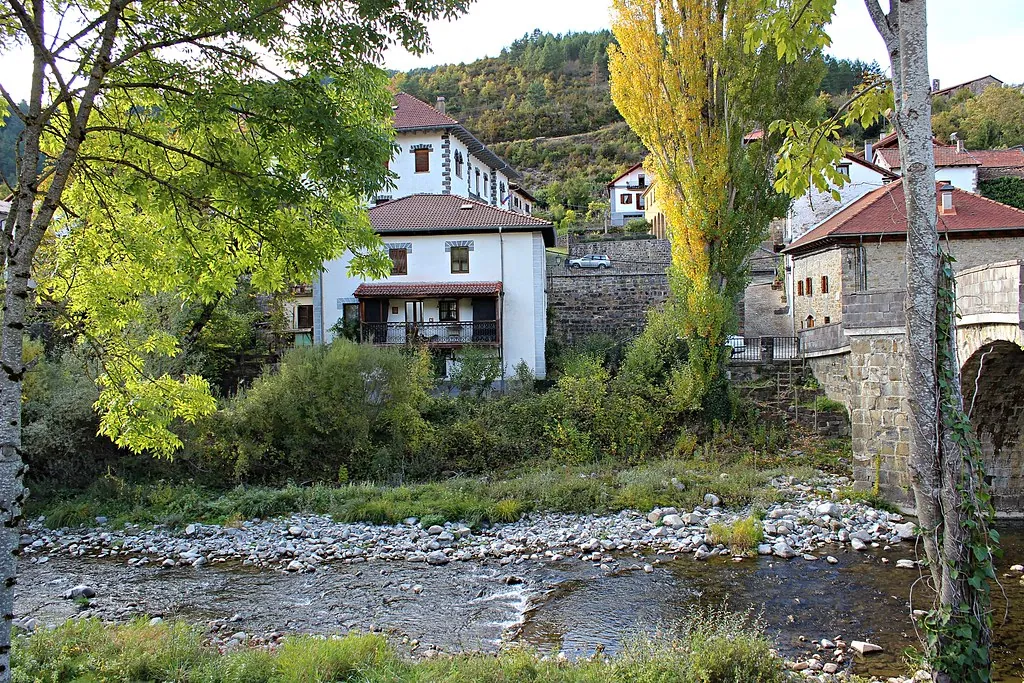
Oronz sits in the Navarrese Pyrenees on a slope where the land drops towards the valley below. The houses, built from pale stone with sloping roofs, cluster around the church of San Andrés. There is no steady flow of traffic, and shops are not part of daily life here. The dominant feeling is of a place where everyday routines have long been tied to the land and the surrounding hills, without much need for noise or urgency.
A short walk through stone and memory
The village centre does not take long to explore. A relaxed walk of about twenty minutes is enough to cross its main streets.
The façades reveal small details that hint at the past. Wooden balconies darkened by many winters sit above doorways, wrought iron grilles show careful handwork, and here and there a carved stone marks an entrance. Some walls still carry traces of old paint or faint markings that are easy to miss without slowing down.
The church of San Andrés acts as a natural reference point. From the space around it, the layout of Oronz becomes clear. Houses stand close together, the hillside rises immediately behind, and open meadows stretch out towards the valley. The relationship between built space and landscape is direct and easy to read.
Paths that lead into the woods
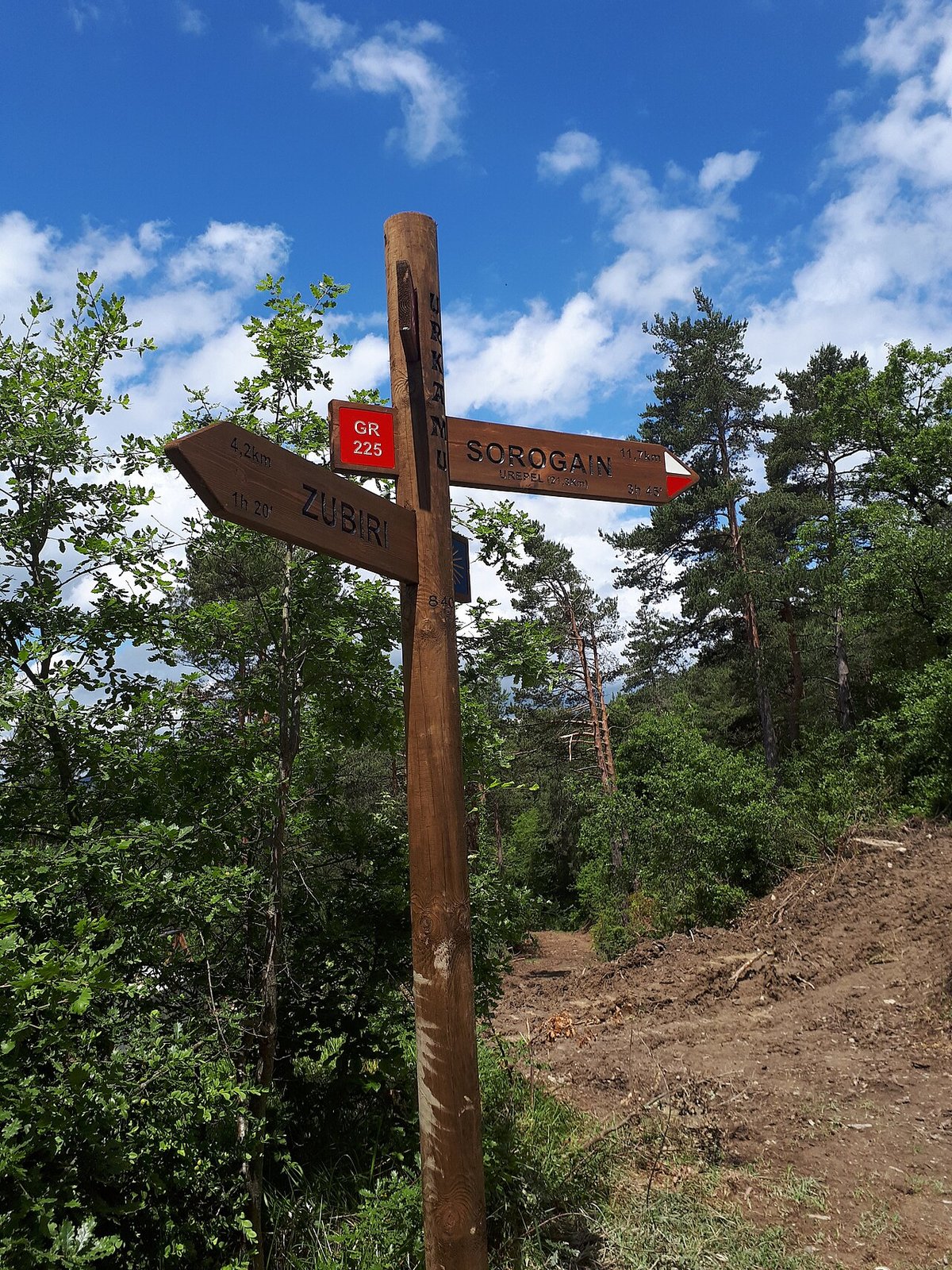
Beyond the last houses, the paths begin almost straight away. These are narrow tracks of earth and stone, traditionally used to move between small rural buildings known as bordas and nearby meadows.
They are not marked as long-distance walking routes. Instead, they function as local paths that cross areas of beech forest and oak woodland. In autumn, fallen leaves cover the ground and the smell of damp wood becomes especially strong. During summer, the shade provided by the trees makes walking here far more comfortable than down in the valley.
Good footwear is worth having. After rain, mud clings to boots and some sections are uneven, with stones protruding from the ground.
Wildlife in the quieter hours
Animals tend to keep their distance, but early in the day there is often movement at the edges of the forest. Roe deer can be seen crossing quickly between bushes, while wild boar move more cautiously before human activity increases.
Above, birds of prey make use of rising air currents from the valley. At times they glide for several minutes without flapping their wings, tracing slow circles in near silence.
This is not a place designed for wildlife observation, and there are no facilities set up for that purpose. Still, patience usually brings some reward.
Seasons that reshape the landscape
From spring through to autumn, the surroundings change noticeably in appearance.
Spring turns the meadows a vivid green, and the forest begins to thicken as leaves return to the trees. Autumn shifts the colour palette entirely. The beech woods around Oronz take on tones of red and ochre that alter the look of the landscape.
Winter has its own character, though it can make access more difficult. Frost and snow may complicate both the road journey and any walks along the paths. Anyone arriving at that time of year benefits from checking the weather beforehand and keeping daylight hours in mind.
Before setting off
Oronz is a very small village and does not operate as a service centre. Shops and bars are not usually open on a regular basis, so bringing water and something to eat makes sense if there are plans to walk in the area.
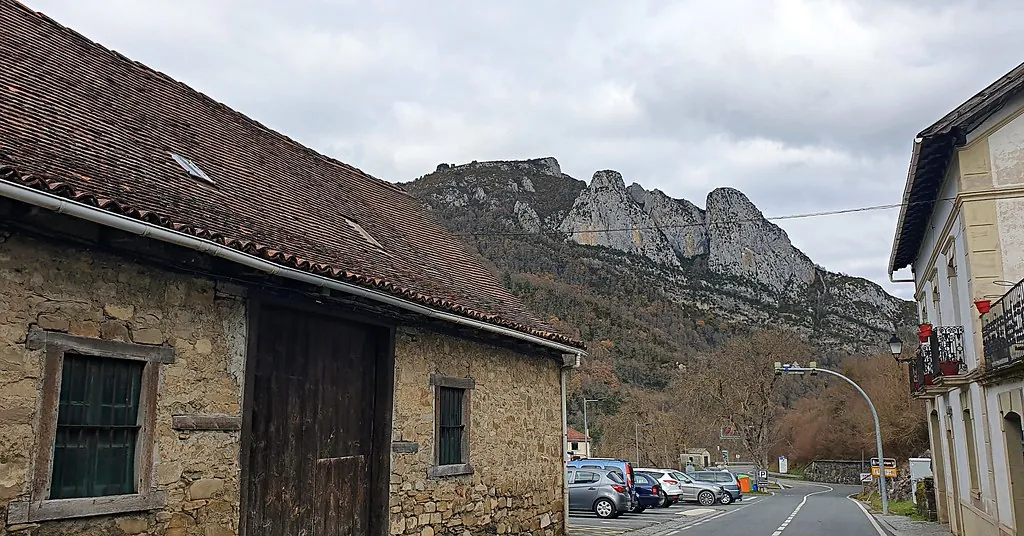
Roads in this part of the Navarrese Pyrenees are secondary and often winding. Driving calls for patience, particularly in winter or after heavy rain.
It is also worth remembering how close everything is to the village itself. Paths, meadows and bordas are part of the working landscape used by people in the valley. Respectful behaviour and leaving no trace help keep the area as quiet and undisturbed as it is today.
A pause along the way
Oronz does not present itself as a destination packed with activity or somewhere to fill several days. It works better as a pause within a wider route through the Navarrese Pyrenees. The village offers a brief stop defined by stone, quiet and a close connection to the surrounding hills. A short walk and a moment spent looking out over the slopes are enough to understand how life has unfolded here for generations.